
‘Che’ Guevara: A Sociological Analysis of a Life (Part Two)

By Robin West.

The practice of ideology

Following the trip, Guevara eventually found himself in Guatemala. His distaste of foreign intervention in Latin America had increased and he made his first substantial contact with communist organisations challenging American hegemony. A politically mature Guevara rapidly emerged and in 1955 he was introduced to Castro. The following year he took part in the invasion of Cuba, integrating his increasing knowledge of Marxist literature with revolutionary guerrilla warfare tactics. Together with Castro, Guevara declared that agricultural workers were to be the new proletariat. Subsequent ideological conflicts within the communist world caused Castro and Guevara to move in different political directions concerning economic positions – although still close personally to Castro, Guevara experienced political isolation. In 1965 he decided to leave for the Congo and re-engage directly in the revolutionary struggle. The following section will attempt to describe how the events of this period can be explained from both the analysis of the actor – by referring to the enabling nature of bourgeois habitus – and the paradoxical affect on the interpretation of external structures both within the African context and those that were at play in the broader historical arena.

II. The Congo: tensions and consequences of habitus and doxa.
Emotions, structure, and practice

In 1960, the Congo gained independence from Belgium and fell under the control of a proto-nationalist government. Chaos ensued following provincial secessions, military coups and counter-revolts. The superpowers became involved and the situation developed ostensibly into a struggle between socialism and imperialism. I have argued that a sense of emotional reflexivity is emergent from, and generates, habitus. As we have seen, significant interactional situations appear to have provided the opportunity for the elaboration of character along these lines and have led to emotional motivation in the formulation of strategies. The situation in the Congo illustrates this well – with reports suggesting that Guevara was ‘profoundly’ moved by the combination of poverty, backwardness, and oppression structuring the potentiality of the situation. In what follows, I draw attention to the latent tensions between what can be considered as the dynamism of emotional reflexivity (such reflection propelled Guevara toward a dispositional passion for Marxist ‘guerrillaism’) and the transmutation of emotions into the structural character of dispositions that form emotive constraints in the field of action (cf. Lizardo, 2004:376).

The composition of Ernesto’s character, as we have analysed it, is one that retains the original import of his middle-class socialisation process. His belief premises concerning the spread of communism have been incorporated into this character through ideological elaboration and direct encounters with the proletariat. These factors have been accompanied by an early admiration for indigenous culture. Undoubtedly, Guevara’s success in Cuba would have ratified his ideological position and produced an unquestioning faith in his own policies. It is this habitual package that Ernesto carries with him to the Congo without adequate knowledge of the wider social forces with which he must contend for control of the situation. The event we are concerned with takes place in the field of ‘revolutionary struggle’ in which a network of actors and collectivities ‘share a certain number of fundamental interests’ (Bourdieu, 1993b:73). We must think of this network in terms of ‘position-practices’ which, from a structural perspective, sees the actors set in an institutionalised framework of relations: in this case the military/political organisation (cf. Cohen, 1989:208). Occupying the field at one level, we have the government forces opposed to the revolt – we can align this aspect with the wider historical ideological conflict through the support of the U.S. who feared a ‘communist Africa’. I will not discuss this aspect of the field further, but will concentrate on the ‘position-practices’ of Guevara and his ‘allies’. Cohen suggests that position practices must be understood by analysing the actors’ varying claims to legitimate identity in the field and the 7
practices through which claims to prerogatives are foregrounded. These then interplay with the contingent situations and often erroneous strategies that contest the performance of institutionalised reciprocities (and that can produce a struggle for control of the situation). As Cohen makes clear, the motivation behind ‘strategic forbearance’ from acting must also be considered (1989:210). It would be fair to say that revolt in the Congo failed predominantly due to the international context – however, having established our picture of Guevara’s dispositional traits as modified on a continuum, that is as emergent from the cultural background and subsequently modified through cognitive and emotional encounters, it will be useful to analyse their effect on the relational field in which he became embedded.

I want to argue that, for Guevara, Marxist and guerrilla ideology, merged with his perception of indigenous culture as primitive communism, form an internal structure that comes close to the status of ‘personal’ doxa. In this sense, the invigorating dualism between habitus and the capacity for renewed reflexive modification seems to have fallen into stagnation. Guevara had adopted an unquestioning perspective that championed the advent of the ‘New Man’ orientated by moral motivation and constructed on a new base that rose above material incentives. As Bourdieu states, ‘in each of us […] there is a part of yesterday’s man’ (1977:79) – the events of Guevara’s life had culminated in his belief that he was the agent that would produce this phenomenon through the ideological guidance of the agricultural proletariat. It is clear that world events played the key role in preventing the emergence of the ‘New Man’ in the Congo. However, the failings of Guevara can be tentatively explained in part through the cognitive implications of habitus. Stones (2001) points out that agents draw on significatory structures that condition action alongside knowledge of the situation arising from ‘practical consciousness’. Such significatory structures ‘can in no sense be direct representations’ of the exterior world. Guevara’s perspective of the world is in part constituted by the ‘imagined symbolism’ of indigenous collectivity and moral universalism that have been accepted and stored in habitus as emotional residues. However, as shall be seen, the world is perceived from multiple ideological and traditional perspectives and the actual chance of homogeneity within any situation becomes slim (Stones, 2001:186).

The dialectic of control

That Guevara did not meet with success in the Congo can be attributed to the combination of emergent structural and personal properties that are set in the wider historical framework (see Archer, 1995, 2000), that is the international political field and the more immediate field of interaction. Guevara bemoaned the motivation and discipline of the Congolese troops he commanded. The latter refused to carry supplies, ran away at the first sign of conflict and were, more-than-often, drunk. Guevara responded by drawing on his stock of knowledge of guerrilla warfare and imposed harsh disciplinary measures. More worryingly, the Africans relied heavily on dawa, a magical incantation delivered by sorcerers, to protect them in the field of battle. Guevara became concerned that any defeats would be attributed to the Cubans’ lack of faith in this respect. He also attempted to ridicule the Congolese into discipline by suggesting that they should be made to wear skirts and carry vegetables in a basket – an insult that would have mortified Hispanic mentality, but was met with hysterical laughter from the Congolese. In each of these situations Guevara fails to assimilate his dispositional strategy with the normative structures prevailing in the Congo and thus underestimates the potential power bases that may oppose attempts to establish order. Just as events in his early life failed to appreciate the actuality of situations by applying an idealisation of the overall situation (i.e. the cripple and the mine-workers), so his willingness to believe that his romanticised indigenous fighters would embrace his strategy is challenged. Consequentially, the increasing restoration of dawa and the general lack of deference can be seen as the struggle for power that emerges from the clash between the combined emotional and ideological motivation of Guevara and the doxic institutionalised ritual of the Congolese. As we shall discuss in the next section, this results in a dialectic of control (Giddens, 1984:16; 288, Stones, 1996:93) that allows the Congolese to reassert their sense of autonomy.

Giddens (1984) argues that social relations must be examined through the analysis of how individuals draw upon structural properties in their strategic conduct. Hence, contextual boundaries (in our case, the delineation of traditional practices and guerrilla tactics) are revealed by giving attention to the expression of both discursive and practical consciousness (Giddens, 1984:288). ‘Less powerful’ agents possess and perform a knowledgeability of the social situation and manage the resources that are available to them in a way that enables them to exert control over authoritative figures (ibid:373). Thus, a ‘dialectic of control’ is established that affects the ‘balance of power’ and can lead ultimately to the loss of one of the party’s agency (Stones, 1996:93-94). The situation in the Congo reached such a height that Guevara was forced to concede to the traditional practices he had idealised and abandoned any hope of effective control. This confrontational interaction must be defined in the synthesis of relevant contexts – that is Guevara’s rigid doxic appraisal of the situation as was covered above, the dispositional behaviour of the Congolese, and finally the abstract agency emerging from the historical circumstances.

Historical contexts

To explain how this dialectic of control is substantiated in the overall context we must briefly look at the prevailing conditions in the Congo, conditions that I feel were partially concealed by the myopic reflexivity resulting from Guevara’s romantic idealism and emotionally driven cognition. Whereas Guevara seemed to rely on national unity as a precondition of universal socialism, in effect ethnic division split the country – with any form of nationalism only present as a ‘vague ideological cohesion’ (Davidson, 1981). The actual rising against neo-imperialism could not truly be seen as such as it was the re-activated residue of much older tribal conflicts and intentions (ibid.).9 Any modernising ideology had always come in the guise of colonial repression, therefore the attempt to create a new social structure in a ‘liberated’ Congo was counteracted by a reversion to traditionalism, hence the dogmatic adherence to dawa. Guevara’s sentimental idealisation of indigenous culture as revolutionary vanguard seems at odds with the social reality, in this case as the Congolese recruits, without substantive political guidance, were susceptible to the structural authority of traditional magic.

Guevara, a key agent in the conflict, relates to this structure at the level of the combination of his passionate beliefs and established rules, thus acting on the basis of a synthesis of his position, disposition, and subsequent interaction in the paradigmatic sense outlined above. Conversely, the Congolese relate to socialist strategy in the context of their particular relevant position (i.e. the desire to escape any form of imperialism). The levels of knowledge to which they have access alienate them from an intimate understanding of the guerrilla rulebook by which Guevara abides. Although he has tacit knowledge of the surface rules that underpin Congolese culture, due to the overwhelming historical context and the limited knowledge of the reality of that culture (which becomes idealised in accordance to the emotional element of his habitus), Guevara has little purchase in effecting any impact in the specific time-space situation (cf. Mouzelis, 1991:100) and is thus unable to effect widespread social change. Consequentially, Guevara and the Cubans were forced to flee in defeat after seven months of frustration. Doubtless many factors beyond the influence of Guevara’s habitually conditioned judgement will have been at play in this situation. The trajectory of his habitus – negotiated though instances of determinism and emergence – almost undoubtedly gave rise to the Guevara that sought to bring socialism to the Congo. However, the values that accompanied him, as Bourdieu (1984:466) suggests, can tentatively be considered as transmuted into ‘automatic gestures’. With this I contend that despite the possibility for generative reflexivity in the face of novel situations, there is an intransient element to Guevara’s character through which rational judgement emerges in a filtered form – that is to suggest that subjective conditions for action are always constrained by the accumulated residues of experience that are ratified and embodied by the ‘emotional’ habitus (cf. Burkitt, 2002:232).

Conclusion

In this paper I have attempted to show the intransient cultural and social roots that give rise to the habitus of Che Guevara. I have sought to show that these dispositional traits are modified through a phenomenological dialogue with external conditions and are influenced by both rational and emotional reflexivity. By suggesting that these two elements reveal a dualistic nature to the agent that, nonetheless, results in a dominant course of action depending on their subjective predominance, I have attempted to illustrate Guevara’s characteristic self-assurance in his ideological standpoint that dictates the almost doxic avoidance of historical reality. This culminates in the Congolese fiasco. It is perhaps the additional dualism between Guevara’s position and traditional and international structures that provokes his final critical reflection of the situation, and, retaining some degree of agency, flees. Less than eighteen months later, having renounced Cuban nationality and whilst attempting to create ‘twenty new Vietnams’ in Latin America, Guevara was betrayed, captured, and later executed by Bolivian government forces.

Notes
1 In this paper, the narrative of the life of Guevara is taken from Jorge Castañeda’s (1997) biography Compañero. All unreferenced quotations are taken from this work. Quotations and accounts drawn from the diaries of Guevara himself are fully referenced.
2 Cultural capital, for Bourdieu, is the sum of socially transmitted ‘techniques’ that enable the subject to act competently in relevant situations (Bourdieu, 1977:89).
3.As I understand Mouzelis, the paradigmatic refers generally to the enactment of rules in a virtual unreflexive manner in which they are both the medium and the outcome of social action – thus it seems that the actor can be awarded a significant account of agency throughout interaction. The syntagmatic allows for a more relational situation in which a subject’s agency is restricted by the knowledge and agency of other participants (Mouzelis, 1991:99-100).
4. Although Bourdieu would most likely abstain from associating habitus to ‘character’, I am in sympathy with Burkitt’s attempt to root habitus in the idea of a generalised disposition that ‘suffuses’ action throughout life and thus is interpreted as a mould of the personality – or, ‘character’ (Burkitt, 2002:220).
5. By this I mean that we must consider habitus as the constantly modified result of the negotiation of phenomenological experience, memory traces, and doxa.
6 In this formulation of habitus, I draw on Lau’s (2004) account that attempts a critical realist development of Bourdieu’s theory. The intransitive nature of habitus (in my account) refers to the pre-reflexive – and therefore not directly accessible – element that is encountered only as the locus of corporeal memory (in Bourdieu’s sense of the bodily hexis (1977:82)). For Lau, habitus is considered as a ‘practical sense emergent’ from experience and thus escapes suggestions of purely cultural reductionism. However, my argument attempts to place the onus of responsibility for action on the agent’s successful negotiation of cultural conditioning and the capacity for the innovative rationalisation of situations.
7. Lizardo (2004:394), however, contends that habitus should be regarded in terms of a ‘duality of structures’ (i.e. historical and developmental) that intersect and overlap.
8. Castañeda suggests that the great tragedy of Guevara’s life was the fact that he constantly generalised the overall situation. Guevara’s hope for a unified Latin-Americanism is based on his admiration for the indigenous peasant – hence at one stage he claims that he would ‘rather be an illiterate Indian than an American millionaire’. His misconception of the situation blinds him to the fact that in reality, most Indian peasants would rather be American millionaires.
9. As Davidson tells us in his history of the Congo conflict, ‘volunteers might receive a revolutionary teaching; but with them, and more powerful, came also the beliefs of their own rural culture. Theirs, increasingly, was a messianic fiction of a golden age when the ancestors should govern once more, the goods of the Europeans should pass automatically to the Africans, and power would once again reside in spiritual shrines’ these therefore took precedence over ideas of ‘capitalism, exploitation, class conflict and the rest’ (1981: 111).

Acknowledgements: I am grateful to Rob Stones for inspiration and initial comments on an early draft of this paper. I would also like to thank the anonymous reviewer for pointing out clear ambiguities and tensions in the original submission.

Bibliography
Archer, M. (1995) Realist Social Theory: The Morphogenetic Approach, Cambridge: CUP.
Archer, M. (2000) Being Human: The Problem of Agency, Cambridge: CUP.
Bourdieu, P and Wacquant, L. (1992) An Invitation to Reflexive Sociology, Cambridge: Polity.
Bourdieu, P. (1977) Outline of a Theory of Practice, Cambridge: CUP.
Bourdieu, P. (1984) Distinction: A Social Critique of the Judgement of Taste, London: Routledge.
Bourdieu, P. (1993a) The Field of Cultural Production, Cambridge: Polity.
Bourdieu, P. (1993b) Sociology in Question, London: Sage.
Burkitt, I. (2002) ‘Technologies of the Self: Habitus and Capacities’ Journal for the Theory of Social Behaviour 32(2): 219-237.
Castañeda, J. (1997) Compañero: The Life and Death of Che Guevara, London: Bloomsbury.
Cohen, I. (1989) Structuration Theory: Anthony Giddens and the Constitution of Social Life, Basingstoke: Macmillan.
Davidson, B. (1981) The People’s Cause: A History of Guerrillas in Africa,
Harlow: Longman.
Giddens, A. (1984) The Constitution of Society, Cambridge: Polity.
Guevara, E. (1996) The Motorcycle Diaries, London: Fourth Estate.
Guevara, E. (2000) The African Dream: The Diaries of the Revolutionary War in the Congo, London: Harvill.
James, W. (1884) ‘What is an emotion?’ Mind No. 9: 188-205.
King, A. (2000) ‘Thinking with Bourdieu against Bourdieu: A ‘Practical’ Critique of the Habitus’ Sociological Theory 18(3): 417-433.
Lau, R. (2004) ‘Habitus and the Practical Logic of Practice: An Interpretation’ Sociology 38(2): 369-387.
Lizardo, O. (2004) ‘The Cognitive Origins of Bourdieu’s Habitus’ Journal for the Theory of Social Behaviour 34(4):375-401.
Mouzelis, N. (1991) Back to Sociological Theory: the Construction of Social Orders, Basingstoke: Macmillan.
Noble, G. and Watkins, M. (2003) ‘So, how did Bourdieu learn to play tennis? Habitus, Consciousness and Habituation’ Cultural Studies 17(3/4): 520-538.
Stones, R. (1996) Sociological Reasoning: Towards a Past-Modern Sociology, Basingstoke: Macmillan.
Stones, R. (2001) ‘Refusing the Realism-Structuration Divide’, European Journal of Social Theory, Vol. 4 (2): 177-179.

Αποχαιρετιστήριο γράμμα του Τσε στον Φιντέλ Κάστρο (1965)
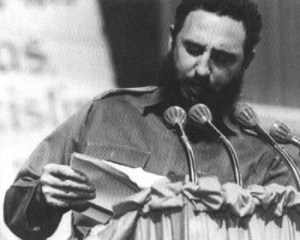
Ο Φιντέλ Κάστρο διαβάζει το γράμμα του Τσε σε δημόσια συγκέντρωση στην Αβάνα, 1965

Φιντέλ,

αυτή τη στιγμή θυμάμαι πολλά πράγματα-όταν σε γνώρισα στο σπίτι της Μαρίας-Αντωνίας, όταν μου πρότεινες να σε ακολουθήσω, την ένταση της προετοιμασίας. Μια μέρα ήρθαν και μας ρώτησαν ποιος θα έπρεπε να ειδοποιηθεί σε περίπτωση θανάτου μας. Τότε η συνειδητοποιήσαμε την πιθανότητα αυτή. Αργότερα μάθαμε ότι ήταν αλήθεια, ότι σε μια επανάσταση νικά κανείς ή πεθαίνει (αν είναι πραγματική).

Αυτή τη στιγμή θυμάμαι πολλά πράγματα-όταν σε γνώρισα στο σπίτι της Μαρίας-Αντωνίας, όταν μου πρότεινες να σε ακολουθήσω, την ένταση της προετοιμασίας. Μια μέρα ήρθαν και μας ρώτησαν ποιος θα έπρεπε να ειδοποιηθεί σε περίπτωση θανάτου μας. Τότε η συνειδητοποιήσαμε την πιθανότητα αυτή. Αργότερα μάθαμε ότι ήταν αλήθεια, ότι σε μια επανάσταση νικά κανείς ή πεθαίνει (αν είναι πραγματική). Πολλοί σύντροφοι έπεσαν στην πορεία προς τη νίκη.

Σήμερα τα πάντα έχουν ένα λιγότερο δραματικό τόνο, επειδή είμαστε πιο ώριμοι, αλλά το γεγονός επαναλαμβάνεται. Αισθάνομαι ότι έχω κάνει το καθήκον μου προς την Κουβανέζικη επανάσταση, στο έδαφός της, και αποχαιρετώ εσένα, τους συντρόφου, το λαό σου ο οποίος είναι τώρα δικός μου.

Παραιτήθηκα επίσημα από τις θέσεις μου στην ηγεσία του κόμματος, το πόστο μου σαν υπουργός, το βαθμό μου σα διοικητής και τηνυπηκοότητά μου. Δεν έχω κανένα πια δεσμό νομικά με την Κούβα. Οι μόνοι δεσμοί που εχω είναι άλλης φύσεως-αυτοί που δεν σπάνε όπως οι διορισμοί σε πόστα. Ανασκοπώντας τη ζωή μου, πιστεύω ότι δούλευα με αρκετή τιμιότητα και αφοσίωση για να εδραιώσω την επαναστατική κατάκτηση. Το μόνο μου σοβαρό λάθος ήταν το ότι δεν σου έδειξα αρκετή εμπιστοσύνη απ’ τις πρώτες στιγμές στη Σιέρα Μαέστρα και το ότι δεν κατάλαβα αρκετά γρήγορα τις ηγετικές και επαναστατικές σου ικανότητες.

Έζησα υπέροχες στιγμές δίπλα σου και αισθάνομαι την τιμή να ανήκω στους ανθρώπους σου στις λαμπρές μα λυπημένες μέρες της κρίσης της Καραϊβικής. Λίγοι πολιτικοί είναι στις μέρες μας τόσο λαμπροί όσο εσύ. Είμαι επίσης περήφανος που σε ακολούθησα χωρίς δισταγμό, που ταυτίστηκα με τον τρόπο που σκέφτεσαι και που εκτιμάς τους κινδύνους.

Άλλα έθνη του κόσμου χρειάζονται τις ταπεινές μου προσπάθειες συμπαράστασης. Μπορώ να κάνω αυτό που εσύ δεν μπορείς λόγω της ευθύνης σου στην αρχηγία της Κούβας, και έφτασε ο καιρός να αποχωριστούμε.

Πρέπει να ξέρεις ότι αυτό το κάνω με ανάμεικτα συναισθήματα. Αφήνω εδώ την πιο αγνή μου ελπίδα σαν χτίστης και σαν αγαπημένος αυτών που λατρεύω. Και αφήνω τους ανθρώπους που με δέχτηκαν σα γιο. Αυτό πληγώνει ένα μέρος της ψυχής μου. Μεταφέρω στα πεδία των νέων μαχών την πίστη ότι με δίδαξες, το επαναστατικό πνεύμα του λαού μου, το αίσθημα της εκπλήρωσης ενός απ’ τα πιο ιερά καθήκοντα: να πολεμάς όπου και να είσαι τον ιμπεριαλισμό. Αυτό είναι μια πηγή δύναμης και ακόμη, γιατρεύει τις βαθύτερες πληγές.

Δηλώνω για άλλη μια φορά ότι απαλλάσσω την Κούβα από κάθε ευθύνη, εκτός απ’ αυτή που προέρχεται απ’ το παράδειγμά της. Αν ο θάνατος με βρει κάτω από άλλους ουρανούς, η τελευταία μου σκέψη θα είναι γι αυτό το λαό και ειδικά για σένα. Είμαι ευγνώμων για τη διδασκαλία και το παράδειγμά σου, στο οποίο θα προσπαθήσω να σταθώ πιστός μέχρι τις τελικές συνέπειες των πράξεών μου.

Πάντα ταυτιζόμουν με την εξωτερική πολιτική της επανάστασής μας,όπως και συνεχίζω. Όπου κι αν βρίσκομαι, θα αισθάνομαι την ευθύνη του να είσαι Κουβανός επαναστάτης και σαν τέτοιος θα συμπεριφέρομαι. Δεν λυπάμαι που δεν άφησα τίποτα υλικό στη γυναίκα και τα παιδιά μου. Είμαι ευτυχισμένος που έγινε έτσι. Δε ζητώ τίποτα γι αυτούς γιατί το κράτος θα φροντίσει να έχουν αρκετά για να ζήσουν και να μορφωθούν. Θα είχα πολλά να πω σ’ εσένα και το λαό μας, αλλά αισθάνομαι ότι είναι άχρηστα. Οι λέξεις δεν μπορούν να εκφράσουν αυτό που θα ήθελα και δεν υπάρχει λόγος να ξοδεύω σελίδες.

Πάντα μπροστά για τη νίκη!
Πατρίδα ή θάνατος!
Σε αγκαλιάζω με όλο τον επαναστατικό μου ζήλο.

Ερνέστο Τσε Γκεβάρα, 3 Οκτωβρίου 1965.

Che’s ideas are absolutely relevant today: A speech by Fidel Castro (Part Three)

For example, voluntary work, the brainchild of Che and one of the best things he left us during his stay in our country and his part in the revolution, was steadily on the decline. It became a formality almost. It would be done on the occasion of a special date, a Sunday. People would sometimes run around and do things in a disorganized way. The bureaucrat’s view, the technocrat’s view that voluntary work was neither basic nor essential gained more and more ground. The idea was that voluntary work was kind of silly, a waste of time, that problems had to be solved with overtime, and with more and more overtime, and this while the regular work-day was not even being used efficiently. We had fallen into a whole host of habits that Che would have been really appalled at.

If Che had ever been told that one day, under the Cuban revolution, there would be enterprises prepared to steal to pretend they were profitable, Che would have been appalled. Or if he’d been told of enterprises that wanted to be profitable and give out prizes and I don’t know what else, bonuses, and they’d sell the materials allotted to them to build and charge as they had built whatever it was, Che would have been appalled.

And I’ll tell you that this happened in the fifteen municipalities in the capital of the republic, in the fifteen enterprises responsible for house repair; and that’s only one example. They’d appear as though what they’d produced was with 8,000 pesos a year, and when the chaos was done away with, it turned out they were producing 4,000 pesos worth or less. So they were not profitable. They were only profitable when they stole. Che would have been appalled if he’d been told that enterprises existed that would cheat to fulfill and even surpass their production plan by pretending to have done January’s work in December.Che would have been appalled if he’d been told that there were enterprises that fulfilled their production plan and then distributed prizes for having fulfilled it in monetary value but not in goods produced, and that engaged in producing items that meant more monetary value and refrained from producing others that yielded less profit, despite the fact that one item without the other was not worth anything.

Che would have been appalled if he’d been told that product norms were so slack, so weak, so immoral that on certain occasions almost all the workers fulfilled them two or three times over. Che would have been appalled if he’d been told that money was becoming man’s concerns, man’s fundamental motivation. He who warned us so much against that would have been appalled. Work shifts were being shortened and millions of hours of overtime reported; the mentality of our worker was being corrupted and men were increasingly being motivated by the pesos on their minds.

Che would have been appalled for he knew that communism could never be attained by wandering down those beaten capitalist paths and to follow along those paths would mean eventually to forget all ideals of solidarity and even internationalism. To follow those paths would never develop a new man and a new society. Che would have been appalled if he’d been told that a day would come when bonuses and more bonuses of all kinds would be paid, without these having anything to do with production. Were he to have a group of enterprises teeming two-bit capitalists — as we call them — playing at capitalism, beginning to think and act like capitalists, forgetting about the country, the people and high standards (because high standards just didn’t matter; all they cared about was the money being earned thanks to the low norms), he would have been appalled.

And were he to have seen that one day they would not just take manual work subject to [quantitative] productions norms — with a certain logic to it, like cutting cane doing many other manual and physical activities — but even intellectual work, even radio and television work, and the here even a surgeons’ work was likely to be subject to norms — putting just anybody under the knife in order to double or triple his income — I can truthfully say that Che would have been appalled, because none of those paths will ever lead use to communism. On the contrary, those paths lead to all the bad habits and the alienation of capitalism.

Those paths, I repeat — and Che knew it very well — would never lead us to building real socialism, as a first and transitional stage to communism. But I don’t think Che was that naïve, an idealist, or someone out of touch with reality. Che understood and took reality into consideration. But Che believed in man. And if we don’t believe in man, if we think that man is an incorrigible little animal, capable of advancing only if you feed him grass or tempt him with a carrot or whip him with a stick — anybody who believes this, anybody convinced of this will never be a revolutionary; anybody who believes this, anybody convinced of this will never be a socialist; anybody who believes this, anybody convinced of this will never be a communist. Our revolution is an example of what faith in man means because our revolution started from scratch, from nothing. We did not have a single weapon, we did not have a penny, even the men who started the struggle were unknown, and yet we confronted all that might, we confronted their hundreds of millions of pesos, we confronted the thousands of soldiers, and the revolution triumphed because we believed in man. Not only was victory made possible, but so was confronting the empire and getting this far only a short way off from celebrating the twenty-ninth anniversary of the triumph of the revolution. How could we have done all of this if we had not had faith in man?

Che had great faith in man. Che was a realist and did not reject material incentives. He deemed them necessary during the transitional stage, while building socialism. But Che attached more importance — more and more importance — to the conscious factor, to the moral factor. At the same time, it would be a caricature to believe that Che was unrealistic and unfamiliar with the reality of a society and a people who had just emerged from capitalism. But Che was mostly known as man of action, a soldier, a leader, a military man, a guerrilla, an exemplary person who always was the first in everything; a man who never asked others to do something that he himself would not do first; a model of a righteous, honest, pure, courageous man. These are the virtues he possessed and the ones we remember him by. Che was a man of very profound thought, and he had the exceptional opportunity during the first years of the revolution to delve deeply into very important aspects of the building of socialism because given his qualities, whenever a man was needed to do an important job, Che was always first there. He really was a many-sided man and whatever his assignment, he fulfilled it in a completely serious and responsible manner.

He was in INRA [National Institute of Agrarian Reform] ad managed a few industries under its jurisdiction at a time when the main industries had not yet been nationalized and only a few factories had been take over. He headed the National Bank, another of the responsibilities entrusted to him, and he also headed the Ministry of Industry when this agency was set up. Nearly all the factories had been nationalized by then and everything had to organized, production had to be maintained, and Che took on the job, as he had taken on many others. He did so with total devotion, working day and night, Saturdays and Sundays, and he really set out to solve far-reaching problems. It was then that he tackled the task of applying Marxist-Leninist principles to the organization of production, the way he understood it, the way he saw it.

He spent years doing that; he spoke a lot, wrote a lot on all those subjects, and he really managed to develop a rather elaborate and very profound theory on the manner in which, in his opinion, socialism would be built leading to a communist society.

Recently all these ideas were compiled, and an economist wrote a book that was awarded a Casa de las Américas prize. The author compiled, studied, and presented in a book the essence of Che’s economic ideas, retrieved from many of his speeches and writings — articles and speeches dealing with a subject so decisive in the building of socialism. The name of the book is The Economic Thoughts of Ernesto Che Guevara. So much has been done to recall his other qualities that this aspect, I think, has been largely ignored in our country. Che held truly profound, courageous, bold ideas, which were different from many paths already taken.

In essence — in essence! — Che was radically opposed to using and developing capitalist economic laws and categories in building socialism, he advocated something that I had often insisted on: Building socialism and communism is not just a matter producing and distributing wealth but is also a matter of education and consciousness. He was firmly opposed to using these categories, which have been transferred from capitalism to socialism, as instruments to build the new society. At a given moment some of Che’s ideas were incorrectly interpreted and, what’s more, incorrectly applied. Certainly no serious attempt was ever made to put them into practice, and there came a time when ideas diametrically opposed to Che’s economic thought began to take over.

This is not the occasion for going deeper and deeper into the subject. I’m essentially interested in expressing one idea: Today, on the twentieth anniversary of Che’s death; today, in the midst of the profound rectification process we are all involved in, we fully understand that rectification does not mean extremism, that rectification cannot mean idealism, that rectification cannot imply for any reason whatsoever a lack realism, that rectification cannot even imply abrupt changes.

Read Part Four.

Τσε Γκεβάρα και Γιούρι Γκαγκάριν / Che Guevara and Yuri Gagarin
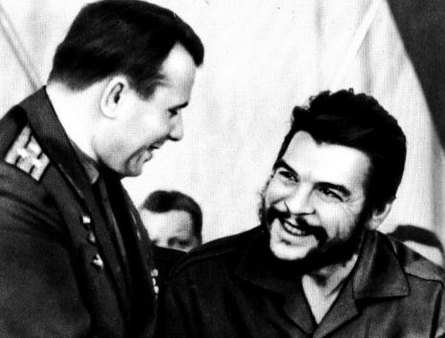
Ο Τσε συνομιλεί με τον σοβιετικό κοσμοναύτη Γιούρι Γκαγκάριν στη Μόσχα. Ο Γκαγκάριν υπήρξε ο πρώτος άνθρωπος που ταξίδεψε στο διάστημα, τον Απρίλιο του 1961.
Τσε Γκεβάρα: Ο άνθρωπος πίσω απ’ το μύθο
Του Νικολάου Μόττα.

Ήταν 5 Μαρτίου 1960 όταν ο φωτογραφικός φακός του Αλμπέρτο Κόρντα αποτύπωνε τη μορφή του Ερνέστο Τσε Γκεβάρα που έμελλε να μείνει στην αιωνιότητα. Έκτοτε, εκείνη η φωτογραφία αποτέλεσε για ολόκληρες γενιές το «εικόνισμα» του ασυμβίβαστου επαναστάτη. Πέρα όμως από το βλοσυρό και αποφασιστικό βλέμμα του γενειοφόρου αργεντίνου υπήρχε και ένας άλλος Ερνέστο. Αυτός της ευρυμάθειας και της ευαισθησίας. Πέρα απ’ τον commandante υπήρχαν και άλλες, περισσότερο ανθρώπινες, όψεις του Τσε: αυτή του πολιτικού στοχαστή, αλλά και του ποιητή, του φωτογράφου, του συζύγου και πατέρα.

Μέσα από την ενδελεχή μελέτη των λόγων και των γραπτών του Γκεβάρα προκύπτει μια αξιοσημείωτη ευρεία πολιτική και κοινωνική μόρφωση εξίσου σημαντική με τις στρατηγικές του ικανότητες στον ανταρτοπόλεμο. Αφοσιωμένος μαρξιστής και ταυτόχρονα λάτρης μιας πλειάδας πνευματικών έργων που εκτείνονται από τους αρχαίους έλληνες φιλοσόφους μέχρι την πολιτική κληρονομιά του Χοσέ Μαρτί και από την ποίηση του Πάμπλο Νερούδα μέχρι τις υπαρξιακές αναζητήσεις του Ζαν Πωλ Σαρτρ. O ασπασμός της μαρξιστικής ιδεολογίας από τον Γκεβάρα δεν ήταν αποτέλεσμα αποκλειστικά και μόνο της συνεχούς διεύρυνσης των κοινωνικών ανισοτήτων και του ιμπεριαλισμού που ο ίδιος, ως φοιτητής ιατρικής, είχε αντιληφθεί ταξιδεύοντας σε χώρες της λατινικής Αμερικής. Υπήρξε και απότοκος βαθύτερης σκέψης και προσωπικών αναζητήσεων, με στόχο την κατανόηση της επανάστασης ως μέσου για την κατάκτηση της σοσιαλιστικής κοινωνίας.

Χαρακτηριστικά τα όσα γράφει στο βιβλίο της «Αναπόληση: η ζωή μου με τον Che» η σύζυγος του αργεντίνου επαναστάτη Αλέϊδα Μαρτς: «Όλοι τον γνώριζαν για τα στρατηγικά του χαρίσματα, αλλά σχεδόν τίποτα δεν ήταν γνωστό για την ευρεία θεωρητική του κατάρτιση, για την καλλιέργεια του ήδη απ’ τα χρόνια της εφηβείας του». Εκτός λοιπόν από δεινός μαχητής στα βουνά της Σιέρρα Μαέστρα, στη ζούγκλα του Κονγκό και στη βολιβιανή ύπαιθρο, ο Τσε ήταν ένας ακούραστος αναγνώστης. Ακόμη και υπό τις πλέον δύσκολες συνθήκες. Θυμάται η Αλέϊδα Μάρτς: «Διάβαζε πολύ, όπως πάντα, αλλά τώρα (σ.σ. κατά τη διάρκεια του πολέμου στο Κονγκό) το ενδιαφέρον του στρεφόταν σε ακόμη περισσότερα αντικείμενα και η μελέτη του ήταν πιο βαθιά. Είναι απίστευτο πως εν μέσω τόσων δυσκολιών, σ’έναν αφιλόξενο τόπο και έχοντας πλήρη συνείδηση για το τι τον περίμενε, εξακολουθούσε να διαβάζει φιλοσοφία και διάφορα άλλα αναγνώσματα, που θα τον βοηθούσαν να αναπτύξει θεωρίες, ικανές να ενισχύσουν το μέλλον του σοσιαλισμού στον Τρίτο Κόσμο».

Ανάμεσα στα βιβλία που ζητούσε να έχει μαζί του ήταν μεταξύ άλλων: οι Τραγωδίες του Αισχύλου, Δράματα και Τραγωδίες του Σοφοκλή, Ιστορία του Ηροδότου, τα Ελληνικά του Ξενοφώντα, οι Διάλογοι και η Πολιτεία του Πλάτωνα, τα Πολιτικά του Αριστοτέλη, ο Δον Κιχώτης, ο Φάουστ του Γκαίτε, τα Άπαντα του Σαίξπηρ. Για τον Γκεβάρα, στον κόσμο του ανταρτοπόλεμου και της πάλης ενάντια στον ιμπεριαλισμό, υπήρχε χώρος και χρόνος για την ανάγνωση αρχαίας ελληνικής φιλοσοφίας, πολιτικών δοκιμίων και ποίησης. Άλλωστε, χωρίς τη γνώση, η δημιουργία του «νέου ανθρώπου» που οραματίστηκε ο Τσε – ενός ανθρώπου απαλλαγμένου από τον εγωκεντρισμό της καπιταλιστικής κοινωνίας – θα ήταν αδύνατο να γίνει πραγματικότητα.

Στο περιθώριο του πεδίου της μάχης και της πολιτικής, ο Ερνέστο έβρισκε το χρόνο για τις αγαπημένες του συνήθειες: την ανάγνωση και συγγραφή ποίησης, το ψάρεμα αλλά και τη φωτογραφία. Λίγοι γνώριζαν την αγάπη του να αποτυπώνει στιγμές της καθημερινότητας μέσα απ’ τον φωτογραφικό φακό. Πριν από τέσσερα χρόνια, το Κέντρο Μελετών Τσε Γκεβάρα (Centro de Estudios Che Guevara) υπό τη διεύθυνση της κόρης του Αλέϊδα Γκεβάρα, παρουσίασε μια κινητή έκθεση υπό τον τίτλο «Τσε, ο φωτογράφος» επιθυμώντας να καταστήσει γνωστή άλλη μια όψη του αργεντίνου επαναστάτη. Η Αλέϊδα Μαρτς γράφει γι’ αυτήν την πλευρά του Τσε: «Το ενδιαφέρον του για τη φωτογραφία, απ’ την εποχή που ήταν ακόμη έφηβος, ήταν τέτοιο που η τέχνη αυτή έγινε μόνιμη κι αχώριστη σύντροφος και βοηθός του στην προσπάθεια του να αιχμαλωτίσει εικόνες που σχετίζονται με τα ανθρωπιστικά του ενδιαφέροντα, κατά τη διάρκεια των ταξιδιών του στη λατινική Αμερική και σε άλλα μέρη του κόσμου».

Αχώριστη σύντροφος του όμως ήταν και η ποίηση. Η σύντροφος του διατηρεί ως πολύτιμο θησαυρό γράμματα που ο Ερνέστο της είχε στείλει από το εξωτερικό σε πολλά από τα οποία επέλεγε να εκφραστεί ποιητικά, συνδυάζοντας το χιούμορ με το ρεαλισμό της πραγματικότητας, την προσήλωση στο καθήκον της επανάστασης με τη νοσταλγία της οικογένειας που είχε αφήσει πίσω.

Αξίζει να παρατεθούν αποσπάσματα των δύο τελευταίων γραμμάτων που ο Τσε είχε στείλει στη σύζυγο του όντας στο δρόμο για τη Βολιβία, όπου λίγο καιρό αργότερα θα συναντούσε το θάνατο.

«Μοναδική μου,

Θα μπορούσα να σου πω ότι μου λείπεις τόσο που έχω χάσει τον ύπνο μου, αλλά ξέρω ότι δε θα με πίστευες, οπότε συγκρατούμαι. Είναι όμως κάποιες μέρες που η νοσταλγία ορμάει ασυγκράτητη και με κυριεύει. Τα Χριστούγεννα και την Πρωτοχρονιά, κυρίως, δεν ξέρεις πόσο μου έλειψαν τα τελετουργικά σου δάκρυα, κάτω από τούτον τον ουρανό με τα καινούργια άστρα, που μου θύμιζε πόσο λίγο έχω χαρεί τη ζωή στον προσωπικό τομέα. […] Για τη ζωή μου εδώ δεν έχω να σου πω πολλά ενδιαφέροντα, η δουλειά μου αρέσει αλλά απαιτεί απομόνωση και μερικές φορές γίνεται κουραστική. Μελετάω, όποτε μου μένει χρόνος, και πότε πότε ονειρεύομαι. Παίζω σκάκι, δίχως αξιόλογους αντιπάλους, και περπατάω αρκετά. Αδυνατίζω, λίγο απ’ τη νοσταλγία και λίγο απ’ τη δουλειά. Δώσε ένα φιλί στα κεφτεδάκια, και σ’όλους τους άλλους. Για σένα ένα φιλί έμπλεο αναστεναγμών και λοιπών θλιβερών, απ’ τον φτωχό και φαλακρό σου σύζυγο».

Πίσω απ’ τον ατρόμητο αντάρτη που πολεμούσε για την ελευθερία των λαών υπήρχε ένας ευαίσθητος σύζυγος και πατέρας τεσσάρων παιδιών. Η επιλογή του να αφήσει τη σιγουριά της Κούβας προκειμένου να στηρίξει έμπρακτα τους επαναστατικούς αγώνες άλλων εθνών ήταν μια απόφαση που σφράγισε το πεπρωμένο του. Απόφαση επώδυνη, καθώς η προσωπική και οικογενειακή ζωή θυσιάζονταν γιά τα ιδανικά της επανάστασης. Λίγες μέρες πριν αναχωρήσει για τη Βολιβία, ο Τσε – έχοντας μεταμορφωθεί για λόγους ασφαλείας σε ηλικιωμένο άνδρα – συνάντησε για τελευταία φορά τα παιδιά του. Μια συγκινητική στιγμή που περιγράφει στο βιβλίο της η Αλέϊδα Μαρτς:

«Λίγες μέρες πριν από την αναχώρηση του, τον μετέφεραν σε ένα ασφαλές σπίτι που βρισκόταν στην Αβάνα, μεταμορφωμένο ήδη σε γερό-Ραμόν, κι’ εκεί ζήτησε να δει τα παιδιά. […] Όταν έφτασαν τα παιδιά, τους τον σύστησα ως ένα στενό φίλο του μπαμπά τους που ήθελε να τους γνωρίσει. Φυσικά δε φαντάστηκαν ότι εκείνος ο άνδρας, που έδειχνε εξηντάρης, μπορούσε να είναι ο πατέρας τους. Ήταν μια στιγμή πολύ δύσκολη για τον Τσε αλλά και για μένα. Για εκείνον βέβαια ήταν εξαιρετικά επώδυνο το να βρίσκεται τόσο κοντά τους και να μην μπορεί να τους το πει, ούτε να τους φερθεί όπως ήθελε. Ήταν μία απ’ τις πιο σκληρές δοκιμασίες που χρειάστηκε να περάσει ποτέ του».

Ήταν τέλη του 1966. Λίγους μήνες αργότερα ο Ερνέστο Γκεβάρα θα έπεφτε αιχμάλωτος του βολιβιανού στρατού και των πρακτόρων της CIA. Το τι ακολούθησε είναι γνωστό σε όλους. Πριν την σύλληψη του είχε προλάβει να στείλει το τελευταίο ποίημα στην Αλέϊδα, με λέξεις που υποδηλώνουν μια προαίσθηση του τέλους που πλησίαζε:

«Πάω να οικοδομήσω τις ανοίξεις του αίματος και του γουδιού κι αφήνω, στο κενό της απουσίας μου, ετούτο το φιλί το δίχως γνωστή διεύθυνση. Δε μου έχουν ανακοινώσει, όμως, την κρατημένη θέση στη θριαμβευτική παρέλαση της νίκης και το μονοπάτι που βγάζει στο δρόμο μου είναι φωτοστεφανωμένο από δυσοίωνες σκιές. Αν προορίζουν για μένα τον σκοτεινό θώκο των τσιμέντων, φύλαξε τον στο ομιχλώδες αρχείο των αναμνήσεων, κατέφυγε σ’αυτόν τις νύχτες των δακρύων και των ονείρων…

Αντίο μοναδική μου, μην τρέμεις μπροστά στην πείνα των λύκων ούτε στις παγωμένες στέπες της απουσίας. Σ’έχω στο μέρος της καρδιάς και θα πορευτούμε μαζί ώσπου ο δρόμος να σβηστεί».

Στις 8 Οκτωβρίου 1967, η βολιβιανή κυβέρνηση και η Ουάσινγκτον θα αποφάσιζαν τη δολοφονία του Ερνέστο Τσε Γκεβάρα. Εκείνη τη μέρα, στην επαρχία Βαλεγκράντε της βολιβιανής υπαίθρου, οι σφαίρες έδωσαν τέλος στη ζωή ενός ανθρώπου. Του θνητού Ερνέστο Γκεβάρα ντε λα Σέρνα, ενός ανθρώπου με κοινές αδυναμίες και συναισθήματα. Δεν κατάφεραν όμως να σταματήσουν την ανάδειξη του θρύλου του Τσε, του συμβόλου της νεανικής επαναστατικότητας για ολόκληρες γενιές.

(Πρώτη δημοσίευση στο ιστολόγιο Sierra Maestra)

Αλμπέρτο Κόρντα (Alberto Korda)

Ο Αλμπέρτο Κόρντα ήταν ο φωτογράφος που απαθανάτισε τον Ερνέστο Γκεβάρα στην πλέον διάσημη εικόνα του – αυτήν του Guerillero Heroico. Η φωτογραφία ελήφθη στις 5 Μαρτίου 1960 στην Αβάνα της Κούβας και έκτοτε παρέμεινε σήμα-κατατεθέν του αργεντίνου επαναστάτη κάνοντας το γύρο του κόσμου.

Ο Κόρντα γεννήθηκε στις 14 Σεπτεμβρίου 1928 στην Αβάνα και πέθανε το Μάη του 2001 στο Παρίσι. Το αληθινό του όνομα ήταν Αλμπέρτο Ντίαζ Γουτιέρες. Υπήρξε στενός φίλος του Φιντέλ Κάστρο και προσωπικός του φωτογράφος από την εποχή της επανάστασης κατά του καθεστώτος Μπατίστα. Πριν την ενασχόληση του με τη φωτογραφία εργάστηκε σε πολλές διαφορετικές δουλειές. Στην αρχή της σταδιοδρομίας του εργάστηκε ως βοηθός φωτογράφου και μετέπειτα διακρίθηκε ως φωτογράφος μόδας. Αργότερα εγκατέλειψε την εμπορική φωτογραφία γιά να ασχοληθεί με το φωτορεπορτάζ (φωτοδημοσιογραφία). Από το 1959 εργάστηκε στην κουβανική εφημερίδα Revolución. Στα καθήκοντα του, ως ο «φωτογράφος της επανάστασης», ήταν να αποθανατίζει τον Τσε και τον Φιντέλ σε διάφορες στιγμές των δημόσιων δραστηριοτήτων τους. Χαρακτηριστική είναι η φωτογραφία του Τσε να ψαρεύει μαζί με τον Έρνεστ Χέμινγουέϊ.

Che’s ideas are absolutely relevant today: A speech by Fidel Castro (Part Five)

I say this because it is my deepest conviction that if his thought remains unknown it will be difficult to get very far, to achieve real socialism, really revolutionary socialism, socialism with socialists, socialism and communism with communists. I’m absolutely convinced that ignoring those ideas would be a crime. That’s what I’m putting to you. We have enough experience to know how to do things; and there are extremely valuable principles of immense worth in Che’s ideas and thought that simply go beyond the image that many people have of Che as a brave, heroic, pure man; of Che as a saint because of his virtues; as a martyr because of his selflessness and heroism. Che was also a revolutionary, a thinker, a man of doctrine, a man of great ideas, who was capable with great consistency of working out instruments and principles that unquestionably are essential to the revolutionary path.

Capitalists are very happy when they hear people talk about rent profit, interest, bonuses, superbonuses; when they hear about markets, supply and demand as elements that regulate production and promote quality, efficiency and all those things, for they say, “That’s my kind of talk, that’s my philosophy, that’s my doctrine,” and the emphasis that socialism may place on them makes them happy, for they know these are essential aspects of capitalist theory, laws and categories. We ourselves are being criticized by quite a few capitalists; they try to make people think that the Cuban revolutionaries are unrealistic, that the thing to do is go for all the lures of capitalism; that’s where they aim their fire. But we’ll see how far we get, even riding on the old nag full of sores, but correctly led, for as long as we don’t have anything better than the old nag. We’ll see how far we get in the rectification process with the steps we’re taking now. That’s why on this, the twentieth anniversary, I’m making an appeal for our party members, our youth, our students, our economists to study and familiarize themselves with Che’s political and economic thought.

Che is a figure with enormous prestige. Che is a figure whose influence will grow. Needless to say, those who feel frustrated or who dare to fight Che’s ideas or use certain terms to describe Che or depict him as a dreamer, as someone who is out of touch with reality, do not deserve any revolutionary’s respect. That’s why we want our youth to have that instrument, to wield that weapon, even if for the time being it only serves to say, don’t follow that mistaken path foreseen by Che; even if it only serves to increase our knowledge; even if it only serves to meditate or to delve deeper into our revolutionary thought. I sincerely believe that more than this ceremony, more than formal activities, more than all the honors, what we accomplish, is the best homage we can pay to Che. The work spirit that is starting to appear in so many places and that is evident in so many examples in this province: those workers in Viñales who are working twelve and fourteen hours building minidams, starting them and finishing them one right after the other, and building them at half what they otherwise would have cost, with the result that in comparison with other projects — were we to use a capitalist term, although Che was opposed to even using capitalist terms when analyzing questions of socialism — were we to use the term profitability, we could say that those men on the minidam construction brigade working in Viñales are more than 100 percent profitable — more than 100 percent profitable!

Che devoted absolute, total, priority attention to accounting, to analyzing expenditures and costs, cent by cent. Che could not conceive of building socialism and running the economy without proper organization, without efficient controls and strict account of every cent. Che could not conceive of development without an increase in labor productivity. He even studied mathematics to use mathematical formulas to implement controls and measure the efficiency of the economy. What’s more, Che even dreamed of computers being used in running the economy as an essential, fundamental and decisive way of measuring efficiency under socialism. And those men I have mentioned have made a contribution: for every peso spent, they produce two million. They and those working on the Guamá Dam, those working on the canal, those working on the thruway to Pinar del Río, those who are going to work on the Patate Dam, those who have started to work on roads and the water works in the city — there are a number of groups of workers who are carrying out real feats with pride, honor, discipline, loyalty to work. They are working with great productivity.

A few days ago, we met with a group of construction workers building an avenue in the capital. They’re all members of the party or the Union of Young Communists, and they’re outstanding workers, about 200 men in all. Rather than linking their wages to production norms — I don’t mean to say that this is negative, there are a number of fields where it is perfectly correct — since they do move about in powerful trucks and machines, we don’t have to tell them to work more but rather to work less. People like that are doing a lot, sometimes too much with too much effort. At times, we’d have to tell them to take less trips because at the proper speed they can’t make twenty-five trips with materials in a truck but twenty, because we don’t want them to get killed. What we’re interested in is not only what they do but the quality with which it is done. We told them we were much more interested in the quality than the quantity. Quantity without quality is a waste of resources; it’s throwing away work and materials.

Awareness of the need for water conservation, which had virtually died out in the shameful period when nothing was finished, is being regained, and the province of Pinar del Río is playing a leading role in this regard. The road brigades in the mountains of Pinar del Río are working with the same spirit, and the awareness of the need for water conservation is spreading all over the country with the desire to build roads and highways and improve the efficiency of our economy, factories, agriculture, hospitals and schools, to go full speed ahead with the economic and social development of the country. Fortunately, during these years we have trained a large number of people with a high degree of technical knowledge and experience — university graduates and intermediate-level technicians. How does this compare to what we had in the early years of the revolution? When Che headed the Ministry of Industry, how many engineers did the country have, how many technicians, designers, researchers, scientists? Now we must have about twenty times the number we had then, perhaps more. If he had been able to draw on the collective experience of all the cadres that we have now, who knows what we could have accomplished.

Let’s look at the medical sector alone. Back then, we had 3,000 doctors and now we have 28,000. Each year our twenty-one medical schools graduate as many doctors as the total number in the country at that time. What a privilege! What a power! What a force! As of the next year, we’ll be graduating more doctors than those who stayed in the country in the early years. Can we not do what we set our minds to in the field of public health? And what doctors they are! They work in the countryside, in the mountains, or in Nicaragua, Angola, Mozambique, Ethiopia, Vietnam, Kampuchea, or at the end of the world! Those are the doctors trained by the revolution! I’m sure Che would be proud, not of the shoddy things that have been done with such a two-bit profiteering mentality; he’d be proud of the knowledge and technology our people have, of our teachers who went to Nicaragua, and the 100,000 who offered to go! He’d be proud of our doctors willing to go anywhere in the world, or our technicians, of our hundreds of thousands of compatriots who have been on international missions!

I’m sure Che would be proud of that spirit just like we all are, but we cannot permit what we have built with our heads and hearts to be trampled on with our feet. That’s the point, that and the fact that with all the resources we have built up, with all that force, we should be able to advance and take advantage of all the potential opened up by socialism and the revolution to get people to move ahead. I would like to know if the capitalists have people like those I mentioned. They are extraordinary internationalists and workers; you have to talk to them to see how they think and feel, to see how deeply thy love their work, and this is not because they’re workaholics but because they feel the need to make up for lost time, time lost during the revolution, time lost during almost 60 years of neocolonial republic, time lost during centuries of colonialism.

We must regain this time! And hard work is the only way, not waiting 100 years to build 100 day-care centers in the capital when we can really do it in two; not waiting 100 years to build 350 all over the country when we can do in it three with our work; not waiting 100 years to solve the housing problem when we can do in a few years with our work, our stones, our sand, our materials, our cement, even with our oil and steel produced by workers. As I said this afternoon at the hospital ceremony, the year 2000 is just around the corner. We must set ourselves ambitious goals for 2000, not for the year 3000 or 2100 or 2050, and if someone suggests that we should, we must reply: “That may suit you, but not us! We have the historic mission of building a new country, a new society, the historic mission of making a revolution and developing a country; those of us who have had the honor and privilege of not just promoting development but a socialist development and working for a more humane and advanced society.”

To those who encourage laziness and frivolity, we will say, “We will live longer than you, no just better than you, or like we would live if everyone were like you. We will live longer than you and be healthier than you because with your laziness you will be sedentary and obese, you will have heart problems, circulatory ailments, and all sorts of other things, because work doesn’t harm your health, work promotes health, work safeguards health and work created man.” These men and women doing great things must become models. We could say that they’re being true to the motto, “We will belike Che!” They are working like Che worked or, as Che would have worked.

When we were discussing where this ceremony should be held, there were many possible places. It could have in the Plaza of the Revolution in the capital; it could have been in a province; it could have been in one of the many workplaces or factories that the workers wanted to name after Che. We gave the matter some thought and recalled this new and important factory, the pride of Pinar del Río, the pride of the country and example of what can be done with progress, study, education in this province, which in the past was so neglected and backward and now has young workers capable of running such a complex and sophisticated factory. We need only say that the rooms where the circuits are printed must be ten times cleaner than an operating room to meet the required standard. It was necessary to do such complex work, with such quality and good equipment, and Pinar del Río residents are doing it marvelously.

When we toured it we were deeply impressed and talked with many compañeros, the members of the Central Committee about what they were doing in the factory, which is advancing at a rapid pace; what was being done in construction. We realized the great future of this factory as a manufacturer of components, of vanguard technology, which will have a major impact on development and productivity, on the automation of production processes. When we toured your first-rate factory and saw the ideas you had which are being put into practice, we realized it would become a huge complex of many thousands of workers, the pride of the province and the pride of the country. In the next five years, more than 100-million pesos will be invested in it to make it a real giant. When we learned that the workers wanted to name it after Che because he was so concerned with electronics, computers and mathematics, the leadership of our party decided that this was where the ceremony marking the twentieth anniversary of Che’s death should be held, and that factory should be given the glorious and beloved name of Ernesto Che Guevara.

I know that its the workers, its young workers, its dozens and dozens of engineers, its hundreds of technicians will do honor to that name and work as they should. This doesn’t only mean being here fourteen, twelve, or ten hours, for often on certain jobs, eight hours of work well done is a real feat. We’ve seen compañeros, especially many women workers doing microsoldering, which is really difficult work that requires rigor and tremendous concentration. We’ve seen them, and it’s hard to imagine how these compañeros can spend eight hours doing that work and turn out up to 5,000 units daily.

Compañeros, don’t think that we feel that’s the only way to solve problems is to work twelve or fourteen hours a day. There are jobs where you can’t work twelve or fourteen hours. In some, even eight hours can be a lot. One day, we hope that not all workdays will be the same. We hope that in certain fields — if we have enough personnel, and we will if we employ them efficiently — we can have six-hour workdays. What I mean to say is that being true to Che’s example and name also means using the workday with the right pace, being concerned about high standards, having people do various tasks, avoiding overstaffing, working in an organized manner and developing consciousness. I’m sure that the workers of this factory will be worthy of Che’s name, just as I’m sure that this province was deserving of hosting the anniversary and will continue to be deserving. If there is something left to say tonight, it’s that despite our problems; despite the fact that we have less hard currency than ever before, for reasons we have explained in the past; despite the drought; despite the intensification of the imperialist blockade — as I see our people respond, as I see more and more possibilities open up, I feel confident, I feel optimistic, and I am absolutely convinced that we will do everything we set our minds to!

We’ll do it with the people, with the masses; we’ll do it with the principles, pride, honor of each and every one of our party members, workers, youth, peasants and intellectuals! I can proudly say that we are giving Che well-deserved tribute and honor, and if he lives more than ever, so will the homeland! If he is an opponent of imperialism more powerful than ever, the homeland will also be more powerful than ever against imperialism and its rotten ideology! And if one day we chose the path of revolution, of socialist revolution and of communism, the path of building communism, today we are prouder to have chosen that path because it is the only one that can give rise to men like Che and a people composed of millions of men and women capable of being like Che!

As [José] Martí said, whereas there are men without dignity, there are also men who carry inside them the dignity of many men! We might add that there are men who carry inside them the dignity of the world, and one of those men is Che!

Patria o muerte! [Homeland or death!]
Venceremos! [We will win!]