
Συντάκτης: Guevaristas
Ημερολόγια Μοτοσυκλέτας – Εισαγωγικό Σημείωμα (Μέρος Πρώτο)
 Του Σίντιο Βιτιέρ.
Αν υπάρχει ένας ήρωας στον αγώνα της Λατινικής Αμερικής για απελευθέρωση – από την εποχή του Μπολίβαρ [1] μέχρι τη δική μας – ο οποίος γοήτευσε νέους ανθρώπους από τη Λατινική Αμερική και από ολόκληρο τον κόσμο, ο ήρωας αυτός είναι ο Ερνέστο Τσε Γκεβάρα. Και, μολονότι μετά το θάνατο του έγινε ένας σύγχρονος μύθος, δεν έχει χάσει ακόμα τη νεανική ζωντάνια του. Το αντίθετο, ο μύθος του τόνισε ακόμα περισσότερο τη νεανικότητά του, η οποία, μαζί με την τόλμη και την αγνότητα του, φαίνεται ότι συνιστούν τη μυστική ουσία του χαρίσματος του. Ένας τέτοιος χαρακτήρας, για να γίνει μύθος, σύμβολο τόσο πολλών απεγνωσμένων ελπίδων, πρέπει να διαθέτει κάποια βαρύτητα, κάποια ιερότητα.
Η ιστορική ουτοπία χρειάζεται πρόσωπα για να την ενσαρκώσουν. Δεν πρέπει όμως να ξεχνάμε την καθημερινή φύση των ανθρώπων αυτών, που υπήρξαν παιδιά, έφηβοι και νέοι προτού αποκτήσουν τις ικανότητες εκείνες με τις οποίες μας καθοδηγούν. Δεν είναι ότι θέλω να θάψω την εξαιρετική τουςφύση στις κοινότοπες ή προσωπικές πλευρές της ζωής τους, αλλά ότι η γνώση αυτών των πρώτων, διαμορφωτικών σταδίων μάς δείχνει την αφετηρία της μεταγενέστερης πορείας τους. Αυτό ισχύει ιδιαίτερα στην περίπτωση του Τσε: η αφήγηση από τον ίδιο αυτού του πρώτου ταξιδιού που έκανε με το φίλο του Αλμπέρτο Γκρανάδο προσφέρει σε όσους αισθάνονται νέοι μια άμεση και χαρούμενη, σοβαρή και ταυτόχρονα σαρκαστική εικόνα του νεαρού άντρα, ώστε μπορούμε σχεδόν να δούμε το χαμόγελο του και να ακούσουμε τη φωνή και την ασθματική ανάσα του. Είναι νέος, όπως αυτοί, και γέμισε ολόκληρη τη ζωή του με νεανική ζωντάνια και ωρίμασε χωρίς να την αφήσει να χαθεί.
Αυτή η έκδοση των Ημερολογίων Μοτοσικλέτας, των σημειώσεων που περιγράφουν ένα ταξίδι που έκαναν χωρίς δισταγμό, πάνω στη θορυβώδη μοτοσικλέτα Ποδερόσα II (η οποία παρέδωσε το πνεύμα στη μέση του ταξιδιού, αφού όμως πρώτα μετέδωσε στην περιπέτεια έναν εύθυμο παλμό, που αισθανόμαστε κι εμείς), ελεύθεροι σαν τον άνεμο, με μόνο σκοπό να γνωρίσουν τον κόσμο, είναι αφιερωμένη σε όσους ανθρώπους δε ζουν τα νιάτα τους απλώς ως μια σειρά γεγονότων, αλλά με όλητην ψυχή και το πνεύμα τους. Στις πρώτες σελίδες, ο νεαρός άντρας που θα γινόταν ένας από τους γνήσιους ήρωες του εικοστού αιώνα μάς προειδοποιεί: «Αυτή δεν είναι μια αφήγηση ηρωικών κατορθωμάτων». Η λέξη «ηρωικών» ξεχωρίζει ανάμεσα στις άλλες, γιατί δεν μπορούμε να διαβάσουμε αυτές τις σελίδες χωρίς να έχουμεστο μυαλό μας το μέλλον του Τσε, μια εικόνα του πάνω στη Σιέρα Μαέστρα, μια εικόνα που έφτασε στην τελειότητα στην Κεμπράδα δελ Γιούρο της Βολιβίας [2]. Αν αυτή η νεανική περιπέτεια δεν ήταν το προοίμιο της διαμόρφωσης του επαναστάτη, οι σελίδες αυτές θα ήταν διαφορετικές και θα τις διαβάζαμε με διαφορετικό τρόπο, αν και δεν μπορούμε να φανταστούμε πώς. Το γεγονός ότι γνωρίζουμε πως είναι του Τσε – μολονότι τις έγραψε πριν γίνει ο Τσε – μας κάνει να πιστεύουμε ότι είχε ένα προαίσθημα σχετικά με τον τρόπο με τον οποίο πρέπει να διαβαστούν. Για παράδειγμα: Το πρόσωπο που έγραψε αυτές τις σημειώσεις «πέθανε» μόλις ξαναπάτησε το πόδι του στη γη της Αργεντινής και αυτός που τις τακτοποιεί και τις «ξαναχτενΐζει», «εγώ», δεν είμαι εγώ. Δεν είμαι ο ίδιος, εσωτερικά τουλάχιστον. Τούτη η άσκοπη περιπλάνηση στη «Μεγάλη Αμερική Μας» με άλλαξε περισσότερο απ’ ό,τι πίστευα.
Οι σελίδες αυτές είναι η μαρτυρία – το αρνητικό μιας φωτογραφίας, όπως το έθεσε επίσης – μιας εμπειρίας που τον άλλαξε, μιας πρώτης «αναχώρησης» προς τον έξω κόσμο, η οποία, όπως ητελευταία του αναχώρηση, ήταν δονκιχωτική όσο αφορά τον ημι-συνειδητό τρόπο που τη βίωσε και, όπως για τον Δον Κιχοτη, είχε το ίδιο αποτέλεσμα στο πεδίο της συνείδησης του. Ήταν το «πνεύμα ενός ονειροπόλου» που ξυπνάει. Κατά βάση, και με την τέλεια λογική του απρόβλεπτου, το ταξίδι τους έχει προορισμό το Βορρά, όπως και έγινε στην πραγματικότητα: το «αρνητικό μιας φωτογραφίας» της Βόρειας Αμερικής, τοοποίο αποτελούν η φτώχεια και τα αδιέξοδα της Νότιας Αμερικής, και την αληθινή γνώση του τι σημαίνει για εμάς η Βόρεια Αμερική. «Εκείνες τις στιγμές μάς διέφευγε το τεράστιο μέγεθος του εγχειρήματος μας. Βλέπαμε μόνο τησκόνη του δρόμου και εμάς τους δυο πάνω στη μοτοσικλέτα να καταβροχθίζουμε τα χιλιόμετρα στη φυγή μας προς το Βορρά». Αυτή η «σκόνη του δρόμου» δεν ήταν άραγε, μολονότι ο Τσε δεν το αντιλαμβανόταν, η ίδια σκόνη που ο Χοσέ Μαρτί [3] είδε όταν ταξίδεψε από την Γκουάιρα στο Καράκας «με μια κοινή μικρή άμαξα»; Δεν ήταν η δονκιχωτική σκόνη μέσα από την οποία εμφανίστηκαν τα φαντάσματα της αμερικανίκης λύτρωσης, «το φυσικό σύννεφο σκόνης που θα σηκωθεί όταν οι φοβερές αλυσίδες μας πέσουν στο χώμα;» [4]. Ο Μαρτί όμως ήταν από το Βορρά και ο Τσε πήγαινε προς αυτόν, ρίχνοντας φευγαλέες ματιές στο πεπρωμένο του, το οποίο βλέπουμε κι εμείς μέσα από τα ανέκδοτα και τις βινιέτες του. Ο Καμ Μπακ [5], ο μικρός σκύλος με το «ένστικτο του αεροπόρου», τον οποίο τόσο κωμικά μάς παρουσιάζει ο Τσε να χοροπηδάει γύρω από τη μηχανή στο δρόμο από τη Βίγια Γκεσέλ προς το Μιραμάρ, εμφανίζεται ξανά μετά από χρόνια στα βουνά της Σιέρα Μαέστρα σαν ένα κουτάβι πουπρέπει να στραγγαλιστεί εξαιτίας των «υστερικών γαβγισμάτων» του κατά τη διάρκεια μιας αποτυχημένης ενέδρας που στήθηκε με την ελπίδα να συλληφθεί ο [περιβόητος συνταγματάρχης του Μπατίστα] Σάντσες Μοσκέρα. «Μ’ έναν τελευταίο νευρικό σπασμό το κουτάβι έπαψε να κουνιέται. Κειτόταν εκεί, φαρδύ πλατύ, με το κεφαλάκι του πάνω στα κλαδιά». Στο τέλος όμως αυτού του συμβάντος από τα Επεισόδια του Επαναστατικού Πολέμου, ένας άλλος σκύλος εμφανίζεται στο χωριουδάκι του Mαρ Βέρδε. Ο Φέλιξ τον χάιδεψε στο κεφάλι και ο σκύλος τον κοίταξε. Ο Φέλιξ ανταπέδωσε το βλέμμα και τότε εκείνος κιεγώ ανταλλάξαμε μια ένοχη ματιά. Ξαφνικά έπεσε σιωπή. Νιώσαμε μια ανεπαίσθητη ανατριχίλα καθώς το μειλίχιο κι ωστόσο πονηρό βλέμμα του σκύλου φαινόταν να περιέχει μια υποψία μομφής. Εκεί, ενώπιον μας, μολονότι μας παρατηρούσε με τα μάτια ενός άλλου σκύλου, βρισκόταν το δολοφονημένο κουτάβι. Ο Καμ Μπακ ήταν αυτός που είχε επιστρέψει, δικαιολογώντας το όνομα του, θυμίζοντας μας όσα είπε ο Εσέκιελ Μαρτίνες Εστράδα, ο άλλος μεγάλος Αργεντινός, για το ημερολόγιο εκστρατείας του Χοσέ Μαρτί: Αυτές οι συγκινήσεις, αυτά τα αισθήματα δεν μπορούν να περιγραφούν ή να εκφραστούν με τη γλώσσα ποιητών και ζωγράφων, μουσικών και μυστικιστών πρέπει κανείς να τις… απορροφήσει χωρίς απόκριση, όπως κάνουν τα ζώα με τα στοχαστικά και εκστασιασμένα μάτια τους [6]. Μια σύγκριση των Επεισοδίων με τα Ημερολόγια Μοτοσικλέτας μάς δείχνει ότι, αν και είχαν περάσειπάνω από δέκα χρόνια, το δεύτερο υπήρξε λογοτεχνικό πρότυπο για το πρώτο. Το διακρίνει η ίδια μετριοπάθεια, η ίδια ειλικρίνεια, η ίδια φρεσκάδα, ακριβώς η ίδια σύλληψη των στιγμών η οποία προσδίδει ενιαίο χαρακτήρα σε κάθε σύντομο κεφάλαιο· και, βέβαια, η ίδια αταραξία πουδέχεται τα ευχάριστα και τα δυσάρεστα γεγονότα χωρίς έντονες εναλλαγές συναισθημάτων. Αυτό που αναζητείται δεν είναι η λογοτεχνική ικανότητα, αλλά η πιστή απόδοση των εμπειριών και η αφηγηματική αποτελεσματικότητα. Όταν επιτυγχάνονται και τα δύο, η ικανότητα ακολουθεί με τρόπο φυσικό, παίρνοντας τη θέση που της αναλογεί, χωρίς να τυφλώνει ούτε να ενοχλεί, αλλάσυνεισφέροντας με το δικό της τρόπο. Εδώ, με εξαίρεση μερικές στιγμές αδεξιότητας ή δισταγμού, το ύφος του Τσε έχει ήδη διαμορφωθεί. Τα χρόνια θα το εξευγένιζαν, όπως ο ίδιος εξευγένισε τη βούληση του με την ευχαρίστηση ενός καλλιτέχνη, αν και όχι με αυτή ενός χειριστή του λόγου: μια βουβή ντροπαλότητα τον ανάγκαζε να μη στέκεται πολύ στις λέξεις, αλλά να προχωρεί προς τηνποίηση της γυμνής εικόνας, την οποία το ανεπαίσθητο άγγιγμα του μετέτρεπε σε πραγματικότητα. Ο κύκλος «Εγώ – αυτό μέσα μου» ανοίγει και κλείνει συνεχώς, αφήνοντας χώρο για ένα ύφος πουπροτιμά να παραμένει αθέατο. Ο πεζός λόγος πάνω στη σελίδα ρίχνει φως, δεν επιμένει όμως υπερβολικά στην ανεπαίσθητα επιφανειακή αφήγηση. Κυλάει ανάμεσα στην περιγραφήσυναισθημάτων (στα Επεισόδια, «ο αποφασισμένος δολοφόνος άφηνε πίσω του καμένες καλύβες, θλίψη…») και αφηγήσεις, στις οποίες αναζητάει τον εαυτό του (στα Ημερολόγια, «Ο άνθρωπος, μέτροτων πάντων, μιλάει εδώ με το δικό μου στόμα και διηγείται με το δικό μου λεξιλόγιο αυτό που είδαν τα μάτια») και καμιά φορά φαίνεται σαν να μας κοιτάζει.
 Ο ζωντανός πεζός λόγος του Τσε δίνει χρώμα στα αντικείμενα μέχρι εκεί που φτάνει η ματιά του καισυχνά, αν το τοπίο το επιτρέπει, με μια προσωπική πινελιά: Ο δρόμος φιδοσέρνεται ανάμεσα στα χαμηλά βουνά, που μόλις προδιαγράφουν την αρχή της μεγάλης Κορδιλιέρας, και κατηφορίζει απότομα, για να καταλήξει στο χωριό, άχαρο και θλιβερό, ματριγυρισμένο από μεγαλοπρεπή βουνά σκεπασμένα με πυκνή βλάστηση. Το επεισόδιο της απόπειρας να κλέψουν κρασί, και άλλα ανάλογα, αποτελούν υπέροχα δείγματα επιδεξιότητας στην επιλογή λέξεων: Το γεγονός ήταν ότι είχαμε μείνει απένταροι, όπως πάντα, να σκεφτόμαστε ποια από τα χαμόγελα που είχαν υποδεχτεί τα μεθυσμένα μου καμώματα μπορεί να έκρυβαν το ειρωνικό «μα ποιον πας να κοροϊδέψεις;» Μια αίσθηση παράδοξου επιστρέφει. Στο κεφάλαιο «Παρακαμπτήριο εξερεύνηση»: «Η σκοτεινιά της νύχτας έφερνε μαζί της μύριους ανησυχητικούς θορύβους και μια παράξενη αίσθηση κενού σε κάθεβήμα που κάναμε μέσα στο σκοτάδι». Στα Επεισόδια: «Και τότε, την ώρα της ενέδρας, μια αλλόκοτησιγή επικράτησε για μια στιγμή. Όταν πήγε να μαζέψει τους νεκρούς μετά τους πρώτους πυροβολισμούς, δεν ήταν κανένας στον αυτοκινητόδρομο…» Η εικόνα ξεχειλίζει από την αφθονία καιταυτόχρονα τη σιωπή του ορατού κόσμου: Η πελώρια φιγούρα ενός ελαφιού διέσχισε σαν οπτασία το ποταμάκι, και το προφίλ του, ασημί από τοφεγγαρόφωτο, χάθηκε στη λόχμη. Ο παλμός της φύσης μάς συγκίνησε βαθιά (Ημερολόγια Μοτοσικλέτας). Η φωνή και η παρουσία του [του Φιντέλ] στο δάσος, που φωτιζόταν από τους φακούς, προσέλαβετόνους κίνησης και μπορούσες να δεις ότι ο ηγέτης μας άλλαζε τις ιδέες πολλών ανθρώπων (Επεισόδια). Μολονότι γίνεται αναφορά στη φωνή και στον τόνο του Φιντέλ, η σκηνή μάς φαίνεται σιωπηλή, σαν να την παρακολουθούμε από μακριά.
[1] Ο Σιμόν Μπολίβαρ ηγήθηκε αρκετών ένοπλων επαναστάσεων, βοηθώντας μεγάλο τμήμα της Λατινικής Αμερικής να αποκτήσει τηνανεξαρτησία του από την Ισπανία. Οραματιζόταν μια ομοσπονδία ισπανόφωνων νοτιοαμερικανικών κρατών.
[2] Το φαράγγι οτο οποίο η αντάρτικη ομάδα του Τσε έπεσε σε ενέδρα στις 8 Οκτωβρίου 1967 και ο ίδιος ο Τσε πιάστηκε όμηρος. Δολοφονήθηκε την επόμενη μέρα.
[3] Χοσέ Μαρτί, Κουβανός εθνικός ήρωας και ποιητής, συγγραφέας, ρήτορας και δημοσιογράφος. Ο Μαρτί ίδρυσε το Επαναστατικό Κόμμα Κούβας το 1892 για να πολεμήσει την ισπανική εξουσία και να αντιταχθεί στην νεο-αποικιο-κρατία των ΗΠΑ. Κήρυξε τον πόλεμο τηςανεξαρτησίας το 1895 και σκοτώθηκε στη μάχη.
[4] Χοσέ Μαρτί, Άπαντα, Αβάνα, εκδόσεις Editorial National de Cuba, 1963-73, τόμος 7, σ. 289-90.
[5] Το αγγλικό παρατσούκλι που έδωσε ο Ερνέστο στο μικρό σκύλο που πηγαίνει στην Τσιτσίνα, τη φιλενάδα του που κάνει διακοπές στο Μιραμάρ.
[6] Εσέκιελ Μαρτίνες Εστράδα, 0 Επαναστάτης Μαρτί, Αβάνα, εκδόσεις Casa de las Americas, 1967, σ. 414.
* Ο Σίντιο Βιτιέρ (Cintio Vitier, 1921-2009) ήταν βραβευμένος κουβανός ποιητής, συγγραφέας και μυθιστοριογράφος. Το κείμενο του δημοσιεύθηκε στο βιβλίο «The Motorcycle Diaries: Notes on a Latin American Journey». Στα ελληνικά κυκλοφόρησε από τις Εκδόσεις Ν.Σ. Λιβάνης (2004), μετάφραση: Ευάγγελος Κεφαλλονίτης.
Τα πρώτα χρόνια, 1928-1932
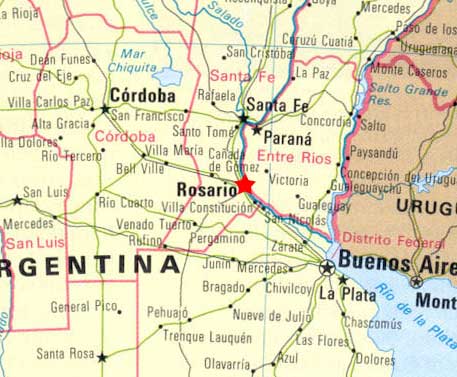
 Ερνέστο Γκεβάρα ντε λα Σέρνα Λιντς, Ροσάριο, Αργεντινή, 1929.
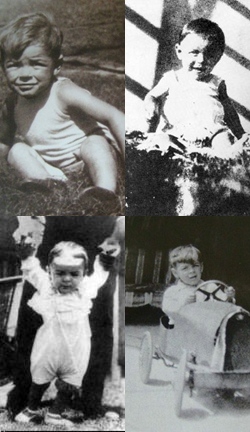 Στιγμές από την παιδική ηλικία του Ερνεστίτο.
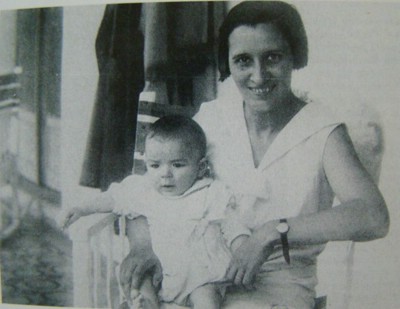 Στην αγκαλιά της μητέρας του, Σέλια ντε λα Σέρνα.
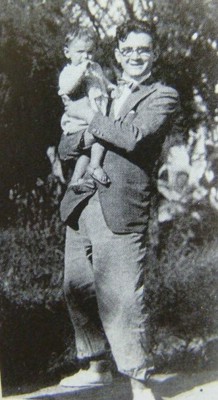 Με τον πατέρα του, Ερνέστο Γκεβάρα Λιντς.
Κούβα: Μοναδική περίπτωση ή πρωτοπόρος στον αγώνα κατά του Ιμπεριαλισμού; (Μέρος Πρώτο)
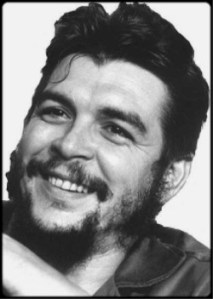 Του Ερνέστο Γκεβάρα.
Δεν είχαν ξανασυμβεί στην Αμερική γεγονότα με τόσο ασυνήθιστα χαρακτηριστικά με ρίζες και συνέπειες τόσο βαθιές για το πεπρωμένο των προοδευτικών κινημάτων της ηπείρου, όσο ο επαναστατικός μας πόλεμος. Ορισμένοι μάλιστα τον αποκάλεσαν το υπ’ αριθμόν 1 γεγονός στην ιστορία της Αμερικής και το τοποθετούν δίπλα στην τριλογία που αποτελούν η Ρώσικη Επανάσταση, η κοινωνική διαφοροποίηση που ακολούθησε την ήττα των χιτλερικών στρατευμάτων στην ανατολική Ευρώπη και η Κινέζικη Επανάσταση.
Και ενώ αυτό το κίνημα παρουσίαζε εξαιρετικές μεταπτώσεις στη μορφή και τις εκδηλώσεις του, ακολούθησε – και δεν θα μπορούσε να συμβεί αλλιώς – τις γενικές γραμμές όλων των μεγάλων ιστορικών γεγονότων που χαρακτηρίζονται από τον αγώνα τους κατά του αποικιοκρατικισμού και την μετάβασή τους προς τον σοσιαλισμό. Ορισμένοι κατά καιρούς, είτε από καλή πίστη, είτε από πολιτικό ενδιαφέρον, προσπάθησαν να δουν μέσα στην Κουβανική Επανάσταση μια σειρά αιτιών και ιδιαζόντων χαρακτηριστικών. Υπερβάλλουν στη σημασία και προχωρούν μάλιστα μέχρι στο να περιορίσουν τους συντελεστές προκειμένου να ερμηνεύσουν αυτά τα βαθιά κοινωνικά και ιστορικά γεγονότα. Μιλούν για την «ιδιάζουσα» μορφή της Κουβανικής Επανάστασης σε σύγκριση με τις γραμμές δράσης των άλλων προοδευτικών κομμάτων της Αμερικής. Βεβαιώνουν μάλιστα ότι η μορφή και οι δρόμου της Κουβανικής Επανάστασης είναι ένα μοναδικό γεγονός και ότι η ιστορική εξέλιξη των λαών στις άλλες χώρες της Αμερικής θα είναι διαφορετική.
Αναγνωρίζουμε ότι ξεχωριστοί συντελεστές έδωσαν στην Κουβανική Επανάστασης ιδιαίτερα χαρακτηριστικά. Είναι μια δεδομένη αλήθεια ότι κάθε επανάσταση περιέχει αυτό το είδος των ξεχωριστών συντελεστών. Αλλά δεν είναι το λιγότερο δεδομένο το γεγονός πως όλες οι επαναστάσεις υπακούουν εξίσου σε ορισμένους νόμους από τους οποίους οι κοινωνίες δεν μπορούν να ξεφύγουν. Ας αναλύσουμε λοιπόν αυτούς τους δήθεν «ιδιάζοντες» συντελεστές.
Ο πρώτος, ο πιο καινούργιος και ο σημαντικότερος ίσως είναι αυτή η φυσική δύναμη που ονομάζεται Φιντέλ Κάστρο Ρουζ, που πήρε σ’ ένα χρόνο ιστορικές διαστάσεις. Οι αρετές του τον κατατάσσουν δίπλα στις μεγαλύτερες φυσιογνωμίες της ιστορίας της Λατινικής Αμερικής. Ποιες είναι οι ιδιάζουσες συνθήκες που περιβάλουν την προσωπικότητα του Φιντέλ Κάστρο; Ποια είναι τα ιδιαίτερα γνωρίσματα της ζωής και του χαρακτήρα του που τον κάνουν να ακτινοβολεί πάνω στους συντρόφους του και εκείνους που τον ακολουθούν; Ο Φιντέλ έχει μια προσωπικότητα τόσο εξαιρετική, που θα γινόταν αρχηγός οποιουδήποτε κινήματος κι αν μετείχε, αυτό εξ άλλου γινόταν πάντα σ’ όλη του τη σταδιοδρομία, από τότε που ήταν φοιτητής, ως τη στιγμή που έγινε ο αρχηγός της χώρας μας και των καταπιεσμένων λαών της Λατινικής Αμερικής.
Έχει τις αρετές του μεγάλου οδηγού. Με την ικανότητά του να συνδέει, να ενώνει και να αντιστέκεται στη διαίρεση που αδυνατίζει. Με την επιδεξιότητά του να διευθύνει τη δράση του λαού σαν ανώτατος αρχηγός. Με την εξαιρετική του επιθυμία να ακούει πάντα τη θέληση του λαού, ο Φιντέλ Κάστρο έκανε περισσότερα από οποιονδήποτε στην Κούβα για να οικοδομήσει από το μηδέν αυτό το υπέροχο έργο που λέγεται σήμερα Κουβανέζικη Επανάσταση. Ασφαλώς κανείς δεν θα μπορούσε να ισχυριστεί πως οι πολιτικές και κοινωνικές συνθήκες στην Κούβα ήταν τελείως διαφορετικές από εκείνες που χαρακτηρίζουν τις άλλες χώρες της Αμερικής και ότι η Κουβανέζικη Επανάσταση έγινε εξ αιτίας αυτών των διαφορών. Όπως δεν θα μπορούσε να ισχυριστεί επίσης κανείς πως ο Φιντέλ έκανε την Επανάσταση παρ’ όλες αυτές τις διαφορές. Ο Φιντέλ οδήγησε της Επανάσταση στην Κούβα την ώρα και με τον τρόπο που την πραγματοποίησε συνειδητοποιώντας τις βαθιές πολιτικές αναστατώσεις που προετοίμαζαν το λαό για το μεγάλο άλμα στο δρόμο της Επανάστασης.
Υπήρχαν επίσης ορισμένες συνθήκες που, παρ’ όλο που δεν συμβαίνουν στην Κούβα ιδιαίτερα, θα είναι δύσκολα εκμεταλλεύσιμες από άλλους λαούς. Γιατί ο ιμπεριαλισμός, αντίθετα με άλλα προοδευτικά κόμματα παίρνει μαθήματα από τα λάθη του. Την κατάσταση που θα μπορούσαμε να θεωρήσουμε σαν ιδιάζουσα, είναι πως ο βορειοαμερικάνικος ιμπεριαλισμός ήταν απροσανατόλιστος και δεν ήταν σε θέση να αναμετρήσει το πραγματικό βάθος της Κουβανικής Επανάστασης. Έτσι μπορούν να εξηγηθούν πολλές από τις φανερές αντιφάσεις στη βορειοαμερικάνικη πολιτική. Τα μονοπώλια, όπως συμβαίνει σ’ αυτές τις περιπτώσεις, πίστεψαν καταρχήν πως πρόκειται για έναν διάδοχο του Μπατίστα, ακριβώς γιατί ήξεραν πως ο λαός δυσαρεστημένος, αναζητούσε επίσης κάποιον για μια επαναστατική προοπτική, κι ήταν ασφαλώς πολύ πιο έξυπνο και προνοητικό να αποτραβήξουν τον μικρό δικτάτορα που δεν χρειαζόταν πια, για να βάλουν στη θέση του «νέους» που σε καιρούς χαλεπούς θα ήταν πολύ πρόθυμοι να εξυπηρετήσουν τα συμφέροντα του ιμπεριαλισμού. Οι ιμπεριαλιστές έπαιξαν για ένα διάστημα αυτό το χαρτί. Και έχασαν θλιβερά. Πριν τη νίκη τούς ανησυχούσαμε, αλλά δεν μας φοβόντουσαν. Ή μάλλον έπαιζαν σε δυο καρέ, χρησιμοποιώντας την εμπειρία τους σ’ αυτό το διπλό παιχνίδι, στο οποίο, κατά παράδοση, δε μπορούσαν να χάσουν. Απεσταλμένοι του κράτους, μεταμφιεσμένοι σε δημοσιογράφους, ήρθαν πολλές φορές να βολιδοσκοπήσουν αυτή την άπρεπη επανάσταση, αλλά δεν κατάφεραν ποτέ να διαγνώσουν το παραμικρό σύμπτωμα του υποβόσκοντος κινδύνου. Όταν ο ιμπεριαλισμός θέλησε να αντιδράσει, όταν κατάλαβε πως η ομάδα των άπειρων νέων που παρήλαυνε θριαμβευτικά στους δρόμους της Αβάνας, είχε μια πολύ ξεκάθαρη γνώση του πολιτικού της καθήκοντος και την σταθερή απόφαση να οργανώσει τη ζωή της, ήταν πια πολύ αργά. Έτσι γεννήθηκε το Γενάρη του 1959 η πρώτη κοινωνική επανάσταση σ’ όλη τη ζώνη της Καραϊβικής και η πιο ουσιαστική από τις αμερικάνικες επαναστάσεις.
Δεν νομίζουμε πως είναι ιδιαίτερα ξεχωριστό το γεγονός ότι η αστική τάξη ή τουλάχιστον ένα μεγάλο μέρος της, φάνηκε ευνοϊκή στην επανάσταση κατά της τυραννίας και ότι ταυτόχρονα υποστήριξε και επιδίωξε κινήσεις που αποβλέπανε σε διαπραγματεύσεις που θα επέτρεπαν μια αντικατάσταση του Μπατίστα, από στοιχεία διατεθειμένα να ελέγχουν την Επανάσταση.
Παίρνοντας υπόψη τις συνθήκες που προκάλεσαν τον επαναστατικό πόλεμο και τις συγκεκριμένες πολιτικές δυνάμεις που ήταν εναντίον της τυραννίας δεν είναι περίεργο το ότι ορισμένα στοιχεία από τους λατιφουντίστες, υιοθέτησαν μια στάση ουδετερότητας ή τουλάχιστον όχι εχθρική απέναντι στις επαναστατικές δυνάμεις. Όπως είναι ευνόητο ότι η εθνική αστική τάξη τσακισμένη από τον ιμπεριαλισμό και την τυραννία είδε με κάποια συμπάθεια αυτούς τους νεαρούς ορεσίβιους να τιμωρούν το μισθοφόρο στρατό, όργανο στην υπηρεσία του ιμπεριαλισμού. Αυτή η δύναμη, η όχι επαναστατική πάντως, βοήθησε πράγματι την επανάσταση να κερδίσει την εξουσία.
Πηγαίνοντας ακόμα πιο μακριά, μπορούμε να προσθέσουμε ακόμα έναν ιδιάζοντα συντελεστή, που είναι η προλεταριοποίηση του λαού στο μεγαλύτερο τμήμα της κουβανέζικης γης, αποτέλεσμα της δράσης του μεγάλου κεφάλαιου στην Κούβα, της ημιμηχανοποίησης της γεωργίας που απαιτούσε μια οργάνωση και που είχε σα συνέπεια μια μεγαλύτερη ανάπτυξη ταξικής συνείδησης.Αυτό μπορούμε να το παραδεχτούμε. Αλλά πρέπει να δηλώσουμε εν ονόματι της αλήθειας, ότι το πρώτο έδαφος που κατέλαβε η αντάρτικη Στρατιά, που την αποτελούσαν οι επιζήσαντες της αποδεκατισμένης ταξιαρχίας που αποβιβάστηκε στη Γκράνμα, το κατοικούσε μια τάξη χωρικών, διαφορετικών από άποψη κοινωνικών καταβολών και παιδείας, από τους κατοίκους των περιοχών της μεγάλης ή ημιμηχανοποιημένης καλλιέργειας της Κούβας.
Η Σιέρρα Μαέστρα πραγματικά στάθηκε το πρώτο επαναστατικό κέντρο, το καταφύγιο όλων εκείνων των χωρικών που πολεμούσαν καθημερινά εναντίον των λατιφουντιστών. «Κατοικούσαν σε γη που ανήκε στο κράτος ή σε μεγάλους γαιοκτήμονες, ελπίζοντας να κερδίσουν ένα ψίχουλο γης, μια στάλα αγαθά. Έπρεπε να αγωνίζονται συνεχώς κατά των παράνομων φορολογιών ων στρατιωτών, πάντοτε συμμάχων των λατιφουντιστών. Ο ορίζοντάς τους δεν ξεπερνούσε την κατάκτηση ενός τίτλου ιδιοκτησίας. Οι χωρικοί στρατιώτες που πλαισίωναν το πρώτο μας αντάρτικο προήλθαν απ’ αυτή τη μερίδα της κοινωνικής τάξης, που εκδηλώνει σχεδόν επιθετικά την επιθυμία της για κατοχή γης και που εκφράζει με ιδανικό τρόπο το πνεύμα του «μικροαστού». Ο χωρικός πολεμά γιατί θέλει γη, γι’ αυτόν και για τα παιδιά του. Θέλει να την διευθύνει, να την πουλά και να πλουτίσει από τη δουλειά του».
«Παρά το «μικροαστικό» του πνεύμα ο χωρικός μαθαίνει πολύ γρήγορα, πως δεν μπορεί να ικανοποιήσει την επιθυμία του να γίνει κάτοχος γης, αν δεν σπάσει το σύστημα της ιδιοκτησίας στα λατιφούντια. Μια ριζική αγροτική μεταρρύθμιση, όμως είναι η μόνη που μπορεί να δώσε γη στους χωρικούς, θίγει άμεσα τα συμφέροντα των ιμπεριαλιστών, των μεγάλων γαιοκτημόνων και τους μεγαλοεπιχειρηματίες της ζάχαρης και της κτηνοτροφίας. Η αστική τάξη τρέμει μη θιγούν τα συμφέροντά της. Το προλεταριάτο δεν έχει παρόμοιους φόβους. Με αυτή την έννοια η γραμμή της Επανάστασης ενώνει τον εργάτη με το χωρικό. Οι εργάτες υποστηρίζουν τον αγώνα κατά των λατιφούντιων. Ο φτωχός χωρικός, αυτός που δέχεται τη γη, υποστηρίζει τίμια την επαναστατική εξουσία και την υπερασπίζεται εναντίον των εχθρών της ιμπεριαλιστών και επαναστατών.
Πιστεύουμε πως άλλου ιδιάζων συντελεστής δεν υπάρχει. Ας εξετάσουμε τώρα τις μόνιμες βάσεις κάθε κοινωνικού φαινομένου στην Αμερική, τις αντιθέσεις που έχουν δημιουργηθεί στους κόλπους των σύγχρονων κοινωνιών και οι οποίες προκαλούν διαφοροποιήσεις που μπορούν να πάρουν τις διαστάσεις μιας Επανάστασης σαν αυτή που έγινε στην Κούβα.
Κατ’ αρχήν, από χρονολογική άποψη, αν όχι κατά σειρά εκτίμησης, σήμερα υπάρχει το σύστημα των λατιφούντιων. Υπήρξε η βάση της οικονομικής εξουσίας της άρχουσας τάξης, όλη την περίοδο που ακολούθησε τις απελευθερωτικές και αντιαποικιακές επαναστάσεις του τελευταίου αιώνα. Αυτή η τάξη των γαιοκτημόνων, που υπάρχει σ’ όλες τις χώρες, είναι γενικά απληροφόρητη για τα κοινωνικά γεγονότα που κατευθύνουν τον κόσμο. Μερικές φορές οι πιο συνετοί και όσοι βλέπουν μακρύτερα από την τάξη των γαιοκτημόνων μυρίζονται τον κίνδυνο κι αρχίζουν να αλλάζουν τρόπο επένδυσης των κεφαλαίων τους, άλλοτε μηχανοποιώντας την αγροτική παραγωγή, μεταφέρουν ένα μέρος του πλούτου τους στη βιομηχανία ή γίνονται οι ίδιοι εμπορικού πράκτορες των μονοπωλίων. Εκείνη η πρώτη απελευθερωτική επανάσταση δεν κατέστρεψε τα λατιφούντια, που παραμείνανε σαν οικονομική βάση, διατηρώντας έτσι ένα αντιδραστικό στοιχείο που έσωζε την αρχή της δουλείας στην εργασία. Είναι ένα φαινόμενο που παρουσιάζεται χωρίς εξαίρεση σε όλες τις χώρες της Αμερικής και χρησιμεύει σαν υπόβαθρο όλων των αδικιών που έγιναν, από την εποχή που οι βασιλιάδες της Ισπανίας παραχωρούσαν αχανείς εκτάσεις στους ευγενέστερους από του κονκισταδόρους τους, αφήνοντας μόνο για τους «ιθαγενείς» μαύρους ή μιγάδες, όπως στην περίπτωση της Κούβας τα ριλέγκος (κρατική γη), το κομμάτι της γης δηλαδή που αφήνεται ανάμεσα σε τρεις μεγάλες κυκλικές εκτάσεις που συνορεύουν μεταξύ τους. Ο γαιοκτήμονας που στις περισσότερες χώρες καταλάβαινε πως δεν μπορούσε να ζήσει μόνος, συμμάχησε γρήγορα με τα μονοπώλια που ήταν βέβαια, οι ισχυρότεροι και σκληρότεροι δυνάστες στους αμερικάνικους λαούς.
Η Αμερική υπήρξε το πεδίο της μάχης για της μεγάλες ιμπεριαλιστικές εταιρείες. Στο τέλος του δεύτερου παγκοσμίου πολέμου – αυτός ο πόλεμος αποφασίστηκε σχεδόν αποκλειστικά προς όφελος των βορειοαμερικάνικων μονοπωλίων- και έπειτα οι ιμπεριαλιστές ανασκουμπώθηκαν για να ενισχύσουν την παράνομη κατοχή τους στις αποικίες τους και να τελειοποιήσουν το σύστημα κατά της λαθραίας εισχώρησης πολιτών και νέων αντιπάλων από άλλες ιμπεριαλιστικές χώρες. Όλα αυτά δημιούργησαν μια οικονομία τερατωδώς παραμορφωμένη, που οι οικονομολόγοι των καπιταλιστικών καθεστώτων εκφράζουν με μια άκακη λέξη που αποδεικνύει τη βαθιά συμπόνια που έχουν για μας οι «υποανάπτυκτοι». (Αποκαλούν τους δυστυχείς μας ινδιάνους, που εκμεταλλεύτηκαν, καταδίωξαν και καταδίκασαν στην άγνοια: οι «μικροί ινδιάνοι». Όλους τους ανθρώπους της μαύρης ράτσας και τους μιγάδες τους καταδικασμένους στην περιφρόνηση και στις διακρίσεις τους λένε οι «έγχρωμοι» και εφευρίσκουν τρόπους σαν άτομα και σαν σύνολα για να διχάζουν τις εργατικές μάζες στον αγώνα τους για ένα καλύτερο οικονομικό μέλλον).
Τι είναι η υποανάπτυξη;
Ένας νάνος με ένα τεράστιο κεφάλι και ένα γερό στήθος είναι υποανάπτυκτος με την έννοια πως τα αδύνατα πόδια του και τα κοντά χέρια του δεν ανταποκρίνονται στην υπόλοιπη ανατομία του. Είναι το τερατώδες προϊόν μιας ελαττωματικής διάπλασης που παραμόρφωσε την ανάπτυξή του. Είναι αυτό που στην πραγματικότητα είμαστε εμείς τελικά, οι ευγενώς επονομαζόμενοι «υποανάπτυκτοι» των αποικιών ή των εξαρτώμενων χωρών. Οι χώρες μας έχουν οικονομίες παραμορφωμένες από την ιμπεριαλιστική πολιτική που ανάπτυξε ανώμαλα τους βιομηχανικούς και γεωργικούς κλάδους κατά τέτοιο τρόπο ώστε να καταντήσουν συμπληρώματα των πολύπλοκων ιμπεριαλιστικών οικονομιών.
Η «υποανάπτυξη», ή παραμορφωμένη ανάπτυξη προκαλεί στις πρώτες ύλες μια επικίνδυνη ειδίκευση, που διατηρεί όλους τους λαούς κάτω από την απειλή της πείνας. Εμείς οι «υποανάπτυκτοι», είμαστε επίσης χώρες μονοκαλλιέργειας. Ένα μοναδικό προϊόν που η αβέβαιη πώλησή του εξαρτάται από μια μοναδική αγορά, η οποία επιβάλει και καθορίζει τους όρους, ιδού η μεγάλη συνταγή της ιμπεριαλιστικής οικονομικής κυριαρχίας που συναντιέται με το παλιό και αιώνιο ρωμαϊκό ρητό «διαίρει και βασίλευε».
Το σύστημα των λατιφουντίων ως προς τις σχέσεις του με τον ιμπεριαλισμό καθορίζει τέλεια τον ισχυρισμό «υποανάπτυξη» που έχει σαν αποτέλεσμα την ανεργία και τους χαμηλούς μισθούς. Το φαινόμενο των χαμηλών μισθών και της ανεργίας είναι ένας φαύλος κύκλος που δημιουργεί ακόμα χαμηλότερους μισθούς και μια ανεργία ακόμα μεγαλύτερη όσο οι αντιφάσεις του συστήματος οξύνονται. Πάντοτε στο έλεος των οικονομικών διακυμάνσεων δημιουργείται ένας κοινός παρανομαστής για τους λαούς της Αμερικής, από το Ρίο Μπράβο ως το Νότιο Πόλο. Αυτός ο κοινός παρανομαστής, που θα των τυπώσουμε με κεφαλαία, αποτελεί το σημείο εκκίνησης για όλους όσους ασχολούνται με αυτά τα κοινωνικά φαινόμενα και είναι η πείνα των ανθρώπων, η κατάπτωση του ατόμου πάντοτε στη διάθεση της εκμετάλλευσης, καταπιεζόμενου και διωκόμενου, η κούρασή του, του να πουλάει την ικανότητά του για εργασία από μέρα σε μέρα σε χαμηλές τιμές (μπροστά στον κίνδυνο να μεγαλώσει την ουρά των ανέργων) προκειμένου να αντληθεί το μεγαλύτερο δυνατό όφελος από κάθε ανθρώπινο κορμί και να σπαταληθεί στην πολυτέλεια των κεφαλαιοκρατών.
Διαπιστώνουμε λοιπόν, πως υπάρχουν στην Αμερική ουσιαστικοί και αναπόφευκτοι κοινοί παρανομαστές και δεν μπορούμε να ισχυριστούμε πως εξαιρούμαστε από κανέναν από αυτούς τους αλληλέγγυους συντελεστές. Το σύστημα των λατιφούντιων τόσο στη μορφή του της πρωτόγονης εκμετάλλευσης, όσο και στη μονοπωλιακή του γραμμή προσαρμόζεται στις νέες καταστάσεις και ευθυγραμμίζεται με τον ιμπεριαλισμό: αυτή η μορφή εκμετάλλευσης από το ξένο κεφάλαιο δημιουργεί μια οικονομία αποικιοκρατικού τύπου που ονομάστηκε κατ’ ευφημισμό «υποανάπτυξη».
Όλα αυτά υπήρχαν στην Κούβα. Υπήρχε επιπλέον η πείνα, το ποσοστό των ανέργων ήταν το ψηλότερο της λατινικής Αμερικής, ο ιμπεριαλισμός ήταν ακόμα πιο άγριος παρά σ’ οποιαδήποτε άλλη χώρα. Τα λατιφούντια ήταν το ίδιο πανίσχυρα όσο και σ’ οποιαδήποτε από τις άλλες αδελφές δημοκρατίες. Τι κάναμε εμείς για να απελευθερωθούμε από αυτό το παντοδύναμο ιμπεριαλιστικό σύστημα, με την ακολουθία του των κυβερνήσεων μαριονετών σε κάθε χώρα και τους μισθοφόρους στρατούς που αμύνονταν γι’ αυτό το πολύπλοκο σύστημα εκμετάλλευσης του ανθρώπου από τον άνθρωπο; Οι αντικειμενικές συνθήκες για τον αγώνα καθορίστηκαν από την πείνα του λαού και σαν αντίδραση εναντίον αυτής της πείνας από τη βία που προκαλούσε τη λαϊκή αντίδραση και από το κύμα του μίσους που η καταπίεση δημιουργούσε μόνη της. Οι υποκειμενικές συνθήκες έλειπαν στην Αμερική και το σημαντικότερο ήταν η συνείδηση μιας πιθανής νίκης κάτω από έναν σκληρό αγώνα εναντίον της ιμπεριαλιστικής δύναμης και των συνεταίρων της του εσωτερικού. Αυτές οι συνθήκες δημιουργήθηκαν από τον ένοπλο αγώνα μας, που βοήθησε να γίνει πιο συγκεκριμένη η ανάγκη μιας αλλαγής και επέτρεψε επίσης την ολοκληρωτική εξολόθρευση του στρατού (απαραίτητος όρος για κάθε πραγματική Επανάσταση) από τις λαϊκές δυνάμεις.
Η ένοπλή μας δύναμη που δημιουργείται κατά τις εκστρατείες κυρίεψε απ’ έξω τις πόλεις, ενώθηκε με την εργατική μάζα και διαμόρφωσε την πολιτική της συνείδηση, από την επαφή της μ’ αυτήν. Είναι αυτό δυνατόν να γίνει σε άλλες χώρες της λατινικής Αμερικής; Θα εξηγήσουμε τις δυσκολίες που, κατά τη γνώμη μας, θα κάμουν πιο επίπονους τους επαναστατικούς αγώνες στην Αμερική. Τονίσαμε ήδη, στην αρχή αυτού του άρθρου, ότι ορισμένοι συντελεστές μπορούν να θεωρηθούν σαν ιδιάζοντες: η συμπεριφορά του ιμπεριαλισμού που αιφνιδιάστηκε προς στιγμή από την Κουβανέζικη Επανάσταση και ως ένα ορισμένο σημείο τη στάση της εθνικής αστικής τάξης, επίσης αιφνιδιασμένης, που έβλεπε την αντάρτικη δράση με κάποια συμπάθεια, γιατί δεν είχε υποστεί λίγες ζημιές κι αυτή από τον ιμπεριαλισμό (αυτή η κατάσταση βαραίνει εξίσου και στις άλλες χώρες). Αλλά ο ιμπεριαλισμός κατάλαβε το μάθημα της Κούβας και δε θα αιφνιδιαστεί πια σε καμιά από τις είκοσι δημοκρατίες της Αμερικής. Αυτό είναι σημαντικό, γιατί αν ο κουβανέζικος απελευθερωτικός πόλεμος υπήρξε δύσκολος με τις συνεχείς μάχες που έδωσε επί δύο χρόνια, οι καινούριες μάχες που περιμένουν τους λαούς στα άλλα μέρη της λατινικής Αμερικής θα είναι αφάνταστα πιο δύσκολες. Οι Ηνωμένες Πολιτείες προσφέρουν συμπληρωματικά όπλα στις κυβερνήσεις των μαριονετών που βλέπουν να κινδυνεύουν. Υπογράφουν μαζί τους συμβάσεις υποταγής προκειμένου να διευκολύνουν με νόμιμα μέσα την καταπίεση, την ανάμιξη, ακόμη και την επέμβαση. Χωρίς να λογαριάσουμε ότι δραστηριοποιούν την εκγύμναση στρατού καταπίεσης με την πρόθεση να τον χρησιμοποιήσουν αποτελεσματικά σαν όργανο κατά του λαού.
(Το άρθρο δημοσιεύθηκε στο περιοδικό Verde Olivo το 1961).
Με τον Καμίλο Σιενφουέγος

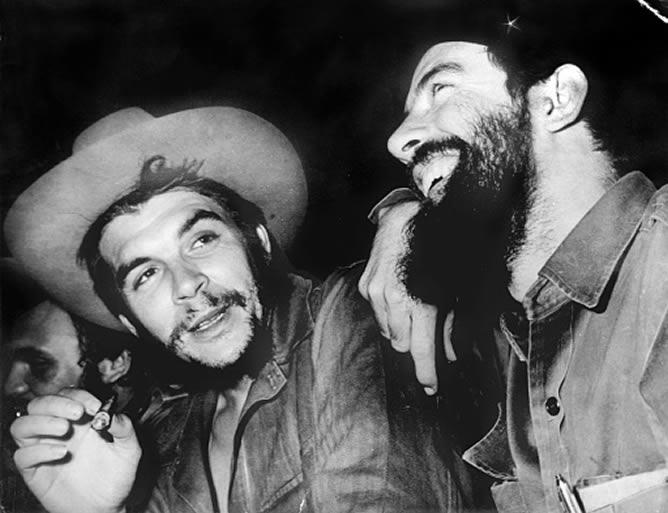
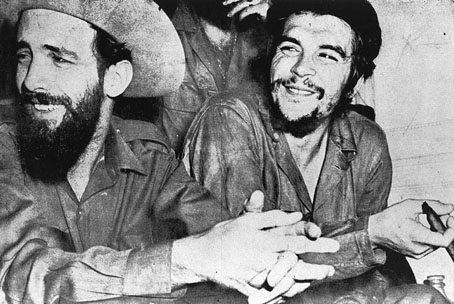
Ο Τσε με τον σύντροφο και φίλο Κομαντάντε Καμίλο Σιενφουέγος, εκ των πρωτεργατών της Κουβανικής Επανάστασης.
Βιβλιοκριτική: Che Guevara. His Revolutionary Legacy (Löwy & Besancenot)
 Κριτική στο βιβλίο: Che Guevara. His Revolutionary Legacy, των Olivier Besancenot και Michael Lowy. Monthly Review Press, 2009.
Της Κιτ Άνταμ Γουάινερ.
Το ότι η μορφή του Τσε Γκεβάρα βρίσκεται σε τοίχους και t-shirts σε όλον τον κόσμο δεν αποτελεί νέο. Στη Λατινική Αμερική, τις δεκαετίες του 1970 και ’80, ένας ταξιδιώτης μπορούσε να δει το πρόσωπο του Τσε ζωγραφισμένο με σπρέι σε τοίχους εργατικών συνοικιών. Στην επαναστατική Νικαράγουα το γκραφίτι με τη μορφή του Τσε απαγορεύτηκε επισήμως, όπως συνέβη με το τεράστιο κύμα «της τέχνης των τοίχων» υπέρ των Σαντινίστας και κατά των Κοντρας. Ως μάρτυρας ο Τσε συμβολίζει την προσήλωση και την ελπίδα για αντι-ιμπεριαλιστικές ομάδες ανταρτών σε όλην την Αμερική.
Τι είναι καινούργιο σήμερα στην εμπορικότητα της εικόνας του Τσε. Ο Τσε είναι υπερεκτεθιμένος σε ρουχισμό, μπιχλιμπίδια, ρολόγια. Εμφανίζεται σε γυμνάσια, κολλέγια και στους δρόμους του lower Μανχάταν. Για κάποιους η ατίθαση γενιάδα και ο μαύρος μπερές έχουν αναμφίβολα μια αισθητική αξία. Συμβολίζει ο Τσε την αντίσταση, την αντι-εξουσιαστική διάθεση ή κάποια προσωπική στάση που μόνο οι θαυμαστές του αντιλαμβάνονται;
Το βιβλίο των Ολιβιέρ Μπεσανσενό και Μάικλ Λεβί ‘Che Guevara: A Revolutionary Legacy’ αποτελεί μια ευπρόσδεκτη προσπάθεια να προχωρήσει ένα βήμα παραπέρα από τη «μόδα του Τσε» και να επανακαθορίσει το παρελθόν – μια επαναστατική σοσιαλιστική κληρονομιά βασισμένη στη ζωή και στις ιδέες του Τσε Γκεβάρα. Οι συγγραφείς είναι, αντίστοιχα, ένας γάλλος συνδικαλιστής και προεδρικός υποψήφιος της επαναστατικής αριστεράς (Μπεσανσενό) και ένας κορυφαίος θεωρητικός του μαρξισμού, συγγραφέας πάνω σε επαναστατικές παραδόσεις της Ευρώπης και της Λατινικής Αμερικής (Λεβί).
Για τους συγγραφείς «κλειδί» για την κατανόηση της κληρονομιάς του Τσε είναι η εκτίμηση του αντι-Σταλινισμού του. Ο Μπεσανσενό και ο Λεβί ανιχνεύουν τα χρόνια της πολιτικής συνειδητοποίησης του Τσε στη Γουατεμάλα του ρεφορμιστή Γιακόμπο Άρμπενς. Ο Τσε έγινε αυτόπτης μάρτυρας της αδυναμίας του ρεφορμιστικού προγράμματος να αντιμετωπίσει το ιμπεριαλιστικό πραξικόπημα του 1954 και, ως εκ τούτου, μετακινήθηκε ριζοσπαστικά προς την αριστερά. Αποσχίστηκε από τη «διεπίπεδη» ορθοδοξία των κομμουνιστικών κομμάτων – ένα σχήμα που υποστήριζε ένα μεταβατικό στάδιο «μπουζουαρζικής δημοκρατικής» ανάπτυξης ως προάγγελο της σοσιαλιστικής φάσης. Οι θεωρητικοί του κομμουνισμού προέτρεπαν το «ποίμνιο» τους να συγκρατούν τις επαναστατικές τους ορμές κατά το «δημοκρατικό στάδιο», να περιορίζουν την δραστηριότητα της εργατικής τάξης στον Τρίτο Κόσμο χάρην συμμαχιών με «εθνικές αστικές τάξεις» για τη δημιουργία δημοκρατικών, αντι-ιμπεριαλιστικών μπλοκ. Οι συνέπειες ήταν τραγικές. Η δημοκρατική κυβέρνηση της Γουατεμάλα θα ανατρέπονταν από ένα, στηριζόμενο από τις ΗΠΑ, πραξικόπημα το 1954. Παρομοίως, ένα στρατιωτικό πραξικόπημα θα διέλυε τη σοσιαλιστική κυβέρνηση του Σαλβαδόρ Αλιέντε στη Χιλή, στις 11 Σεπτέμβρη του 1973. Και στις δύο περιπτώσεις οι κομμουνιστές θα φυλακίζονταν η θα δολοφονούνταν εν ψυχρώ.
Παρ’ όλα αυτά υπήρχε μια λογική στη στρατηγική αυτή. Η συγκράτηση (απραξία) των κομμουνιστών «έδενε» με την σοβιετική εξωτερική πολιτική η οποία νοιάζοταν λιγότερο γιά την προώθηση επαναστάσεων στον κόσμο και περισσότερο με τη δημιουργία συμμαχιών στο πλαίσιο του Ψυχρού Πολέμου. Πρώτα και πάνω απ’ όλα, η Μόσχα επιθυμούσε τη διατήρηση ενός status quo ισορροπίας μεταξύ των αντίπαλων στρατοπέδων, ώστε να μην επιχειρούσαν επίθεση κατά της Σοβιετικής Ένωσης οι ιμπεριαλιστικές χώρες. Σε αυτό το πλαίσιο, η δημιουργία συμμαχιών με εθνικές καπιταλιστικές τάξεις που αποζητούσαν μια κάποια αυτονομία από την Ουάσινγκτον φαίνονταν λογική για την πολιτική των μεγάλων δυνάμεων. Παρ’ όλα αυτά, δεν είχε ουδεμία σχέση με την επανάσταση. Και σύμφωνα με τους Μπεσανσενό και Λεβί, ο Τσε το αντιλήφθηκε αυτό τη δεκαετία του 1950.
Συνοψίζοντας τα μαθήματα από την εμπειρία της Γουατεμάλα, ο Τσε κατέληξε σε μια άποψη παρόμοια με αυτήν που ο Λένιν είχε αναπτύξει στις «Θέσεις του Απρίλη» το 1917. Για τους Μπεσανσενό και Λεβί, με την απόρριψη της αντίληψης περί «επιπέδων» της δημοκρατικής μεταβατικής περιόδου ο Τσε αποσυνδέονταν από το όλο Σοβιετικό μοντέλο και αυτοτοποθετούνταν ολοκληρωτικά στο στρατόπεδο της αντι-σταλινικής επαναστατικής αριστεράς. Εξυπακούεται ότι ο επανακαθορισμός και η επανασύσταση της πραγματικής (πολιτικής) κληρονομιάς του Τσε ενδέχεται να έχει μεγάλο αντίκτυπο στην επαναθεμελίωση μιάς επαναστατικής αριστεράς στη Λατινική Αμερική. Όπως αναφέρουν, μάλλον ποιητικά, οι συγγραφείς, «πολλοί ισχυρίζονται ότι η φλόγα της ελπίδας μας έσβησε με την κατάρρευση της τραγικής και αιματηρής εμπειρίας γνωστής ως ‘υπαρκτός σοσιαλισμός’. Απαντούμε: ένα καντήλι ακόμη καίει – ο κομμουνισμός του Τσε Γκεβάρα».
Τα πολλαπλά πρόσωπα του Σταλινισμού
Ο Μπεσανσενό και ο Λεβί προσεγγίζουν το θέμα τους με μεγάλη φιλολογική ικανότητα και μια μοναδική αφοσίωση στην επανεκίνηση του επαναστατικού κινήματος στην Αμερική και διεθνώς. Είναι αποφασισμένοι να χρησιμοποιήσουν τα καλύτερα στοιχεία της κληρονομιάς του Τσε προκειμένου να πετύχουν αυτόν τον στόχο. Αυτή τους η αφοσίωση, παρ’ όλα αυτά, τους οδηγεί στην υποτίμηση της απόρριψης, εκ μέρους του Τσε, της δημοκρατίας ως αντίδοτο του «γραφειοκρατικού μαρξισμού» και στην αγνόηση αποδεικτικών στοιχείων που έρχονται σε αντίθεση με τον χαρακτηρισμό του Τσε ως αντιπάλου του Σταλινισμού. Η προσήλωση του Τσε στις ιδέες και τις πολιτικές του Στάλιν, αλλά και η τιμή προς το ίδιο το πρόσωπο του σοβιετικού ηγέτη, αποδεικνύεται ευρέως στο γραπτό έργο του Σαμ Φαρμπερ. Μια απόσχιση από το σοβιετικό μοντέλο της «σοσιαλιστικής» μετάβασης και ανάπτυξης δεν ισοδυναμεί με αντι-σταλινισμό. Αντιθέτως, αυτό που απέρριψε ο Τσε ήταν η περίοδος του «λαϊκού μετώπου» του σταλινισμού – το απέρριψε όμως χάρην ενός είδους υπερεθελοντισμού που είχε απομείνει από την «Τρίτη περίοδο» (1928-1934) του σταλινισμού, με τις ακραίες και καταστροφικές πολιτικές συλλογικοποίησης και τις ψεύτικες υποσχέσεις της επερχόμενης παγκόσμιας επανάστασης. Στην πραγματικότητα, τη δεκαετία του 1960 όταν η (ιδεολογική) απόσχιση του Τσε από τη Μόσχα δημοσιοποιήθηκε, ο σταλινικού τύπου κομμουνισμός δεν ήταν πλέον μονολιθικός. Μεταξύ των ηγετών του ήταν υπερασπιστές του επαναστατικού αγώνα, του δημοκρατικού ρεφορμισμού, αποσχισμένες φατρίες της Μόσχας και ακόμη η απόρροψη της κληρονομιάς του ίδιου του Στάλιν. Ο Μάο Τσε Τούνγκ και ο Χο Τσι Μινχ, για παράδειγμα, ηγήθηκαν αμφότεροι επαναστατικών κινημάτων τα οποία ανέτρεψαν φιλοιμπεριαλιστικά καθεστώτα και διέκοψαν τα σοβιετικά σχέδια για μεταπολεμική σταθερότητα. Η απόσχιση του Μάο από την ΕΣΣΔ πήρε δημόσιες διαστάσεις το 1960, οδηγώντας σε διαιρέσεις μεταξύ των κομμουνιστικών κομμάτων ανα τον κόσμο. Ο Μάο απέρριψε τον μη-επαναστατικό δρόμο της Μόσχας προς το σοσιαλισμό και, κατά την πολιτιστική επανάσταση, κύρηξε πόλεμο στον «γραφειοκρατισμό». Παρ’ όλα αυτά, ο Μάο ήταν ένας καθαρός σταλινιστής, οι ακρατικές καμπάνιες είχαν πτωτική πορεία και ποτέ δεν βασίστηκαν στην αυτό-οργάνωση των κινέζων εργατών. Και οι εξωτερικές του πολιτικές απεδείχθησαν όχι λιγότερο τυχοδιωκτικές από αυτές της Μόσχας. Το σχίσμα του 1948 μεταξύ των Τίτο και Στάλιν οδήγησε στην επιβίωση ενός κομμουνιστικού κράτους (σ.σ. Γιουγκοσλαβία) που απέρριπτε ανοιχτά την σταλινική κληρονομιά και τον ίδιο τον Στάλιν προσωπικά. Κατά ειρωνεία, τα μέσα που το κομμουνιστικό κόμμα της Γιουγκοσλαβίας χρησιμοποίησε προκειμένου να καταπιέσει τους γιουγκοσλάβους σταλινιστές των αρχών του ’50 περιελάμβαναν μυστική αστυνομία και δίκες αμφιβόλου αμεροληψίας.
Μεταξυ των γιουγκοσλάβων κομμουνιστών ηγετών ήταν διανοούμενοι οι οποίοι έκαναν φιλότιμες προσπάθειες να μελετήσουν τα προβλήματα της γραφειοκρατείας, την ανάγκη αποκεντροποίησης και την παραγωγή ποιοτικών καταναλωτικών αγαθών. Στα 1950 και 1960 αυτοί οι κομμουνιστές προέβαλαν το ζήτημα του ελέγχου των εργατών στο πλαίσιο του σοσιαλισμού και σχεδίασαν ένα σύστημα αυτό-οργάνωσης των ίδιων των εργατών. Παρ’ όλα αυτά, η αυτό-οργάνωση των εργατών ήταν γενικά ουτοπική. Οι εργάτες ποτέ δεν ήλεγχαν τον κεντρικό σχεδιασμό και δεν ήταν ποτέ σε θέση να αποφασίσουν πως θα έπρεπε να ρυθμιστεί ο γιουγκοσλαβικός σοσιαλισμός σε μακρο-οικονομικό επίπεδο. Την στιγμή που η Γιουγκοσλαβία παρέμεινε λιγότερο καταπιεστική σε σχέση με τις άλλες ανατολικοευρωπαϊκές χώρες, το ΚΚ της Γιουγκοσλαβίας δεν απεμπόλησε ποτέ το κεντρικό δόγμα του μονοκομματικού κράτους στο οποίο η εξουσία και τα προνόμοια της ηγεσίας του βασίζονταν στην αστυνομική δύναμη. Στην ίδια τη Συμφωνία της Βαρσοβίας αναδείχθησαν αρκετοί κομμουνιστές ηγέτες που αμφισβήτησαν την σταλινική ορθοδοξία. Στο πλαίσιο της «Αποσταλινοποίησης» του Νικίτα Χρουτσώφ και ωθούμενοι από κινήματα, εργάτες και διανοουμένους, οι Βλάντισλαβ Γκομούλκα (Πολωνία 1956), Ιμρέ Ναγί (Ουγγαρία 1956) και Αλεξάντερ Ντουμπτσεκ (Τσεχοσλοβακία 1968) αναδείχθηκαν μέσα από διαδικασίες σταλινικών κομμουνιστικών κομμάτων και αποκύρηξαν τον Σταλινισμό. Την στιγμή που ο αντι-σταλινισμός του Γκομούλκα ήταν πάντοτε σχεδιασμένος ώστε να διατηρεί το μονοκομματικό καθεστώς την ώρα που ευαγγελίζονταν μια ριζοσπαστικοποιημένη εργατική τάξη, οι Ναγί και Ντουμπτσεκ έδειχναν να πιστεύουν πως μπορούσαν να χτίσουν έναν πιο ανθρώπινο σοσιαλισμό στο πλαίσιο της κυριαρχίας του κομμουνιστικού κόμματος. Παρ’ όλα αυτά, κανένας τους δεν ήταν διατεθειμένος να αποσχιστεί από τα κομμουνιστικά κόμματα τους η να προσπαθήσει να δημιουργήσει αντιπολιτευόμενα εργατικά κόμματα. Και κανείς δεν ανέπτυξε σχεδιασμούς ικανούς να αντισταθούν στην σοβιετική ισχύ.
Είναι άξιο θαυμασμού ότι οι Μπεσανσενό και Λεβί επιχειρούν να χρησιμοποιήσουν τις πλέον επαναστατικές ιδέες του Τσε προκειμένου να «παρέμβουν» στη διαδικασία δημιουργίας μιας νέας αριστεράς στη Λατινική Αμερική. Ακόμη, η πρόσφατη αναβίωση αυτής της αριστεράς έρχεται σε μια περίοδο όπου τα ζητήματα της γραφειοκρατίας και του εργατικού ελέγχου συνεχίζουν να είναι πιεστικά και η κυρίαρχη άποψη μιας σοσιαλιστικής μετάβασης κινείται γύρω από ισχυρούς ηγέτες. Και το κομμουνιστικό κόμμα του Τσε συνεχίζει να κυβερνά την Κούβα. Ως εκ τούτου μια πιο κριτική ματιά στον αντι-σταλινισμό του Τσε είναι αναγκαία, λαμβάνοντας υπ’ όψη το ότι η πολιτική του κληρονομιά υιοθετείται από ποικιλλία συλλογικοτήτων όπως το κουβανικό κομμουνιστικό κόμμα, το ενωμένο σοσιαλιστικό κόμμα του Ούγκο Τσάβες και το EZLN των Ζαπατίστας στο νότιο Μεξικό. Η διαφορά μεταξύ του επαναστάτη Τσε και του φιλο-σταλινικού Τσε εμφανίζεται στο πρώτο κεφάλαιο, «Ένας μαρξιστικός ανθρωπισμός». Ο Μπεσανσενό και ο Λόουι κάνουν έκκληση για έναν σοσιαλισμό βασισμένο σε ανθρωπιστικές αρχές, θέτοντας ως προτεραιότητα το μετασχηματισμό των ανθρώπων σε ηθικά όντα απελευθερωμένα από το (καπιταλιστικό) νόμο της αξίας. Παραπέμπουν σε πολλά από τα γραπτά του Τσε προκειμένου να προβάλλουν την άποψη του ότι η επαναστατική διαδικασία μεταβάλλει τον ατομικιστή άνθρωπο σε «κολλεκτιβιστική» μονάδα ταγμένη στην σοσιαλιστική αλληλεγγύη. Θα έπρεπε όμως να αντιμετωπίσουμε τα όρια που έθεσε ο Τσε: Τι εννοούμε όταν μιλάμε για ανθρωπισμό σε μια μετα-επαναστατική κοινωνία; Πιο συγκεκριμένα – τι είναι ο ανθρωπισμός χωρίς δημοκρατία;
Όπως αναφέρει ο Σαμ Φαρμπερ, το αντίδοτο του Τσε στον ατομισμό και την απομόνωση της εργατικής τάξης ήταν ένας καθολικός εθελοντισμός μέσα από τον οποίο οι εργάτες καλούνταν να θυσιαστούν για το ευρύτερο σοσιαλιστικό καλό, όχι για τον εργατικό έλεγχο. Ήρθε αντιμέτωπος με προσπάθειες κουβανών εργατών να διατηρήσουν ανεξάρτητες ενώσεις και έπαιξε σημαίνοντα ρόλο στο «χτίσιμο» του μονοκομματικού κράτους.
Ο Μπεσανσενό και ο Λεβί ασκούν κριτική στον Τσε για την άρνηση του να αναγνωρίσει την εργατική δημοκρατία ως αντίδοτο στην γραφειοκρατία (54-57) όσο και για την υποστήριξη που παρείχε στη θανατική ποινή. Ασκούν κριτική όμως περιληπτικά και σύντομα χωρίς να εξετάζουν τις αντιφάσεις μεταξύ του ουμανισμού του Τσε και του ρόλου του στη δημιουργία μιάς κοινωνίας στην οποία οι εργάτες έχουν μικρό ρόλο στον καθορισμό του τι παράγουν, πόσο παράγουν και στην οποία παραμένουν απομονωμένοι.
Βρισκόμαστε ακόμη στην πρώϊμη φάση της επανασυγκρότησης μιάς αριστεράς που είναι και επαναστατικά σοσιαλιστική και δημοκρατική. Είναι αναπόφευκτο ότι οι επαναστάτες θα ανακαλύψουν ξανά παλαιούς στοχαστές και πρόσωπα χωρίς αναγκαστικά να υιοθετήσουν το σύνολο των απόψεων τους. Είναι όμως ουσιαστικό μαθαίνοντας από το παρελθόν να είμαστε, εν τέλει, τόσο κριτικοί όσο και θαυμαστές. Ο Τσε Γκεβάρα είχε θαυμαστές αρετές αλλά η υποστήριξη του προς έναν σοσιαλισμό που δεν περιελάμβανε την εργατική δημοκρατία συνέβαλε στις αποτυχίες της παλιάς αριστεράς και είναι ένας απ’ τους λόγους που η προσπάθεια που κάνουμε τώρα είναι αυτή της Επαναθεμελίωσης (της αριστεράς).
ATC 143, Νοέμβριος – Δεκέμβριος 2009.
(Το άρθρο δημοσιεύθηκε στην ιστοσελίδα της αμερικανικής σοσιαλιστικής ένωσης «Solidarity»).
Forty years since the death of Che Guevara (Part One)
9 October 2007.
By Alan Woods*.
Ernesto (“Che”) Guevara was executed by Bolivian troops near the town of La Higuera on 9 October 1967, following an ambush. The operation was planned by the CIA and organized by US Special Forces. On the 40th anniversary of his death it is appropriate that we make a balance sheet of this outstanding revolutionary and martyr. Alan Woods in a two-part article looks at the evolution of Che Guevara from his early days to the day he was killed.
Che – an icon?
Lenin wrote in State and Revolution: «What is now happening to Marx’s theory has, in the course of history, happened repeatedly to the theories of revolutionary thinkers and leaders of oppressed classes fighting for emancipation. During the lifetime of great revolutionaries, the oppressing classes constantly hounded them, received their theories with the most savage malice, the most furious hatred and the most unscrupulous campaigns of lies and slander. After their death, attempts are made to convert them into harmless icons, to canonize them, so to say, and to hallow their names to a certain extent for the ‘consolation’ of the oppressed classes and with the object of duping the latter, while at the same time robbing the revolutionary theory of its substance, blunting its revolutionary edge and vulgarizing it.»
After his death, Guevara became an icon of socialist revolutionary movements and a key figure of modern pop culture worldwide. The Alberto Korda photo of Che has become famous, appearing on t-shirts and protest banners all over the world. Thus, Che has become an icon of our times. After the death of Lenin, the leading clique of Stalin and Zinoviev created a cult around his figure. Against Krupskaya’s wishes, his body was embalmed and placed on public display in the mausoleum in Red Square. Later Krupskaya stated: «All his life Vladimir Ilyich was against icons, and now they have turned him into an icon.»
In November 2005, the German magazine Der Spiegel wrote about Europe’s «peaceful revolutionaries» whom it describes as the heirs of Gandhi and Guevara [!]. This is a complete travesty. We should form a «Society for the Protection of Che Guevara» against the people who have nothing to with Marxism, the class struggle or socialist revolution, and who wish to paint an entirely false picture of Che as a kind of revolutionary saint, a romantic petty bourgeois, an anarchist, a Gandhian pacifist or some other nonsense of the sort.
Our attitude to this outstanding revolutionary is similar to the attitude of Lenin towards Rosa Luxemburg. While not concealing his criticisms of the mistakes of Rosa Luxemburg, Lenin held Rosa Luxemburg in high regard as a revolutionary and internationalist. Here is what he wrote about Rosa, defending her memory against the reformists and Mensheviks:
«We shall reply to this by quoting two lines from a Russian fable, ‘Eagles may at times fly lower than hens but hens can never rise to the height of eagles’. [Rosa ] in spite of her mistakes […] was and remains for us an eagle. And not only will Communists all over the world cherish her memory, but her biography and her complete works will serve as useful manuals for training many generations of communists all over the world. ‘Since August 4, 1914, German social-democracy has become a stinking corpse’ ‑ this statement will make Rosa Luxemburg’s name famous in the history of the international working class movement. And, of course, in the backyard of the working class movement, among the dung heaps, hens like Paul Levi, Scheidemann, Kautsky and all their fraternity will cackle over the mistakes committed by the great Communist». (Lenin Collected Works, Vol. 33, p. 210, Notes of a Publicist, Vol. 33).
Early life
Ernesto Guevara de la Serna (14th June 1928 – 9th October, 1967), generally known as Che Guevara was a Marxist revolutionary – Argentinean by birth but an internationalist to the marrow of his bones. His ancestry, like that of most people in Latin America, was very mixed. Guevara is a Castilianized form of the Basque Gebara, signifying «from the Basque province of Araba (Alava)». One of his family names, Lynch, was Irish (the Lynch family was one of the 14 Tribes of Galway). The mixture of Basque and Irish blood is somewhat explosive!
Born into a middle class family, he did not suffer poverty and hunger like so many other children in Latin America. But he suffered from ill health. His naturally adventurous and rebellious spirit was connected with the fact that from an early age he had a serious asthmatic condition. He spent all his life trying to overcome this problem by deliberately driving himself to the limit. His steely determination to overcome all difficulties may also be traced back to this.
His humanitarian instincts first inclined him to the field of medicine. He obtained a medical degree. His specialty was dermatology and he was particularly interested in leprosy. At this time his horizons were no wider than those of most other middle class young men: to work hard, get a degree in medicine, get a good job, maybe do original research into medical science and advance human knowledge by some amazing discovery. About this period in his life he wrote:
«When I began to study medicine most of the concepts I now have as a revolutionary were then absent from my warehouse of ideals. I wanted to be successful, as everyone does. I used to dream of being a famous researcher, of working tirelessly to achieve something that could, decidedly, be placed at the service of mankind, but which was at that time all about personal triumph. I was, as we all are, a product of my environment.»
Like most young people, Ernesto loved to travel. He was seized by what the Germans call «Wanderlust». He wrote: «I now know by an unbelievable coincidence of fate that I am destined to travel.» Just how far he was to travel, and in what direction he would go, was as yet a sealed book to him. No doubt he would have made a conscientious physician, but the Wanderlust got the better of him. He took to the road, and did not to return to Argentina for many years. His adventurous nature induced him to set out on a long journey travelling rough throughout South America on a motorbike.
The link between medicine and his political ideals emerged in a speech that he delivered in the San Pablo leprosarium in Peru on the occasion of his 24th birthday. He said:
«Although we’re too insignificant to be spokesmen for such a noble cause, we believe, and this journey has only served to confirm this belief, that the division of America into unstable and illusory nations is a complete fiction. We are one single mestizo race with remarkable ethnographical similarities, from Mexico down to the Magellan Straits. And so, in an attempt to break free from all narrow-minded provincialism, I propose a toast to Peru and to a United America.»(Motorcycle Diaries, p.135).
Early awakenings
This journey was the beginning of a long odyssey that slowly opened his eyes to the reality of the world in which he lived. For the first time in his life he was brought into direct contact with the impoverished and oppressed masses of the continent. He witnessed at first hand the appalling conditions in which the majority of people lived. That such dreadful poverty should exist amidst all the natural wealth and beauty of this wonderful continent made a deep impression on his young mind.
These contradictions moved his passionate and sensitive nature and caused him to mediate on their causes. Che always had an eager and inquiring mind. That same intellectual fervour that he showed in his study of medicine was now turned to the study of society. The experiences and observations he had during these trips left a lasting mark on his consciousness.
Suddenly all his earlier ambitions for personal advancement seemed petty and uninteresting. After all, a doctor can cure individual patients. But who can cure the terrible disease of poverty, illiteracy, homelessness and oppression? One cannot cure cancer with an aspirin, and one cannot cure the underlying ills of society with palliatives and half-measures.
Slowly in the mind of this young man a revolutionary idea was maturing and developing. He did not immediately become a Marxist. Who does? He thought long and hard, and read widely: a habit that never left him to the end of his life. He began to study Marxism. Gradually, imperceptibly, but with a steely inevitability, he became convinced that the problems of the masses could only be remedied by revolutionary means.
Guatemala
His conversion to conscious Marxism received a decisive impetus when he went to Guatemala to learn about the reforms being implemented there by President Jacobo Arbenz Guzmán. In December 1953 Che arrived in Guatemala where Guzmán headed a reformist government, which was attempting to carry out a land reform and demolish the latifundia system.
Even before arriving in Guatemala Guevara was a committed revolutionary, although his views were still in a formative stage. This is shown by a letter written in Costa Rica on 10 December 1953, in which he says: «En Guatemala me perfeccionaré y lograré lo que me falta para ser un revolucionario auténtico.» («In Guatemala I will perfect myself and gain everything I still lack to be a real revolutionary»: Guevara Lynch, Ernesto. Aquí va un soldado de América. Barcelona: Plaza y Janés Editores, S.A., 2000, p. 26.).
But the United Fruit Company and the CIA had other ideas. They organized a coup attempt led by Carlos Castillo Armas, with US air support. Guevara immediately joined an armed militia organized by the Communist Youth; but was frustrated with the group’s inaction. After the coup, the arrests began and Che had to seek refuge in the Argentine consulate where he remained until he received a safe-conduct pass. He then decided to make his way to Mexico.
His experience of the US-sponsored coup against Arbenz confirmed him in his views and led him to draw certain conclusions. It concentrated Che Guevara’s mind on the role of the United States in Latin America. Here was an imperialist power that was a bulwark of all the reactionary forces throughout the continent. Any government that tried to change society would inevitably face the implacable opposition of a powerful and ruthless enemy.
After the victory of the CIA-inspired coup, Che was forced to flee to Mexico where, in 1956, he joined Fidel Castro’s revolutionary 26th of July Movement, which was engaged in a ferocious struggle against the dictatorship of General Fulgencio Batista in Cuba. The two men seemed to strike up an immediate rapport. Castro needed reliable men and Che needed an organization and a cause for which to fight.
Che had seen with his own eyes the fatal weakness of reformism and this confirmed in him the belief that socialism could only be achieved through armed struggle. He arrived in Mexico City in early September 1954, and entered into contact with Cuban exiles whom he had met in Guatemala. In June 1955 he met first Raúl Castro, and then his brother Fidel, who had been amnestied from prison in Cuba, where he had been confined after the failure of the assault on the Moncada Barracks.
Che immediately joined the 26th of July Movement that was planning to overthrow the dictatorship of Fulgencio Batista. At first Che was supposed to play a medical role. His poor health (he suffered from asthma all his life) did not suggest a warrior’s constitution. Nevertheless, he participated in military training side by side with the other members of the Movement, and proved his worth.
Granma
On November 25th, 1956, the cabin cruiser Granma set out from Tuxpan, Veracruz heading for Cuba, loaded with revolutionaries. It was an old ship and it was carrying many more people than it was designed for. It nearly sank in the heavy weather that reduced many of the passengers to severe seasickness. This was only the beginning of their problems.
The expedition was almost destroyed right at the outset. They landed in the wrong place and were caught in the swamps. They were attacked by government troops soon after landing, and about half of the rebels were killed or executed after being captured. Only 15-20 survived. This battered and depleted force somehow managed to re-group and escape into the Sierra Maestra Mountains from where they waged a guerrilla war against the Batista dictatorship.
Despite the initial setback, the rebels had struck a courageous blow, which resonated in the hearts and minds of the masses and especially the youth. New recruits filled up their depleted ranks. The guerrilla war spread throughout eastern Cuba. Che had been taken on as a medic, but in the heat of battle he had to make up his mind whether he could serve the cause best as a doctor or a fighter. He decided:
«Perhaps this was the first time I was confronted with the real-life dilemma of having to choose between my devotion to medicine and my duty as a revolutionary soldier. Lying at my feet were a knapsack full of medicine and a box of ammunition. They were too heavy for me to carry both of them. I grabbed the box of ammunition, leaving the medicine behind « (Quizás esa fue la primera vez que tuve planteado prácticamente ante mí el dilema de mi dedicación a la medicina o a mi deber de soldado revolucionario. Tenía delante de mí una mochila llena de medicamentos y una caja de balas, las dos eran mucho peso para transportarlas juntas; tomé la caja de balas, dejando la mochila ….»)
The main strength of the rebellion lay in the chronic weakness of the old regime, which was internally rotted with corruption and decay. Despite the support, money and arms of US imperialism, Batista was unable to check the advance of the revolution. His soldiers were unwilling to risk their lives to defend a diseased regime. Weakened and demoralized by a series of ambushes in the heights of the Sierra Maestra, at Guisa and Cauto Plains, the army was already thoroughly demoralized when the final offensive was launched.
In this campaign Che became a Comandante, gaining a reputation for courage, bravery and military skill. He was now second only to Fidel Castro himself. In the final days of December 1958, Comandante Guevara and his column of fighters headed west for the final push towards Havana. This column undertook the most dangerous tasks in the decisive attack on Santa Clara. In a speech given in Palma Soriano on December 27, 1983), Castro pointed out the importance of this offensive:
«We established our defensive line on the Cautillo River. We had Mapos surrounded, but there was still Palma. There were approximately 300 enemy soldiers. We had to take Palma. We were also anxious to take the arms that were to be found in Palma, because when we left La Plata, in the Sierra Maestra, because of the latest offensive, we left with 25 armed soldiers and 1,000 unarmed recruits. We armed those troops along the way. We armed them during the fighting, but we really finished fully arming them in Palma.»
The final orders to the rebel army were issued from Palma on January 1, 1959. But the final blow that finished off the dictatorship was the general strike of the workers of Havana. The whole edifice was collapsing like a house of cards. Batista’s generals were attempting to negotiate a separate peace with the rebels. When he learned of this, the dictator realized that the game was up and fled to the Dominican Republic on New Year’s Day, 1959.
In power
The old bourgeois state had been smashed and a new power was formed, or rather improvised, on the basis of the guerrilla army. Power now passed into the hands of the guerrilla army. Marxists all over the world rejoiced at the victory of the Cuban Revolution. This was a heavy blow stuck at imperialism, capitalism and landlordism on the doorstep of the most powerful imperialist state in history. It gave hope to the oppressed masses everywhere. Yet the way in which it took place was different to the Russian Revolution of October 1917. There were no soviets and the working class, although it had ensured the final victory of the Revolution through a general strike, did not play a leading role.
There are some who argue that this is irrelevant, that every revolution is different, that there cannot be a model that is applicable to all cases, and so on. To some extent this is true. Every revolution has its own concrete features and characteristics that correspond to the different concrete conditions, class balance of forces, history and traditions of different countries. But this observation by no means exhausts the question.
«The dictatorship of the proletariat»
Marx explained that the workers cannot simply lay hold of the old state apparatus and use it to change society. He developed his theory of workers’ power in The Civil War in France: Address of the General Council of the International Working Men’s’ Association, 1871. What is the essence of this theory? Marx explained that the old state could not serve as an instrument to change society. It had to be destroyed and replaced with a new state power – a workers’ state – that would be completely different to the old state machine, «the centralized state power, with its ubiquitous organs of standing army, police, bureaucracy, clergy, and judicature». It would be a semi-state, to use Marx’s expression, dedicated to its own disappearance:
«The Commune was formed of the municipal councillors, chosen by universal suffrage in the various wards of the town, responsible and revocable at short terms. The majority of its members was naturally working men, or acknowledged representatives of the working class. The Commune was to be a working, not a parliamentary body, executive and legislative at the same time.
«Instead of continuing to be the agent of the Central Government, the police was at once stripped of its political attributes, and turned into the responsible, and at all times revocable, agent of the Commune. So were the officials of all other branches of the administration. From the members of the Commune downwards, the public service had to be done at workman’s wage. The vested interests and the representation allowances of the high dignitaries of state disappeared along with the high dignitaries themselves. Public functions ceased to be the private property of the tools of the Central Government. Not only municipal administration, but the whole initiative hitherto exercised by the state was laid into the hands of the Commune.
«Having once got rid of the standing army and the police – the physical force elements of the old government – the Commune was anxious to break the spiritual force of repression, the «parson-power», by the disestablishment and disendowment of all churches as proprietary bodies. The priests were sent back to the recesses of private life, there to feed upon the alms of the faithful in imitation of their predecessors, the apostles.» (Marx, The Civil War in France, The Third Address, May, 1871 [The Paris Commune])
This bears absolutely no relation to the bureaucratic totalitarian regime of Stalinist Russia where the state was a monstrous repressive power standing above society. Even the word «dictatorship» in Marx’s day had an entirely different connotation to that which we attach to it today. After the experience of Stalin, Hitler, Mussolini, Franco and Pinochet the word dictatorship signifies concentration camps, the Gestapo and the KGB. But Marx actually had in mind the dictatorship of the Roman Republic, whereby in a state of emergency (usually war) the usual mechanisms of democracy were temporarily suspended and a dictator ruled for a temporary period with exceptional powers.
Far from a totalitarian monster, the Paris Commune was a very democratic form of popular government. It was a state so constructed that it was intended to disappear – a semi-state, to use Engels’ expression. Lenin and the Bolsheviks modelled the Soviet state on the same lines after the October Revolution. The workers took power through the soviets, which were the most democratic organs of popular representation ever invented.
Despite the conditions of terrible backwardness in Russia the working class enjoyed democratic rights. The 1919 Party programme specified that, «all the working masses without exception must be induced to take part in the work of state administration». Direction of the planned economy was to be mainly in the hands of the trade unions. This document was immediately translated into all the main languages of the world and widely distributed. However, by the time of the Purges in 1936 it was already regarded as a dangerous document and all copies of it were quietly removed from all libraries and bookshops in the USSR.
In any revolution where the leading role is not played by the working class but other forces, certain things will inevitably flow. There is always a tendency for the state to rise above the rest of society and even the most dedicated people can be corrupted or lose contact with the masses under certain circumstances. That is why Lenin devised his famous four conditions for workers’ power:
i) Free and democratic elections with right of recall of all officials.
ii) No official to receive a higher wage than a skilled worker.
iii) No standing army but the armed people.
iv) Gradually, all the tasks of running society to be done by everybody in turn (when everybody is a bureaucrat nobody is a bureaucrat).
These conditions were not a caprice or an arbitrary idea of Lenin. In a nationalized planned economy it is absolutely necessary to ensure the maximum of participation of the masses in the running of industry, society and the state. Without that, there will inevitably be a tendency towards bureaucratism, corruption and mismanagement, which can ultimately undermine and destroy the planned economy from within. That is just what happened to the USSR. The points raised by Lenin have an important bearing on the events in Cuba and on Che’s own evolution.
Revolutionary minister
Che occupied various posts in the revolutionary administration. He worked at the National Institute of Agrarian Reform, and was President of the National Bank of Cuba, when he signed banknotes with his nickname, «Che». All this time, Guevara refused his official salaries of office, drawing only his lowly wage as an army comandante.
This little detail tells us a lot about the man. He maintained that he did this in order to set a «revolutionary example». In fact, he was following to the letter the principle laid down by Lenin in State and Revolution that no official in the Soviet state should receive a salary higher than a skilled worker. This was an anti-bureaucratic measure. Lenin, like Marx, was well aware of the danger of the state raising itself above society and that this danger also existed in a workers’ state.
Taking as his point of departure Marx and Engels’ analysis of the Paris Commune, Lenin put forward four key points to fight bureaucracy in a workers’ state in 1917 to which we have already referred to above.
«We shall reduce the role of state officials,» wrote Lenin, «to that of simply carrying out our instructions as responsible, revocable, modest paid ‘foremen and accountants’ (of course, with the aid of technicians of all sorts, types and degrees). This is our proletarian task, this is what we can and must start with in accomplishing the proletarian revolution.» (LCW, Vol. 25, p. 431.).
During the first months of Soviet rule the salary of a People’s Commissar (including Lenin himself) was only twice the minimum subsistence wage for an ordinary citizen. Over the next years, prices and the value of the ruble often changed very rapidly and wages altered accordingly. At times the figures were quite astonishing – hundreds of thousands and millions of rubles. But even under these conditions Lenin made sure that the ratio between lowest and highest salaries in state organizations did not exceed the fixed limit – during his lifetime the differential apparently was never greater than 1:5.
Of course, under conditions of backwardness, many exceptions had to be made which represented a retreat from the principles of the Paris Commune. In order to persuade the «bourgeois specialists» (spetsy) to work for the Soviet state, it was necessary to pay them very large salaries. Such measures were necessary until the working class could create its own intelligentsia. In addition, special «shock worker» rates were paid for certain categories of factory and office workers, and so on.
However, such compromises did not apply to Communists. They were strictly forbidden to receive more than a skilled worker. Any income they received in excess of that figure had to be paid over to the Party. The chair of the Council of People’s Deputies received 500 rubles, comparable to the earnings of a skilled worker. When the office manager of the Council of People’s Deputies, V. D. Bonch-Bruevich paid Lenin too much in May 1918, he was given «a severe reprimand» by Lenin, who described the rise as «illegal».
Due to the isolation of the revolution, and the need to employ bourgeois specialists and technicians the differential was increased for these workers – they could earn a wage 50 per cent more than that received by the members of the government. Lenin was to denounce this as a «bourgeois concession», which should be reduced as rapidly as possible.
Not only in theory but in practice, Che adhered to similar revolutionary principles.
Che versus Stalinism
Che Guevara was an instinctive revolutionary. He was personally incorruptible and detested bureaucracy, careerism and privileges. His was the stern and puritan morality of the revolutionary fighter. Therefore, he was repelled by the manifestations of bureaucracy and flunkeyism that he observed after the victory of the Revolution.
Che often expressed opinions in opposition of the official positions of the Communist Party of the Soviet Union under Nikita Khrushchev. He was opposed to the «theory» of peaceful coexistence. He did not like the slavish attitude of some Cubans towards Moscow and its ideology. Above all, bureaucracy, careerism and privilege repelled him. His visits to Russia and Eastern Europe shocked him and deepened his sense of disillusionment with Stalinism. The bureaucracy, privileges and suffocating conformism repelled him to the depths of his soul.
He became increasingly critical of the Soviet Union and its leaders. That is why he initially inclined to China in the Sino-Soviet dispute. But to portray Che as a Maoist is to do him an injustice. There is no reason to believe that he would have felt any more at home in Mao’s China than in Khrushchev’s Russia. The reason he appeared to lean to China was that the Chinese criticized Moscow’s decision to remove the Soviet missiles from Cuba, an act that Che looked on as a betrayal.
It is impossible to arrive at a neat classification of Che Guevara. He was a complex character with a fertile brain that was always seeking after truth. The dogmas of Stalinism were the absolute antithesis of his way of thinking. He was repelled by bureaucratic servility and conformism and detested privilege of any sort. This made him an object of suspicion to visiting «Communist» dignitaries from Europe and the Soviet Bloc. The Stalinist leaders of the French Communist Party were particularly hostile to him and even launched a campaign of calumnies against Che, describing him as a «petty bourgeois adventurer».
Minister of Industries
Guevara later served as Minister of Industries, in which post he grappled with the problems of building a socialist planned economy in the difficult conditions that confronted the Cuban Revolution. My good friend and comrade Leon Ferrera, the veteran Cuban Trotskyist, worked with Che in the Ministry and had many discussions with him about Trotsky and Trotskyism. He gave him Trotsky’s books to read and he showed some interest in them. But there was one point he could not grasp: «Trotsky writes a lot about the bureaucracy, but what does this mean». Leon explained as best he could, and after a while Che said: «Yes, I think I understand what you mean.»
The next day Che and Leon were together cutting sugar cane in the fields. In the middle of this backbreaking work, Leon saw a big black car slowly advancing across the field. He turned to Che: «Comandante, it looks like you have a visitor,» he said. Che looked up, surprised and saw the limousine. Then his face lit up with a smile and he said to Leon: «Now just you watch this!»
The car came to a halt and a sweating official with a suit and tie stepped out and began to walk towards Che. Before he could open his mouth, Che shouted at him: «What are you doing here? Get out! We don’t want any bureaucrats here!» The shamefaced functionary turned back and headed for the car and Che turned to Leon: «You see!» he said with a triumphant grin.
When the Cuban Trotskyists were arrested Che personally intervened to secure their release. (He later said that this had been a mistake.) He also proposed a study of the writings of Leon Trotsky, who he regarded as one of the unorthodox Marxists. This attitude is very different to the position of the followers of Mao Tse Tung who described Trotsky as a counterrevolutionary and enemy of socialism.
These ideas are expressed in the letter of Che Guevara to Armando Hart Dávalos, which was published in Cuba in September, 1997 in Contracorriente, N°9. The letter was written in Dar-es-Salaam, Tanzania on 4 December 1965, during Che’s African expedition. In it he expresses himself in very critical terms on Soviet philosophy and the servile tail-endism of some Cubans:
«In this long period of holidays [sic!] I have stuck my nose into philosophy, which is something I have been meaning to do for a long time. I met my first difficulties in Cuba [where] there is nothing published except the unreadable Soviet tomes [literally «Soviet bricks» los ladrillos soviéticos] which have the drawback that they do not allow you to think, since the Party has done it for you and you just have to swallow it. As a method, this is completely anti-Marxist, and furthermore they are mostly very bad.»
«If you take a look at the publications [in Cuba] you will see a profusion of Soviet and French authors [He is referring to the French hard-line Stalinists like Garaudy]. This is due to the ease with which translations are obtained and also to ideological tail-endism [seguidismo ideológico]. This is not the way to give Marxist culture to the people. In the best case it is Marxist propaganda [divulgación marxista], which is necessary, if it is of good quality (which is not the case), but insufficient.»
 Ελληνικό Αρχείο Τσε Γκεβάρα © Guevaristas