
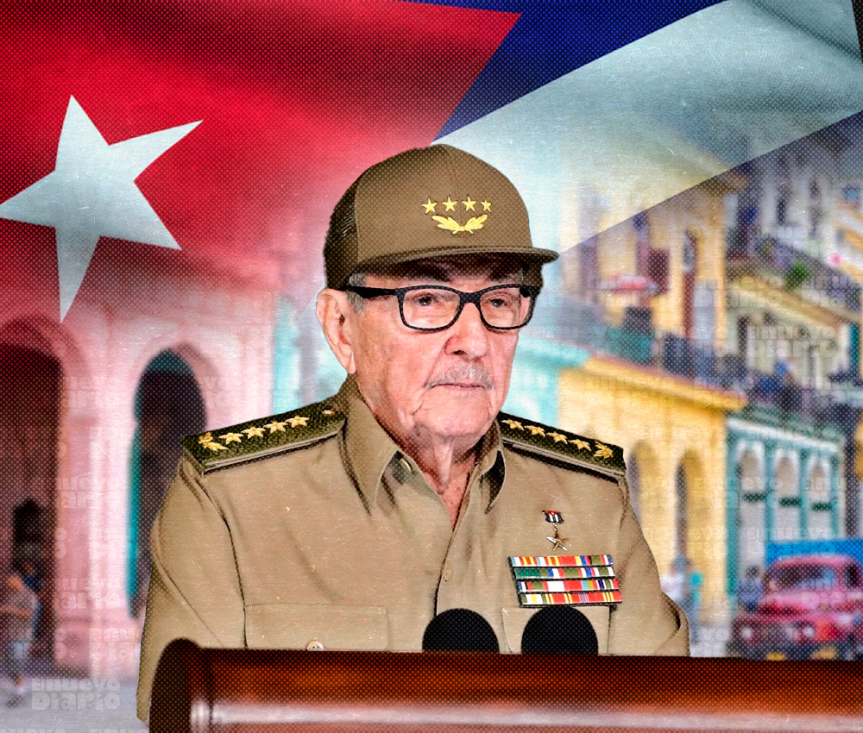
Raúl Castro es un héroe: Los verdaderos criminales son los imperialistas estadounidenses

Por Nikos Mottas

Raúl Castro no es, bajo ningún concepto, un criminal, por más desesperadamente que la administración Trump intente presentarlo como tal. Es un revolucionario que dedicó su vida a la lucha contra la dictadura, la dominación extranjera y la explotación capitalista en Cuba. Las renovadas amenazas en torno a una posible orden de arresto estadounidense contra él no son más que otro acto de arrogancia imperial por parte de un Estado que lleva más de sesenta años intentando asfixiar a la Revolución Cubana mediante el bloqueo, el sabotaje, la guerra económica y la agresión política permanente.

La hipocresía de Washington es difícil de exagerar. Los mismos Estados Unidos que invadieron países, organizaron golpes de Estado, armaron fuerzas reaccionarias y destruyeron sociedades enteras en defensa de sus intereses geopolíticos, ahora pretenden presentarse como defensores de la “justicia” y la “democracia”. El mismo establishment político que financia guerras, respalda castigos colectivos y apoya abiertamente regímenes criminales en todo el mundo, de repente pretende arrogarse autoridad moral cuando se trata de la Cuba revolucionaria.

Estados Unidos también tiene una larga historia de protección y legitimación de extremistas violentos anticastristas que operan desde Miami: individuos y redes vinculados al sabotaje, los atentados y décadas de agresión terrorista contra Cuba. Ese mismo establishment político intenta ahora dar lecciones al mundo sobre “justicia” y “democracia”.

Raúl Castro pertenece a la generación histórica que derrocó la dictadura de Batista, un régimen de represión, corrupción y total subordinación a los intereses económicos estadounidenses. Junto a Fidel Castro, Che Guevara y miles de revolucionarios cubanos, aquella generación transformó Cuba de un patio trasero de corporaciones norteamericanas e intereses mafiosos en un país independiente que garantizó salud pública, educación, alfabetización y dignidad a millones de personas humildes.

Esa es la verdadera razón por la que Cuba ha sido atacada durante décadas. Como dijo célebremente Fidel Castro: “No nos perdonan haber hecho una Revolución socialista bajo las propias narices de los Estados Unidos.”

Durante más de sesenta años, Estados Unidos ha intentado quebrar a la Revolución Cubana por todos los medios posibles. Estrangulamiento económico, aislamiento diplomático, planes de asesinato, campañas de desestabilización e interminables sanciones fueron diseñados para obligar a Cuba a volver a la dependencia y la sumisión. Y, sin embargo, Cuba resistió. A pesar de enormes dificultades, la Cuba socialista alcanzó conquistas sociales que siguen estando fuera del alcance de amplios sectores de la población incluso dentro de los países capitalistas más ricos.

Donald Trump y las fuerzas cada vez más reaccionarias que lo rodean representan el rostro más agresivo del imperialismo estadounidense contemporáneo. Su obsesión con Cuba no tiene absolutamente nada que ver con los “derechos humanos”. Cuba sigue siendo un objetivo porque representa un acto histórico de desafío: un pequeño país que resistió el poder de Estados Unidos y sobrevivió. Esa realidad continúa enfureciendo al establishment imperial en Washington.

La campaña contra Raúl Castro, por lo tanto, no está dirigida simplemente contra un individuo. Es un ataque contra toda la legitimidad histórica de la Revolución Cubana. Busca criminalizar la propia lucha antiimperialista mientras borra el largo historial de violencia, intervenciones y dominación ejercidas por Estados Unidos en América Latina y el resto del mundo.

Pero existe una memoria histórica que el imperialismo no puede borrar tan fácilmente.

Millones de personas en todo el mundo siguen viendo la Revolución Cubana como un símbolo de soberanía, resistencia y solidaridad internacional. Más allá de los debates que puedan existir sobre el camino seguido por Cuba, hay un hecho innegable: la Revolución rompió las cadenas de la dominación extranjera y demostró que incluso una pequeña nación podía enfrentarse al poder imperial sin rendirse.

Pase lo que pase, Raúl Castro seguirá formando parte de esa historia gloriosa. En cambio, los arquitectos de las sanciones, la agresión y la dominación imperial pasarán a formar parte del largo historial de imperialismo, opresión y violencia.

* Nikos Mottas es el redactor jefe de En Defensa del Comunismo.

Traducido del original: Raúl Castro is a hero: The real criminals are the U.S. Imperialists
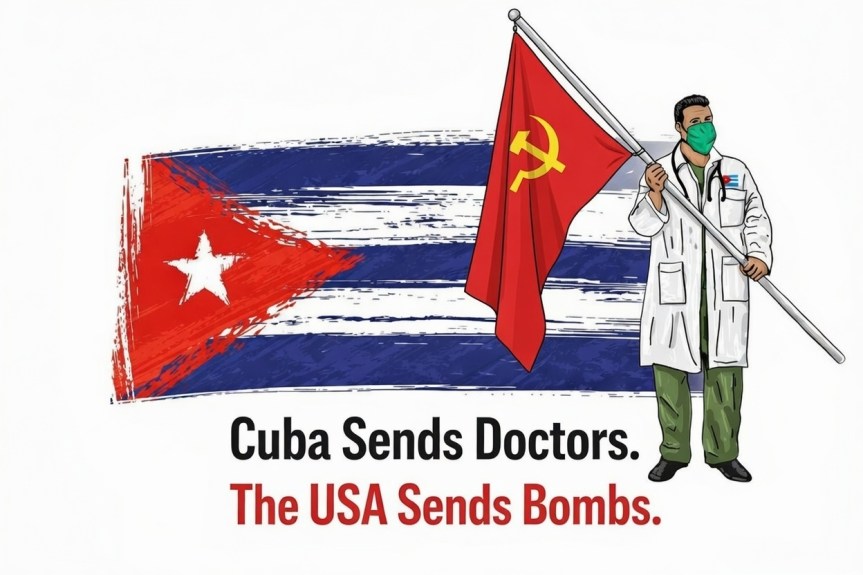
Nikos Mottas: «Cuba Sends Doctors. The USA Sends Bombs»

By Nikos Mottas

There are moments when history reduces itself to a single, unavoidable contrast. Today is one of them. As renewed threats and economic aggression once again emanate from Washington under Donald Trump, an old truth regains its sharpness:

Cuba sends doctors. The United States sends bombs.

This is not a slogan invented for effect. It is a reflection of two opposing social systems, two different priorities, two irreconcilable visions of what a society should produce—and for whom.

For more than sixty years, socialist Cuba has lived under blockade, sanctions, financial isolation, and constant political hostility from the United States. The goal of that pressure has never been hidden. From the early days after 1959, Washington’s strategy aimed at economic suffocation: restrict trade, choke access to credit, create scarcity, and force the population to turn against its own revolutionary project.

It did not work.

Instead of collapsing, the island reorganized itself. Instead of militarizing its society, it invested in education and public health. When much of the pre-revolutionary medical elite left the country expecting the Revolution to fall, Cuba made a historic decision: it would form a new generation of doctors drawn from workers and peasants. Healthcare would not depend on wealth. It would be universal, preventive, and public.

Under the leadership of Fidel Castro, scarce resources were directed not toward stock exchanges or private insurance conglomerates, but toward polyclinics, vaccination programs, and medical schools. In a poor country under siege, the Revolution chose to multiply doctors.

That choice transformed Cuba internally. Life expectancy rose. Infant mortality dropped to levels comparable with developed nations. Entire rural areas that had been abandoned under the old order received consistent medical care for the first time. Health ceased to be a commodity and became a social guarantee.

But Cuba did not stop at its own borders.

Time and again, when disaster struck elsewhere, Cuban medical brigades were there. After earthquakes in Latin America, hurricanes in the Caribbean, epidemics in Africa, and pandemics that paralyzed wealthy nations, Cuban doctors boarded planes carrying not weapons but stethoscopes. In the midst of Ebola’s devastation in West Africa, it was Cuban medical personnel who arrived in significant numbers when many powerful countries hesitated. During the COVID-19 crisis, Cuban brigades assisted overwhelmed healthcare systems abroad while the island simultaneously developed its own vaccines despite the blockade.

This is not charity diplomacy. It flows from a different organizing principle. A planned economy, even one with limited material wealth, can prioritize the defense of life because it is not governed by private profit.

Now look at the other side of the contrast.

The US commands the largest military budget in history. Its defense spending surpasses that of entire regions combined. It maintains hundreds of overseas bases and has been involved—directly or indirectly—in wars, invasions, regime-change operations, sanctions campaigns, and covert interventions across continents. From Southeast Asia to the Middle East, from Latin America to Eastern Europe, its foreign policy has consistently relied on military leverage and economic coercion.

At home, millions of Americans struggle with medical debt. Entire communities face inadequate healthcare access. Life-saving medication can be priced beyond reach. Yet there is no comparable hesitation when funding new weapons systems, expanding military alliances, or modernizing nuclear arsenals.

This contrast is not about national character. It is about structure.

Capitalism in its imperial stage concentrates wealth, protects corporate power, and projects military force to secure economic interests. Socialist construction—however constrained by massive external pressure—attempts to allocate resources according to collective need.

For more than six decades, the US blockade has attempted to make daily life in Cuba unbearable. It restricts access to medical equipment, fuel, spare parts, financial transactions, and international trade. It punishes third countries that attempt normal economic relations with the island. Every shortage is then cynically cited as proof that socialism “fails,” while the external chokehold is treated as invisible.

And yet, despite all this, Cuba continues to graduate doctors in remarkable numbers. It continues to dispatch medical brigades abroad. It continues to treat healthcare not as a luxury but as a right.

That reality is politically dangerous.

Washington is unsettled not by Cuban strength, but by Cuban example. A small Caribbean nation, ninety miles from Florida, demonstrating that education can be free, that healthcare can be universal, that solidarity can cross borders without corporate contracts—this stands as a quiet but persistent rebuke to the dominant model.

The difference can be expressed simply:

One system invests in aircraft carriers; the other invests in pediatricians

One system refines sanctions; the other refines vaccination campaigns.

One system speaks of “freedom” while tightening economic sieges; the other sends medical teams to communities that cannot pay.

Cuba is not a utopia. No society operating under permanent external pressure can be free of contradictions or difficulties. But its priorities are unmistakable. When faced with scarcity, it chooses to educate. When confronted with crisis, it chooses to heal. When attacked economically, it responds by training more doctors.

That moral orientation matters.

Cuba, a small island just ninety miles from Florida, keeps demonstrating that another world is possible — not through declarations and speeches, but through doctors, classrooms, and solidarity. And that living example is what the empire will never forgive.

* Nikos Mottas is the Editor-in-Chief of In Defense of Communism.  

Source: idcommunism.com