
Cuba: Historical exception or vanguard in the anticolonial struggle?

Speech by Ernesto Che Guevara delivered on April 9, 1961.

«The working class is the creative class; the working class produces what material wealth exists in a country. And while power is not in their hands, while the working class allows power to remain in the hands of the bosses who exploit them, in the hands of landlords, the speculators, the monopolies and in the hands of foreign and national interest groups, while armaments are in the hands of those in the service of these interest groups and not in their own hands, the working class will be forced to lead a miserable existence no matter how many crumbs those interest groups should let fall from their banquet table.»
— Fidel Castro
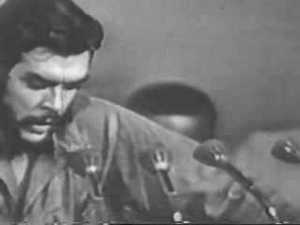
Never in the Americas has an event of such extraordinary character, with such deep roots and such far-reaching consequences for the destiny of the continent’s progressive movements taken place as our revolutionary war. This is true to such an extent that it has been appraised by some to be the decisive event of the Americas, on a scale of importance second only to that great trilogy — the Russian Revolution, the victory over Nazi Germany and the subsequent social transformations and the victory of the Chinese Revolution.

Our revolution, unorthodox in its forms and manifestations, has nevertheless followed the general lines of all the great historical events of this century that are characterized by anticolonial struggles and the transition toward socialism.

Nevertheless some sectors, whether out of self-interest or in good faith, claim to see in the Cuban Revolution exceptional origins and features whose importance for this great historical-social event they inflate even to the level of decisive factors. They speak of the exceptionalism of the Cuban Revolution as compared with the course of other progressive parties in Latin America. They conclude that the form and road of the Cuban Revolution are unique and that in the other countries of the Americas the historical transition will be different.

We accept that exceptions exist which give the Cuban Revolution its peculiar characteristics. It is clearly established that in every revolution there are specific factors, but it is no less established that all follow laws that society cannot violate. Let us analyze, then, the factors of this purported exceptionalism.

The first, and perhaps the most important and original, is that cosmic force called Fidel Castro Ruz, whose name in only a few years has attained historic proportions. The future will provide the definitive appraisal of our prime minister’s merits, but to us they appear comparable to those of the great historic figures of Latin America. What is exceptional about Fidel Castro’s personality? Various features of his life and character make him stand out far above his compañeros and followers. Fidel is a person of such tremendous personality that he would attain leadership in whatever movement he participated. It has been like that throughout his career, from his student days to the premiership of our country and as a spokesperson for the oppressed peoples of the Americas. He has the qualities of a great leader, added to which are his personal gifts of audacity, strength, courage, and an extraordinary determination always to discern the will of the people — and these have brought him the position of honor and sacrifice that he occupies today. But he has other important qualities — his ability to assimilate knowledge and experience in order to understand a situation in its entirety without losing sight of the details, his unbounded faith in the future, and the breadth of his vision to foresee events and anticipate them in action, always seeing farther and more accurately than his compañeros . With these great cardinal qualities, his capacity to unite, resisting the divisions that weaken; his ability to lead the whole people in action; his infinite love for the people; his faith in the future and with his capacity to foresee it, Fidel Castro has done more than anyone else in Cuba to create from nothing the present formidable apparatus of the Cuban Revolution.

No-one, however, could assert that specific political and social conditions existed in Cuba that were totally different from those in the other countries of the Americas, or that precisely because of those differences the revolution took place. Neither could anyone assert, conversely, that Fidel Castro made the revolution despite a lack of difference. Fidel, a great and able leader, led the revolution in Cuba, at the time and in the way he did, by interpreting the profound political disturbances that were preparing the people for their great leap onto the revolutionary road. Certain conditions were not unique to Cuba but it will be hard for other peoples to take advantage of them because imperialism — in contrast to some progressive groups — does learn from its errors. The condition we would describe as exceptional was the fact that U.S. imperialism was disoriented and was never able to accurately assess the true scope of the Cuban Revolution. This partly explains the many apparent contradictions in U.S. policy.

The monopolies, as is habitual in such cases, began to think of a successor for Batista precisely because they knew that the people were opposed to him and were looking for a revolutionary solution. What more intelligent and expert stroke than to depose the now unserviceable little dictator and to replace him with the new “boys” who would in turn serve the interests of imperialism? The empire gambled for a time on this card from its continental deck, and lost miserably.

Prior to our military victory they were suspicious of us, but not afraid. Actually, with all their experience at this game they were so accustomed to winning, they played with two decks. On various occasions emissaries of the U.S. State Department came, disguised as reporters, to investigate our rustic revolution, yet they never found any trace of imminent danger. By the time the imperialists wanted to react — when they discovered that the group of inexperienced young men marching in triumph through the streets of Havana had a clear awareness of their political duty and an iron determination to carry out that duty — it was already too late. Thus, in January 1959, the first social revolution in the Caribbean and the most profound of the Latin American revolutions dawned.

It could not be considered exceptional that the bourgeoisie, or at least a part of it, favored the revolutionary war over the dictatorship at the same time as it supported and promoted movements seeking negotiated solutions that would permit them to substitute elements disposed to curb the revolution for the Batista regime. Considering the conditions in which the revolutionary war took place and the complexity of the political tendencies that opposed the dictatorship, it was not at all exceptional that some elements adopted a neutral, or at least a nonbelligerent, attitude toward the insurrectionary forces. It is understandable that the national bourgeoisie, choked by imperialism and the dictatorship — whose troops sacked small properties and made extortion a daily way of life — felt a certain sympathy when they saw those young rebels from the mountains punish the mercenary army, the military arm of imperialism.

Nonrevolutionary forces did indeed aid the coming of revolutionary power.

A further exceptional factor was that in most of Cuba the peasants had been progressively proletarianized due to the needs of large-scale, semimechanized capitalist agriculture. They had reached a new level of organization and therefore a greater class consciousness. In mentioning this we should also point out, in the interest of truth, that the first area in which the Rebel Army operated (comprising the survivors of the defeated column who had made the Granma voyage) was an area inhabited by peasants whose social and cultural roots were different from those of the peasants found in the areas of large-scale, semimechanized Cuban agriculture. In fact the Sierra Maestra, the site of the first revolutionary settlement, is a place where peasants who had struggled against large landholders took refuge. They went there seeking new land — somehow overlooked by the state or the voracious landholders — on which to earn a modest income. They struggled constantly against the demands of the soldiers, always allied to the landholders, and their ambitions extended no further than a property deed. The peasants who belonged to our first guerrilla armies came from that section of this social class which most strongly shows love for the land and the possession of it; that is to say, which most perfectly demonstrates the petty-bourgeois spirit. The peasants fought because they wanted land for themselves and their children, to manage and sell it and to enrich themselves through their labor.

Despite their petty-bourgeois spirit, the peasants soon learned that they could not satisfy their desire to possess land without breaking up the large landholding system. Radical agrarian reform, the only type that could give land to the peasants, clashed directly with the interests of the imperialists, the large landholders and the sugar and cattle magnates. The bourgeoisie was afraid to clash with those interests but the proletariat was not. In this way the course of the revolution itself brought the workers and peasants together. The workers supported the demands of the peasants against the large landholders. The poor peasants, rewarded with ownership of land, loyally supported the revolutionary power and defended it against its imperialist and counterrevolutionary enemies.

In our opinion no further exceptionalism can be claimed. We have been generous to extend it this far. We shall now examine the permanent roots of all social phenomena in the Americas: the contradictions that mature in the wombs of present societies and produce changes that can reach the magnitude of a revolution such as Cuba’s.

First, in chronological order although not in order of importance at present, is the large landholding system. It was the economic power base of the ruling class throughout the entire period following the great anticolonial revolutions of the last century. The large landholding social class, found in all Latin American countries, generally lags behind the social developments that move the world. In some places, however, the most alert and clear sighted members of this class are aware of the dangers and begin to change the form of their capital investment , at times opting for mechanized agriculture, transferring some of their wealth to industrial investment or becoming commercial agents of the monopolies. In any case, the first liberating revolutions never destroyed the large landholding powers that always constituted a reactionary force and upheld the principle of servitude on the land.

This phenomenon, prevalent in all the countries of the Americas, has been the foundation of all the injustices committed since the era when the King of Spain gave huge grants of land to his most noble conquistadores. In the case of Cuba, only the unappropriated royal lands — the scraps left between where three circular landholdings met — were left for the natives, Creoles and mestizos.

In most countries the large landholders realized they couldn’t survive alone and promptly entered into alliances with the monopolies — the strongest and most ruthless oppressors of the Latin American peoples. U.S. capital arrived on the scene to exploit the virgin lands and later carried off, unnoticed, all the funds so “generously” given, plus several times the amount originally invested in the “beneficiary” country. The Americas were a field of interimperialist struggle. The “wars” between Costa Rica and Nicaragua, the separation of Panama from Colombia, the infamy committed against Ecuador in its dispute with Peru, the fight between Paraguay and Bolivia, are nothing but expressions of this gigantic battle between the world’s great monopolistic powers, a battle decided almost completely in favor of the U.S. monopolies following World War II. From that point on the empire dedicated itself to strengthening its grip on its colonial possessions and perfecting the whole structure to prevent the intrusion of old or new competitors from other imperialist countries. This resulted in a monstrously distorted economy which has been described by the shamefaced economists of the imperialist regime with an innocuous vocabulary revealing the deep compassion they feel for us inferior beings. They call our miserably exploited Indians, persecuted and reduced to utter wretchedness, “little Indians” and they call blacks and mulattos, disinherited and discriminated against, “colored” — all this as a means of dividing the working masses in their struggle for a better economic future. For all of us, the peoples of the Americas, they have a polite and refined term: “underdeveloped.” What is underdevelopment?

A dwarf with an enormous head and a swollen chest is “underdeveloped” inasmuch as his weak legs or short arms do not match the rest of his anatomy. He is the product of an abnormal formation distorting his development. In reality that is what we are — we, politely referred to as “underdeveloped,” in truth are colonial, semicolonial or dependent countries. We are countries whose economies have been distorted by imperialism, which has abnormally developed those branches of industry or agriculture needed to complement its complex economy. “Underdevelopment,” or distorted development, brings a dangerous specialization in raw materials, inherent in which is the threat of hunger for all our peoples. We, the “underdeveloped,” are also those with the single crop, the single product, the single market. A single product whose uncertain sale depends on a single market imposing and fixing conditions. That is the great formula for imperialist economic domination. It should be added to the old, but eternally youthful Roman formula: Divide and Conquer!

The system of large landholding, then, through its connections with imperialism, completely shapes so-called “underdevelopment,” resulting in low wages and unemployment that in turn create a vicious cycle producing ever lower wages and greater unemployment. The great contradictions of the system sharpen, constantly at the mercy of the cyclical fluctuations of its own economy, and provide the common denominator for all the peoples of America, from the Rio Bravo to the South Pole. This common denominator, which we shall capitalize and which serves as the starting point for analysis by all who think about these social phenomena, is called the People’s Hunger. The people are weary of being oppressed, persecuted, exploited to the maximum. They are weary of the wretched selling of their labor-power day after day — faced with the fear of joining the enormous mass of unemployed — so that the greatest profit can be wrung from each human body, profit later squandered in the orgies of the masters of capital. We see that there are great and inescapable common denominators in Latin America, and we cannot say we were exempt from any of those, leading to the most terrible and permanent of all: the people’s hunger.

Large landholding, whether in its primitive form of exploitation or as a form of capitalist monopoly, adjusts to the new conditions and becomes an ally of imperialism — that form of finance and monopoly capitalism which goes beyond national borders — in order to create economic colonialism, euphemistically called “underdevelopment,” resulting in low wages, underemployment and unemployment: the people’s hunger.

All this existed in Cuba. Here, too, there was hunger. Here, the proportion of unemployed was one of the highest in Latin America. Here, imperialism was more ruthless than in many countries of America. And here, large landholdings existed as much as they did in any other Latin American country.

What did we do to free ourselves from the vast imperialist system with its entourage of puppet rulers in each country, its mercenary armies to protect the puppets and the whole complex social system of the exploitation of human by human? We applied certain formulas, discoveries of our empirical medicine for the great ailments of our beloved Latin America, empirical medicine which rapidly became scientific truth.

Objective conditions for the struggle are provided by the people’s hunger, their reaction to that hunger, the terror unleashed to crush the people’s reaction and the wave of hatred that the repression creates. The rest of the Americas lacked the subjective conditions, the most important of which is consciousness of the possibility of victory against the imperialist powers and their internal allies through violent struggle. These conditions were created through armed struggle — which progressively clarified the need for change and permitted it to be foreseen — and through the defeat and subsequent annihilation of the army by the popular forces (an absolutely necessary condition for every genuine revolution ).

Having already demonstrated that these conditions are created through armed struggle, we have to explain once more that the scene of the struggle should be the countryside. A peasant army pursuing the great objectives for which the peasantry should fight (the first of which is the just distribution of land) will capture the cities from the countryside. The peasant class of Latin America, basing itself on the ideology of the working class whose great thinkers discovered the social laws governing us, will provide the great liberating army of the future — as it has already done in Cuba. This army, created in the countryside where the subjective conditions for the taking of power mature, proceeds to take the cities, uniting with the working class and enriching itself ideologically. It can and must defeat the oppressor army, at first in skirmishes, engagements and surprises and, finally, in big battles when the army will have grown from small-scale guerrilla footing to a great popular army of liberation. A vital stage in the consolidation of the revolutionary power, as we have said, will be the liquidation of the old army.

If these conditions present in Cuba existed in the rest of the Latin American countries, what would happen in other struggles for power by the dispossessed classes? Would it be feasible to take power or not? If it was feasible, would it be easier or more difficult than in Cuba? Let us mention the difficulties that in our view will make the new Latin American revolutionary struggles more difficult. There are general difficulties for every country and more specific difficulties for some whose level of development or national peculiarities are different. We mentioned at the beginning of this essay that we could consider the attitude of imperialism, disoriented in the face of the Cuban Revolution, as an exceptional factor. The attitude of the national bourgeoisie was, to a certain extent, also exceptional. They too were disoriented and even looked sympathetically upon the action of the rebels due to the pressure of the empire on their interests — a situation which is indeed common to all our countries.

Cuba has again drawn the line in the sand, and again we see Pizarro’s dilemma: On the one hand there are those who love the people and on the other, those who hate the people. The line between them divides the two great social forces, the bourgeoisie and the working class, each of which are defining, with increasing clarity, their respective positions as the process of the Cuban Revolution advances.

Imperialism has learned the lesson of Cuba well. It will not allow itself to be caught by surprise in any of our 20 republics or in any of the colonies that still exist in the Americas. This means that vast popular struggles against powerful invading armies await those who now attempt to violate the peace of the sepulchers, pax Romana. This is important because if the Cuban liberation war was difficult, with its two years of continuous struggle, anguish and instability, the new battles awaiting the people in other parts of Latin America will be infinitely more difficult.

The United States hastens the delivery of arms to the puppet governments they see as being increasingly threatened; it makes them sign pacts of dependence to legally facilitate the shipment of instruments of repression and death and of troops to use them. Moreover, it increases the military preparation of the repressive armies with the intention of making them efficient weapons against the people.

And what about the bourgeoisie? The national bourgeoisie generally is not capable of maintaining a consistent struggle against imperialism. It shows that it fears popular revolution even more than the oppression and despotic dominion of imperialism which crushes nationality, tarnishes patriotic sentiments, and colonizes the economy.

A large part of the bourgeoisie opposes revolution openly, and since the beginning has not hesitated to ally itself with imperialism and the landowners to fight against the people and close the road to revolution. A desperate and hysterical imperialism, ready to undertake any maneuver and to give arms and even troops to its puppets in order to annihilate any country which rises up; ruthless landowners, unscrupulous and experienced in the most brutal forms of repression; and, finally, a bourgeoisie willing to close, through any means, the roads leading to popular revolution: These are the great allied forces which directly oppose the new popular revolutions of Latin America.

Such are the difficulties that must be added to those arising from struggles of this kind under the new conditions found in Latin America following the consolidation of that irreversible phenomenon represented by the Cuban Revolution.
There are still other, more specific problems. It is more difficult to prepare guerrilla groups in those countries that have a concentrated population in large centers and a greater amount of light and medium industry, even though it may not be anything like effective industrialization. The ideological influence of the cities inhibits the guerrilla struggle by increasing the hopes for peacefully organized mass struggle. This gives rise to a certain “institutionalization,” which in more or less “normal” periods makes conditions less harsh than those usually inflicted on the people. The idea is even conceived of possible quantitative increases in the congressional ranks of revolutionary forces until a point is someday reached which allows a qualitative change.

It is not probable that this hope will be realized given present conditions in any country of the Americas, although a possibility that the change can begin through the electoral process is not to be excluded. Current conditions, however, in all countries of Latin America make this possibility very remote. Revolutionaries cannot foresee all the tactical variables that may arise in the course of the struggle for their liberating program. The real capacity of a revolutionary is measured by their ability to find adequate revolutionary tactics in every different situation and by keeping all tactics in mind so that they might be exploited to the maximum. It would be an unpardonable error to underestimate the gain a revolutionary program could make through a given electoral process, just as it would be unpardonable to look only to elections and not to other forms of struggle, including armed struggle, to achieve power — the indispensable instrument for applying and developing a revolutionary program. If power is not achieved, all other conquests, however advanced they appear, are unstable, insufficient and incapable of producing necessary solutions.

When we speak of winning power via the electoral process, our question is always the same: If a popular movement takes over the government of a country by winning a wide popular vote and resolves as a consequence to initiate the great social transformations which make up the triumphant program, would it not immediately come into conflict with the reactionary classes of that country? Has the army not always been the repressive instrument of that class? If so, it is logical to suppose that this army will side with its class and enter the conflict against the newly constituted government. By means of a more or less bloodless coup d’état, this government can be overthrown and the old game renewed again, never seeming to end. It could also happen that an oppressor army could be defeated by an armed popular reaction in defense and support of its government. What appears difficult to believe is that the armed forces would accept profound social reforms with good grace and peacefully resign themselves to their liquidation as a caste.

Where there are large urban concentrations, even when economically backward, it may be advisable — in our humble opinion — to engage in struggle outside the limits of the city in a way that can continue for a long time. The existence of a guerrilla center in the mountains of a country with populous cities maintains a perpetual focus of rebellion because it is very improbable that the repressive powers will be able, either rapidly or over a long period of time, to liquidate guerrilla groups with established social bases in territory favorable to guerrilla warfare, if the strategy and tactics of this type of warfare are consistently employed.

What would happen in the cities is quite different. Armed struggle against the repressive army can develop to an unanticipated degree, but this struggle will become a frontal one only when there is a powerful army to fight against [the enemy] army. A frontal fight against a powerful and well equipped army cannot be undertaken by a small group.

For the frontal fight, many arms will be needed, and the question arises: Where are these arms to be found? They do not appear spontaneously; they must be seized from the enemy. But in order to seize them from the enemy, it is necessary to fight; and it is not possible to fight openly. The struggle in the big cities must therefore begin clandestinely, capturing military groups or weapons one by one in successive assaults. If this happens, a great advance can be made.

Still, we would not dare to say that victory would be denied to a popular rebellion with a guerrilla base inside the city. No one can object on theoretical grounds to this strategy; at least we have no intention of doing so. But we should point out how easy it would be as the result of a betrayal, or simply by means of continuous raids, to eliminate the leaders of the revolution. In contrast, if while employing all conceivable maneuvers in the city (such as organized sabotage and, above all, that effective form of action, urban guerrilla warfare) and if a base is also maintained in the countryside, the revolutionary political power, relatively safe from the contingencies of the war, will remain untouched even if the oppressor government defeats and annihilates all the popular forces in the city. The revolutionary political power should be relatively safe, but not outside the war, not giving directions from some other country or from distant places. It should be within its own country fighting. These considerations lead us to believe that even in countries where the cities are predominant, the central political focus of the struggle can develop in the countryside.

Returning to the example of relying on help from the military class in effecting the coup and supplying the weapons, there are two problems to analyze: First, supposing it was an organized nucleus and capable of independent decisions, if the military really joins with the popular forces to strike the blow, there would in such a case be a coup by one part of the army against another, probably leaving the structure of the military caste intact. The other problem, in which armies unite rapidly and spontaneously with popular forces, can occur only after the armies have been violently beaten by a powerful and persistent enemy, that is, in conditions of catastrophe for the constituted power. With an army defeated and its morale broken, this phenomenon can occur. For that, struggle is necessary; we always return to the question of how to carry on that struggle. The answer leads us toward developing guerrilla struggle in the countryside, on favorable ground and supported by struggle in the cities, always counting on the widest possible participation of the working masses and guided by the ideology of that class.

We have sufficiently analyzed the obstacles revolutionary movements in Latin America will encounter. It can now be asked whether or not there are favorable conditions for the preliminary stage, like, for example, those encountered by Fidel Castro in the Sierra Maestra. We believe that here, too, general conditions can facilitate these centers of rebellion and specific conditions in certain countries exist which are even more favorable. Two subjective factors are the most important consequences of the Cuban Revolution: the first is the possibility of victory, knowing that the capability exists to crown an enterprise like that of the group of idealistic Granma expeditionaries who successfully struggled for two years in the Sierra Maestra. This immediately indicates there can be a revolutionary movement operating from the countryside, mixing with the peasant masses, that will grow from weakness to strength, that will destroy the army in a frontal fight, that will capture cities from the countryside, that will strengthen through its struggle the subjective conditions necessary for seizing power. The importance of this fact is demonstrated in the huge number of “exceptionalists” who have recently appeared. “Exceptionalists” are those special beings who say they find in the Cuban Revolution a unique event which cannot be followed — led by someone who has few or no faults, who led the revolution through a unique path. We affirm this is completely false. Victory by the popular forces in Latin America is clearly possible in the form of guerrilla warfare undertaken by a peasant army in alliance with the workers, defeating the oppressor army in a frontal assault, taking cities by attack from the countryside, and dissolving the oppressor army — as the first stage in completely destroying the superstructure of the colonial world.

We should point out a second subjective factor: The masses not only know the possibility of triumph, they know their destiny. They know with increasing certainty that whatever the tribulations of history during short periods, the future belongs to the people; the future will bring about social justice. This knowledge will help raise revolutionary ferment to even greater heights than those prevailing in Latin America today.

Some less general factors do not appear with the same intensity from country to country. One very important one is the greater exploitation of the peasants in Latin America than there was in Cuba. Let us remind those who pretend to see the proletarianization of the peasantry in our insurrectionary stage, that we believe it was precisely this which accelerated the emergence of cooperatives as well as the achievement of power and the agrarian reform. This is in spite of the fact that the peasant of the first battles, the core of the Rebel Army, is the same one to be found today in the Sierra Maestra, proud owner of their parcel of land and intransigently individualistic.

There are, of course, characteristics specific to the Latin American countries: an Argentine peasant does not have the same outlook as a communal peasant in Peru, Bolivia or Ecuador. But hunger for land is permanently present in the peasants, and they generally hold the key to the Americas. In some countries they are even more exploited than they were in Cuba, increasing the possibility that this class will rise up in arms. Another fact is Batista’s army, which with all its enormous defects, was structured in such a way that everyone, from the lowest soldier to the highest general, was an accomplice in the exploitation of the people. They were complete mercenaries, and this gave the repressive apparatus some cohesiveness. The armies of Latin America generally include a professional officers’ corps and recruits who are called up periodically. Each year, young recruits leave their homes where they have known the daily sufferings of their parents, have seen them with their own eyes, where they have felt poverty and social injustice. If one day they are sent as cannon fodder to fight against the defenders of a doctrine they feel in their own hearts is just, their capacity to fight aggressively will be seriously affected. Adequate propaganda will enable the recruits to see the justice of and the reasons for the struggle, and magnificent results will be achieved.

After this brief study of the revolutionary struggle we can say that the Cuban Revolution had exceptional factors giving it its own peculiarities as well as factors which are common to all the countries of the Americas and which express the internal need for revolution. New conditions will make the flow of these revolutionary movements easier as they give the masses consciousness of their destiny and the certainty that it is possible. On the other hand, there are now obstacles making it harder for the armed masses to achieve power rapidly, such as imperialism’s close alliance with the bourgeoisie, enabling them to fight to the utmost against the popular forces. Dark days await Latin America. The latest declarations of those that rule the United States seem to indicate that dark days await the world: Lumumba, savagely assassinated, in the greatness of his martyrdom showed the tragic mistakes that cannot be committed. Once the antiimperialist struggle begins, we must constantly strike hard, where it hurts the most, never retreating, always marching forward, counterstriking against each aggression, always responding to each aggression with even stronger action by the masses. This is the way to victory. We will analyze on another occasion whether the Cuban Revolution, having taken power, followed these new revolutionary paths with its own exceptional characteristics or if, as in this analysis, while respecting the existence of certain special characteristics, it fundamentally followed a logic derived from laws intrinsic to the social process.

* The Che Reader, Ocean Press. Copyright: © 2005 Aleida March, Che Guevara Studies Center and Ocean Press. Editing: Nikos Mottas/Guevaristas.
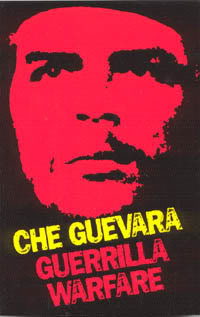
Guerrilla warfare: A Method

By Ernesto Che Guevara.

Guerrilla warfare has been employed throughout history on innumerable occasions and in different circumstances to obtain different objectives. Lately it has been employed in various people’s wars of liberation when the vanguard of a people have chosen the road of irregular armed struggle against enemies of superior military power. Asia, Africa and Latin America have been the scenes of such actions in attempts to obtain power in the struggle against feudal, neocolonial, or colonial exploitation. In Europe, guerrilla units have been used as supplements to native or allied regular armies.

Guerrilla warfare has been employed in the Americas on several occasions. We have had, as a case in point, the experience of César Augusto Sandino fighting against the Yankee expeditionary force on Nicaragua’s Segovia [River]. Recently we had Cuba’s revolutionary war. In the Americas since then the problem of guerrilla war has been raised in theoretical discussions by the progressive parties of the continent with the question of whether its utilization is possible or convenient. This has become the topic of very controversial polemics.

This article will express our views on guerrilla warfare and its correct utilization. Above all, we must emphasize at the outset that this form of struggle is a means to an end. That end, essential and inevitable for any revolutionary, is the conquest of political power. In the analysis of specific situations in different countries of America, we must therefore use the concept of guerrilla warfare in the limited sense of a method of struggle in order to gain that end.

Almost immediately the questions arise: Is guerrilla warfare the only formula for seizing power in Latin America? Or, at any rate, will it be the predominant form? Or will it simply be one formula among many used during the struggle? And ultimately we may ask: Will Cuba’s example be applicable to the present situation on the continent? In the course of polemics, those who want to undertake guerrilla warfare are criticized for forgetting mass struggle, implying that guerrilla warfare and mass struggle are opposed to each other. We reject this implication, for guerrilla warfare is a people’s warfare; an attempt to carry out this type of war without the population’s support is a prelude to inevitable disaster. The guerrilla is the combat vanguard of the people, situated in a specified place in a certain region, armed and willing to carry out a series of warlike actions for the one possible strategic end — the seizure of power. The guerrilla is supported by the peasant and worker masses of the region and of the whole territory in which it acts. Without these prerequisites, guerrilla warfare is not possible.

We consider that the Cuban Revolution made three fundamental contributions to the laws of the revolutionary movement in the current situation in America. First, people’s forces can win a war against the army. Second, it is not always necessary to wait for all conditions favorable to revolution to be present; the insurrection itself can create them. Third, in the underdeveloped parts of America, the battleground for armed struggle should in the main be the countryside. (Ernesto Che Guevara, Guerrilla Warfare )

Such are the contributions to the development of the revolutionary struggle in America, and they can be applied to any of the countries on our continent where guerrilla warfare may develop.

The Second Declaration of Havana points out:

In our countries two circumstances are linked: underdeveloped industry and an agrarian system of feudal character so no matter how hard the living conditions of the urban workers are, the rural population lives under even worse conditions of oppression and exploitation. With few exceptions, the rural population also constitutes the absolute majority, comprising more than 70 percent of the Latin American populations.

Not counting the landowners who often live in the cities, this great mass earns its livelihood by working for miserable wages as peons on plantations. They till the soil under conditions of exploitation no different from those of the Middle Ages. These circumstances determine in Latin America that the poor rural population constitutes a tremendous potential revolutionary force.

The armies in Latin America are set up and equipped for conventional warfare. They are the force through which the power of the exploiting classes is maintained. When they are confronted with the irregular warfare of peasants based on their home ground, they become absolutely powerless; they lose 10 men for every revolutionary fighter who falls. Demoralization among them mounts rapidly when they are beset by an invisible and invincible army which provides them no chance to display their military academy tactics and their military fanfare, of which they boast so heavily, and which they use to repress the city workers and students.

The initial struggle of the small fighting units is constantly nurtured by new forces; the mass movement begins to grow bold, bit by bit the old order breaks into a thousand pieces, and that is when the working class and the urban masses decide the battle. What is it that from the very beginning of the fight makes these units invincible, regardless of the numbers, strengths and resources of their enemies? It is the people’s support, and they can count on an ever-increasing mass support.

The peasantry, however, is a class that because of the ignorance in which it has been kept and the isolation in which it lives, requires the revolutionary and political leadership of the working class and the revolutionary intellectuals. It cannot launch the struggle and achieve victory alone.

In the present historical conditions of Latin America, the national bourgeoisie cannot lead the ant feudal and anti-imperialist struggle. Experience demonstrates that in our nations this class — even when its interests clash with those of Yankee imperialism — has been incapable of confronting imperialism, paralyzed by fear of social revolution and frightened by the clamor of the exploited masses.

Completing the foresight of the preceding statements that constitute the essence of the revolutionary declaration of Latin America, the Second Declaration of Havana states:

The subjective conditions in each country, the factors of revolutionary consciousness, organization and leadership, can accelerate or delay revolution, depending on the state of their development. Sooner or later in each historic epoch objective conditions ripen, consciousness is acquired, organization is achieved, leadership arises, and revolution takes place.

Whether this takes place peacefully or comes into the world after painful labor does not depend on the revolutionaries; it depends on the reactionary forces of the old society, who resist the birth of the new society engendered by contradictions carried in the womb of the old. Revolution, in history, is like the doctor assisting at the birth of a new life, who will not use forceps unless necessary, but who will use them unhesitatingly every time labor requires them. It is a labor bringing the hope of a better life to the enslaved and exploited masses.

In many Latin American countries revolution is inevitable. This fact is not determined by the will of any person. It is determined by the horrifying conditions of exploitation under which the Latin American people live, the development of a revolutionary consciousness in the masses, the worldwide crisis of imperialism and the universal liberation movements of the subjugated nations. We shall begin from this basis to analyze the whole matter of guerrilla warfare in Latin America.

We have already established that it is a means of struggle to attain an end. First, our concern is to analyze the end in order to determine whether the winning of power in Latin America can be achieved in ways other than armed struggle.

Peaceful struggle can be carried out through mass movements that compel — in special situations of crisis — governments to yield; thus, the popular forces would eventually take over and establish a dictatorship of the proletariat. Theoretically this is correct. When analyzing this in the Latin American context, we must reach the following conclusions: Generally on this continent objective conditions exist that propel the masses to violent action against their bourgeois and landholding governments. In many countries there are crises of power and also some subjective conditions necessary for revolution. It is clear, of course, that in those countries where all of these conditions are found, it would be criminal not to act to seize power. In other countries where these conditions do not occur, it is right those different alternatives will appear and out of theoretical discussions the tactic suitable to each country should emerge. The only thing history does not allow is that the analysts and executors of proletarian politics be mistaken.

No-one can solicit the role of vanguard party as if it were a diploma given by a university. To be the vanguard party means to be at the forefront of the working class through the struggle for achieving power. It means to know how to guide this fight through shortcuts to victory. This is the mission of our revolutionary parties and the analysis must be profound and exhaustive so that there will be no mistakes.

At the present time we can observe in America an unstable balance between oligarchical dictatorship and popular pressure. We mean by “oligarchical” the reactionary alliance between the bourgeoisie and the landowning class of each country in which feudalism remains to a greater or lesser degree.

These dictatorships carry on within a certain “legal” framework adjudicated by themselves to facilitate their work throughout the unrestricted period of their class domination. Yet we are passing through a stage in which pressure from the masses is very strong and is straining bourgeois legality so that its own authors must violate it in order to halt the impetus of the masses.

Barefaced violation of all legislation or of laws specifically instituted to sanction ruling class deeds only increases the pressure from the people’s forces. The oligarchical dictatorships then attempt to use the old legal order to alter constitutionality and further oppress the proletariat without a frontal clash. At this point a contradiction arises. The people no longer support the old, and much less the new, coercive measures established by the dictatorship and try to smash them. We should never forget the class character, authoritarian and restrictive, that typifies the bourgeois state. Lenin refers to it in the following manner [in State and Revolution ]: “The state is the product and the manifestation of the irreconcilability of class antagonisms. The state arises when, where, and to the extent that class antagonisms objectively cannot be reconciled. And, conversely, the existence of the state proves that class antagonisms are irreconcilable.” In other words, we should not allow the word “democracy” to be utilized apologetically to represent the dictatorship of the exploiting classes; to lose its deeper meaning and acquire that of granting the people certain liberties, more or less adequate. To struggle only to restore a certain degree of bourgeois legality without considering the question of revolutionary power is to struggle for the return of a dictatorial order established by the dominant social classes. In other words, it is to struggle for a lighter iron ball to be fixed to the prisoner’s chain.

In these conditions of conflict, the oligarchy breaks its own contracts, its own mask of “democracy,” and attacks the people, though it will always try to use the superstructure it has formed for oppression. We are faced once again with a dilemma: What must be done? Our reply is: Violence is not the monopoly of the exploiters and as such the exploited can use it too and, moreover, ought to use it when the moment arrives. [José] Martí said, “He who wages war in a country when he can avoid it is a criminal, just as he who fails to promote war which cannot be avoided is a criminal.” Lenin said, “Social democracy has never taken a sentimental view of war. It unreservedly condemns war as a bestial means of settling conflicts in human society. But social democracy knows that as long as society is divided into classes, as long as there is exploitation of human by human, wars are inevitable. In order to end this exploitation we cannot walk away from war, which is always and everywhere begun by the exploiters, by the ruling and oppressing classes.” He said this in 1905. Later, in Military Program of the Proletarian Revolution , a far-reaching analysis of the nature of class struggle, he affirmed: “Whoever recognizes the class struggle cannot fail to recognize civil wars, which in every class society are the natural, and under certain conditions, inevitable continuation, development and intensification of the class struggle. All the great revolutions prove this. To repudiate civil war, or to forget about it, would mean sinking into extreme opportunism and renouncing the socialist revolution.” That is to say, we should not fear violence, the midwife of new societies, but violence should be unleashed at that precise moment in which the leaders have found the most favorable circumstances.

What will these be? Subjectively, they depend on two factors that complement each other and which deepen during the struggle: consciousness of the necessity of change and confidence in the possibility of this revolutionary change. Both of these factors — combined with the objective conditions (favorable in all of Latin America for the development of the struggle) — and the firm will to achieve revolutionary change, as well as the new correlation of forces in the world, will determine the mode of action.

Regardless of how far away the socialist countries may be, their favorable influence will be felt by the people who struggle, just as their example will give the people further strength. Fidel Castro said on July 26 [1963]:

The duty of the revolutionaries, especially at this moment, is to know how to recognize and how to take advantage of the changes in the correlation of forces that have taken place in the world and to understand that these changes facilitate the people’s struggle. The duty of revolutionaries, of Latin American revolutionaries, is not to wait for the change in the correlation of forces to produce a miracle of social revolutions in Latin America, but to take full advantage of everything that is favorable to the revolutionary movement — and to make revolution!

There are some who say, “Let us admit that in certain specific cases revolutionary war is the best means to achieve political power; but where do we find the great leaders, the Fidel Castros, who will lead us to victory?” Fidel Castro, like any other human being, is the product of history. The political and military leaders who will lead the insurrectional uprisings in the Americas, merged if possible in one person, will learn the art of war during the course of war itself. There exists neither trade nor profession that can be learned from books alone. In this case, the struggle itself is the great teacher.

Of course, the task will not be easy and it is not exempt from grave dangers.

During the development of armed struggle, there are two moments of extreme danger for the future of the revolution. The first of these arises in the preparatory stage and the way it is dealt with will give the measure of determination to struggle as well as clarity of purpose of the people’s forces. When the bourgeois state advances against the people’s positions, obviously there must arise a process of defense against the enemy who at this point, being superior, attacks. If the basic subjective and objective conditions are ripe, the defense must be armed so that the popular forces will not merely become recipients of the enemy’s blows. Nor should the armed defense camp be allowed to be transformed into the refuge of the pursued. The guerrilla army, the defensive movement of the people, at a given moment carries within itself the capacity to attack the enemy and must develop this constantly. This capacity is what determines, with the passing of time, the catalytic character of the people’s forces. That is, guerrilla warfare is not passive self-defense; it is defense with attack. From the moment we recognize it as such, it has as its final goal the conquest of political power.

This moment is important. In social processes the difference between violence and nonviolence cannot be measured by the number of shots exchanged; rather it lies in concrete and fluctuating situations. We must be able to see the right moment in which the people’s forces, conscious of their relative weakness and their strategic strength, must take the initiative against the enemy so the situation will not deteriorate. The equilibrium between oligarchic dictatorship and popular pressure must be changed. The dictatorship tries to function without resorting to force so we must try to oblige it to do so, thereby unmasking its true nature as the dictatorship of the reactionary social classes. This event will deepen the struggle to such an extent that there will be no retreat from it. The success of the people’s forces depends on the task of forcing the dictatorship to a decision — to retreat, or to unleash the struggle — thus beginning the stage of long-range armed action. Skillful avoidance of the next dangerous moment depends on the growing power of the people’s forces. Marx always recommended that once the revolutionary process has begun the proletariat should strike blows again and again without rest. A revolution that does not constantly expand is a revolution that regresses. The fighters, if weary, begin to lose faith; and at this point some of the bourgeois maneuvers may bear fruit — for example, the holding of elections to turn a government over to another gentleman with a sweeter voice and a more angelic face than the outgoing tyrant, or the staging of a coup by reactionaries, generally led by the army, with the direct or indirect support of the progressive forces. There are others, but it is not our intention to analyze all such tactical stratagems.

Let us focus on the military coup mentioned previously. What can the military contribute to democracy? What kind of loyalty can be asked of them if they are merely an instrument of domination for the reactionary classes and imperialist monopolies and if, as a caste whose worth rests on the weapons in their hands, they aspire only to maintain their prerogatives? When, in difficult situations for the oppressors, the military establishment conspires to overthrow a dictator who in reality has already been defeated, it can be said that they do so because the dictator is unable to preserve their class prerogatives without extreme violence, a method that generally does not suit the interests of the oligarchies at that point. This statement does not mean to reject the service of military men as individual fighters who, once separated from the society they served, have in fact now rebelled against it. They should be utilized in accordance with the revolutionary line they adopt as fighters and not as representatives of a caste.

A long time ago Engels, in the preface to the third edition of Civil War in France, wrote:

The workers were armed after every revolution; for this reason the disarming of the workers was the first commandment for the bourgeois at the helm of the state. Hence, after every revolution won by the workers there was a new struggle ending with the defeat of the workers. (Quoted by Lenin in State and Revolution )

This play of continuous struggle, in which some change is obtained and then strategically withdrawn, has been repeated for many dozens of years in the capitalist world. Moreover, the permanent deception of the proletariat along these lines has been practiced for over a century.

There is danger also that progressive party leaders, wishing to maintain conditions more favorable for revolutionary action through the use of certain aspects of bourgeois legality, will lose sight of their goal (which is common during the action), thus forgetting the primary strategic objective: the seizure of power .

These two difficult moments in the revolution, analyzed briefly here, become obvious when the leaders of Marxist-Leninist parties are capable of clearly perceiving the implications of the moments and of mobilizing the masses to the fullest, leading them on the correct path of resolving fundamental contradictions.

In developing the thesis, we have assumed that eventually the idea of armed struggle as well as guerrilla warfare as a method of struggle will be accepted. Why do we think that in the present situation in the Americas guerrilla warfare is the best method? There are fundamental arguments that in our opinion determine the necessity of guerrilla action as the central axis of struggle in the Americas.

First, accepting as true that the enemy will fight to maintain itself in power, one must think about destroying the oppressor army. To do this, a people’s army is necessary. Such an army is not born spontaneously; rather it must be armed from the enemy’s arsenal and this requires a long and difficult struggle in which the people’s forces and their leaders will always be exposed to attack from superior forces and will be without adequate defense and maneuverability.

On the other hand the guerrilla nucleus, established in terrain favorable for the struggle, ensures the security and continuity of the revolutionary command. The urban forces, led by the general staff of the people’s army, can perform actions of the greatest importance. The eventual destruction of these groups, however, would not kill the soul of the revolution; its leadership would continue from its rural bastion to spark the revolutionary spirit of the masses and would continue to organize new forces for other battles. More importantly, in this region begins the construction of the future state apparatus entrusted to lead the class dictatorship efficiently during the transition period. The longer the struggle becomes, the larger and more complex the administrative problems; and in solving them, cadres will be trained for the difficult task of consolidating power and, at a later stage, economic development. Second, there is the general situation of the Latin American peasantry and the ever more explosive character of the struggle against feudal structures within the framework of an alliance between local and foreign exploiters.

Returning to the Second Declaration of Havana:

At the outset of the past century, the peoples of the Americas freed themselves from Spanish colonialism, but they did not free themselves from exploitation. The feudal landlords assumed the authority of the governing Spaniards, the Indians continued in their painful serfdom, the Latin American remained a slave one way or another, and the minimal hopes of the peoples died under the power of the oligarchies and the tyranny of foreign capital. This is the truth of the Americas, to one or another degree of variation. Latin America today is under a more ferocious imperialism that is more powerful and ruthless than the Spanish colonial empire.

What is Yankee imperialism’s attitude toward confronting the objective and historically inexorable reality of the Latin American revolution? To prepare to fight a colonial war against the peoples of Latin America; to create an apparatus of force establishing the political pretexts and the pseudo-legal instruments underwritten by the representatives of the reactionary oligarchies in order to curb, by blood and by iron, the struggle of the Latin American peoples.

This objective situation shows the dormant force of our peasants and the need to utilize it for Latin America’s liberation.

Third, there is the continental nature of the struggle. Could we imagine this stage of Latin American emancipation as the confrontation of two local forces struggling for power in a specific territory? Hardly. The struggle between the people’s forces and the forces of repression will be to the death. This also is predicted within the paragraphs cited previously. The Yankees will intervene due to conjunction of interest and because the struggle in Latin America is decisive. As a matter of fact they are intervening already, preparing the forces of repression and the organization of a continental apparatus of repression. But from now on they will do so with all their energies; they will punish the popular forces with all the destructive weapons at their disposal. They will not allow a revolutionary power to consolidate; and, if it ever happens, they will attack again, they will not recognize such a power, and will try to divide the revolutionary forces. They will infiltrate saboteurs, create border problems, force other reactionary states to oppose it and will impose economic sanctions attempting, in one word, to annihilate the new state. This being the panorama in Latin America, it is difficult to achieve and consolidate victory in an isolated country. The unity of the repressive forces must be confronted with the unity of the popular forces. In all countries where oppression reaches intolerable proportions, the banner of rebellion must be raised; and this banner of historical necessity will have a continental character.

As Fidel has said, the cordillera of the Andes will be the Sierra Maestra of Latin America; and the immense territories this continent encompasses will become the scene of a life or death struggle against imperialism. We cannot predict when this struggle will reach a continental dimension or how long it will last. But we can predict its advent and triumph because it is the inevitable result of historical, economic and political conditions; and its direction cannot change.

The task of the revolutionary forces in each country is to initiate the struggle when the conditions are present there, regardless of the conditions in other countries. The development of the struggle will bring about the general strategy. The prediction of the continental character of the struggle is the outcome of the analysis of the strength of each contender but this does not exclude independent outbreaks. The beginning of the struggle in one area of a country is bound to cause its development throughout the region; the beginning of a revolutionary war contributes to the development of new conditions in the neighboring countries.

The development of revolution has usually produced high and low tides in inverse proportion. To the revolution’s high tide corresponds the counterrevolutionary low tide and vice versa, as there is a counterrevolutionary ascendancy in moments of revolutionary decline. In those moments, the situation of the people’s forces becomes difficult and they should resort to the best means of defense in order to suffer the least damage. The enemy is extremely powerful and has continental scope. The relative weakness of the local bourgeoisie cannot therefore be analyzed with a view to making decisions within restricted boundaries. Still less can one think of an eventual alliance by these oligarchies with a people in arms. The Cuban Revolution sounded the bell that raised the alarm. The polarization of forces will become complete: exploiters on one side and exploited on the other. The mass of the petty bourgeoisie will lean to one side or the other according to their interests and the political skill with which they are handled. Neutrality will be an exception. This is how revolutionary war will be.

Let us think how a guerrilla foco can start. Nuclei with relatively few people choose places favorable for guerrilla warfare with the intention of either unleashing a counterattack or weathering the storm, and from there they start taking action. What follows, however, must be very clear: At the beginning the relative weakness of the guerrilla is such that they should work only toward becoming acquainted with the terrain and its surroundings while establishing connections with the population and fortifying the places that will eventually be converted into bases. There are three conditions for survival that a guerrilla force must embrace if it is emerging subject to the premises described here: constant mobility, constant vigilance and constant distrust. Without these three elements of military tactics the guerrilla will find it hard to survive. We must remember that the heroism of the guerrilla fighter, at this moment, consists of the scope of the planned goal and the enormous number of sacrifices they must make in order to achieve it. These sacrifices are not made in daily combat or in face-to-face battle with the enemy; rather they will take subtler forms, more difficult for the guerrilla fighter to resist both physically and mentally.

Perhaps the guerrillas will be punished heavily by the enemy, divided at times into groups, while at other times those who are captured will be tortured. They will be pursued as hunted animals in the areas where they have chosen to operate; the constant anxiety of having the enemy on their track will be with them. They must distrust everyone, for the terrorized peasants will in some cases give them away to the repressive troops in order to save themselves. Their only alternatives are life or death, at times when death is a concept a thousand times present and victory only a myth for a revolutionary to dream about.

This is the guerrilla’s heroism. For this it is said that walking is a form of fighting and that avoiding combat at a given moment is another. Facing the general superiority of the enemy at a given place, one must find the tactics with which to gain relative superiority at that moment, either by being capable of concentrating more troops than the enemy or by using the terrain fully and well in order to secure advantages that unbalance the correlation of forces. In these conditions tactical victory is assured; if relative superiority is not clear, it is better not to act. As long as the guerrilla army is in the position of deciding the “how” and the “when,” no combat should be fought that will not end in victory.

Within the framework of the great political-military action of which they are a part, the guerrilla army will grow and reach consolidation. Bases will continue to be formed, for they are essential to the success of the guerrilla army. These bases are points the enemy can enter only at the cost of heavy losses; they are the revolution’s bastions, they are both refuge and starting point for the guerrilla army’s more daring and distant raids.

This point is reached if difficulties of a tactical and political nature have been overcome. The guerrillas cannot forget their function as vanguard of the people — their mandate — and as such they must create the necessary political conditions for the establishment of a revolutionary power based on the support of the masses. The peasants’ aspirations or demands must be satisfied to the degree and in the form that circumstances permit so as to bring about the decisive support and solidarity of the whole population. If the guerrillas’ military situation is difficult from the very first moment, the political situation is just as delicate. If a single military error can liquidate the guerrilla, a political error can hold back its development for long periods. The struggle is political-military and it must be developed and understood as such.

In the process of the guerrilla’s growth, the fighting reaches a point where its capacity for action in a given region is so great there are too many fighters in too great a concentration. Then begins the “beehive action” in which one of the commanders, a distinguished guerrilla, moves to another region and repeats the chain of development of guerrilla warfare. That commander is nevertheless subject to a central command. It is imperative to point out that one cannot hope for victory without the formation of a popular army. The guerrilla forces can be expanded to a certain magnitude; the people’s forces in the cities and in other areas can inflict losses; but the military potential of the reactionaries will still remain intact. One must always keep in mind the fact that the final objective is the enemy’s annihilation. All these new zones that are being created, as well as the infiltrated zones behind enemy lines and the forces operating in the principal cities, should be unified under one command.

Guerrilla war or liberation war will generally have three stages. First is the strategic defensive stage when the small force nibbles at the enemy and runs. It is not sheltered to make a passive defense within a small circumference, but rather its defense consists of the limited attacks it can successfully strike. After this comes a state of equilibrium in which the possibilities of action on both sides — the enemy and the guerrillas — are established. Finally, the last stage consists of overrunning the repressive army leading to the capture of the big cities, large-scale decisive encounters, and ultimately the complete annihilation of the enemy.

After reaching a state of equilibrium, when both sides respect each other, the guerrilla war develops and acquires new characteristics. The concept of maneuver is introduced: large columns attacking strong points; mobile warfare with the shifting of forces and relatively potent means of attack. But due to the capacity for resistance and counterattack that the enemy still has, this war of maneuver does not replace guerrilla fighting; rather, it is only one form of action taken by the guerrillas until that time when they crystallize into a people’s army with an army corps. Even at this moment the guerrilla, marching ahead of the action of the main forces, will continue the tactics of the first stage, destroying communications and sabotaging the whole defensive apparatus of the enemy. We have predicted that the war will be continental. This means that it will be a protracted war, it will have many fronts and it will cost much blood and countless lives for a long period of time. Another phenomenon occurring in Latin America is the polarization of forces, that is, the clear division between exploiters and exploited. When the armed vanguard of the people achieves power both the imperialists and the national exploiting class will be liquidated at one stroke. The first stage of the socialist revolution will have crystallized and the people will be ready to heal their wounds and initiate the construction of socialism. Are there less bloody possibilities? A while ago the last dividing-up of the world took place and the United States took the lion’s share of our continent. Today the imperialists of the Old World are developing again — and the strength of the European Common Market frightens the United States itself. All this might lead to the belief that the possibility exists for us merely to observe as spectators, perhaps in alliance with the stronger national bourgeoisie, the struggle among the imperialists trying to make further advances. Yet a passive policy never brings good results in class struggle and alliances with the bourgeoisie, though they might appear to be revolutionary, have only a transitory character. The time factor will induce us to choose another ally. The sharpening of the most important contradiction in Latin America appears to be so rapid that it disturbs the “normal” development of the imperialist camp’s contradiction in its struggle for markets.

The majority of national bourgeoisie have united with U.S. imperialism so their fate shall be the same. Even in the cases where pacts or common contradictions are shared between the national bourgeoisie and other imperialists, this occurs within the framework of a fundamental struggle which will sooner or later embrace all the exploited and all the exploiters. The polarization of antagonistic forces among class adversaries is up till now more rapid than the development of the contradiction among exploiters over splitting the spoils. There are two camps. The alternative becomes clearer for each individual and for each specific stratum of the population. The Alliance for Progress attempts to slow that which cannot be stopped. But if the advance on the U.S. market by the European Common Market, or any other imperialist group, were more rapid than the development of the fundamental contradiction, the forces of the people would only have to penetrate into the open breach, carrying on the struggle and utilizing the new intruders whilst having a clear awareness of what their true intentions are.

Not a single position, weapon or secret should be given to the class enemy, under penalty of losing all. In fact, the eruption of the Latin American struggle has begun. Will its storm center be in Venezuela, Guatemala, Colombia, Peru, Ecuador…? Are today’s skirmishes only manifestations of a restlessness that has not come to fruition? The outcome of today’s struggles does not matter. It does not matter in the final count that one or two movements were temporarily defeated, because what is definite is the decision to struggle which matures every day, the consciousness of the need for revolutionary change, and the certainty that it is possible. This is a prediction. We make it with the conviction that history will prove us right. Analysis of the objective and subjective conditions of Latin America and the imperialist world indicates to us the certainty of these assertions based on the Second Declaration of Havana.

* Written on September 1963. The Che Reader, Ocean Press, © 2005. Copyright: © 2005 Aleida March, Che Guevara Studies Center and Ocean Press.

Τσε Γκεβάρα: Η ουσία του αντάρτικου αγώνα («Ο Ανταρτοπόλεμος», Πρώτο Κεφάλαιο)

Του Ερνέστο Τσε Γκεβάρα.

Η ένοπλη νίκη του κουβανικού λαού κατά της δικτατορίας του Μπατίστα, δεν υπήρξε μόνο ένας επικός θρίαμβος που ανακοινώθηκε από τα δελτία ειδήσεων όλου του κόσμου. Υπήρξε και παράγοντας για την αναθεώρηση παλιών δογμάτων σχετικά με την συμπεριφορά των λαϊκών μαζών της Λατινικής Αμερικής, αποδείχνοντας με τρόπο απτό την ικανότητα του λαού να αποτινάξει μια καταπιεστική κυβέρνηση μέσω του αντάρτικου αγώνα.

Πιστεύουμε ότι με τρία θεμελιώδη σημεία συνέβαλε η Κουβανική  Επανάσταση στην πρακτική των επαναστατικών κινημάτων στη Λατινική Αμερική. Αυτά είναι:

1. Οι λαϊκές δυνάμεις μπορούν να κερδίσουν  έναν πόλεμο ενάντια στον στρατό.
2. Δεν είναι πάντα απαραίτητο να πριμένουμε να δημιουργηθούν όλες οι συνθήκες για την επανάσταση – μια εστία εξέγερσης μπορεί να τις δημιουργήσει.
3. Στην υπανάπτυκτη Αμερική, το πεδίο του ένοπλου αγώνα πρέπει βασικά να είναι η ύπαιθρος.

Από αυτές τις τρείς συνεισφορές, οι δύο πρώτες αντιμάχονται την παθητική στάση κάποιων επαναστατών ή ψευτοεπαναστατών που καταφεύγουν, βρίσκοντας, έτσι , καταφύγιο για την αδράνεια τους στην πρόφαση ότι τίποτε δεν μπορεί να γίνει απέναντι σε έναν επαγγελματικό στρατό. Αντιμάχονται όμως και κάποιους άλλους, που κάθονται και περιμένουν να δημιουργηθούν, με τρόπο μηχανικό, όλες οι αναγκαίες αντικειμενικές και υποκειμενικές συνθήκες, δίχως να νοιάζονται να τις επιταχύνουν. Όσο και αν είναι σήμερα ολοφάνερη η ισχύς αυτών των δύο αναμφισβήτητων αληθειών, συζητήθηκαν αρκετά στο παρελθόν στην Κούβα και πιθανά να συζητιούνται επίσης και στη Λατινική Αμερική. Φυσικά, όταν μιλάμε για τις συνθήκες της επανάστασης, δεν είναι δυνατό να σκέφτεται κανείς ότι όλες τους θα δημιουργηθούν κάτω από την ώθηση που θα τους δώσει η αντάρτικη εστία. Πρέπει να έχουμε πάντα κατά νου, ότι υπάρχουν κάποιες ελάχιστες προϋποθέσεις που κάνουν εφικτή την δημιουργία και την εδραίωση της πρώτης εστίας. Δηλαδή, πρέπει να αποδείξουμε ολοκάθαρα στο λαό ότι δεν είναι δυνατό να κρατάμε τον αγώνα για κοινωνικές διεκδικήσεις μέσα στα πλαίσια μόνο της πολιτικής αντιπαράθεσης. Η ειρήνη τορπιλίζεται απο κείνες ακριβώς τις καταπιεστικές δυνάμεις που διατηρούνται στην εξουσία παραβιάζοντας το καθιερωμένο δίκαιο,

Κάτω από αυτές τις συνθήκες η λαϊκή δυσαρέσκεια παίρνει ολοένα και πιο θετικές μορφές και προεκτάσεις, και αποκτά, σε κάποια δεδομένη στιγμή, ένα τέτοιο επίπεδο αντίστασης που αποκρυσταλλώνεται στο ξέσπασμα του αγώνα, που αρχικά προκλήθηκε από τη στάση των αρχών. Εκεί όπου μια κυβέρνηση ανέβηκε στην εξουσία έπειτα από κάποιας μορφής λαϊκή ετυμηγορία, είτε νόθα είτε όχι, και υπάρχει τουλάχιστον μια φαινομενική τήρηση της συνταγματικής νομιμότητας, το αντάρτικο ξέσπασμα είναι αδύνατο να προκληθεί, εφόσον δεν έχουν εξαντληθεί οι δυνατότητες του πολιτικού αγώνα.

Η τρίτη συμβολή είναι βασική στρατηγικής φύσης και πρέπει να απασχολήσει εκείνους που επιχειρούν με δογματικά κριτήρια να επικεντρώσουν την πάλη των μαζών στα κινήματα των πόλεων, ξεχνώντας ολότελα την τεράστια συμμετοχή ανθρώπων της υπαίθρου στη ζωή όλων των υπανάπτυκτων χωρών της Αμερικής. Αυτό δεν σημαίνει ότι υποτιμάμε τους αγώνες των οργανωμένων εργατικών μαζών. Απλά, αναλύουμε με ρεαλιστικά κριτήρια τις δυνατότητες κάτω από τις δύσκολες συνθήκες του ένοπλου αγώνα, εκεί όπου οι εγγυήσεις που συνήθως κοσμούν τα συντάγματα μας είτε έχουν ανασταλεί είτε αγνοούνται. Σε αυτές τις συνθήκες, τα εργατικά κινήματα αναγκάζονται να περάσουν στην παρανομία, δίχως όπλα, αντιμετωπίζοντας τεράστιους κινδύνους. Η κατάσταση δεν είναι τόσο δύσκολη στην ύπαιθρο, όπου οι κάτοικοι μπορούν να έχουν την υποστήριξη του ένοπλου αντάρτικου και σε μέρη όπου οι δυνάμεις καταστολής δεν μπορούν να φτάσουν.

Παρ’ όλο που αργότερα θα αναλύσουμε λεπτομερειακά αυτά τα τρία συμπεράσματα που απορρέουν από την κουβανική επαναστατική εμπειρία, τα αναφέρουμε τώρα, στην αρχή αυτού του έργου, γιατί τα θεωρούμε σαν τη θεμελιώδη συνεισφορά μας.

Ο ανταρτοπόλεμος, βάση της πάλης για την απελευθέρωση ενός λαού, παρουσιάζει διάφορα χαρακτηριστικά, διαφορετικές όψεις, ακόμα και αν υπάρχει πάντα η ίδια ουσιαστική θέληση για απελευθέρωση. Είναι ευνόητο – και όσοι έγραψαν πάνω σε αυτό το θέμα το έχουν τονίσει πολλές φορές – ότι ο πόλεμος ανταποκρίνεται σε μια καθορισμένη σειρά επιστημονικών νόμων, και όποιος πάει αντίθετα σε αυτούς τους νόμους, οδηγείται στην ήττα. Ο ανταρτοπόλεμος, όντας μια φάση του πολέμου, πρέπει να διέπεται απο όλους αυτούς τους νόμους. Αλλά λόγω της ιδιαιτερότητας του, διέπεται επιπλέον απο μια σειρά συμπληρωματικούς νόμους, που πρέπει να ακολουθηθούν για να διεξαχθεί με επιτυχία. Είναι φυσικό, οι γεωγραφικές και κοινωνικές συνθήκες κάθε χώρας να προσδοιορίζουν τον τρόπο και τις ιδιαίτερες μορφές που θα προσλάβει ο ανταρτοπόλεμος. Όμως, οι ουσιαστικοί του νόμοι έχουν ισχύ για οποιονδήποτε αγώνα αυτού του είδους. Καθήκον μας αυτην την στιγμή είναι να βρούμε τις βάσεις πάνω στις οποίες στηρίζεται αυτού του είδους ο αγώνας, τους κανόνες που πρέπει να ακολουθήσουν οι λαοί που αναζητούν την απελευθέρωση τους. Να θεωρητικοποιήσουμε τα γεγονότα, να συνθέσουμε και να γενικεύσουμε αυτή την εμπειρία, έτσι ώστε να επωφεληθούν από αυτήν και άλλοι.

Το πρώτο που πρέπει να καθορίσουμε είναι ποιοι είναι οι μαχητές σε έναν ανταρτοπόλεμο. Απο τη μια πλευρά έχουμε τον πιεστικό πυρήνα και τον πράκτορα του, τον επαγγελματικό στρατό, καλά οπλισμένο και πειθαρχημένο, που, σε πολλές περιπτώσεις, βασίζεται στην ξένη βοήθεια, καθώς και μικρούς πυρήνες γραφειοκρατών, λακέδες στην υπηρεσία του καταπιεστικού πυρήνα. Από την άλλη πλευρά έχουμε τον πληθυσμό της συγκεκριμένης χώρας ή περιοχής. Έχει σημασία να τονίσουμε ότι ο αντάρτικος αγώνας πάλη των μαζών, είναι πάλη του λαού: το αντάρτικο, σαν ένοπλος πυρήνας, είναι η αγωνιστική πρωτοπορία του λαού, η μεγάλη του δύναμη έχει τις ρίζες της στις μάζες του πληθυσμού. Δεν πρέπει να θεωρούμε το αντάρτικο κατώτερο αριθμητικά του στρατού ενάντια στον οποίο μάχεται, ακόμη και αν διαθέτει μικρότερη δύναμη πυρός. Γι’ αυτό ακριβώς πρέπει να καταφεύγει κανείς στον ανταρτοπόλεμο όταν έχει μαζί του έναν πολυπληθή πυρήνα έστω και αν διαθέτει έναν πολύ μικρότερο αριθμό όπλων για να αμυνθεί απέναντι στην καταπίεση.

Τότε, ο αντάρτης μπορεί να υπολογίσει στην ολόπλευρη υποστήριξη του πληθυσμού της περιοχής. Είναι κάτι απολύτως απαραίτητο. Και αυτό φαίνεται ολοκάθαρα, αν πάρουμε για παράδειγμα τις συμμορίες ληστών που δρουν σε κάποια περιοχή. Έχουν όλα τα χαρακτηριστικά του αντάρτικου στρατού: ομοιογένεια, σεβασμό στον αρχηγό, γενναιότητα, γνώση του εδάφους, και πολλές φορές, ακόμη και ολοκληρωμένη εκτίμηση για την τακτική που πρέπει να χρησιμοποιηθεί. Το μόνο που τους λείπει είναι η υποστήριξη του λαού. Και αναπόφευκτα αυτές οι συμμορίες είτε συλλαμβάνονται, είτε εξολοθρεύονται από τις δυνάμεις της δημόσιας τάξης.

Έχοντας αναλύσει τον τρόπο με τον οποίο κάνει τις επιχειρήσεις του το αντάρτικο, τις μορφές του αγώνα και κατανοώντας τη μαζική του βάση, απομένει να αναρωτηθούμε: Γιατί αγωνίζεται ο αντάρτης: Πρέπει να καταλήξουμε στο αναπόφευκτο συμπέρασμα πως ο αντάρτης είναι ένας κοινωνικός μεταρρυθμιστής, που παίρνει τα όπλα ανταποκρινόμενος στην οργισμένη διαμαρτυρία του λαού ενάντια στους καταπιεστές του και αγωνίζεται να αλλάξει το κοινωνικό καθεστώς που κρατάει τα άοπλα αδέλφια του μέσα στον εξευτελισμό και τη μιζέρια. Ξεσηκώνεται ενάντια στις συγκεκριμένες συνθήκες των θεσμοθετημένων δομών που κυριαρχούν κάποια δεδομένη στιγμή, και καταγίνεται, με όσες δυνάμεις του επιτρέπουν οι περιστάσεις, να σπάσει τα πλαίσια αυτών των θεσμοθετημένων δομών. Όταν θα αναλύσουμε σε βάθος την τακτική του ανταρτοπολέμου, θα δούμε ότι ο αντάρτης πρέπει να έχει πλήρη γνώση του εδάφους όπου βρίσκεται, των δρόμων πρόσβασης και διαφυγής, των δυνατοτήτων γρήγορων ελιγμών – πρέπει να έχει την υποστήριξη του λαού και, φυσικά, μέρη όπου να μπορεί να κρυφτεί. Όλα αυτά υποδεικνύουν ότι ο αντάρτης θα κάνει τις επιχειρήσεις του σε τόπους τραχείς και αραιοκατοικημένους. Σε αυτούς τους τόπους, η πάλη του λαού για διεκδικήσεις επικεντρώνεται κατά κύριο λόγο, και σχεδόν αποκλειστικά, στην αλλαγή της κοινωνικής δομής της γαιοκτησίας. Δηλαδή, ο αντάρτης είναι, πρώτα απ’ όλα, ένας αγρότης επαναστάτης. Εκφράζει τις επιθυμίες της μεγάλης μάζας των αγροτών να γίνουν αφέντες της γης, αφέντες των μέσων παραγωγής, των ζώων τους και όλων όσων τελικά λαχταρούσαν τόσα χρόνια, όλων όσων αποτελούν τη ζωή τους και θα αποτελέσουν και τον τάφο τους. Πρέπει να πούμε ότι σύμφωνα με τις τρέχουσες ερμηνείες υπάρχουν δυο διαφορετικοί τύποι ανταρτοπολέμου. Ο ένας από αυτούς, που συνίσταται σε έναν αγώνα συμπληρωματικό, πλάι στο μεγάλο τακτικό στρατό, όπως είναι η περίπτωση του ουκρανικού αντάρτικου στην Σοβιετική Ένωση, δεν ενδιαφέρει αυτήν την ανάλυση. Μας ενδιαφέρει η περίπτωση μιας ένοπλης ομάδας που αναπτύσσεται σε αγροτικές περιοχές. Σε όλες αυτές τις περιπτώσεις, όποια και αν είναι η ιδεολογία που εμπνέει τον αγώνα, η οικονομική βάση προσδιορίζεται από την επιθυμία για ιδιοκτησία της γης.
Η Κίνα του Μάο ξεκινά με έναν ξεσηκωμό των εργατικών πυρήνων του Νότου, που ηττήθηκαν και σχεδόν αποδεκατίστηκαν. Σταθεροποιείται και ξεκινά την ανοδική του πορεία μονάχα όταν, μετά τη μεγάλη πορεία στο Γενάν, εγκαθίσταται σε αγροτικές περιοχές και θέτει σαν βάση των διεκδικήσεων την αγροτική μεταρρύθμιση. Ο αγώνας του Χο Τσι Μινχ στην Ινδοκίνα στηρίζεται στους καταπιεσμένους από τον γαλλικό αποικιακό ζυγό αγρότες των ορυζώνων, και με αυτήν τη δύναμη προχωρά μέχρι που νικά τους αποικιοκράτες. Και στις δύο περιπτώσεις παρεμβάλλεται ο πατριωτικός πόλεμος ενάντια στον ιάπωνα εισβολές, όμως δεν ξεχνιέται η οικονομική βάση, δηλαδή, ο αγώνας για τη γη. Στην περίπτωση της Αλγερίας, η μεγάλη ιδέα του αραβικού εθνικισμού αποτελεί την οικονομική απάντηση στον σφετερισμό του συνόλου σχεδόν της καλλιεργήσιμης γης από ένα εκατομμύριο γάλλους εποίκους. Σε κάποιες χώρες, όπως το Πουέρτο Ρίκο, όπου οι ιδιαίτερες συνθήκες του νησιού δεν επέτρεψαν το αντάρτικο ξέσπασμα, το πατριωτικό πνεύμα των κατοίκων του, βαθιά τραυματισμένο από τις διακρίσεις που καθημερινά διαπράττονται εναντίον τους, έχει σαν βάση τον πόθο του αγρότη (αν και σε πολλές περιπτώσεις έχει ήδη προλεταριοποιηθεί) για τη γη που του κλέβει ο βορειοαμερικάνος εισβολέας.

Ήταν η ίδια αυτή κεντρική ιδέα που εμψύχωνε, αν και με διαφορετικές προεκτάσεις, τους μικροϊδιοκτήτες, τους αγρότες και τους σκλάβους των υποστατικών της ανατολικής Κούβας που συσπειρώθηκαν για να υπερασπιστούν όλοι μαζί το δικαίωμα στην ιδιοκτησία της γης, στη διάρκεια του τριαντάχρονου απελευθερωτικού πολέμου.

Παρά τα ιδιαίτερα χαρακτηριστικά που κάνουν τον ανταρτοπόλεμο έναν ειδικό τύπο πολέμου και έχοντας υπόψη τις δυνατότητες ανάπτυξης του, καθώς, με την αύξηση της δυναμικότητας του πυρήνα που πραγματοποιεί τις επιχειρήσεις, μεταβάλλεται σε έναν πόλεμο θέσεων, πρέπει να θεωρήσουμε ότι αυτού του είδους ο αγώνας δεν είναι παρά ο ίδιος ο πόλεμος θέσεων σε εμβρυακή κατάσταση, δεν είναι παρά ένα σχέδιο για τον πόλεμο θέσεων. Οι δυνατότητες του αντάρτικου να αναπτυχθεί και να αλλάξει το είδος του αγώνα μέχρι να φτάσει σε έναν συμβατικό πόλεμο είναι τόσες, όσες είναι και οι πιθανότητες να νικήσει τον εχθρό στις διάφορες μάχες, συγκρούσεις και αψιμαχίες που θα διεξαχθούν. Γι’ αυτό και θεμελιώδης αρχή είναι πως δεν πρέπει με κανέναν τρόπο να δοθεί μάχη που να μην κερδηθεί, δεν πρέπει να γίνει σύγκρουση ή αψιμαχία που να μην κερδηθεί. Υπάρχει ένας αντιπαθητικός ορισμός που λέει: “Ο αντάρτης είναι ο ιησουίτης του πολέμου”. Αυτός ο ορισμός υποδεικνύει την ιδιότητα της πανουργίας, του αιφνιδιασμού και μυστικότητας, που είναι, ολοφάνερα, ουσιαστικά στοιχεία του αντάρτικου αγώνα. Όπως είναι φυσικό, είναι ένας ειδικός ιησουιτισμός που υπαγορεύεται από τις περιστάσεις, που κάποιες στιγμές μας αναγκάζουν να πάρουμε μια απόφαση διαφορετική από τις ρομαντικές και φαιδρές αντιλήψεις με τις οποίες θέλουν να μας κάνουν να πιστέψουμε πως γίνεται ο πόλεμος.

Ο πόλεμος είναι πάντα ένας αγώνας, όπου και οι δύο αντίπαλοι προσπαθούν να εξοντώσουν ο ένας τον άλλο. Έτσι, εκτός από τη δύναμη, θα καταφύγουν σε κάθε στρατήγημα, σε κάθε πιθανό κόλπο, για να πετύχουν αυτό το αποτέλεσμα. Οι στρατιωτικές τακτικές και στρατηγικές αντιπροσωπεύουν τις επιδιώξεις της ομάδας που αποβλέπει να επωφεληθεί από κάθε αδύνατο σημείο του εχθρού. Μπορούμε να συμπεράνουμε ότι, σε έναν πόλεμο θέσεων, η δράση κάθε διμοιρίας μιας μεγάλης στρατιωτικής ομάδας, παρουσιάζει τα ίδια χαρακτηριστικά, όσον αφορά την ατομική πάλη, με εκείνα που παρατηρούνται στο αντάρτικο. Υπάρχει πανουργία, μυστικότητα, αιφνιδιασμός, και όταν δεν υπάρχουν αυτά τα χαρακτηριστικά, είναι γιατί είναι αδύνατο να αιφνιδιαστεί ο αντίπαλος που βρίσκεται σε επαγρύπνηση. Επειδή όμως το αντάρτικο είναι απο μόνο του ένας διαχωρισμός και επειδή υπάρχουν μεγάλες εδαφικές περιοχές που δεν περιφρουρούνται από τον εχθρό, πάντα μπορούν να πραγματοποιηθούν αυτές οι επιχειρήσεις κατά τέτοιον τρόπο, ώστε να εξασφαλιστεί ο αιφνιδιασμός – και είναι καθήκον του αντάρτη να το κάνει.

“Χτύπα και φύγε” το αποκαλούν μερικοί περιφρονητικά, και αυτό ακριβώς είναι. Χτύπα και φύγε, περίμενε, παραμόνευε, ξαναχτύπα και φύγε πάλι, και έτσι συνέχεια, δίχως να αφήνεις ανάπαυση στον εχθρό. Φαινομενικά, υπάρχει σε όλα αυτά μια αρνητική στάση, μια στάση οπισθοχώρησης και αποφυγής μετωπικών συγκρούσεων. Όμως, όλα αυτά, είναι συνεπή με τη γενική στρατηγική του ανταρτοπολέμου, που έχει ίδιο τελικό στόχο με οποιονδήποτε πόλεμο: την επίτευξη της νίκης και την εξόντωση του εχθρού. Είναι ολοφάνερο ότι ο ανταρτοπόλεμος είναι μια φάση του πολέμου που από μόνος του δεν έχει τη δυνατότητα να πετύχη τη νίκη. Είναι, επιπλέον, μια απο τις αρχικές φάσεις του πολέμου και θα αναδιπλώνεται και θα αναπτύσσεται, μέχρι που, με την συνεχή αύξηση του, ο αντάρτικος στρατός προσλάβει τα χαρακτηριστικά ενός τακτικού στρατού. Εκείνη τη στιγμή θα είναι έτοιμος να δώσει το οριστικό πλήγμα στον εχθρό και να εξασφαλίσει τη νίκη. Ο θρίαμβος θα είναι πάντα καρπός ενός τακτικού στρατού, κι ας έχει τις απαρχές του σε έναν αντάρτικο στρατό.

Έτσι λοιπόν, όπως σε έναν σύγχρονο πόλεμο δεν χρειάζεται να πεθάνει ο στρατηγός μιας μεραρχίας επικεφαλής των στρατιωτών του, έτσι και ο αντάρτης, όντας στρατηγός του εαυτού του, δεν πρέπει να πεθάνει σε οποιαδήποτε μάχη. Είναι πρόθυμος να δώσει τη ζωή του, όμως η θετική ιδιότητα του ανταρτοπόλεμου είναι ακριβώς ότι ο καθένας από τους αντάρτες είναι πρόθυμος να πεθάνει, όχι για να υπερασπιστεί ένα ιδανικό, αλλά για να το κάνει πραγματικότητα. Αυτή είναι η βάση, η ουσία του αντάρτικου αγώνα. Αυτό είναι το θαύμα, χάρη στο οποίο ένας μικρός πυρήνας ανθρώπων, ένοπλη πρωτοπορία του μεγάλου λαϊκού πυρήνα που τον υποστηρίζει, βλέποντας πιο πέρα από τον άμεσο τακτικό στόχο, προχωρεί αποφασιστικά στην κατάκτηση ενός ιδανικού, στην εδραίωση μιας νέας κοινωνίας, στο σπάσιμο των απαρχαιωμένων σχημάτων της παλιάς κοινωνίας, στην κατάκτηση, τελικά, της κοινωνικής δικαιοσύνης για την οποία αγωνίζεται.

Απ’ αυτήν την άποψη, όλες οι υποτιμητικές εκφράσεις αποκτούν το πραγματικό τους μεγαλείο, το μεγαλείο του σκοπού που υπηρετούν. Και ας τονίσουμε πως δεν αναφερόμαστε σε ανεπίτρεπτα μέσα για να φτάσουμε στον στόχο. Η αγωνιστική στάση, αυτή η στάση που ούτε μια στιγμή δεν πρέπει να ατονίσει, αυτή η ανυποχώρητη στάση μπροστά στα μεγάλα προβλήματα του τελικού στόχου, αποτελεί το μεγαλείο του αντάρτη.

* Το κείμενο αποτελεί το πρώτο μέρος του Πρώτου Κεφαλαίου του βιβλίου «Ο Ανταρτοπόλεμος» (Guerrilla Warfare) που πρωτοδημοσιεύθηκε το 1961. Επιμέλεια: Ν. Μόττας/Guevaristas.  

Ερνέστο ο φωτογράφος: Ο φακός ως «διαρκές όπλο»

7 Μάη 2006. Του Γρηγόρη Τραγγανίδα.

Ο Τσε Γκεβάρα είχε πολλές ιδιότητες, τις περισσότερες από τις οποίες ουδέποτε «διεκδίκησε». Αλλοι ήταν αυτοί που μίλησαν για τη λογοτεχνική του δεινότητα, τις πολιτικές και στρατιωτικές του ικανότητες, τα πλούσια και δημιουργικά επεξεργασμένα ιδεολογικά του αποθέματα. «Καλλιτέχνη του αντάρτικου αγώνα» τον αποκαλούσε ο Φιντέλ.

Το σίγουρο είναι, πως αυτή η πολυσχιδής προσωπικότητα, ακόμη και μετά από τόσες δεκαετίες από τον τραγικό του θάνατο, εξακολουθεί να μας εκπλήσσει και να μας διδάσκει. Από την περασμένη Τρίτη στο Πολιτιστικό Κέντρο «Ελληνικός Κόσμος» (Πειραιώς 254, κτίριο 1) και για τους επόμενους μήνες, το ελληνικό κοινό έχει τη μοναδική ευκαιρία να γνωρίσει από κοντά μία από τις χαρακτηριστικότερες, όσο και μέχρι πρότινος άγνωστες στους περισσότερους, πτυχές του Τσε: Την ενασχόλησή του με τη φωτογραφία. Μέσα από την έκθεση με τίτλο «ΕΡΝΕΣΤΟ ΤΣΕ ΓΚΕΒΑΡΑ: Ο ΦΩΤΟΓΡΑΦΟΣ», που διοργανώνει και παρουσιάζει σε όλο τον κόσμο το Κέντρο Μελετών «Τσε Γκεβάρα» που εδρεύει στην Αβάνα (με συνδιοργανωτή για την Ελλάδα την εταιρία «New Star») το αθηναϊκό αρχικά και μετά και το κοινό άλλων μεγάλων ελληνικών πόλεων, θα δει:

  • 238 φωτογραφίες, τραβηγμένες από το 1951 ως το 1963, σε μια σειρά χώρες.

  • 11 φακέλους εργαστηρίων των φωτογραφιών με σημειώσεις του.

  • Φωτοτυπία της ταυτότητας φωτογράφου του Τσε.

  • Τις μηχανές του, μια «Plaubel» του 1960 και μια «Ihagee» του 1934.

Πάθος για την αλήθεια.

Στόχος του Κέντρου Μελετών, σύμφωνα με την επιστημονική του συντονίστρια, Δρ. Μαρία ντελ Κάρμεν Αριέτ, είναι η «ενημέρωση για τη ζωή και το έργο του Τσε, μέσα από τη μελέτη και την παρουσίαση ανέκδοτου υλικού, που αποτελεί έναν πραγματικό θησαυρό πληροφοριών, ιδιαίτερης ιστορικής και καλλιτεχνικής σημασίας». Για τον γιο του Τσε, Καμίλο, το Κέντρο στοχεύει στο «να παρουσιάσει το πλήρες «αποτύπωμα» της ζωής του Τσε, για να αποκαλυφθεί η αλήθεια και να καταδικαστεί το ψέμα, και για να μην αφήσουμε να περιοριστεί στο παρελθόν η ελπιδοφόρα πράξη αυτού του άντρα, αλλά να περάσει στο παρόν και στο μέλλον».

Η Δρ. Αριέτ γράφει, ότι από τα πρώτα κιόλας χρόνια της ζωής του, «τα «κλικ» της κάμερας του πατέρα του Ντον Ερνέστο (…) πρέπει να αποτέλεσαν ένα καθοριστικό βίωμα. Ηταν αυτός που, κατά πάσα πιθανότητα, του μετέδωσε την ανησυχία και την αγάπη για τη φωτογραφία, μια αγάπη που διατηρήθηκε μέχρι το τέλος της ζωής του Τσε».

Αυτή η ενασχόληση έγινε κάποια στιγμή και επαγγελματική. Πριν την επανάσταση έκανε ένα σύντομο πέρασμα από το φωτορεπορτάζ, καλύπτοντας τους Παναμερικανικούς Αγώνες του 1955 στο Μεξικό, για ένα πρακτορείο Τύπου της Αργεντινής. Επίσης, δούλεψε για πολλούς μήνες ως φωτογράφος στα πάρκα της μεξικανικής πρωτεύουσας, τραβώντας κυρίως Αμερικανούς τουρίστες.

Ομως, για την Δρ. Αριέτ, το «πάθος της μετάδοσης της αλήθειας» είναι αυτό που οδηγεί τον Τσε και στη φωτογραφία. To δυστύχημα είναι ότι δε σώθηκαν όλες οι φωτογραφίες από το αρχείο του. Μόνο να φανταστεί κανείς μπορεί πόσο πλουσιότερο θα ήταν αυτό το υλικό, γνωρίζοντας ότι τραβήχτηκε στο «διαρκές ταξίδι» του Τσε, «με διάφορα μέσα μεταφοράς, είτε μέσα στο εσωτερικό της Αργεντινής, στα πρώτα χρόνια της δεκαετίας του 1950, είτε σε ολόκληρη την Αμερική». Αυτά τα ταξίδια, σημειώνει η επιστήμονας, «τον άλλαξαν περισσότερο απ’ ό,τι νόμιζε, όπως επίσης και η απόφασή του να συνδεθεί με την Κουβανική Επαναστατική Πρωτοπορία το 1955, πρώτα στην αντάρτικη πλευρά της και αργότερα υπηρετώντας τη με διάφορα καθήκοντα, ως ένας από τους ηγέτες της θριαμβευτικής επανάστασης (…) Απαραίτητος συνένοχος στην περιπλάνησή του, η φωτογραφική του μηχανή, σαν διαρκές όπλο, να δίνει μορφή, από το χέρι του σκοπευτή, συλλαμβάνοντας εικόνες που αποκαλύπτουν την παγκόσμια αφοσίωση αυτού του βαθύτατου ανθρωπιστή».

Διαρκής αναζήτηση.

Στις φωτογραφίες του αποτυπώνει καθημερινά θέματα, αλλά και εξειδικευμένα, που αποκαλύπτουν και άλλα ενδιαφέροντα του Τσε, όπως την αρχαιολογία και κυρίως την ευρεία γνώση του πάνω στις προκολομβιανές κουλτούρες. Η φωτογραφία θα τον βοηθήσει «να γνωρίσει σε βάθος τον Λατινοαμερικανό, τον Ινδιάνο, τον εργάτη, τον αγρότη, όλους αυτούς που αντιπροσωπεύονται σε διαφορετικές στιγμές της ζωής τους μέσα στις φωτογραφίες του». «Η επαναστατημένη Κούβα, η πραγματικότητα της, η κινητικότητα και οι κυρίαρχες αλλαγές από το 1959, καθρεφτίζονται πιστά στο φωτογραφικό του λόγο, σε διάφορες στιγμές και τοποθεσίες: Η εικόνα ενός παιδιού στο βουνό, η γέννηση ενός νέου ανθρώπινου τύπου, νεαροί στρατιώτες που οικοδομούν ένα σχολείο, σύμβολο των νέων καιρών, όταν, για πρώτη φορά στη δική μας ήπειρο, ένας στρατός κατασκευάζει με τα δικά του χέρια έργα για το λαό, ως υποθήκη για το μέλλον»…

Η έκθεση περιλαμβάνει φωτογραφίες από το δεύτερο ταξίδι του στη Λατινική Αμερική. Ξεκινά από το 1953 και φτάνει στην τελευταία του γνωστή φωτογραφία στην Τανζανία, πριν αναχωρήσει για το Κονγκό. Ανάμεσά τους απαθανατίζει την Κούβα της Επανάστασης, το Κάιρο, τη Δαμασκό, την Ταϊλάνδη, τη Βιρμανία, τις Ινδίες, το Πακιστάν, την Κεϋλάνη, το Χονγκ Κονγκ, την Ιαπωνία, το Μαρόκο, το Τολέδο. Αρχαιολογικοί χώροι, εργοστάσια, πόλεις, πορτρέτα, τίποτα δεν τον αφήνει ασυγκίνητο.

Το 1963 επέστρεψε στη Σιέρα Μαέστρα, «στα παλιά πεδία των μαχών, όπου έπεσαν ηρωικά οι σύντροφοί του κατά την περίοδο του Μπατίστα», και τους τιμά με τις φωτογραφίες του.

«Σε όλα του τα έργα παρατηρείται μια διαρκής αναζήτηση, που φανερώνει τη χωρίς όρια κουλτούρα του, η οποία του γεννά μιαν αναπόφευκτη πνευματική ανάγκη, που όμως δεν ξέχναγε το καθημερινό, την καθημερινή δράση με τους ανθρώπους στους δρόμους, τους ηλικιωμένους, τα παιδιά, τα εργοστάσια, στα οποία, όσο κι αν δεν είναι αναμενόμενο, βρίσκει κανείς επίσης μια αδιαμφισβήτητη ομορφιά».

Ο Τσε είναι πέρα και πάνω απ’ όλα επαναστάτης. Η φωτογραφία είναι και μέσο τεκμηρίωσης για τις θεωρητικές και ιδεολογικές αναζητήσεις του. Οχι για τον εαυτό του. Αλλά για το λαό. «Πολλές από τις φωτογραφίες αυτών των ταξιδιών χρησίμευαν ως οπτικό υλικό σε άρθρα του και χρονογραφήματα σε εφημερίδες, καθώς και στο διαρκή αγώνα του για την εκπαίδευση και την ευημερία του λαού, στα πλαίσια της Κουβανικής Επανάστασης».

Η συλλογή παρέμεινε ανέκδοτη στο Κέντρο Μελετών «Τσε Γκεβάρα» μέχρι και τον Απρίλη του 2001, όταν παρουσιάστηκε στη Βαλένσια (Ισπανία) και τον Ιούλη της ίδιας χρονιάς στην Αβάνα, στο Μόρο Καμπάνια. Το 2002 παρουσιάστηκε στο Μεξικό, μετά στο Μοντεβίδεο και «πέρασε» στην Ευρώπη (Βαλένθια της Ισπανίας, Ρώμη, Δανία, Αυστρία και αλλού). Αξίζει να σημειωθεί πως στην Ελλάδα θα παρουσιαστεί για πρώτη φορά η πληρέστερη μορφή της έκθεσης.

Για τον Καμίλο Γκεβάρα «αυτές οι οπτικές καταγραφές είναι μαρτυρία μιας εποχής, ενός τρόπου ζωής, κι αποτελούν σημεία αναδρομής – σύντομης βέβαια, αλλά όχι λιγότερο σημαντικής γι’ αυτό – στη ζωή ενός ανθρώπου που μπόρεσε να συνθέσει με τον πιο καίριο τρόπο τις σημαντικότερες αξίες της εποχής μας».

Η φωτογραφική μηχανή ήταν ένα από τα ελάχιστα προσωπικά αντικείμενα που βρέθηκαν στο σάκο του μετά το μαρτυρικό του θάνατο.

Πηγή: «Ριζοσπάστης», 7 Μάη 2006.

Ο Τσε Γκεβάρα δεν ήταν τροτσκιστής

Του Espresso Stalinist.

Ο Ερνέστο Τσε Γκεβάρα ήταν ένας αντι-ρεβιζιονιστής μαρξιστής-λενινιστής και δυναμικός υποστηρικτής του Ιωσήφ Στάλιν. Και οι δύο ήταν αντίθετοι στις πρακτικές του Τρότσκι και του Χρουστσώφ. Ο Τσε μισούσε την πολιτική του Χρουστσώφ και ήταν χολωμένος με την υποστήριξη που ο Φιντέλ Κάστρο έδειχνε στον σοβιετικό ρεβιζιονισμό

  • Θεωρούμε τη δράση του τροτσκιστικού κόμματος ως αντεπαναστατική”, Τσε, 1961

Το Νοέμβρη του 1960, κατά την επίσκεψη του στην Σοβιετική Ένωση, επέμενε στην κατάθεση στεφάνου στον τάφο του Στάλιν, παρά τις παραινέσεις του κουβανού πρέσβη στη Μόσχα ώστε να μην το πράξει. Αυτό συνέβη περισσότερα από τέσσερα χρόνια μετά την έναρξη της περίφημης “αποσταλινοποίησης” της ΕΣΣΔ που ξεκίνησε επί Νικίτα Χρουστσώφ.

Ο συνταξιδιώτης του Τσε, Αλμπέρτο Γκρανάδο, είχε πεί ότι ο Γκεβάρα είχε ανακαλύψει τον Στάλιν (σ.μ: προφανώς εννοεί την πολιτική που εφήρμοσε ο Στάλιν στα χρόνια της ηγεσίας του) στα μέσα της δεκαετίας του 1950 (Anderson, σ.165-166 & σ.565).

 Το 1955 όντας στο Μεξικό ο Τσε έστειλε γράμμα στην θεία του υπογράφοντας ως “Στάλιν ΙΙ”:

Πιστεύω ότι η βασική ιδεολογία στην οποία ο Τρότσκι βασίστηκε ήταν λανθασμένη, τα κρυφά κίνητρα της δράσης του (ήταν) λανθασμένα και τα τελευταία του χρόνια υπήρξαν σκοτεινά. Οι τροτσκιστές δεν έχουν συνεισφέρει τίποτα απολύτως στο επαναστατικό κίνημα – εκεί που έδρασαν περισσότερο ήταν στο Περού αλλά στο τέλος απέτυχαν επειδή χρησιμοποιούν κακές μεθόδους”. (Παράρτημα, όπως αναφέρεται στο κείμενο “Comments on ‘Critical Notes on Political Economy’ by Che Guevara” από το Revolutionary Democracy Journal).

Παρά το γεγονός ότι ο Γκεβάρα βοήθησε στην ασφαλή απελευθέρωση ορισμένων τροτσκιστών από την φυλακή το 1965 (σ.μ: πιθανόν στην Κούβα, δεν αναφέρεται χώρα), ελευθερώθηκαν υπό τον όρο ότι θα σταματούσαν την πολιτική τους δράση. (Revolutionary History 2000, Τομ.7 Αρ., σ.193-195, σ.249).

Κατά τη διαδρομή μου είχα την ευκαιρία να περάσω απ’ την “επικράτεια” της United Fruit Co., πείθοντας με ακόμη μια φορά πόσο απαίσια είναι αυτά τα καπιταλιστικά χταπόδια. Ορκίστηκα μπροστά σε μια φωτογραφία του παλαιού και θρηνημένου συντρόφου Στάλιν ότι δεν θα ησυχάσω μέχρι να δω τον αφανισμό αυτών των χταποδιών”. (Γράμμα στην θεία του Βεατρίκη, όπου περιγράφει εμπειρίες του απ’ τη διαμονή στην Γουατεμάλα το 1953. Απ’ το βιβλίο Che Guevara: A Revolutionary Life (1997) του Jon Lee Anderson).

Ο Τρότσκι, μαζί με τον Χρουστσώφ, ανήκει στην κατηγορία των μεγάλων ρεβιζιονιστών” – Γράμμα στον Αρμάντο Χαρτ, 4 Δεκέμβρη 1965

Ο Τρότσκι έκανε θεμελιώδη λάθη…Οι τροτσκιστές απέτυχαν παντελώς διότι χρησιμοποίησαν κακές μεθόδους” – Άπαντα Κριτική για την Πολιτική Οικονομία, 1964.

Στα επονομαζόμενα “λάθη του Στάλιν” βρίσκεται η διαφορά μεταξύ μιας επαναστατικής και μιας ρεβιζιονιστικής αντίληψης. Πρέπει να μελετήσεις τον Στάλιν στο ιστορικό πλαίσιο που κινήθηκε, όχι να τον δεις (αποκλειστικά) ως ένα είδος αγριανθρώπου, αλλά στα συγκεκριμένα ιστορικά όρια. Ασπάστικα τον κομμουνισμό εξαιτίας του πατερούλη Στάλιν και κανείς δεν πρέπει να ‘ρθει να μου πει ότι δεν πρέπει να διαβάζω Στάλιν. Τον διάβαζα όταν ήταν κάτι πολύ κακό να διαβάζεις γι’ αυτόν. Αυτό ήταν σε μια άλλη εποχή. Και επειδή δεν είμαι πολύ εφυιής, αλλά και ξεροκέφαλος, συνεχίζω να τον διαβάζω. Ιδιαίτερα σε αυτήν τη νέα περίοδο που είναι ακόμη χειρότερο να διαβάζεις (για τον Στάλιν). Τότε, όπως και τώρα, βρίσκω μια σειρά πραγμάτων που είναι πολύ καλά”. (Γράμμα του Τσε προς τον René Ramos Latour, στις 14 Δεκέμβρη 1957, κορυφαίου μέλους του Κινήματος της 26ης Ιούλη που πέθανε στην μάχη).

Στην Κούβα δεν υπάρχει τίποτα δημοσιευμένο, εάν εξαιρέσουμε τα σοβιετικά τούβλα, τα οποία φέρουν τη δυσκολία ότι δεν σ’αφήνουν να σκεφτείς – το κόμμα σκέφτεται για σένα και συ πρέπει να το αφομοιώσεις. Θα ήταν αναγκαίο να δημοσιευθούν η πλήρης εργογραφία των Μαρξ, Ένγκελς, Λένιν, Στάλιν (υπογραμμισμένο από τον Τσε στο αυθεντικό έγγραφο της επιστολής) και άλλων σπουδαίων μαρξιστών. Εδώ θα μπορούσαμε να προσθέσουμε τους μεγάλους ρεβιζιονιστές (εάν θέλεις μπορείς να προσθέσεις τον Χρουστσώφ) και επίσης τον φίλο σου τον Τρότσκι ο οποίος υπήρξε και προφανώς έγραψε κάτι”. (Γράμμα στον Αρμάντο Χαρτ Ντάβαλος, πρωτοδημοσιεύθηκε στην εφημ. Contracorriente, Αβάνα, Σεπτέμβρης 1997).

Η πρωτότυπη ανάρτηση στα αγγλικά:

Che Guevara was NOT a Trotskyist

«I have yet to find a single credible source pointing to a case where Che executed ‘an innocent’. Those persons executed by Guevara or on his orders were condemned for the usual crimes punishable by death at times of war or in its aftermath: desertion, treason or crimes such as rape, torture or murder. I should add that my research spanned five years, and included anti-Castro Cubans among the Cuban-American exile community in Miami and elsewhere.”

— Jon Lee Anderson, author of Che Guevara: A Revolutionary Life, PBS forum.

Che Guevara was an anti-revisionist Marxist-Leninist and a strong supporter of Joseph Stalin. He was both opposed to Trotsky and Khrushchev. He hated Khrushchev and was very upset that Fidel Castro supported Soviet revisionism.

“We consider the Trotskyist party to be acting against the revolution.”

— (Che Guevara, 1961).

In November 1960, Che Guevara insisted on depositing a floral tribute at Stalin’s tomb even against the advice of the Cuban Ambassador to the USSR. This was more than four years after Khrushchev’s process of “De-Stalinisation” started.

Guevara’s fellow motorcyclist Alberto Ganado said that it was Stalin that Guevara “discovered” in the mid-fifties (Anderson pp.165-166, p.565).

In 1955 while in Mexico he sent a letter to his aunt signed with the words “Stalin II.”

“I think that the fundamental stuff that Trotsky was based upon was erroneous and that his ulterior behaviour was wrong and his last years were even dark. The Trotskyites have not contributed anything whatsoever to the revolutionary movement; where they did most was in Peru, but they finally failed there because their methods are bad.”(‘Annexes’, p. 402)

— quoted in “Comments on ‘Critical Notes on Political Economy’ by Che Guevara,” from Revolutionary Democracy Journal

Although Guevara helped secure the release of some Trotskyists from prison in 1965, they were freed only on the condition that they cease their political activity (Revolutionary History 2000, Vol.7 No.3) pp.193-195, p.249).

“Along the way, I had the opportunity to pass through the dominions of the United Fruit, convincing me once again of just how terrible these capitalist octopuses are. I have sworn before a picture of the old and mourned comrade Stalin that I won’t rest until I see these capitalist octopuses annihilated.”

 – Letter to his aunt Beatriz describing what he had seen while traveling through Guatemala (1953); as quoted in Che Guevara: A Revolutionary Life (1997) by Jon Lee Anderson

“Trotsky, along with Khrushchev, belongs to the category of the great revisionists.”

– – (December 4, 1965: Letter to Armando Ηart)

“Trotsky was fundamentally wrong… Trotskyites ultimately failed because their methods are bad.”

 – (Apuntes criticos a la Economia Politica, 1964)

“In the so called mistakes of Stalin lies the difference between a revolutionary attitude and a revisionist attitude. You have to look at Stalin in the historical context in which he moves, you don’t have to look at him as some kind of brute, but in that particular historical context. I have come to communism because of daddy Stalin and nobody must come and tell me that I mustn’t read Stalin. I read him when it was very bad to read him. That was another time. And because I’m not very bright, and a hard-headed person, I keep on reading him. Especially in this new period, now that it is worse to read him. Then, as well as now, I still find a Seri of things that are very good.”

Che wrote on December 14 of 1957 a letter to René Ramos Latour (“Daniel”), National Coordinator of the Movimiento 26 de Julio who died in combat, the following:

“Because of my ideological background, I belong to those who believe that the solution of the world’s problems lies behind the so-called iron curtain and I see this Movement as one of the many inspired by the bourgeoisie’s desire to free themselves from the economic chains of imperialism.”

“In Cuba there is nothing published, if one excludes the Soviet bricks, which bring the inconvenience that they do not let you think; the party did it for you and you should digest it. It would be necessary to publish the complete works of Marx, Engels, Lenin, Stalin [underlined by Che in the original] and other great Marxists. Here would come to the great revisionists (if you want you can add here Khrushchev), well analyzed, more profoundly than any others and also your friend Trotsky, who existed and apparently wrote something.”

— (Che Guevara, Letter to Armando Hart Dávalos published in Contracorriente, Havana, September 1997, No. 9).

ΠΗΓΗ: «The Espresso Stalinist», 6 Αυγούστου 2011. Mετάφραση/Επιμέλεια: Guevaristas.

Η ανάκριση (απόσπασμα από Jon Lee Anderson, «Che Guevara. A revolutionary life»)

Το βιβλίο του J.L.Anderson «Che Guevara: A Revolutionary Life».

Στις 7.30′, ο Σέλιχ επικοινώνησε στον ασύρματο με τη Βαγεγκράντε για να ρωτήσει τι να κάνει με τον Τσε και πήρε την απάντηση να τον κρατήσει μέχρι νεωτέρας. Στη συνέχεια, μαζί με τον Πράντο και τον Αγιορόα, πήγαν στο σχολείο για να μιλήσουν με τον Τσε. Από το διάλογό τους που διήρκεσε 45 λεπτά, ο Σέλιχ κράτησε μερικές σύντομες προσωπικές σημειώσεις.

«Κομαντάντε, σε βλέπω κάπως πεσμένο», είπε ο Σέλιχ στον Τσε, σύμφωνα με τις σημειώσεις του. «Μπορείς να μου εξηγήσεις γιατί έχω αυτή την εντύπωση;»

«Απέτυχα», απάντησε ο Τσε. «Όλα τέλειωσαν, κι αυτός είναι ο λόγος που με βλέπεις σ’ αυτή την κατάσταση».

Ύστερα ο Σέλιχ ρώτησε τον Τσε γιατί επέλεξε να αγωνιστεί στη Βολιβία και όχι στην «πατρίδα του». Ο Τσε απέφυγε την ερώτηση, αλλά παραδέχτηκε ότι «ίσως να ήταν καλύτερα έτσι». Όταν άρχισε να εκθειάζει το σοσιαλισμό ως το καλύτερο σύστημα για τις λατινοαμερικανικές χώρες, ο Σέλιχ τον διέκοψε.
«Θα προτιμούσα να μην αναφερθώ στο θέμα αυτό», είπε ο αξιωματικός, και ισχυρίστηκε ότι σε κάθε περίπτωση η Βολιβία ήταν «εμβολιασμένη κατά του κομμουνισμού». Κατηγόρησε τον Τσε ότι είχε «εισβάλει» στη Βολιβία και υπογράμμισε ότι η πλειονότητα των ανταρτών ήταν «ξένοι». Πάντα κατά τον Σέλιχ, ο Τσε έστρεψε το βλέμμα προς τους νεκρούς Αντόνιο και Αρτούρο.
«Συνταγματάρχη, κοίταξέ τους. Τα παλικάρια αυτά είχαν ό,τι μπορούσαν να επιθυμήσουν στην Κούβα, αλλά ήρθαν εδώ για να πεθάνουν σαν σκυλιά».
Ο Σέλιχ προσπάθησε να αποσπάσει κάποιες πληροφορίες από τον Τσε για τους αντάρτες που διώκονταν ακόμη.

«Γνωρίζω ότι ο Μπενίνιο είναι βαριά τραυματισμένος από τη μάχη στη Λα Ιγκέρα (26 Σεπτεμβρίου), όπου πέθαναν ο Κόκο και οι άλλοι. Μπορείς να μου πεις, κομαντάντε, αν είναι ακόμη ζωντανός;»

«Συνταγματάρχη, η μνήμη μου είναι πολύ αδύναμη, δεν θυμάμαι και ούτε ξέρω πώς να απαντήσω στην ερώτησή σου».
«Είσαι Κουβανός ή Αργεντινός;», ρώτησε ο Σέλιχ.
«Είμαι Κουβανός, Αργεντινός, Βολιβιανός, Περουβιανός, Εκουαδοριανός κ.ο. κ. Με αντιλαμβάνεσαι».
«Και τι σε έκανε να αποφασίσεις να δράσεις στη χώρα μας;»
«Μα δεν βλέπετε τις συνθήκες ζωή των χωρικών;, ρώτησε ο Τσε. «Ζουν σχεδόν σαν άγριοι, σε συνθήκες φτώχειας που ραγίζουν την καρδιά, έχουν ένα μόνο δωμάτιο όπου κοιμούνται και μαγειρεύουν, δεν έχουν ρούχα να φορέσουν, κι είναι εγκαταλειμμένοι σαν ζώα…»
«Τα ίδια συμβαίνουν και στην Κούβα», αντέτεινε ο Σέλιχ.
«Αυτό δεν ισχύει», απάντησε ο Τσε. «Δεν αρνούμαι ότι στην Κούβα υπάρχει ακόμη φτώχεια, αλλά εκεί οι αγρότες ζουν τουλάχιστον με την αυταπάτη της προόδου, ενώ ο Βολιβιανός ζει δίχως ελπίδα. Οπως γεννιέται, έτσι πεθαίνει, χωρίς ποτέ να δει την κατάστασή του να βελτιώνεται στο παραμικρό».

(από το βιβλίο του Jon Lee Anderson «Che Guevara. A revolutionary life», Ν. Υόρκη 1997, εκδ. Bantam Press, σ.734-5).

ΠΗΓΗ: «Ιός» / Ελευθεροτυπία, 9 Οκτ. 1997.

Η χρονιά της εξαφάνισης

Την άνοιξη του 1965 ο Τσε εξαφανίστηκε από προσώπου γης, μέσα σε μια απίστευτη παραφιλολογία των δυτικών ΜΜΕ που τον ήθελαν να έχει αυτοκτονήσει, να έχει εκτελεστεί από τον Κάστρο ή να είναι θαμμένος στο … Λας Βέγκας. Στην πραγματικότητα, όπως έμελλε να αποδείξει ο θάνατός του δυόμισι χρόνια αργότερα στα βουνά της Βολιβίας, ο θρυλικός κομαντάντε είχε αποφασίσει να κάνει πράξη το κάλεσμά του για τη μετατροπή του Τρίτου Κόσμου σε «2, 3, πολλά Βιετνάμ». Πρώτος σταθμός του θα είναι το πρώην βελγικό Κονγκό (αργότερα Ζαίρ), σε μια επτάμηνη εκστρατεία που θα παραμείνει για τρεις ολόκληρες δεκαετίες «το καλύτερα φυλαγμένο μυστικό της κουβανικής επανάστασης».

Κι όμως, επρόκειτο για επιχείρηση κάθε άλλο παρά αμελητέα. Στις αρχές της δεκαετίας του ’60, το Κονγκό ήταν για τη διεθνή πολιτική ό,τι η Γιουγκοσλαβία των ημερών μας: ένα πεδίο δοκιμής της νέας τάξης πραγμάτων του μεταποικιακού κόσμου -με εθνοτικές διαμάχες, ιμπεριαλιστικές επεμβάσεις και αποτυχημένες ειρηνιστικές παρεμβάσεις του ΟΗΕ. Το 1964, τρία διαφορετικά αντάρτικα αριστερών αποκλίσεων μάχονταν -με τη δεδηλωμένη υποστήριξη του Οργανισμού Αφρικανικής Ενότητας- κατά της νεοαποικιακής κυβέρνησης του Μωϋσή Τσομπέ και των λευκών μισθοφόρων της · το Νοέμβριο της ίδιας χρονιάς, η προέλασή τους θα ανακοπεί από βέλγους αλεξιπτωτιστές, που μεταφέρθηκαν από αμερικανικά αεροπλάνα μέσω βρετανικών βάσεων. Η κουβανική επέμβαση θα επιχειρήσει να απαντήσει σ’ αυτή την ιμπεριαλιστική επιδρομή: η πρώτη ομάδα μαχητών, με επικεφαλής τον Γκεβάρα, έφτασε στο Νταρ-ες-Σαλάμ της Τανζανίας στις 19.4.1965 και λίγες μέρες αργότερα πέρασε στο Κονγκό, στην απέναντι όχθη της λίμνης Ταγκανίκα · ακολουθούν τους επόμενους μήνες περισσότεροι από 100 ακόμα Κουβανοί, όλοι εθελοντές. Η επιχείρηση παρόλα αυτά θα καταλήξει σε πανωλεθρία, εξαιτίας μιας σειράς αδυναμιών του κονγκολέζικου αντάρτικου αλλά και της αλλαγής της διεθνούς συγκυρίας. Στις 23 Νοεμβρίου 1965, το εκστρατευτικό σώμα του Γκεβάρα εγκαταλείπει τη χώρα. Ο ίδιος ο κομαντάντε, ύστερα από ένα σύντομο διάλειμμα στην Πράγα, θα πάρει το δρόμο για τη Βολιβία -όπου η αφρικανική εμπειρία του θα διαδραματίσει καθοριστικό ρόλο στις επιλογές του, κυρίως όσον αφορά την επιμονή του να κρατήσει ο ίδιος την ηγεσία του αντάρτικου και να μην την εμπιστευθεί στην απρόθυμη καθοδήγηση του τοπικού ΚΚ.

Η πρώτη λεπτομερής περιγραφή του κονγκολέζικου εγχειρήματος έγινε μόλις το 1994, σε ένα βιβλίο που κυκλοφόρησε στην Αβάνα από το γνωστό μεξικανό συγγραφέα Πάκο Ιγνάσιο Τάϊμπο ΙΙ και τους κουβανούς δημοσιογράφους Φροϊλάν Εσκομπάρ και Φελίξ Γκέρα, με τίτλο «Η χρονιά που δεν ήμασταν πουθενά». Στο μεγαλύτερο μέρος του πρόκειται για συρραφή από μαρτυρίες κουβανών και κονγκολέζων που είχαν πάρει μέρος στην εκστρατεία, το πιο ενδιαφέρον όμως τμήμα του αποτελούν τα αποσπάσματα από ένα αδημοσίευτο κείμενο του ίδιου του Γκεβάρα με τίτλο «Pasajes de la guerra revolucionaria: el Congo» (Σελίδες του επαναστατικού πολέμου: το Κονγκό). Από τη γαλλική μετάφραση του βιβλίου ( Παρίσι 1995, εκδ. Metaile) μεταφέρουμε εδώ κάποια χαρακτηριστικά τμήματα των απομνημονευμάτων του Τσε, μαζί με δυο μαρτυρίες συμπολεμιστών του.

Η άφιξη. «Δεν ενημέρωσα κανέναν κονγκολέζο για την απόφασή μου να συμμετάσχω στον αγώνα, ούτε φυσικά για την παρουσία μου. Στην πρώτη συζήτηση με τον Καμπίλα δεν μπορούσα να το κάνω, γιατί τίποτα δεν είχε αποφασιστεί και, άπαξ και αποφασίστηκε, ήταν επικίνδυνο να γνωστοποιηθεί το σχέδιό μου πριν φτάσω στον προορισμό μου (…) Είχα συνείδηση του γεγονότος ότι μια άρνηση από μέρους τους θα με έφερνε σε δύσκολη θέση, καθώς δε θα μπορούσα πια να γυρίσω πίσω, υπολόγιζα όμως πως θα τους ήταν δύσκολο να αρνηθούν. Ήταν ένας εκβιασμός, όπου επέβαλα την παρουσία μου».

Τα Μετώπισθεν. «Μπορέσαμε να διαπιστώσουμε πως οι κονγκολέζοι διοικητές μοίραζαν άδειες για επισκέψεις από το μέτωπο στην Κιγκόμα. Αυτό το χωριό αποτελούσε ένα καταφύγιο, όπου οι πιο τυχεροί μπορούσαν να αποβιβαστούν για να ζήσουν μακριά από τις τύχες του πολέμου. Η καταστροφική επίδραση της Κιγκόμα, των πορνείων της, των μπαρ της και κυρίως αυτός ο χαρακτήρας της ως εξασφαλισμένο άσυλο, δεν είχαν ληφθεί επαρκώς υπόψη από την επαναστατική διοίκηση. (…) Οι μέρες περνούσαν. GΗ λίμνη διασχιζόταν από διάφορους αγγελιοφόρους, που είχαν μια μυθική ικανότητα να διαστρέφουν κάθε είδηση, ή από αδειούχους που είχαν εξασφαλίσει ένα κάποιο πάσο για την Κιγκόμα. Ως γιατρός (επιδημιολόγος), δούλεψα κάμποσες μέρες μαζί με τον Κούμι στο αγροτικό ιατρείο, όπου παρατήρησα αρκετά ανησυχητικά κρούσματα. Πρώτα απ’ όλα, το μεγάλο αριθμό αφροδίσιων νοσημάτων, τα περισσότερα από τα οποία είχαν αποκτηθεί στην Κιγκόμα. Δεν ήταν η υγειονομική κατάσταση του πληθυσμού ή των πορνών της Κιγκόμα που θεωρούσα τότε ανησυχητικά, αλλά το γεγονός ότι αυτές ήταν σε θέση να μολύνουν τόσους άντρες. Ποιος πλήρωνε γι’ αυτές τις γυναίκες; Πού πήγαιναν τα χρήματα της επανάστασης;»

Το Χάος. «Συμμετείχα προσωπικά στη διανομή σοβιετικών φαρμάκων, η όλη σκηνή έμοιαζε με ανατολίτικο παζάρι. Κάθε εκπρόσωπος ένοπλης ομάδας έβγαζε αριθμούς και παρέθετε λόγους για να πάρει μεγάλες ποσότητες φαρμάκων · χρειάστηκε πολλές φορές να αντιταχθώ βίαια στην αρπαγή ορισμένων σκευασμάτων και ειδικευμένου υλικού που θα ήταν αδύνατο να χρησιμοποιηθούν στα πολεμικά μέτωπα, αλλά όλοι ήθελαν να έχουν απ’ όλα. Καθένας ορμούσε με αριθμούς μαγικούς: τέσσερις χιλιάδες οι δικοί μου, κι εγώ άλλες δυο χιλιάδες, και ούτω καθεξής (…) Η παράδοση των φορτίων με τα όπλα και τον υπόλοιπο εξοπλισμό γινόταν με τέτοιο τρόπο, ώστε πάντοτε έλειπε κάτι: κανόνια ή πολυβόλα χωρίς βασικά εξαρτήματα, τουφέκια με ακατάλληλα πυρομαχικά νάρκες δίχως πυροκροτητές. Όλα αυτά έμοιαζαν αναγκαστικό χαρακτηριστικό των αποστολών υλικού από την Κιγκόμα».

Το Μαγικό Φίλτρο. «Ο αντισυνταγματάχης Λαμπέρ, συμπαθητικός και στην αρχή πρόσχαρος, μου εξήγησε πως τα αεροπλάνα του εχθρού δε μετράνε καθόλου γι’ αυτούς, αφού διαθέτουν το dawa, ένα φάρμακο που τους κάνει άτρωτους στις σφαίρες.
-Εμένα, με έχουν πετύχει πολλές φορές και οι σφαίρες πέφτουν στη γη, χωρίς δύναμη.

Δεν άργησα να αντιληφθώ πως μιλούσε σοβαρά. Αυτό το dawa αποδείχθηκε μάλλον καταστροφικό για τη στρατιωτική προετοιμασία. Η αρχή είναι η εξής: ο μαχητής λούζεται με ένα υγρό, όπου έχουν λιώσει διάφορα βότανα και άλλες μαγικές ουσίες, με τη συνοδεία ορισμένων καβαλιστικών σημείων και, σχεδόν πάντα, με τη χάραξη ενός σημαδιού με κάρβουνο στο πρόσωπό του · προς το παρόν, προστατεύεται απέναντι σε κάθε λογής όπλα του εχθρού (αυτό εξαρτάται από την έκταση των δυνάμεων του μάγου), δεν πρέπει όμως να ακουμπήσει κανένα αντικείμενο που δεν του ανήκει, ούτε γυναίκα, ούτε να φοβάται, γιατί αλλιώς θα χάσει την προστασία. Οι αποτυχίες είναι έτσι εύκολο να εξηγηθούν: νεκρός άντρας ίσον άντρας που φοβήθηκε, που έκλεψε ή που κοιμήθηκε με γυναίκα, τραυματίας ίσον άντρας που φοβήθηκε. Καθώς ο φόβος αποτελεί συστατικό στοιχείο του πολέμου, οι μαχητές βρίσκουν πολύ φυσικό να αποδίδουν ένα τραύμα στη δειλία, τουτέστιν στην απουσία πίστης. Και καθώς οι νεκροί δε μιλάνε, μπορεί κανείς πάντοτε να υποψιάζεται ότι παρέβησαν μίαν από τις τρεις εντολές.

Αυτή η πεποίθηση είναι τόσο ισχυρή, που κανείς δεν πηγαίνει στη μάχη χωρίς την προστασία του dawa. Πάντα φοβόμουνα μήπως αυτή η δεισιδαιμονία στρεφόταν τελικά εις βάρος μας, καθιστώντας υπεύθυνους για την αποτυχία μιας μάχης με μεγάλες απώλειες, κι επιχείρησα πολλές φορές να συζητήσω το ζήτημα με διάφορους υπεύθυνους για να δοκιμάσω να τους πείσω. Αποδείχθηκε αδύνατο· το dawa θεωρούνταν σημάδι πίστης. Οι πιο προχωρημένοι πολιτικά έλεγαν πως το dawa είναι μια υλική, φυσική δύναμη, κι ότι ως οπαδοί του διαλεκτικού υλισμού αναγνωρίζουν τη δύναμη του dawa, που επιβάλει τα μυστικά του στους μάγους του δάσους».

Οι Τούτσι. «Περίπου τέσσερις ώρες ποδαρόδρομο από τη βάση μας, υψώνεται ένα σύνολο από μικρούς οικισμούς, των δέκα σπιτιών το πολύ, διασκορπισμένους σε μια τεράστια έκταση φυσικών λιβαδιών. Η ζώνη ονομάζεται γενικά Νγκάνια και κατοικείται από μια φυλή που κατάγεται απ’ τη Ρουάντα. Παρόλο που ζουν στο Κονγκό εδώ και κάμποσες γενιές, διατηρούν άθικτο το πνεύμα της πατρίδας τους · αφοσιώθηκαν στην κτηνοτροφική ζωή αλλά είναι μόνιμοι κάτοικοι κι έχουν την αγελάδα ως κέντρο της οικονομίας τους (…) Πολλές φορές μας αφηγήθηκαν την ιστορία εκείνου του άτυχου στρατιώτη που δεν είχε τον αριθμό αγελάδων που απαιτούσε ο πατέρας της γυναίκας των ονείρων του, γιατί η γυναίκα αγοράζεται κι αυτή -ακριβέστερα, η κατοχή όσο γίνεται περισσότερων γυναικών αποτελεί δείγμα οικονομικής ισχύος, χωρίς να λάβουμε υπόψη ότι είναι αυτή που ασχολείται με τη γεωργία και το σπίτι. Αυτή η κοινότητα μας επέτρεπε να έχουμε στη διάρκεια του πολέμου πρόσβαση στο πολύτιμο βοδινό κρέας που θεραπεύει τα πάντα, ακόμη και τη νοσταλγία (ή σχεδόν)».

Η επίσκεψη του αρχηγού. «Ο Καμπίλα έδειξε πως ήξερε τη νοοτροπία των αντρών του · ζωντανός κι ευχάριστος, εξήγησε στα σουαχίλι όλες τις συνεδριάσεις και τα αποτελέσματα του Καίρου. Έκανε τους αγρότες να μιλούν, έδωσε γρήγορες απαντήσεις που ικανοποίησαν τον κόσμο. Όλα τέλειωσαν με γιορτή και χορό, στο ρυθμό μιας μουσικής που κατέληγε στο ρεφρέν «Καμπίλα βά, Καμπίλα έ».

Επιδείκνυε μίαν έντονη δραστηριότητα, είχε το ύφος πως ήθελε να ξανακερδίσει το χαμένο χρόνο. Πρότεινε να οργανώσουμε την άμυνα της βάσης, κι έμοιαζε να δίνει κουράγιο σε όλο τον κόσμο και να αλλάζει τη φυσιογνωμία μιας ζώνης που υπέφερε πολύ από έλλειψη πειθαρχίας. Αμέσως μαζεύτηκαν εξήντα άντρες, τους δώσαμε τρεις κουβανούς εκπαιδευτές κι άρχισαν να σκάβουν χαρακώματα και να κάνουν μαθήματα σκοποβολής.
Πέντε μέρες μετά την άφιξή του, ο Καμπίλα με φώναξε για να μου πει πως έπρεπε να ξαναφύγει το ίδιο κιόλας βράδυ για την Κιγκόμα. Μου εξήγησε πως ο Σουμαλιότ βρισκόταν εκεί, κι επιδόθηκε σε μίαν αυστηρή κριτική αυτού του ηγέτη, των οργανωτικών του λαθών, της δημαγωγίας και της αδυναμίας του (…) Στη διάρκεια της συζήτησης, του ξέφυγε πως ο Σουμαλιότ στην πραγματικότητα βρισκόταν στο Νταρ-ες-Σαλάμ (…) Όταν μάθαμε τα νέα για την αναχώρηση του Καμπίλα, οι Κονγκολέζοι και οι Κουβανοί παραδόθηκαν για μίαν ακόμη φορά στην απογοήτευση».

Το Μέτωπο. «Ένας μεγάλος αριθμός από ένοπλους άντρες κυκλοφορούσε ανάμεσα στα μικρά χωριά που διασχίζαμε · σε καθένα, υπήρχε κάποιος αρχηγός που βρισκόταν στο σπίτι του ή στο σπίτι κάποιου φίλου, καθαρός, καλοταϊσμένος, και κατά κανόνα καλοπιωμένος. Οι μαχητές έμοιαζαν ν’ απολαμβάνουν μεγάλη ελευθερία και πολύ ικανοποιημένοι από την τύχη τους. Είχανε πάντα το όπλο τους χιαστί, και δεν παρατηρούσε κανείς ούτε το παραμικρό σημάδι πειθαρχίας, διάθεσης για μάχη ή οργάνωσης.

Η Δυσαρέσκεια. «Η ρομαντική εποχή που απειλούσα τους απείθαρχους πως θα τους στείλω πίσω στην Κούβα, είχε περάσει (…) Φήμες ανάμεσα στους άντρες της αποστολής έλεγαν πως οι Κουβανοί έμεναν στο Κονγκό γιατί ο Φιντέλ αγνοούσε την πραγματική κατάσταση που επικρατούσε. Δεν μπορούσα να απαιτώ και πολύ απ’ αυτούς να έχουν εμπιστοσύνη στην ικανότητά μου να διοικώ, μπορούσα όμως να απαιτήσω να σεβαστούν την καλή μου πίστη. Δεν είχα την πρόθεση να θυσιάσω οποιονδήποτε για την προσωπική μου τιμή. Αν ήταν αλήθεια ότι δεν είχα γνωστοποιήσει στην Αβάνα πως τα πάντα είχαν χαθεί, αυτό οφειλόταν στο ότι πραγματικά δεν το πίστευα.

Επιστολή στο Φιντέλ: «Η παρουσία 200 επιπλέον ανδρών θα ήταν μάλλον επιζήμια τούτη τη στιγμή, εκτός αν αποφασίσουμε μια και καλή να πολεμήσουμε από μόνοι μας, αν και σ’ αυτή την περίπτωση θα μας χρειαζόταν μια μεραρχία, κι επιπλέον, θα ‘πρεπε να δούμε πόσες δυνάμεις θα παρατάξει τότε ο εχθρός απέναντί μας. Ίσως υπερβάλλω και ένα τάγμα ενδεχομένως να αρκούσε για να επαναφέρει τα σύνορα εκεί που βρίσκονταν την εποχή της άφιξής μας και να απειλήσει την Αλμπερτβίλ. Όμως σ’ αυτή τη συγκεκριμένη περίπτωση δεν είναι ο αριθμός που μετρά. Δε μπορούμε να απελευθερώσουμε από μόνοι μας μια χώρα που δε θέλει να απελευθερωθεί. Πρέπει να δημιουργήσουμε αυτό το μαχητικό πνεύμα και να ξεκινήσουμε να αναζητάμε ανθρώπους με το φανάρι του Διογένη και την υπομονή του Ιώβ, γεγονός που καθιστά την αποστολή αδύνατη, αν λάβουμε υπόψη μας το περιβάλλον σκατό».

Η Ήττα. «Ήταν η κατάρρευση. Ολόκληρα αποσπάσματα και χωρικοί περνούσαν με τον εχθρό. Δεν υπήρχαν πια έμπιστα κονγκολέζικα στρατεύματα (…) Από τα υψώματά μας, μπορούσαμε να δούμε τις αναρίθμητες φωτιές που είχαν ανάψει οι στρατιώτες, καθώς έκαιγαν όλα τα σπίτια των αγροτών».

Η Αναχώρηση. «Πέρασα τις τελευταίες ώρες μοναχός και μπερδεμένος, ώσπου στις δύο το πρωί ήρθαν από την Κιγκόμα τα καράβια με το κουβανέζικο πλήρωμά τους (…) Οργανώσαμε την εκκένωση · ανέβηκαν οι άρρωστοι, ύστερα το επιτελείο του Μεσένγκο, μια σαρανταριά άνθρωποι που αυτός είχε διαλέξει. Όλοι οι Κουβανοί επιβιβάστηκαν κι ένα επώδυνο θέαμα άρχισε, αξιοθρήνητο, θορυβώδες και άδοξο: χρειάστηκε να απωθήσω άντρες που εκλιπαρούσαν να τους πάρουμε μαζί. Δεν υπήρξε ούτε μια χειρονομία μεγαλείου σ’ αυτή την υποχώρηση, ούτε μια κίνηση εξέγερσης. Τα πολυβόλα και οι άντρες ήταν έτοιμα για το ενδεχόμενο που θα επιχειρούσαν να μας πτοήσουν χτυπώντας μας τη στιγμή της αναχώρησης. Όμως τίποτα τέτοιο δε συνέβη (…)

Ο ενθουσιασμός των Κουβανών και των Κονγκολέζων ξεχείλιζε από τις βάρκες, σαν ένα καυτό υγρό που με τσουρούφλιζε χωρίς να υποκύπτω στο κλίμα που μεταδιδόταν. Στη διάρκεια αυτών των τελευταίων ωρών που πέρασα στο Κονγκό, ένιωσα μόνος όσο ποτέ άλλοτε δεν το είχα νιώσει, ούτε στην Κούβα ούτε οπουδήποτε αλλού, στο μακρύ μου προσκύνημα κατά μήκος του κόσμου».

ΠΗΓΗ: «Ιός» / Ελευθεροτυπία, 9 Οκτ. 1997.