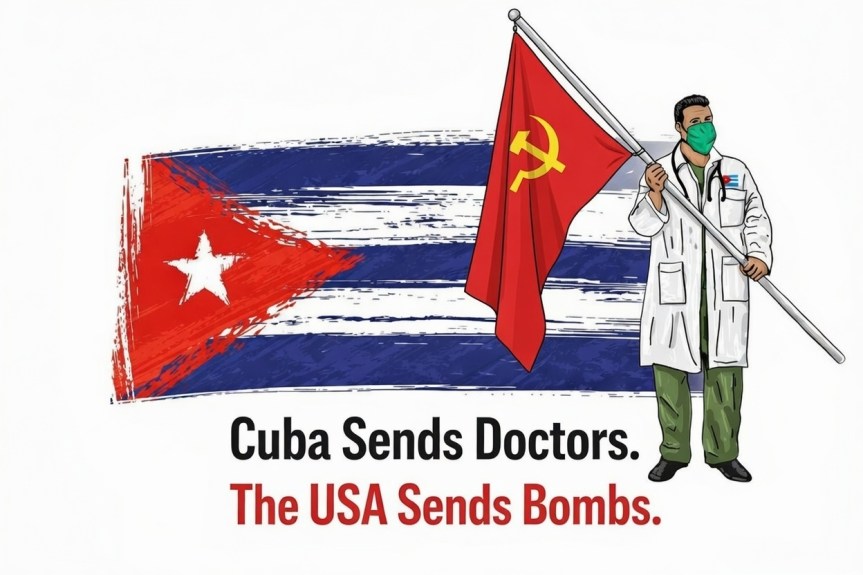
Nikos Mottas: «Cuba Sends Doctors. The USA Sends Bombs»

By Nikos Mottas

There are moments when history reduces itself to a single, unavoidable contrast. Today is one of them. As renewed threats and economic aggression once again emanate from Washington under Donald Trump, an old truth regains its sharpness:

Cuba sends doctors. The United States sends bombs.

This is not a slogan invented for effect. It is a reflection of two opposing social systems, two different priorities, two irreconcilable visions of what a society should produce—and for whom.

For more than sixty years, socialist Cuba has lived under blockade, sanctions, financial isolation, and constant political hostility from the United States. The goal of that pressure has never been hidden. From the early days after 1959, Washington’s strategy aimed at economic suffocation: restrict trade, choke access to credit, create scarcity, and force the population to turn against its own revolutionary project.

It did not work.

Instead of collapsing, the island reorganized itself. Instead of militarizing its society, it invested in education and public health. When much of the pre-revolutionary medical elite left the country expecting the Revolution to fall, Cuba made a historic decision: it would form a new generation of doctors drawn from workers and peasants. Healthcare would not depend on wealth. It would be universal, preventive, and public.

Under the leadership of Fidel Castro, scarce resources were directed not toward stock exchanges or private insurance conglomerates, but toward polyclinics, vaccination programs, and medical schools. In a poor country under siege, the Revolution chose to multiply doctors.

That choice transformed Cuba internally. Life expectancy rose. Infant mortality dropped to levels comparable with developed nations. Entire rural areas that had been abandoned under the old order received consistent medical care for the first time. Health ceased to be a commodity and became a social guarantee.

But Cuba did not stop at its own borders.

Time and again, when disaster struck elsewhere, Cuban medical brigades were there. After earthquakes in Latin America, hurricanes in the Caribbean, epidemics in Africa, and pandemics that paralyzed wealthy nations, Cuban doctors boarded planes carrying not weapons but stethoscopes. In the midst of Ebola’s devastation in West Africa, it was Cuban medical personnel who arrived in significant numbers when many powerful countries hesitated. During the COVID-19 crisis, Cuban brigades assisted overwhelmed healthcare systems abroad while the island simultaneously developed its own vaccines despite the blockade.

This is not charity diplomacy. It flows from a different organizing principle. A planned economy, even one with limited material wealth, can prioritize the defense of life because it is not governed by private profit.

Now look at the other side of the contrast.

The US commands the largest military budget in history. Its defense spending surpasses that of entire regions combined. It maintains hundreds of overseas bases and has been involved—directly or indirectly—in wars, invasions, regime-change operations, sanctions campaigns, and covert interventions across continents. From Southeast Asia to the Middle East, from Latin America to Eastern Europe, its foreign policy has consistently relied on military leverage and economic coercion.

At home, millions of Americans struggle with medical debt. Entire communities face inadequate healthcare access. Life-saving medication can be priced beyond reach. Yet there is no comparable hesitation when funding new weapons systems, expanding military alliances, or modernizing nuclear arsenals.

This contrast is not about national character. It is about structure.

Capitalism in its imperial stage concentrates wealth, protects corporate power, and projects military force to secure economic interests. Socialist construction—however constrained by massive external pressure—attempts to allocate resources according to collective need.

For more than six decades, the US blockade has attempted to make daily life in Cuba unbearable. It restricts access to medical equipment, fuel, spare parts, financial transactions, and international trade. It punishes third countries that attempt normal economic relations with the island. Every shortage is then cynically cited as proof that socialism “fails,” while the external chokehold is treated as invisible.

And yet, despite all this, Cuba continues to graduate doctors in remarkable numbers. It continues to dispatch medical brigades abroad. It continues to treat healthcare not as a luxury but as a right.

That reality is politically dangerous.

Washington is unsettled not by Cuban strength, but by Cuban example. A small Caribbean nation, ninety miles from Florida, demonstrating that education can be free, that healthcare can be universal, that solidarity can cross borders without corporate contracts—this stands as a quiet but persistent rebuke to the dominant model.

The difference can be expressed simply:

One system invests in aircraft carriers; the other invests in pediatricians

One system refines sanctions; the other refines vaccination campaigns.

One system speaks of “freedom” while tightening economic sieges; the other sends medical teams to communities that cannot pay.

Cuba is not a utopia. No society operating under permanent external pressure can be free of contradictions or difficulties. But its priorities are unmistakable. When faced with scarcity, it chooses to educate. When confronted with crisis, it chooses to heal. When attacked economically, it responds by training more doctors.

That moral orientation matters.

Cuba, a small island just ninety miles from Florida, keeps demonstrating that another world is possible — not through declarations and speeches, but through doctors, classrooms, and solidarity. And that living example is what the empire will never forgive.

* Nikos Mottas is the Editor-in-Chief of In Defense of Communism.  

Source: idcommunism.com

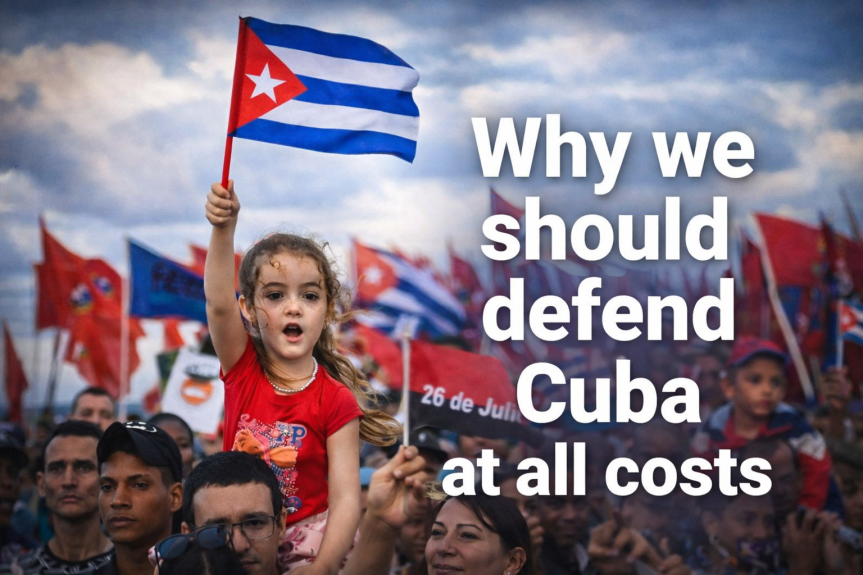
Nikos Mottas: Why we should defend Cuba at all costs

By Nikos Mottas

The recent escalation of vicious threats and coercive measures against Cuba by the Trump administration marks a new phase in a policy that is neither accidental nor episodic. The tightening of sanctions, the targeting of fuel supplies, the intensification of financial restrictions, and the open rhetoric of intimidation together constitute a deliberate sharpening of economic warfare against the Cuban people. 

This is not a diplomatic disagreement, nor a tactical adjustment dictated by momentary calculations. It is the continuation, under contemporary conditions, of a long-standing imperialist strategy whose objective has remained unchanged for more than six decades: to suffocate socialist Cuba and force its political capitulation.

What is unfolding today must be understood within the broader context of a generalized imperialist offensive, taking shape in conditions of deepening capitalist crisis. Economic coercion, sanctions regimes, and extraterritorial measures have become normalized instruments of class power on a global scale. In this framework, Cuba is not an isolated target but a strategic one. The attack on Cuba functions simultaneously as punishment and warning: punishment for a people that dared to break relations of dependency and expropriate capital, and warning to all others of the consequences of attempting a similar rupture.

To grasp why Cuba must be defended at all costs, it is necessary to move beyond moral appeals or abstract expressions of solidarity. The issue at stake is not sympathy, nor the defense of a distant cause. It is a question of class power, historical development, and the balance of forces between imperialism and the international working class.

Lenin’s analysis of imperialism remains indispensable precisely because it dispels illusions. Imperialism is not the product of particularly aggressive governments or misguided leaders; it is the necessary form assumed by capitalism at a certain stage of its development, when monopoly and finance capital dominate economic life and require political and military enforcement. Within this framework, the existence of a socialist state is intolerable not because of its rhetoric, but because of its material practice. Cuba did not merely replace one political leadership with another in 1959. It dismantled relations of dependency, expropriated foreign capital, and asserted social ownership over the decisive sectors of the economy. In doing so, it interrupted the mechanisms through which imperialism extracts value, disciplines labor, and reproduces its dominance.

The response was immediate and systematic. The blockade, sabotage, terrorist attacks, diplomatic isolation, and ideological warfare were not improvised reactions. They were the predictable instruments of a system that cannot coexist with alternatives. Imperialism does not tolerate exceptions; it seeks to erase them.

The blockade against Cuba has always functioned as a permanent counterrevolutionary mechanism. Its logic has never been military conquest, but social erosion. By restricting access to energy, medicine, spare parts, technology, credit, and trade, imperialism aims to disrupt the reproduction of socialist social relations themselves. This is why the targets are not abstract indicators, but concrete conditions of everyday life. Shortages are weaponized. Infrastructure is strained. Transport, production, and distribution are deliberately obstructed. Time, exhaustion, and uncertainty are transformed into political tools. The expectation is not that socialism will be overthrown through direct force, but that it will collapse under the cumulative pressure of material hardship.

Fidel Castro repeatedly warned that imperialism would attempt to defeat the revolution not only through open aggression, but through attrition. Yet he also emphasized that resistance under such conditions reshapes consciousness. Hardship, when interpreted correctly, does not automatically produce resignation or defeatism. It can also produce clarity. In this sense, Cuba’s endurance under siege is not passive survival; it is an ongoing ideological struggle conducted in conditions deliberately made hostile.

Cuba’s social achievements are often presented as isolated successes or statistical anomalies. This approach obscures their political content. Universal healthcare, free education, scientific development, cultural access, and social security are not neutral outcomes. They are the direct result of social ownership, central planning, and the exercise of working-class power. Under capitalism, even in its most developed forms, such guarantees remain subordinate to profitability. Under socialism, they become organizing principles. Cuba’s experience demonstrates, in practice rather than theory, that production organized for social use rather than private accumulation is not a utopian aspiration, but a viable historical alternative.

Che Guevara’s insistence on the moral and conscious dimensions of socialist construction is central to understanding this process. His emphasis on collective responsibility, social motivation, and the transformation of human relations was not ethical embellishment. It reflected a materialist understanding that socialism is not merely a rearrangement of property forms, but a struggle to overcome the social logic inherited from capitalism itself.

Cuba’s internationalist orientation emerged from this same clarity. It was not an optional moral stance, but the product of sober political assessment. As Lenin repeatedly warned, the existence of a socialist state in isolation, surrounded by an imperialist world system, inevitably entails immense pressure and heavy costs. International solidarity, therefore, is not generosity; it is a condition of survival. Cuba’s support for anti-colonial struggles, its internationalist missions, and its medical brigades were undertaken not in conditions of abundance, but of scarcity. They were acts of political realism, rooted in the understanding that fragmentation is imperialism’s most effective weapon and that solidarity, even when costly, strengthens resistance.

This is precisely why Cuba has been targeted so relentlessly. Internationalism undermines imperialism’s strategy of isolation. It exposes the global character of exploitation and reinforces the subjective capacity of oppressed peoples to resist. The attack on Cuba is therefore not only an attack on a specific country, but an attack on the principle of internationalism itself.

The defense of Cuba concerns the international working class directly. The message conveyed by imperialist aggression is unmistakable: any attempt to abolish capitalist property relations will be punished relentlessly. The objective is not only to defeat Cuba materially, but to present its defeat—if achieved—as historical proof that socialism is impossible. Such an outcome would have consequences far beyond the Caribbean. It would deepen defeatism, embolden reactionary forces, and reinforce the ideological hegemony of capital at a moment when capitalism itself is entering a period of intensified instability.

At this point, the historical significance of Cuba must be addressed without evasions. The counterrevolutionary overturns of 1989–1991 and the dissolution of the Soviet Union marked a profound setback in the global balance of class forces. They did not signify the “end of socialism,” but they did dramatically narrow the terrain of socialist construction. In the decades that followed, the international working class has confronted a world in which socialist transformation has been abandoned, distorted, or openly reversed in most places.

It is precisely within this historical rupture that Cuba’s role acquires exceptional weight. Despite its small size, despite suffocating imperialist pressure, and despite undeniable contradictions and difficulties, Cuba remains the only living example of a country that continues to attempt socialist construction on the basis of social ownership, planning, and working-class power, rather than market dominance and capitalist accumulation. This fact is not a moral judgment; it is an objective political reality.

Attempts to obscure this reality through false equivalences serve no emancipatory purpose. Capitalist restoration masked by socialist terminology, or systems dominated by market relations and capital accumulation, cannot substitute for socialist construction. Nor can forms of state survival that do not place the transformation of social relations at their core. Whatever their differences, such cases do not alter the historical truth that Cuba stands alone today as a reference point for socialism as a living project, not as a museum piece or rhetorical legacy.

For this reason, the defense of Cuba is not simply an act of solidarity with a besieged people. It is an act of strategic responsibility toward the international working class. To allow Cuba to be crushed, isolated, or forced into capitulation would not merely represent the defeat of one country. It would be used to seal the narrative that socialism belongs irrevocably to the past—that history has closed that chapter for good.

To defend Cuba is to reject that narrative in practice. It is to affirm that socialism is not a closed chapter of history, but a necessity born of capitalism’s own contradictions, contradictions that are deepening rather than receding. It is to defend the historical possibility that working people can still organize society on different foundations, even under conditions of extreme pressure.

For this reason, solidarity with Cuba cannot be episodic, symbolic, or rhetorical. It must be organized, political, and confrontational. It must challenge the legitimacy of the blockade, expose the criminal character of economic warfare, and mobilize working-class forces against imperialist aggression. For communist and workers’ parties, this is not a matter of preference. It is a test of internationalism. In conditions of imperialist assault, neutrality is not an intermediate position. Silence aligns objectively with the aggressor.

Capitalism today is marked by deep and sharpening structural contradictions: chronic economic instability, the permanent resort to militarization and war, increasingly authoritarian forms of governance, ecological devastation, and the systematic dismantling of social and labor rights. These phenomena are not accidental distortions of an otherwise functional system. They are the mature expression of capitalism’s historical limits. In this phase, the ruling classes are not merely managing crises; they are attempting to reorganize society in a way that permanently suppresses the possibility of systemic challenge.

Under these conditions, every living alternative becomes intolerable. Every historical experience that contradicts the narrative of capitalist inevitability must be erased, neutralized, or transformed into a harmless relic. It is in this sense that Cuba’s continued existence as a socialist project acquires decisive significance. Not because it claims perfection, but because it persists as a concrete negation of capitalist logic.

To understand this significance fully, one must confront directly the historical rupture produced by the counterrevolutionary overturns of 1989–1991 and the dissolution of the Soviet Union. That defeat did not mark the “end of socialism,” as bourgeois ideology endlessly proclaims. It marked a profound setback in the global balance of class forces, one whose consequences are still being felt. Since then, socialist construction has either been abandoned, reversed, or fundamentally distorted in most parts of the world.

In this post-counterrevolutionary landscape, Cuba occupies an objectively unique position. Despite its small size, despite relentless imperialist pressure, despite material scarcity and internal contradictions, Cuba remains the only country that continues to pursue socialist construction on the basis of social ownership, planning, and the primacy of working-class power over market relations and capital accumulation. This is not a matter of sentiment or loyalty; it is a material fact.

Attempts to blur this reality through false equivalences do not serve the working class. Capitalist restoration cloaked in socialist language, systems governed by the law of value and capital accumulation, or forms of state survival that do not place the transformation of social relations at their core cannot be treated as substitutes for socialist construction. Whatever their differences, such cases do not alter the central historical truth: Cuba stands today as the sole living reference point for socialism as a practical, ongoing process, not as a commemorative symbol of the past.

For this reason, the defense of Cuba transcends the boundaries of solidarity with a besieged nation. It becomes a question of strategic responsibility toward the international working class itself. To allow Cuba to be crushed, isolated, or forced into capitulation would not merely signify the defeat of one country. It would be mobilized ideologically to seal the argument that socialism belongs irreversibly to history, that the working class has no future beyond the management of capitalism’s crises.

To defend Cuba is to reject that argument in practice. It is to affirm that socialism is not a closed chapter of history, but a necessity born of capitalism’s own contradictions—contradictions that are intensifying rather than dissolving. It is to defend the historical possibility that working people can still organize society on different foundations, even under conditions of extreme pressure and hostility.

For this reason, solidarity with Cuba cannot be episodic, symbolic, or rhetorical. It must be organized, political, and confrontational. It must challenge the legitimacy of the blockade, expose the criminal character of economic warfare, and mobilize working-class forces against imperialist aggression. For communist and workers’ parties, this is not a question of preference or tone. It is a test of internationalism itself. In conditions of imperialist assault, neutrality is not an intermediate position; silence aligns objectively with the aggressor.

There is no comfortable middle ground. Either imperialism succeeds in suffocating socialist Cuba, or the international working class asserts its capacity to resist, to learn from historical defeats, and to re-enter history as an active force. Fidel Castro warned that revolutions are not destroyed only by external force, but by the erosion of solidarity and historical confidence. The defense of Cuba today is therefore a test—not of Cuba alone, but of the international workers’ movement as a whole.

Defending socialist Cuba is not a matter of sentiment, but a concrete historical task of the international working class — a task that must be carried out at all costs. 

* Nikos Mottas is the Editor-in-Chief of In Defense of Communism.  

Source: idcommunism.com

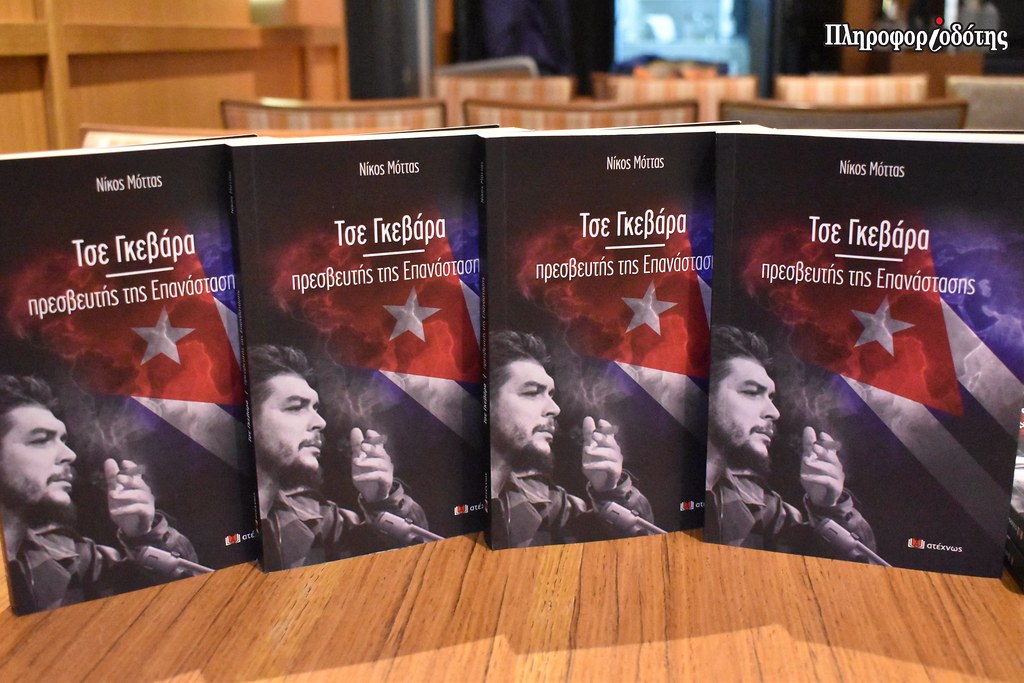
Nikos Mottas’ book on Che Guevara presented in Veria, Greece

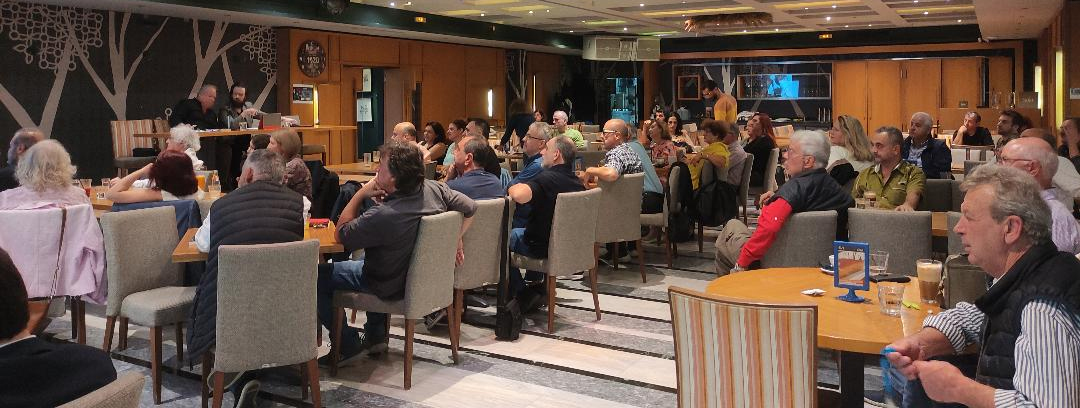
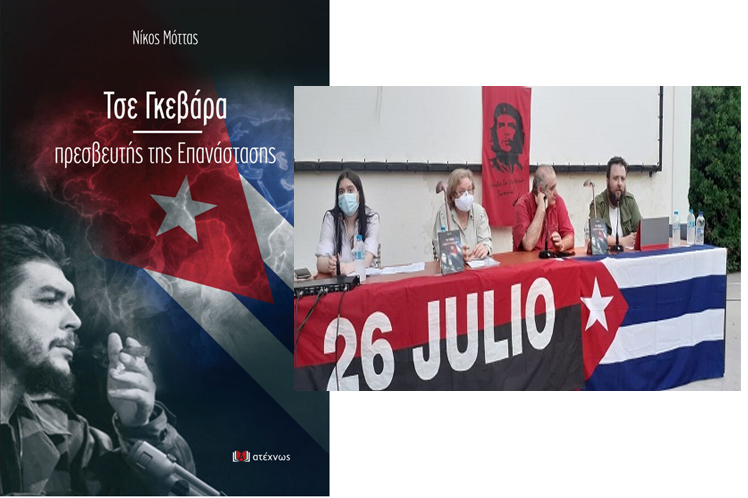
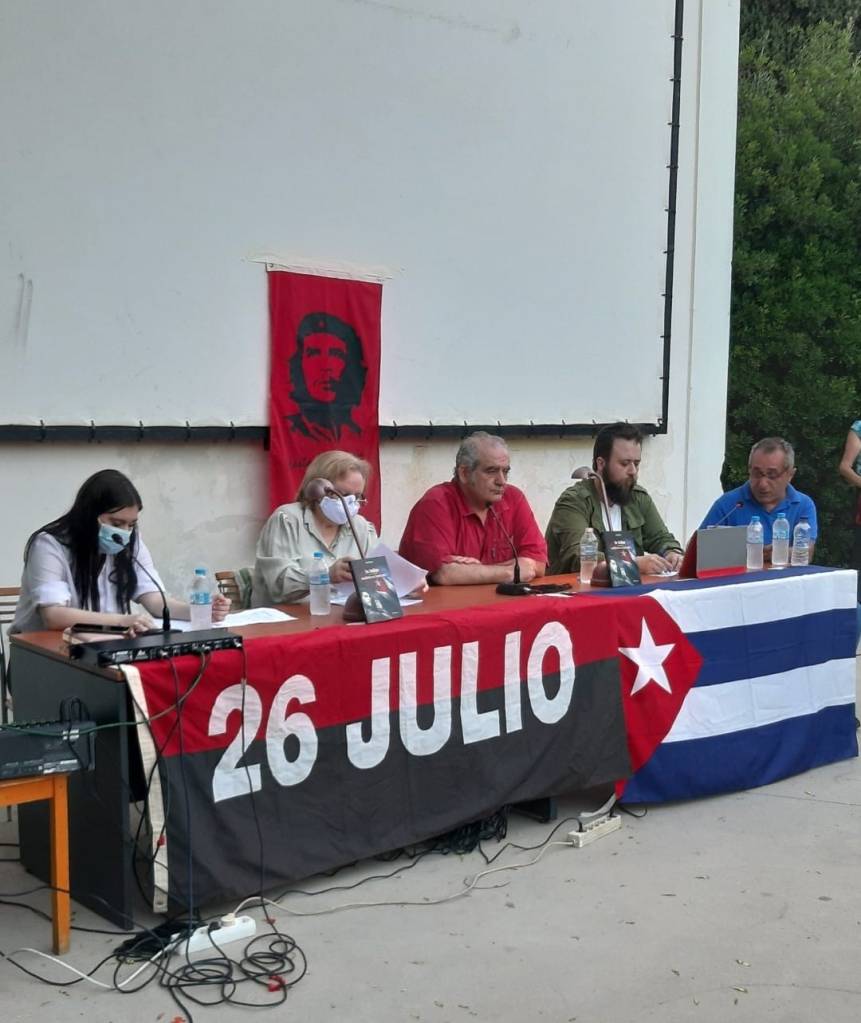
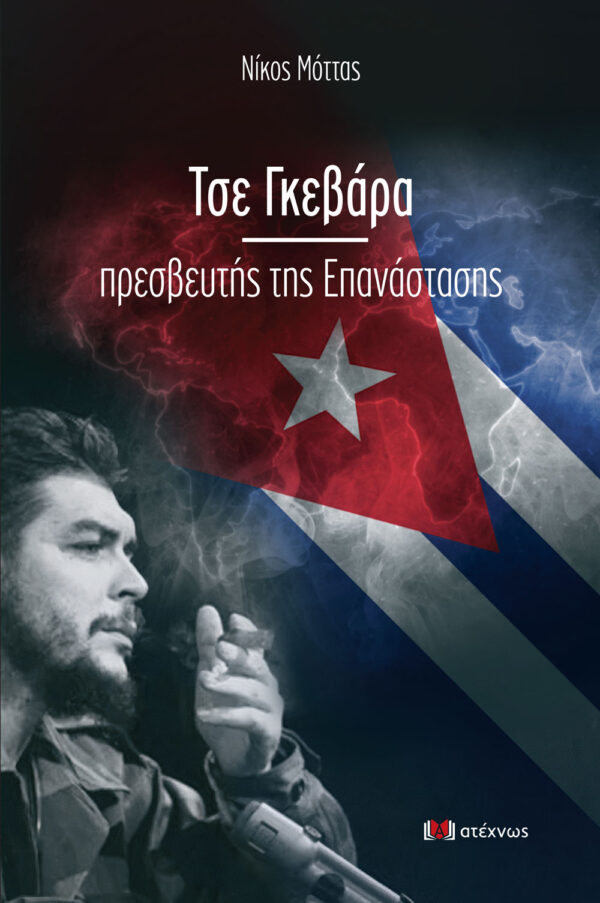
VERIA, GREECE – The presentation of Nikos Mottas’ book “Che Guevara, Ambassador of the Revolution” (2021, Atexnos Publishing) was held with particular success of Sunday 30 September in the northern Greek city of Veria.

The event was attended by numerous friends of Cuba, people from the local administration, representatives of associations and unions from the region of Imathia and others who expressed their solidarity towards the people of Cuba.

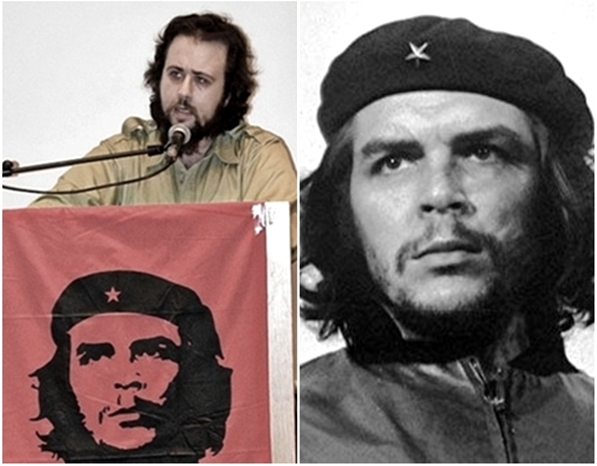
Nikos Mottas (right) with journalist Alekos Chatzikostas.

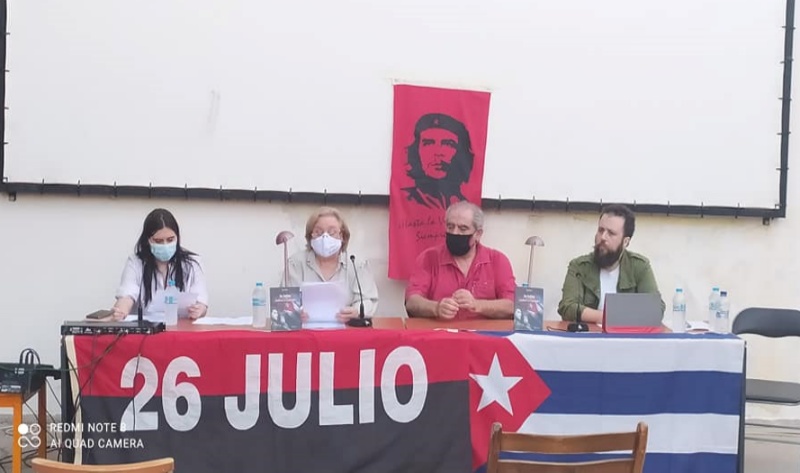
The speakers included Alekos Chatzikostas, journalist and author, as well as the book’s author Nikos Mottas. A special message addressed to the author by Dr. Aleida Guevara, daughter of Ernesto, was also read.

A short documentary titled “PAX CUBANA”, directed by Dimitris Tachmatzidis, was also presented during the event. Among others, the video included scenes from the visit of the Ambassador and Counsellor of the Republic of Cuba, Zelmys Maria Dominguez Cortina and Jose Oriol Marerro Martinez respectively, in northern Greece, including the archaelogical site of Vergina, back in September 2021.

Se presentó en Atenas el libro de Nikos Mottas sobre el Che Guevara

Atenas, 23 de junio. Se celebró en Atenas, la presentación del libro “Che Guevara, embajador de la revolución”, publicado por la editorial “Atexnos”. El autor es Nikos Mottas, gran amigo de Cuba, Secretario general de la Asociación Heleno- Cubana de Amistad de Salónica.

El importante evento devino en acto de solidaridad con Cuba y condena del criminal bloqueo económico comercial y financiero de EEUU contra cuba. Coincidió con la votación en la Asamblea General de Naciones Unidas (AGNU) de la resolución cubana contra el bloqueo, cuyos resultados con la victoria cubana un año más , se informaron para el regocijo de los asistentes.

Los oradores del evento fueron: -Zelmys Maria Dominguez Cortina, Embajadora de Cuba en Grecia; Vasilis Paparis, miembro de la Asociación Heleno-Cubana de amistad de Atenas y Nikos Mottas, autor del libro. Moderó el evento Velissarios Kossivakis, Director de “New Star Cinema” y gran amigo de Cuba.

Un momento muy emotivo fue la lectura de un mensaje especial enviado al evento por la hija de Che Dra. Aleida Guevara.

La embajadora resaltó la importancia del libro al profundizar en esa faceta de la vida del Che como diplomático de la revolución en diferentes foros entre ellos en Naciones Unidas y explicó la situación actual de Cuba, el recrudecimiento del bloqueo y la presentación nuevamente de la resolución condenándolo en AGNU.

Varios presentes hicieron preguntas o comentarios reafirmando su solidaridad con el pueblo cubano y la admiración por la figura del Che y otros líderes de la revolución cubana que son ejemplo para el mundo.

Embacuba Grecia

LOS COMUNISTAS GRIEGOS RINDIERON HOMENAJE A ERNESTO CHE GUEVARA

Nikos Mottas Homenaje Che Guevara
El Secretario General de la Asociación Heleno-Cubana de Amistad, Nikos Mottas

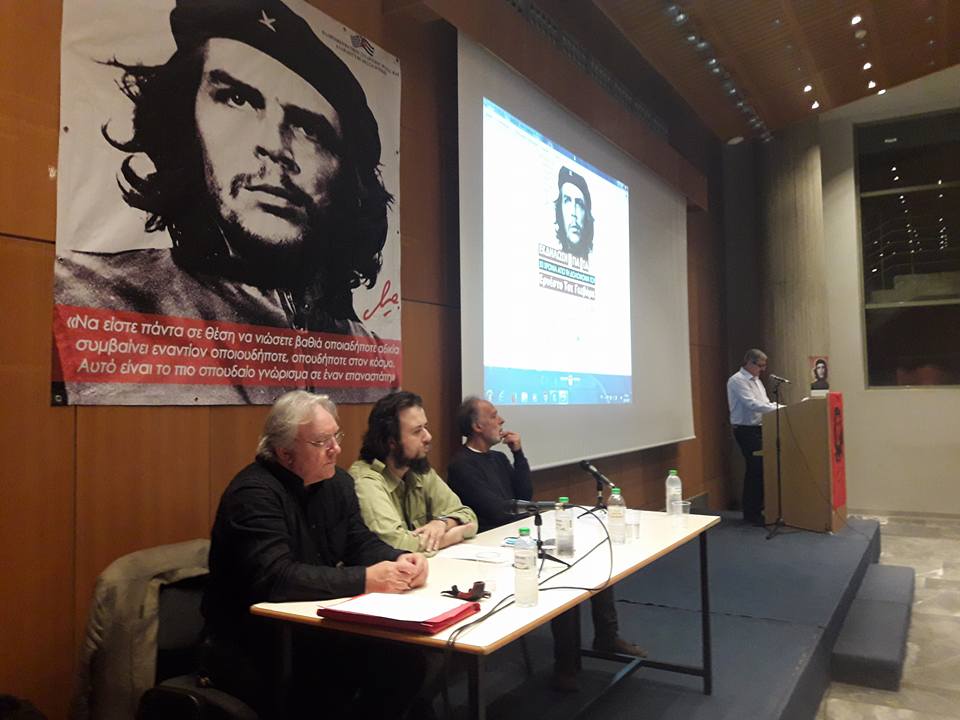
Salónica, Grecia: 18 de octubre – Se rindió homenaje a Ernesto Che Guevara en el 50 Aniversario de su caída en Bolivia, luchando por un mundo mejor y más justo , en un exitoso evento político cultural,  celebrado en la alcaldía de la ciudad griega de Salónica, segunda ciudad en importancia del país. El evento estuvo co-organizado por la Asociación Heleno Cubana de amistad y solidaridad  y el Comité griego por la distensión y la paz.

La Embajadora de Cuba en Grecia Zelmys Maria Domínguez Cortina saludo el evento agradeciendo a los organizadores, y resaltando la importancia del Che como ejemplo y su significado para el pueblo cubano. Señaló que “Ese hombre excepcional, ese ejemplo de revolucionario, siempre llevó consigo el amor por el pueblo cubano y su revolución, amor reciprocado por  ese pueblo que lo adoptó como hijo y sufrió como tal su pérdida física”.

Los principales oradores del evento fueron el Presidente de la Asociación Heleno Cubana de Amistad Apostolis Skoufas; el Secretario General de la mencionada Asociación Nikos Mottas y el presidente del Comité griego para la distensión y la paz de Salónica Nikos Zokas.

En su discurso, el Presidente Skoufas presentó los puntos básicos de la vida del Che y su carácter, mientras que el Secretario General Mottas se refirió a la herencia política marxista leninista del Che y su vigencia actual. Por su parte Nikos Zokas se refirió a aspectos de la economía política de Cuba durante la presencia del Che en el gobierno cubano.

En el evento, estaban presentes el consejero de la Embajada Jose Oriol Marrero Martínez, representantes del Comité Central del Partido Comunista de Grecia (KKE) en Salónica y de la Juventud comunista (KNE), así como  veteranos del ejército democrático de Grecia, y sindicalistas. Fue un evento muy emotivo donde cientos de amigos de Cuba y cubanos residentes en Salónica honraron la memoria del Che.


Grecia Homenaje al Che Guevara 2

Grecia Homenaje al Che Guevara 3

Evento en Grecia: Aniversario 50 del asesinato del Che Guevara

EVENTO POLÍTICO Y CULTURAL
 
50 aniversario del asesinato del Ernesto Che Guevara.
 
Che_876La Asociación Heléno-Cubana de Amistad y Solidaridad de Tesalónica y la Comité para la Paz Internacional de Tesalónica (EDIETH) organizan un acto político-cultural con motivo del 50 aniversario del asesinato del comunista revolucionario argentino Ernesto Che Guevara.
 
El acto tendrá lugar el miércoles 18 de octubre, a las 19.00 horas, en el Ayuntamiento de Salónica (sala «Manolis Anagnostakis»). Los oradores del evento, que se harán referencia a la vida y la acción del Che Guevara, son: Apostolos Skoufas, Presidente de la Asociación Heléno-Cubana; Nikos Mottas, Secretario General de la Asociación Heléno-Cubana y Nikos Zokas, Presidente de EDΙETH.
 
La Embajadora de la República de Cuba en Grecia Sra. Zelmys Maria Dominguez Cortina asistirá y dirigirá un mensaje de bienvenida, mientras que el evento incluirá también el tributo audiovisual y musical al legendario revolucionario.

Nikos Mottas: Thank You Compañero Fidel Castro!

fidel-castro-ruz-great-revolutionaryBy Nikos Mottas / In Defense of Communism.

«Rights are to be taken, 

not requested; seized, 

not begged for»

– Jose Marti.

After 25th November 2016 humanity is poorer. The international working class, the people who fiught for a better world, those who believe in a society without exploitation of man by man, are poorer. Along with the proud people of Cuba, the international communist movement mourns the biological death of one of the greatest, the most emblematic revolutionaries of contemporary History. The heart of the leader of the Cuban Revolution, Comandante Fidel Castro stopped beating, marking the biological end of a life of 90 years full of struggles and sacrifices for the ideals of Socialism-Communism, for a Cuba where the people will be the masters of their destiny.

The death of Fidel, as well as the biological deaths of other extraordinary revolutionaries and communists like Lenin, Stalin, Che, Ho Chi Minch, consists a motive for the evaluation of their revolutionary work and legacy. A work and a legacy which are key factors in the formation of the class conciousness of the working class.

Fidel approached Marxism-Leninism in practice. He was a communist in actions, not words.Comandante Fidel identified himself with revolutionary practice which is dialectically inter-connected with the Marxist revolutionary theory. Along with his comrades and the Cuban people he accomplished an extraordinary achievement- the first Socialist revolution in the history of the American continent. Comrade Castro and the Cuban Revolution proved that Imperialism is not undefeated and that the only real superpower is the people who resist, the people who fight against capitalist barbarity and open the road to socialist perspective.

Various imperialists, apologists of Capitalism, fascists and anticommunists are trying these days to vilify Fidel and his legacy. They have already failed. Because History- the only unmistakable judge- has absolved him. Fidel has been irreversibly and ultimately absolved by History. The achievements of the Cuban Revolution consist a solid proof of that.

Today, 57 years after the 1959 Revolution, the achievements of socialist construction in Cuba’s public sectors including Health, Education and Housing is much higher than in many capitalist countries in Latin America. The literacy rate is almost 98%, education is accessible to all citizens without exceptions while the Cuban national health system (free for all) is justifiably regarded one of the best in the world. Some indicative data speak by themselves:

  • In 2007, the average life expectancy rate in Cuba was 78.26 years, having increasing trend. For the same year, the rate in the US was 77.99 years. (World Bank).
  • In 2010, infant mortality rate in the island was 4.7 for ever 1000 births, less than any country in the whole continent, including the US.
  • During the last years, 1,390,000 patients from 32 countries had their vision improved or fully restored in 59 ophalmology centers operating under the support of the Cuban and Venezuelan governments.
  • The centralized, state control of economy has let Cuba to constantly develop the national health system, even after the collapse of the Soviet Union and the hardening of the US economic blockade. From 1990 to 2003, the number of doctors in Cuba increased by 76%, of dentists by 46% and nurses by 16%. During the same period, the population coverage of the social institution of «family doctor» was increased by 52.2%, touching a rate of 99.2% in 2003.
  • In November 2008, Cuba had more than 70,000 doctors. From them, approximately 17,600 were sent to 75 different countries in order to offer their services there. In 27 countries (including African countries such as Ghana, Botswana, Namimbia etc.) Cuba has supplied medical personnel which offers high quality services. In Timor Leste, for example, it is estimated that between 2003 and 2008, the Cuban medical mission saved 11,400 people contributing significantly to the fall of birth mortality rate.
  • The high solidarity feeling among Cuban people is undoubted. The first Cuban medical team was sent in 1960 to the then devastated by an earthquake Chile. From 1960 to 1980 the Cuban government immediately sent medical aid to 16 countries which had been facing natural disasters or conflicts. On August 2005, after the disastrous hurricane Katrina in the United States, the Castro government volunteered to sent a team of doctors to the state of Louisianna. The proposal was turned down by the Bush administration. During the same year, on October 2005, Cuba sent the largest number of specialized medical personnel (2,500 men and women) to Pakistan, shortly after the earthquake. Moreover, the Cuban government offered 1,000 scholarships to Pakistani students from poor families who desired to study medicine.

fidel-castro-speech-1Furthermore…

  • The 99.8% of Cubans over the age of 15 know how to read and write (UNESCO). That consists the highest rate of literacy in Latin America and one of the highest internationally.

  • During 2010, one million young Cubans were graduated from the country’s universities.

  • The role of woman in society is upgraded. Fourty-three percent (43%) of the seats at the country’s parliament are held by females, while 65% of the labor force in technical sectors are women.

  • Despite the relatively small size of the country (11 million), Cuba is a significant power in sports. For example, in the Pan-American Games of 2011 held in Mexico, the country was terminated second with 58 golden medals.

On the above we should add the fact that any citizen, indifferently of sex, race or ethnicity, can find a job, without facing the terrible situation of unemployment that bedevils many «developed» capitalist countries of the West.

The socialist construction in Cuba is not perfect- there are existing problems which constantly changing and the Revolution faces new challenges. However, we should ask ourselves: Under what conditions does Cuba and Cuban people try to live and develop the socialist system for more than four decades? The answer is clear

Since the triumph of the 1959 Revolution and until today, Imperialism- more specifically the U.S. imperialism- has not stopped to undermine the socialist construction in this small but proud island. The inhuman embargo (economic blockade) that has been imposed by the US government is an example of a multi-dimensional war that Imperialism has declared to Cuba. It is estimated that, in economic terms, 8 hours of economic blockade equals with 140 school buildings’ renovations. Three days of blockade equals with 100 tones of pharmaceutical material.

The war of Imperialism against the Castro government and the Cuban people became more relentless after the counter-revolutionary events of 1989-1991 in the Soviet Union and Eastern Europe. However, Cuba‘s Socialism managed not only to stay firm, but also to progress under especially adverse circumstances. That consists the unambiguous and undoubted vindication of Fidel Castro.

Every communist, every Marxist-Leninist, every honest fighter against capitalist exploitation and Imperialism, in every corner of the world, owes a massive “Gracias” to Comandante Fidel.

Thank You companero Fidel Castro! Thank you for your dedication to the ideals of Socialism-Communism. Thank you for all the unforgettable heroes who fought by your side- for Che, for Camilo, for Celia, for Raul and many others! Thank you for the proletarian internationalism which you and Cuba honoured in the best possible way! Thank you for your solidarity to the people of the world. Thank you for your extraordinary speeches which will continue to inspire a spirit of disobedience and rebellion against Imperialism. Thank you for the Revolution and the bread of the Cuban people who loved you like a father.

Thank You, Compañero Fidel, most of all, for the hope for a better world! Hasta La Victoria, Siempre Comandante!

28.11.2016.
 
*Nikos Mottas is the Editor-in-Chief of In Defense of Communism, a PhD candidate in Political Science, International Relations and Political History. 
fidel2bkentriki