
Ετικέτα: Ernesto Che Guevara

Speech at the U.N. Conference on Trade and Development
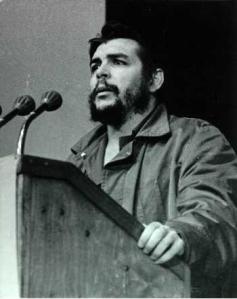 Η παρακάτω ομιλία εκφωνήθηκε από τον Ερνέστο Τσε Γκεβάρα στο πλαίσιο της Συνόδου Εμπορίου και Ανάπτυξης του Ο.Η.Ε. (UN Conference on Trade and Development) στη Γενεύη, στις 25 Μαρτίου 1964.
«The delegation of Cuba, an island nation situated at the mouth of the Gulf of Mexico in the Caribbean Sea, is addressing you. It addresses you under the protection of its rights, on many grounds, to come to this forum and proclaim the truth about itself. It addresses you first of all, as a country that is building socialism; as a country belonging to the group of Latin American nations, even though decisions contrary to law have temporarily severed it from the regional organization, owing to the pressure exerted and the action taken by the United States of America. Its geographical position indicates it is an underdeveloped country that addresses you, one which has borne the scars of colonialist and imperial exploitation and which knows from bitter experience the subjection of its markets and its entire economy, or what amounts to the same thing, the subjection of its entire governmental machinery to a foreign power. Cuba also addresses you as a country under attack.
All these features have given our country a prominent place in the news throughout the world, in spite of its small size, its limited economic importance, and its meager population.
At this conference, Cuba will express its views from the various stand-points which reflect its special situation in the world, but it will base its analysis on its most important and positive attribute: that of a country which is building socialism. As an underdeveloped Latin American country, it will support the main demands of its fraternal countries, and as a country under attack it will denounce from the very outset all the machinations set in train by the coercive apparatus of that imperial power, the United States of America.
We preface our statement with these words of explanation because our country considers it imperative to define accurately the scope of the conference, its meaning, and its possible importance.
We come to this meeting seventeen years after the Havana Conference, where the intention was to create a world order that suited the competitive interests of the imperialist powers. Although Cuba was the site of that Conference, our revolutionary government does not consider itself bound in the slightest by the role then played by a government subordinated to imperialist interests, nor by the content or scope of the so-called Havana Charter.
At that conference, and at the previous meeting at Bretton Woods, a group of international bodies were set up whose activities have been harmful to the interests of the dependent countries of the contemporary world. And even though the United States of America did not ratify the Havana Charter because it considered it too «daring», the various international credit and financial bodies and the General Agreement on Tariffs and Trade which were the tangible outcome of those two meetings, have proved to be effective weapons for defending its interests, and what is more, weapons for attacking our countries.
These are subjects which we must deal with at length later on.
Today the conference agenda is broader and more realistic because it includes, among others, three of the crucial problems facing the modern world: the relations between the camp of the socialist countries and that of the developed capitalist countries; the relations between the underdeveloped countries and the developed capitalist powers; and the great problem of development for the dependent world.
The participants at this new meeting far outnumber those who met at Havana in 1947. Nevertheless, we cannot say with complete accuracy that this is the forum of the peoples of the world. The result of the strange legal interpretations which certain powers still use with impunity is that countries of great importance in the world are missing from this meeting: for example the People’s Republic of China, the sole lawful representative of the most populous nation on earth, whose seats are occupied by a delegation which falsely claims to represent that nation, and which, to add to the anomaly, even enjoys the right of veto in the United Nations.
It should also be noted that delegations representing the Democratic Republic of Korea and the Democratic Republic of Vietnam, the genuine governments of those nations, are absent, while representatives of the governments of the southern parts of both those divided states are present; and to add to the absurdity of the situation, while the German Democratic Republic is unjustly excluded, the Federal Republic of Germany is attending this conference and is given a Vice Presidency. And while the socialist republics I mentioned are not represented here, the government of the Union of South Africa, which violates the Charter of the United Nations by the inhuman and fascist policy of apartheid embodied in its national laws, and which defies the United Nations by refusing to transmit information on the territories which it holds in trust, makes bold to occupy a seat in this hall.
Because of these anomalies the conference cannot be defined as the forum of the world’s peoples. It is our duty to point this out and draw it to the attention of the participants, because so long as this situation persists, and justice remains the tool of a few powerful interests, legal interpretations will continue to be made to suit the convenience of the oppressor powers and it will be difficult to relax the prevailing tension: a situation which entails real dangers for mankind. We also stress these facts in order to call attention to the responsibilities incumbent upon us and to the consequences that may result from the decisions taken here. A single moment of weakness, wavering, or compromise may discredit us in the eyes of history, just as we, the member states of the United Nations, are in a sense accomplices and bear on our hands the blood of Patrice Lumumba, Prime Minister of the Congolese, who was wretchedly murdered at a time when United Nations troops were presumably ‘guaranteeing the stability’ of his regime. What is worse, those troops had been expressly requested by the martyr, Patrice Lumumba.
Events of such gravity, or other similar events, or those which have negative implications for international relations and which jeopardize our prestige as sovereign nations, must not be allowed to happen at this conference.
We live in a world that is deeply and antagonistically divided into groupings of nations very dissimilar in economic, social, and political outlook. In this world of contradictions, the one existing between the socialist countries and the developed capitalist countries is spoken of as the fundamental contradiction of our time. The fact that the cold war, conceived by the warmongering West, has shown itself lacking in practical effectiveness and in political realism is one of the factors that have led to the convening of this conference. But while that is the most important contradiction, it is nevertheless not the only one; there is also the contradiction between the developed capitalist countries and the world’s underdeveloped nations; and at this Conference on Trade and Development, the contradictions existing between these groups of nations are also of fundamental importance. In addition there is the inherent contradiction between the various developed capitalist countries, which struggle unceasingly among themselves to divide up the world and to gain a firm hold on its markets so that they may enjoy an extensive development based, unfortunately, on the hunger and exploitation of the dependent world.
These contradictions are important; they reflect the realities of the world today, and they give rise to the danger of new conflagrations, which, in the atomic age, could spread throughout the world.
If at this egalitarian conference, where all nations can express, through their votes the hopes of their peoples, a solution satisfactory to the majority can be reached, a unique step will have been taken in the history of the world. However, there are many forces at work to prevent this from happening. The responsibility for the decisions to be taken devolves upon the representatives of the underdeveloped peoples. If all the peoples who live under precarious economic conditions, and who depend on foreign powers for some vital aspects of their economy and for their economic and social structure, are capable of resisting the temptations, offered coldly although in the heat of the moment, and impose a new type of relationship here, mankind will have taken a step forward.
If, on the other hand, the groups of underdeveloped countries, lured by the siren song of the vested interests of the developed powers which exploit their backwardness, contend futilely among themselves for the crumbs from the tables of the world’s mighty, and break the ranks of numerically superior forces; or if they are not capable of insisting on clear agreements, free from escape clauses open to capricious interpretations; of if they rest content with agreements that can simply be violated at will by the mighty, our efforts will have been to no avail, and the long deliberations at this conference will result in nothing more than innocuous files in which the international bureaucracy will zealously guard the tons of printed paper and kilometers of magnetic tape recording the opinions expressed by the participants. And the world will remain as it is.
Such is the nature of this conference. It will have to deal not only with the problems involved in the domination of markets and the deterioration in the terms of trade but also with the main reason for this state of world affairs: the subordination of the national economies of the dependent countries to other more developed countries, which, through investment, hold sway over the main sectors of their economies.
It must be clearly understood, and we say it in all frankness, that the only way to solve the problems now besetting mankind is to eliminate completely the exploitation of dependent countries by developed capitalist countries, with all the consequences that this implies. We have come here fully aware that what is involved is a discussion between the representatives of countries which have put an end to the exploitation of man by man, of countries which maintain such exploitation as their working philosophy, and of the majority group of the exploited countries. We must begin our discussion by acknowledging the truth of the above statements.
Even when our convictions are so firm that no arguments can change them, we are ready to join in constructive debate in a setting of peaceful coexistence between countries with different political, economic, and social systems. The difficulty lies in making sure that we all know how much we can hope to get without having to take it by force, and where to yield a privilege before it is inevitably wrung from us by force. The conference has to proceed along this difficult, narrow road; if we stray, we shall find ourselves on barren ground.
We announced at the beginning of this statement that Cuba would speak here also as a country under attack. The latest developments, which have made our country the target of imperialist wrath and the object of every conceivable kind of repression and violation of international law, from before the time of Playa Giron till now, are known to all. It was no accident that Cuba was the main scene of one of the incidents that have most gravely endangered world peace, as a result of legitimate action taken by Cuba in exercise of its right to adopt the principles of its own people.
Acts of aggression by the United States against Cuba began virtually as soon as the Revolution had been won. In the first stage they took the form of direct attacks on Cuban centers of production.
Later, these acts took the form of measures aimed at paralyzing the Cuban economy; about the middle of 1960 an attempt was made to deprive Cuba of the fuel needed to operate her industries, transport, and power stations. Under pressure from the Department of State, the independent United States oil companies refused to sell petroleum to Cuba or to provide Cuba with tankers to ship it in. Shortly afterward efforts were made to deprive Cuba of the foreign exchange needed for its external trade; a cut of 700,000 short tons in the Cuban sugar quota in the United States was made by President Eisenhower on July 6, 1960, and the quota was abolished altogether on March 31, 1961, a few days after the announcement of the Alliance for Progress and a few days before Playa Giron. In an endeavor to paralyze Cuban industry by cutting off its supplies of raw materials and spare machine parts, the United States Department of Commerce issued on October 19, 1960, an order prohibiting the shipment of many products to our island. This ban on trade with Cuba was progressively intensified until on February 3, 1962, the late President Kennedy placed an embargo on all United States trade with Cuba.
After all these acts of aggression had failed, the United States went on to subject our country to economic blockade with the object of stopping trade between other countries and our own. Firstly, on January 24, 1962, the United States Treasury Department announced a ban on the importation into the United States of any article made wholly or partly from products of Cuban origin, even if it was manufactured in another country. A further step, equivalent to setting up a virtual economic blockade, was taken on February 6, 1963, when the White House issued a communique announcing that goods bought with United States Government funds would not be shipped in vessels flying the flag of foreign countries which had traded with Cuba after January 1, of that year. This was the beginning of the blacklist, which now includes over 150 ships belonging to countries that have not yielded to the illegal United States blockade. A further measure to obstruct Cuba’s trade was taken on July 8, 1963, when the United States Treasury Department froze all Cuban property in United States territory and prohibited the transfer of dollars to or from Cuba, together with other kinds of dollar transaction carried out through third countries. Obsessed with the desire to attack us, the United States specifically excluded our country from the supposed benefits of the Trade Expansion Act. Acts of aggression have continued during the current year. On February 18, 1964, the United States announced the suspension of its aid to the United Kingdom, France, and Yugoslavia, because these countries were still trading with Cuba. Secretary of State Dean Rusk said that, «there could be no improvement in relations with Communist China while that country incited and supported acts of aggression in Southeast Asia, or in relations with Cuba while it represented a threat to the Western Hemisphere.» That threat, he went on, could be ended to Washington’s satisfaction only with the overthrow of the Castro regime by the Cuban people. They regarded that regime as temporary.
Cuba summons the delegation of the United States Government to say whether the actions foreshadowed by the Secretary’s statement and others like it, and the incidents we have described are or are not at odds with coexistence in the world today, and whether, in the opinion of that delegation, the successive acts of economic aggression committed against our island and against other countries which trade with us are legitimate. I ask whether that attitude is or is not at odds with the principle of the organization that brings us together — that of practicing tolerance between states — and with the obligation laid by that organization upon countries that have ratified its Charter to settle their disputes by peaceful means. I ask whether that attitude is or is not at odds with the spirit of this meeting in favor of abandoning all forms of discrimination and removing the barriers between countries with different social systems and at different stages of development. And I ask this conference to pass judgement on the explanation, if the United States delegation ventures to make one. We, for our part, maintain the only position we have ever taken in the matter: We are ready to join in discussions provided that no prior conditions are imposed.
The period that has elapsed since the Havana Charter was signed has been marked by events of undeniable importance in the field of trade and economic development. In the first place we have to note the expansion of the socialist camp and the collapse of the colonial system. Many countries, covering an area of more than thirty million square kilometres and with one-third of the world’s population, have chosen as their system of development the construction of the communist society, and as their working philosophy, Marxism-Leninism. Others, without directly embracing the Marxist-Leninist philosophy, have stated their intention of laying the foundations on which to build socialism. Europe, Asia, and now Africa and America, are continents shaken by the new ideas abroad in the world.
The countries in the socialist camp have developed uninterruptedly at rates of growth much faster than those of the capitalist countries in spite of having started out, as a general rule, from fairly low levels of development and of having had to withstand wars to the death and rigorous blockades.
In contrast with the surging growth of the countries in the socialist camp and the development taking place, albeit much more slowly, in the majority of the capitalist countries, is the unquestionable fact that a large proportion of the so-called underdeveloped countries are in total stagnation, and that in some of them the rate of economic growth is lower than that of population increase.
These characteristics are not fortuitous; they correspond strictly to the nature of the developed capitalist system in full expansion, which transfers to the dependent countries the most abusive and barefaced forms of exploitation.
Since the end of the last century this aggressive expansionist trend has been manifested in countless attacks on various countries on the more underdeveloped continents. Today, however, it mainly takes the form of control exercised by the developed powers over the production of and trade in raw materials in the dependent countries. In general it is shown by the dependence of a given country on a single primary commodity, which sells only in a specific market in quantities restricted to the needs of that market.
The inflow of capital from the developed countries is the prerequisite for the establishment of economic dependence. This inflow takes various forms: loans granted on onerous terms; investments that place a given country in the power of the investors; almost total technological subordination of the dependent country to the developed country; control of a country’s foreign trade by the big international monopolies; and in extreme cases, the use of force as an economic weapon in support of the other forms of exploitation.
Sometimes this inflow takes very subtle forms, such as the use of international financial credit and other types of organizations. The International Monetary Fund, the International Bank for Reconstruction and Development, GATT 2 and on the American continent, the Inter-American Development Bank are examples of international organizations placed at the service of the great capitalist colonialist powers essentially at the service of United States imperialism. These organizations make their way into domestic economic policy, foreign trade policy, and domestic and external financial relations of all kinds.
The International Monetary Fund is the watchdog of the dollar in the capitalist camp; the International Bank for Reconstruction and Development is the instrument for the infiltration of United States capital into the underdeveloped world, and the Inter American Development Bank performs the same sorry function on the American continent. All these organizations are governed by rules and principles which are represented as safeguards of equity and reciprocity in international economic relations, whereas in reality they are merely hocus-pocus masking the subtlest kinds of instruments for the perpetuation of backwardness and exploitation. The International Monetary Fund, which is supposed to watch over the stability of exchange rates and the liberalization of international payments, merely denies the underdeveloped countries even the slightest means of defense against the competition of invading foreign monopolies.
While launching so-called austerity programs and opposing the forms of payment necessary for the expansion of trade between countries faced with a balance of payments crisis and suffering from severe discriminatory measures in international trade, it strives desperately to save the dollar from its precarious situation, without going to the heart of the structural problems which afflict the international monetary system and which impede a more rapid expansion of world trade.
GATT, for its part, by establishing equal treatment and reciprocal concessions between developed and underdeveloped countries, helps to maintain the status quo and serves the interests of the former group of countries, and its machinery fails to provide the necessary means for the elimination of agricultural protectionism, subsidies, tariffs, and other obstacles to the expansion of exports from the dependent countries. Even more, it now has its so-called «Programme of Action,» and by a rather suspicious coincidence, the «Kennedy Round» is just about to begin.
In order to strengthen imperialist domination, the establishment of preferential areas has been adopted as a means of exploitation and neocolonial control. We can speak in full knowledge of this, for we ourselves have suffered the effects of preferential Cuban-United States agreements which shackled our trade and placed it at the disposal of the United States monopolies.
There is no better way to show what those preferences meant for Cuba than to quote the views of Sumner Welles, the United States Ambassador, on the Reciprocal Trade Agreement which was negotiated in 1933 and signed in 1934: «…the Cuban Government in turn would grant us a practical monopoly of the Cuban market for American imports, the sole reservation being that in view of the fact that Great Britain was Cuba’s chief customer for that portion of sugar exports which did not go to the United States, the Cuban Government would desire to concede certain advantages to a limited category of imports from Great Britain.
«…Finally, the negotiation at this time of a reciprocal trade agreement with Cuba, along the lines above indicated, will not only revive Cuba but will give us practical control of a market we have been steadily losing for the past ten years, not only for our manufactured products but for our agricultural exports as well, notably in such categories as wheat, animal fats, meat products, rice, and potatoes» [telegram from Ambassador Welles to the Secretary of State of the United States, sent on May 13, 1933 at 6 PM. and reproduced on pages 289 and 290 of Volume V (1933) of the official publication Foreign Relations of the United States]. The results of the so-called Reciprocal Trade Agreement confirmed the view of Ambassador Welles.
Cuba had to vend its main product, sugar, all over the world in order to obtain foreign currency with which to achieve a balance of payments with the United States, and the special tariffs which were imposed prevented producers in European countries, as well as our own national producers, from competing with those of the United States.
It is necessary only to quote a few figures to prove that it was Cuba’s function to seek foreign currency all over the world for the United States. During the period 1948 to ‘957, Cuba had a persistent debit balance of trade with the United States, totaling 382.7 million pesos, whereas its trade balance with the rest of the world was consistently favorable, totaling 1,274.6 million pesos. The balance of payments for the period 1948-1958 tells the story even more eloquently: Cuba had a positive balance of 543.9 million pesos in its trade with countries other than the United States, but lost this to its rich neighbor with which it had a negative balance of 952.1 million pesos, with the result that its foreign currency reserves were reduced by 408.2 million pesos.
The so-called Alliance for Progress is another clear demonstration of the fraudulent methods used by the United States to maintain false hopes among nations, while exploitation grows more acute.
When Fidel Castro, our Prime Minister, indicated at Buenos Aires in 1959, that a minimum of 3 billion dollars a year of additional external income was needed to finance a rate of development which would really reduce the enormous gap separating Latin America from the developed countries, many thought that the figure was exaggerated. At Punta del Este, however, 2 billion dollars a year was promised. Today it is recognized that merely to offset the loss caused by the deterioration in the terms of trade in 1961 (the last year for which figures are available), 30 per cent a year more than the hypothetical amount promised will be required. The paradoxical situation now is that, while the loans are either not forthcoming or are made for projects which contribute little or nothing to the industrial development of the region, increased amounts of foreign currency are being transferred to the industrialized countries. This means that the wealth created by the labor of peoples who live for the most part in conditions of backwardness, hunger, and poverty is enjoyed in United States imperialist circles. In 1961, for instance, according to ECLA figures, there was an outflow of 1.735 billion dollars from Latin America, in the form of interest on foreign investments and similar payments, and of 1.456 billion dollars in payments on foreign short-term and long-term loans. If we add to this the indirect loss of purchasing power of exports (or deterioration in the terms of trade), which amounted to 2.66 billion dollars in 1961, and 400 million dollars for the flight of capital, we arrive at a total of 6.2 billion dollars, or more than three «Alliances for Progress» a year. Thus, assuming that the situation has not deteriorated further in 1964, the Latin American countries participating in the Alliance for Progress will lose directly or indirectly, during the three months of this conference, almost 1.6 billion dollars of the wealth created by the labor of their peoples. On the other hand, of the 2 billion dollars pledged for the entire year, barely half can be expected, on an optimistic estimate, to be forthcoming.
Latin America’s experience of the real results of this type of «aid,» which is represented as the surest and most effective means of increasing external income, better than the direct method-that of increasing the volume and value of exports, and modifying their structure-has been a lamentable one. For this very reason it may serve as a lesson for other regions and for the underdeveloped world in general. At present that region is virtually at a standstill so far as growth is concerned; it is also afflicted by inflation and unemployment, is caught up in the vicious circle of foreign indebtedness, and is racked with tensions which are sometimes discharged by armed conflict.
Cuba has drawn attention to these facts as they emerged, and has predicted the outcome, specifying that it rejected any implication in it other than that emanation from its example and its moral support; and events have proved it to be right. The Second Declaration of Havana is proving its historical validity.
These phenomena, which we have analyzed in relation to Latin America, but which are valid for the whole of the dependent world, have the effect of enabling the developed powers to maintain trade conditions that lead to a deterioration in the terms of trade between the dependent countries and the developed countries.
This aspect — one of the more obvious ones, which the capitalist propaganda machinery has been unable to conceal — is another of the factors that have led to the convening of this conference.
The deterioration in the terms of trade is quite simple in its practical effect: the underdeveloped countries must export raw materials and primary commodities in order to import the same amount of industrial goods. The problem is particularly serious in the case of the machinery and equipment which are essential to agricultural and industrial development.
We submit a short tabulation, indicating, in physical terms, the amount of primary commodities needed to import a thirty to thirty-nine horsepower tractor in the years 1955 and 1962. These figures are given merely to illustrate the problem we are considering. Obviously, there are some primary commodities for which prices have not fallen and may indeed have risen somewhat during the same period, and there may be some machinery and equipment which have not risen in relative cost as substantially as that in our example. What we give here is the general trend.
We have taken several representative countries as producers of the raw materials or primary commodities mentioned. This does not mean, however, that they are the only producers of the item or that they produce nothing else.
Many underdeveloped countries, on analyzing their troubles, arrive at what seems a logical conclusion. They say that the deterioration in the terms of trade is an objective fact and the underlying cause of most of their problems and is attributable to the fall in the prices of the raw materials which they export and the rise in the prices of manufactures which they import — I refer here to world market prices. They also say, however, that if they trade with the socialist countries at the prices prevailing in those markets, the latter countries benefit from the existing state of affairs because they are generally exporters of manufactures and importers of raw materials. In all honesty, we have to recognize that this is the case, but we must also recognize that the socialist countries did not cause the present situation — they absorb barely 10 per cent of the underdeveloped countries’ primary commodity exports to the rest of the world — and that, for historical reasons, they have been compelled to trade under the conditions prevailing in the world market, which is the outcome of imperialist domination over the internal economy and external markets of the dependent countries. This is not the basis on which the socialist countries organize their long-term trade with the underdeveloped countries. There are many examples to bear this out, including, in particular, Cuba. When our social structure changed and our relations with the socialist camp attained a new level of mutual trust, we did not cease to be underdeveloped, but we established a new type of relationship with the countries in that camp. The most striking example of this new relationship are the sugar price agreements we have concluded with the Soviet Union, under which that fraternal country has undertaken to purchase increasing amounts of our main product at fair and stable prices, which have already been agreed up to the year 1970.
Furthermore, we must not forget that there are underdeveloped countries in a variety of circumstances and that they maintain a variety of policies toward the socialist camp. There are some, like Cuba, which have chosen the path of socialism; there are some which are developing in a more or less capitalist manner and are beginning to produce manufactures for export; there are some which have neocolonial ties; there are some which have a virtually feudal structure; and there are others which, unfortunately, do not participate in conferences of this type because the developed countries have not granted the independence to which their people aspire. Such is the case of British Guiana, Puerto Rico, and other countries in Latin America, Africa, and Asia. Except in the first of these groups, foreign capital has made its way into these countries in one way or another, and the demands that are today being directed to the Socialist countries should be placed on the correct footing of negotiation. In some cases this means negotiation between underdeveloped and developed country; almost always, however, it means negotiation between one country subject to discrimination and another in the same situation. On many occasions these same countries demand unilateral preferential treatment from all the developed countries without exception: i.e., including in this category the socialist countries. They place all kinds of obstacles in the way of direct trading with these states. There is a danger that they may seek to trade through national subsidiaries of the imperialist powers-thus giving the latter the chance of spectacular profits – by claiming that a given country is underdeveloped and therefore entitled to unilateral preferences.
If we do not want to wreck this conference, we must abide strictly by principles. We who speak for underdeveloped countries must stress the right on our side; in our case, as a socialist country, we can also speak of the discrimination that is practiced against us, not only by some developed capitalist countries but also by underdeveloped countries, which consciously or otherwise, are serving the interests of the monopoly capital that has taken over basic control of their economy.
We do not regard the existing terms of world trade as just, but this is not the only injustice that exists. There is direct expolitation of some countries by others; there is discrimination among countries by reason of differences in economic structure; and, as we already pointed out, there is the invasion of foreign capital to the point where it controls a country’s economy for its own ends. To be logical, when we address requests to the developed socialist countries, we should also specify what we are going to do to end discrimination and at least specify the most obvious and dangerous forms of imperialist penetration.
We all know about the trade discrimination practiced by the leading imperialist countries against the socialist countries with the object of hampering their development. At times it has been tantamount to a real blockade, such as the almost absolute blockade maintained by United States imperialism against the German Democratic Republic, the People’s Republic of China, the Democratic Republic of Korea, the Democratic Republic of Vietnam, and the Republic of Cuba. Everyone knows that that policy has failed, and that other powers which originally followed the lead of the United States have gradually parted company from it in order to secure their own profits. The failure of this policy is by now only too obvious.
Trade discrimination has also been practiced against dependent and socialist countries, the ultimate object being to ensure that the monopolies do not lose their sphere of exploitation and at the same time to strengthen the blockade of the socialist camp. This policy, too, is failing, and the question arises whether there is any point in remaining bound to foreign interests which history has condemned, or whether the time has come to break through all the obstacles to trade and expand markets in the socialist area.
The various forms of discrimination which hamper trade, and which make it easier for the imperialists to manipulate a range of primary commodities and a number of countries producing those commodities, are still being maintained. In the atomic era it is simply absurd to classify such products as copper and other minerals as strategic materials and to obstruct trade in them; yet this policy has been maintained, and is being maintained to this day. There is also talk of so-called incompatibilities between state monopoly of foreign trade and the forms of trading adopted by the capitalist countries; and on that pretext discriminatory relations, quotas, etc., are established — maneuvers in which GATT has played a dominant role under the official guise of combating unfair trade practices. Discrimination against state trading not only serves as a weapon against the socialist countries but is also designed to prevent the underdeveloped countries from adopting any of the most urgent measures needed to strengthen their negotiating position on the international market and to counteract the operations of the monopolies.
The suspension of economic aid by international agencies to countries adopting the socialist system of government is a further variation on the same theme. For the International Monetary Fund to attack bilateral payments agreements with socialist countries and impose on its weaker members a policy of opposition to this type of relations between peoples has been a common practice in recent years.
As we have already pointed out, all these discriminatory measures im posed by imperialism have the dual object of blockading the socialist camp and strengthening the exploitation of the underdeveloped countries.
It is incontrovertible that present-day prices are unfair; it is equally true that prices are conditioned by monopolist limitation of markets and by the establishment of political relationships that make free competition a term of one-sided application; free competition for the monopolies; a free fox among free chickens! Quite apart from such agreements as may emanate from this conference, the opening up of the large and growing markets of the socialist camp would help to raise the prices of raw materials. The world is hungry but lacks the money to buy food; and paradoxically, in the underdeveloped world, in the world of the hungry, possible ways of expanding food production are discouraged in order to keep prices up, in order to be able to eat. This is the inexorable law of the philosophy of plunder, which must cease to be the rule in relations between peoples.
Furthermore it would be feasible for some underdeveloped countries to export manufactured goods to the socialist countries, and even for long-term agreements to be concluded so as to enable some nations to make better use of their natural wealth and specialize in certain branches of industry that would enable them to participate in world trade as manufacturing countries. All this can be supplemented by the provision of long-term credits for the development of the industries, or branches of industry, we are considering; it must always be borne in mind, however, that certain measures in respect to relations between socialist countries and underdeveloped countries cannot be taken unilaterally.
It is a strange paradox that, while the United Nations is forecasting in its reports adverse trends in the foreign trade of the underdeveloped countries, and while Mr. Prebisch, the secretary-general of the conference, is stressing the dangers that will arise if this state of affairs persists, there is still talk of the feasibility — and in some cases, such as that of the so-called strategic materials, the necessity — of discriminating against certain states because they belong to the socialist countries’ camp.
All these anomalies are possible because of the incontrovertible fact that, at the present stage of human history, the underdeveloped countries are the battleground of economic systems that belong in different eras. In some of these countries, feudalism still exists; in others a nascent, still weak bourgeoisie has to stand the dual pressure of imperialist interests and of its own proletariat, who are fighting for a fairer distribution of income. In the face of this dilemma a certain section of the national bourgeoisie in some countries have maintained their independence or have found a certain form of common action with the proletariat, while the other part has made common cause with imperialism; they have become its appendages, its agents, and have imparted the same character to the governments representing them.
We must sound a warning that this type of dependence, skillfully used, may endanger the achievement of solid progress at the conference; but we must also point out that such advantages as these governments may gain today, as the price of disunity, will be repaid with interest tomorrow, when in addition to facing the hostility of their own peoples, they will have to stand up alone to the monopolist offensive whose only law is maximum gain.
We have made a brief analysis of the causes and results of the contradictions between the socialist camp and the imperialist camp and between the camp of the exploited and that of the exploiting countries; here are two clear and present dangers to the peace of the world. It must also be pointed out, however, that the growing boom in some capitalist countries, and their inevitable expansion in search of new markets, have led to changes in the balance of forces among them and set up stresses that will need careful attention if world peace is to be preserved. It should not be forgotten that the last two world conflagrations were sparked off by clashes between developed powers that found force to be the only way out. On every hand we observe a series of phenomena which demonstrate the growing acuteness of this struggle.
This situation may involve real dangers to world peace in time to come, but now, today, it is exceedingly dangerous to the smooth progress of this very conference. There is a clear distribution of spheres of influence between the United States and other developed capitalist powers, embracing the underdeveloped continents, and in some cases, Europe as well. If these influences grow so strong as to turn the exploited countries into a field of battle waged for the benefit of the imperialist powers, the conference will have failed.
Cuba considers that, as is pointed out in the joint statement of the underdeveloped countries, the trade problems of our countries are well known and what is needed is that clear principles be adopted and practical action taken to usher in a new era for the world. We also consider that the statement of principles submitted by the U.S.S.R. and other socialist countries forms the right basis on which to start discussion, and we endorse it fully. Our country also supports the measures formulated at the meeting of experts at Brasilia, which would give coherence to the principles we advocate, and which we shall go on to expound.
Cuba wishes to make one point clear at the outset: We must not come here to plead for aid, but to demand justice; but not a justice subject to the fallacious interpretations we have so often seen prevail at international meetings; a justice which, even though the peoples cannot define it in legal terms but the desire for which is deeply rooted in spirits oppressed by generations of exploitation.
Cuba affirms that this conference must produce a definition of international trade as an appropriate tool for the speedier economic development of the underdeveloped peoples and of those subjected to discrimination, and that this definition must make for the elimination of all forms of discrimination and all differences, even those emanating from allegedly equal treatment. Treatment must be equitable, and equity, in this context, is not equality; equity is the inequality needed to enable the exploited peoples to attain an acceptable standard of living. Our task here is to lay a foundation on which a new international division of labor can be instituted by making full use of a country’s entire natural resources and by raising the degree of processing of those resources until the most complex forms of manufacture can be undertaken.
In addition the new division of labor must be approached by restoring to the underdeveloped countries the traditional export markets that have been snatched from them by artificial measures for the protection and encouragement of production in the developed countries; and the underdeveloped countries must be given a fair share of future increases in consumption.
The conference will have to recommend specific methods of regulating the use of primary commodity surpluses so as to prevent their conversion into a form of subsidy for the exports of developed countries to the detriment of the traditional exports of the underdeveloped countries, or their use as an instrument for the injection of foreign capital into an under-developed country.
It is inconceivable that the underdeveloped countries, which are sustaining the vast losses inflicted by the deterioration in the terms of trade and which, through the steady drain of interest payments, have richly repaid the imperialist powers for the value of their investments, should have to bear the growing burden of indebtedness and repayment, while even more rightful demands go unheeded. The Cuban delegation proposes that, until such time as the prices for the underdeveloped countries’ exports reach a level which will reimburse them for the losses sustained over the past decade, all payments of dividends, interest, and amortization should be suspended.
It must be made crystal clear that foreign capital investment dominating any country’s economy, the deterioration in terms of trade, the control of one country’s markets by another, discriminatory relations, and the use of force as an instrument of persuasion, are a danger to world trade and world peace.
This conference must also establish in plain terms the right of all peoples to unrestricted freedom of trade, and the obligation of all states signatories of the agreement emanating from the conference to refrain from restraining trade in any manner, direct or indirect.
The right of all countries freely to arrange the shipment of their goods by sea or air and to move them freely throughout the world without let or hindrance will be clearly laid down.
The application of economic measures, or the incitement to apply economic measures, used by a state to infringe the sovereign freedom of another state and to obtain from it advantages of any nature whatsoever, or to bring about the collapse of its economy, must be condemned.
In order to achieve the foregoing, the principle of self-determination embodied in the Charter of the United Nations must be fully implemented and the right of states to dispose of their own resources, to adopt the form of political and economic organization that suits them best, and to choose their own lines of development and specialization in economic activity, without incurring reprisals of any kind whatsoever, must be reaffirmed.
The conference must adopt measures for the establishment of financial, credit, and tariff bodies, whose rules are based on absolute equality and on justice and equity, to take the place of the existing bodies, which are out of date from the functional point of view and reprehensible from the stand-point of specific aims.
In order to guarantee to a people the full disposal of their resources, it is necessary to condemn the existence of foreign bases, the presence, temporary or otherwise, of foreign troops in a country without its consent, and the maintenance of colonialism by a few developed capitalist powers.
For all these purposes the conference must reach agreement and lay a firm foundation for the establishment of an International Trade Organization, to be governed by the principle of the equality and universality of its members, and to possess sufficient authority to take decisions binding on all signatory states, abolishing the practice of barring such forums to countries which have won their liberation since the establishment of the United Nations and whose social systems are not to the liking of some of the mighty ones of this world.
Only the establishment of an organization of the type mentioned, to take the place of existing bodies that are mere props for the status quo and for discrimination, and not compromise formulae, which merely enable us to talk ourselves to a standstill about what we already know, will guarantee compliance with new rules of international relations and the attainment of the desired economic security.
At all relevant points, exact time-limits must be laid down for the completion of the measures decided upon.
These, gentlemen, are the most important points which the Cuban delegation wished to bring to your attention. It should be pointed out that many of the ideas which are now gaining currency upon being expressed by international bodies, in the precise analysis of the present situation of the developing countries submitted by Mr. Prebisch, the secretary-general of the conference, and many of the measures approved by other states — trading with socialist countries, obtaining credits from them, the need of basic social reforms for economic development, etc. — have been formulated and put into practice by Cuba during the revolutionary government’s five years in office, and have exposed it to unjust censure and acts of economic and military aggression approved by some of the countries which now endorse those ideas.
Suffice it to recall the criticism and censure aimed at Cuba for having established trade relations and cooperation with countries outside our hemishpere, and its de facto exclusion, to this day, from the Latin American regional group which meets under the auspices of the Charter of Alta Gracia, namely the Organization of American States, from which Cuba is barred.
We have dealt with the basic points concerning foreign trade, the need for changes in the foreign policy of the developed countries in their relations with the underdeveloped countries, and the need to reconstruct all international credit, financial and similar bodies; but it must be emphasized that these measures are not sufficient to guarantee economic development, and that other measures — which Cuba, an underdeveloped country, has put into practice — are needed as well. As a minimum, exchange control must be established, prohibiting remittances of funds abroad or restricting them to an appreciable degree; there must be state control of foreign trade, and land reform; all natural resources must be returned to the nation; and technical education must be encouraged, together with other measures of internal reorganization which are essential to a faster rate of development.
Out of respect for the wishes of the governments represented here, Cuba has not included among the irreducible minimum measures the taking over by the state of all the means of production, but it considers that this measure would contribute to a more efficient and swifter solution to the serious problems under discussion.
And the imperialists? Will they sit with their arms crossed? No!
The system they practice is the cause of the evils from which we are suffering, but they will try to obscure the facts with spurious allegations, of which they are masters. They will try to compromise the conference and sow disunity in the camp of the exploited countries by offering them pittances.
They will try everything in an endeavor to keep in force the old international bodies which serve their ends so well, and will offer reforms lacking in depth. They will seek a way to lead the conference into a blind alley, so that it will be suspended or adjourned; they will try to rob it of importance by comparison with other meetings convened by themselves, or to see that it ends without achieving any tangible results.
They will not accept a new international trade organization; they will threaten to boycott it, and will probably do so.
They will try to show that the existing international division of labor is beneficial to all, and will refer to industrialization as a dangerous and excessive ambition.
Lastly, they will allege that the blame for underdevelopment rests with the underdeveloped.
To this we can reply that to a certain extent they are right, and they will be all the more so if we show ourselves incapable of joining together, in wholehearted determination, in a united front of victims of discrimination and exploitation.
The questions we wish to ask this assembly are these: Shall we be able to carry out the task history demands of us? Will the developed capitalist countries have the political acumen to accede to minimum demands?
If the measures here indicated cannot be adopted by this conference, and all that emerges once again is a hybrid document crammed with vague statements and escape clauses; and unless, at the very least, the economic and political barriers to trade among all regions of the world, and to international cooperation, are removed, the underdeveloped countries will continue to face increasingly difficult economic situations and world tension could mount dangerously. A world conflagration could be sparked off at any moment by the ambition of some imperialist country to destroy the socialist countries’ camp, or in the not too distant future, by intractable contradictions between the capitalist countries. In addition, however, the feeling of revolt will grow stronger every day among the peoples subjected to various degrees of exploitation, and they will take up arms to gain by force the rights which reason alone has not won them.
This is happening today among the peoples of so-called Portuguese Guinea and Angola, who are fighting to free themselves from the colonial yoke, and with the people of South Vietnam who, weapons in hand, stand ready to shake off the yoke of imperialism and its puppets.
Let it he known that Cuba supports and applauds those people who, having exhausted all possibilities of a peaceful solution, have called a halt to exploitation, and that their magnificent defiance has won our militant solidarity. Having stated the essential points on which our analysis of the present situation is based, having put forward the recommendations we consider pertinent to this conference, and our views on what the future holds if no progress is made in trade relations between countries — an appropriate means of reducing tension and contributing to development — we wish to place on record our hope that the constructive discussion we spoke of will take place.
The aim of our efforts is to bring about a discussion from which everyone will gain and to rally the underdeveloped countries of the world to unity, so as to present a cohesive front. We place our hopes also in the success of this conference, and join our hopes, in friendship, to those of the world’s poor, and to the countries in the socialist camp, putting all our meager powers to work for its success.»
(Πηγή: Worker’s Web και Διαδικτυακό Αρχείο Μαρξιστών).
Carta a mis hijos

A mis hijos
Queridos Hildita, Aleidita, Camilo, Celia y Ernesto:
Si alguna vez tienen que leer esta carta, sera’ porque yo no este’ entre Uds. Casi no se acordara’n de mi’ y los ma’s chiquitos no recordara’n nada. Su padre ha sido un hombre que actu’a como piensa y, seguro, ha sido leal a sus convicciones.
Crezcan como buenos revolucionarios. Estudien mucho para poder dominar la te’cnica que permite dominar la naturaleza. Acue’rdense que la Revolucio’n es lo importante y que cada uno de nosotros, solo, no vale nada. Sobre todo, sean siempre capaces de sentir en lo ma’s hondo cualquier injusticia cometida contra cualquiera en cualquier parte del mundo. Es la cualidad ma’s linda de un revolucionano.
Hasta siempre, hijitos, espero verlos todavi’a. Un beso grandote y un gran abrazo de
Papa’.
Πολιτική και Οικονομική Ανεξαρτησία
 Ραδιοφωνική ομιλία του Τσε που μεταδόθηκε στις 20 Μαρτίου 1960.
Αρχίζοντας μια ομιλία σαν κι αυτήν, απευθύνω, φυσικά, το χαιρετισμό μου σε όλους τους ακροατές της Κούβας, υπενθυμίζοντας ταυτόχρονα, τη σημασία αυτής της λαϊκής διαπαιδαγώγησης, που αφορά άμεσα όλες τις μάζες των εργατών μας, αλλά και των αγροτών μας. Με την ομιλία μου επιδιώκω να εξηγήσω τις αλήθειες της επανάστασης, απογυμνώνοντας την απ’ όλα τα υποκατάστατα μιας γλώσσας που κατασκευάστηκε ειδικά για να αποκρυφτεί η αλήθεια.
Έχω την τιμή να εγκαινιάζω τον κύκλο των ομιλιών. Κανονικά αυτό θα ’πρεπε να γίνει από τον σύντροφο Ραούλ Κάστρο, αλλά επειδή πρόκειται για οικονομικά θέματα, μου ανέθεσε να μιλήσω εγώ στη θέση του. Εμείς που είμαστε οι στρατιώτες της επανάστασης άμεσα εκτελούμε έργα που το καθήκον μας επιβάλλει και συχνά είμαστε υποχρεωμένοι να προχωρήσουμε στην εκτέλεση ορισμένων, για τα οποία, το ολιγότερο που μπορώ να πω είναι, πως δεν έχουμε την ιδανική κατάρτιση. Μια απ’ αυτές τις περιπτώσεις είναι και η σημερινή: Οφείλω να εξηγήσω με απλές λέξεις και με κατανοητές για όλους ιδέες, την τεραστία σημασία του θέματος της πολιτικής εξουσίας και της οικονομικής ανεξαρτησίας. Πρέπει επίσης να τους ξεκαθαρίσω, γιατί αυτοί οι δυο στόχοι είναι πολύ στενά συνδεδεμένοι. Ο ένας μπορεί κάποτε να προηγείται του αλλού, όπως συνέβη μια ορισμένη στιγμή στην Κούβα, αλλά κανονικά πηγαίνουν πάντα ζευγαρωμένοι και πρέπει να συναντηθούν, είτε θετικά όπως στην Κούβα που, αφού επέτυχε την πολιτική της ανεξαρτησία, αφιερώνεται αμέσως στο να επιτύχει και την οικονομική, είτε αρνητικά στην περίπτωση των χωρών που επιτυγχάνουν την πολιτική τους ανεξαρτησία ή αποβλέπουν σ’ αυτήν και που στην αδυναμία τους να εξασφαλίσουν την οικονομική τους ανεξαρτησία, αφήνουν την πολιτική τους ανεξαρτησία να αδυνατίσει, μέχρι που την χάνουν ολοκληρωτικά. Το επαναστατικό μας καθήκον, σήμερα, δεν πρέπει να ασχολείται μόνον με το φορτωμένο από απειλές παρόν μας. Πρέπει να σκεφτόμαστε επίσης και το μέλλον.
Το σύνθημα μας τούτη την ώρα πρέπει να είναι ο προγραμματισμός. Ο συνειδητός και έξυπνος προγραμματισμός όλων των προβλημάτων που θα τεθούν για την Κούβα στο μέλλον. Δεν πρέπει να αποβλέπουμε αποκλειστικά στην απάντηση, στην αντεπίθεση μιας άμεσης ίσως επίθεσης: οφείλουμε να κάνουμε μια γερή προσπάθεια προκείμενου να επεξεργαστούμε ένα σχέδιο που θα μας επιτρέψει να προβλέψουμε το μέλλον. Οι άνθρωποι της επανάστασης πρέπει να εκπληρώσουν τον προορισμό τους απόλυτα συνειδητά. Αλλά δεν αρκεί να γίνει αυτό μόνο από κείνους που έκαναν την Επανάσταση. Ολόκληρος ο λαός της Κούβας πρέπει να καταλάβει απόλυτα ποιες είναι όλες οι επαναστατικές αρχές και να ξέρει πως πέρα από τούτο το παρόν, για το οποίο ορισμένοι αμφιβάλλουν, ένα ευτυχισμένο κι ένδοξο μέλλον μας περιμένει. Στην πραγματικότητα είμαστε μεις που βάλαμε την πρώτη πέτρα της ελευθέριας στην Αμερική, γι’ αυτό κι ένα τέτοιο πρόγραμμα είναι τόσο σημαντικό: όλοι, όσοι έχουν ένα μήνυμα, πρέπει να το γνωστοποιήσουν. Το ’χουμε ξαναπεί: Κάθε φορά που ο πρωθυπουργός μας εμφανίζεται στην Τηλεόραση μας δίνει ένα μεγαλειώδες μάθημα, που μόνον ένας παιδαγωγός της ποιότητας του μπορεί να δώσει. Αλλά και γι’ αυτή την περίπτωση έχουμε προγραμματίσει την εκπαίδευση μας και θέλουμε να την χωρίσουμε σε ειδικά θέματα και να μην αρκούμαστε μόνο σε απαντήσεις συνεντεύξεων. Και τώρα ας έλθουμε στο θέμα μας που αφορά, όπως λίγο πριν είπαμε, την πολιτική εξουσία και την οικονομική ανεξαρτησία.
Πριν μιλήσουμε για τις προσπάθειες που πραγματοποιεί η Επανάσταση αυτή τη στιγμή, προκείμενου αυτοί οι δυο στόχοι να γίνουν πραγματικότητα, θα εξηγήσω για σας τούτες τις δυο έννοιες που πρέπει πάντα να συμπορεύονται. Οι ορισμοί δεν είναι ποτέ ικανοποιητικοί. Αποβλέπουν πάντα να παγώσουν τους στόχους και να τους νεκρώσουν, αλλά πρέπει να δώσουμε τουλάχιστον μια γενική ιδέα αυτών των δυο δίδυμων στόχων. Μερικοί δεν καταλαβαίνουν (ή δεν θέλουν να καταλάβουν, που κάνει το ίδιο) σε τι συνίσταται η εξουσία, και πανικοβάλλονται, όταν παραδείγματος χάριν η χώρα μας υπογράφει μια συμφωνία (στην οποία, εν παρένθεση, είχα την τιμή να συμμετέχω) όπως η εμπορική συμφωνία με την Σοβιετική Ένωση. Ο αγώνας για την εξουσία έχει προηγούμενα στην ιστορία της Αμερικής. Για να μην πάμε πολύ μακριά, αυτές τις μέρες, δυο μέρες πριν για την ακρίβεια, ήταν η επέτειος της απαλλοτρίωσης των εταιριών πετρελαίων του Μεξικού, από την κυβέρνηση του Λάζαρο Καρντενα. Εμείς, οι νέοι, ήμασταν τότε παιδια. Πάνε είκοσι χρόνια από τότε και δεν μπορούμε να διανοηθούμε τι πλήγμα ήταν, ένα παρόμοιο πλήγμα με το τωρινό, για την Αμερική. Πάντως οι όροι και οι μομφές ήταν οι ίδιες με κείνες που η Κούβα θα υποστεί σήμερα, ίδιες με κείνες που υπέστη η Γουατεμάλα πριν λίγο καιρό και που την έζησα προσωπικά. Είναι οι ίδιες που πρέπει να υποστούν στο μέλλον όλες οι χώρες που θα βαδίσουν αποφασιστικά σ’ αυτό το δρόμο της λευτεριάς. Μπορούμε να πούμε σήμερα, σχεδόν χωρίς υπερβολή, ότι οι μεγάλες επιχειρήσεις του Τύπου και οι εκπρόσωποι των Ην. Πολιτειών δίνουν τον τόνο της σημασίας και της εντιμότητας μιας ιθύνουσας χώρας. Αρκεί ν’ αντιστρέψουμε τους όρους. Όσο περισσότερο βάλλεται ένας πρωτοπόρος, τόσο καλύτερος είναι χωρίς αμφιβολία. Κι έχουμε σήμερα το προνόμιο να είμαστε η χώρα και η κυβέρνηση που μας χτυπούν αμείλικτα. Αυτό το ρεκόρ δεν περιορίζεται στο παρόν. Μπορούμε να πούμε πως είμαστε οι πλέον βαλλόμενοι στην ιστορία της Αμερικής, περισσότερο και από τη Γουατεμάλα, ίσως ακόμη και από το Μεξικό του ’38 ή του ’36, όταν ο στρατηγός Καρντένα διέταξε την εθνικοποίηση. Την εποχή εκείνη το πετρέλαιο έπαιζε σημαντικό ρόλο: Η ζάχαρη σήμερα παίζει τον ίδιο ρόλο σε μας: μιας μονοκαλλιέργειας προορισμένης για μια μοναδική αγορά.
«Όχι χώρες χωρίς ζάχαρη» ουρλιάζουν οι εκπρόσωποι της αντίδρασης. Και πιστεύουν πως αν η αγορά διακόψει και δεν αγοράζει τη ζάχαρη μας θα καταρρεύσουμε τελείως. Λες κι αυτή η αγορά που αγοράζει τη ζάχαρη μας το ’κάνε μόνο και μόνο από την έγνοια της να μας βοηθήσει. Για αιώνες οι ιδιοκτήτες των σκλάβων κρατούσαν στα χέρια τους την πολιτική δύναμη και μετά απ’ αυτούς οι φεουδάρχες. Και για να διευκολύνονται οι πόλεμοι κατά των έχθρων και κατά των επαναστάσεων των καταπιεσμένων, μεταβίβαζαν τα προνομία τους σ’ έναν απ’ αυτούς, αυτόν που τους ενσάρκωνε όλους, τον πιο αποφασισμένο, τον πιο σκληρό μάλιστα, που γινόταν ο βασιλιάς, κυρίαρχος και δεσπότης, που επέβαλε βαθμιαία τη θέληση του στη διάρκεια ιστορικών περιόδων, ωσότου την έφτανε στο απόλυτο.
Δεν θα ανατρέξουμε φυσικά σ’ όλη την ανθρώπινη ιστορία και εξ αλλου ο καιρός των βασιλιάδων είναι αμετάκλητα τελειωμένος. Δεν μένουν παρά λίγα δείγματα στην Ευρώπη. Ο Φουλγκενσιο Μπατιστα δεν διανοήθηκε ποτέ να βαφτιστεί σε Φουλγκένσιο τον 1ο, αρκούσε να τον αναγνωρίσει σαν πρόεδρο κάποιος ισχυρός γείτονας και οι αξιωματικοί του στρατου, οι αφεντάδες δηλαδή των φυσικών δυνάμεων, των υλικών δυνάμεων, των εργαλείων του θανάτου, να τον σεβαστούν και να τον υποστηρίξουν σαν τον πιο δυνατό ανάμεσα τους, αναγνωρίζοντας τον σαν τον πιο σκληρό και σαν τον καλύτερα προστατευόμενο από τους ξένους φίλους.
Τώρα υπάρχουν βασιλιάδες χωρίς στέμματα: είναι τα μονοπώλια, αληθινοί αφέντες ολόκληρων χωρών, ακόμα και ηπείρων, σαν την περίπτωση της Αφρικής, ενός γερου τμήματος της Ασίας και δυστυχώς επίσης της Αμερικής μας. Κατά καιρούς προσπάθησαν να κυριαρχήσουν στον κόσμο. Όπως ο Χίτλερ, ο εκπρόσωπος των μεγάλων γερμανικών μονοπωλίων, που προσπάθησε να επιβάλει την ιδέα της ανωτερότητας μιας φυλής στον κόσμο, με έναν πόλεμο που στοίχισε τη ζωή 40 εκατομμυρίων ανθρώπινων υπάρξεων. Η σημασία των μεγάλων μονοπωλίων είναι τεραστία. Σε σημείο που να εξουδετερώνει την πολιτική ισχύ σε πολλές από τις δημοκρατίες μας. Πριν μερικά χρόνια διάβαζα ένα δοκίμιο του Παπινι, όπου ο ήρωας του, ο Γκογκ, αγοράζει μια δημοκρατία και λέει πως σκέπτεται να έχει πρόεδρο, βουλή, στρατο και αισθάνεται άρχοντας, ενώ στην πραγματικότητα έχει αγοράσει το αρχοντιλικι. Αυτή η καρικατούρα είναι απόλυτα ακριβής: υπάρχουν δημοκρατίες που έχουν όλα τα τυπικά στοιχεία για να είναι τέτοιες και που στην πραγματικότητα εξαρτώνται από την θέληση της πανταχού παρούσας Εταιρίας Φρούτων, από την Standard Oil ή από ένα μονοπώλιο πετρελαίων κι άλλες πάλι από τον βασιλιά του κασσίτερου ή από τους μεγαλέμπορους των καφέδων (και δεν δίνω ’δω παρά αμερικανικά παραδείγματα, για να μη μιλήσουμε για την Αφρική ή την Ασία). Με αλλά λόγια η πολιτική κυριαρχία είναι ένας όρος που δεν πρέπει να προσπαθούμε να εξηγήσουμε με επιφανειακούς ορισμούς. Πρέπει να εμβαθύνουμε περισσότερο και να ερευνούμε τις ρίζες. Όλες οι συνθήκες, όλοι οι κώδικες των νομών επιβεβαιώνουν ότι η εθνική πολιτική κυριαρχία είναι μια ιδέα αδιαχώριστη από την έννοια του κυρίαρχου Κράτους, του μοντέρνου Κράτους. Αν δεν συνέβαινε αυτό, ορισμένες δυνάμεις δεν θα αισθάνονταν την υποχρέωση να αποκαλούν τις αποικίες τους ελευθέρα συνεταιρικά Κράτη προσπαθώντας με τον τρόπο αυτό να καμουφλάρουν την αποικιοποιηση με άλλους όρους. Το εσωτερικό καθεστώς του κάθε λαού που του επιτρέπει να εξασκεί την εξουσία του περισσότερο ή λιγότερο απόλυτα, είναι ένα θέμα που πρέπει να ρυθμίζεται απ’ αυτόν τον ίδιο το λαό. Αλλά εθνική κυριαρχία, κατ’ αρχήν, εξασφαλίζει σε μια χώρα το δικαίωμα να αρνείται οποιαδήποτε επέμβαση που θέτει σε κίνδυνο την ύπαρξη της, καθώς και το δικαίωμα να διαλέγει τον τρόπο της διακυβέρνησης που της ταιριάζει καλύτερα. Αυτό εξαρτάται από τη θέληση της και ο λαός της είναι ο μόνος που μπορεί ν’ αποφασίσει αν μια κυβέρνηση πρέπει ή όχι να αλλάξει. Άρα όλες αυτές οι αρχές περί πολιτικής και εθνικής ισχύος δεν είναι παρά κούφια λόγια, όταν δεν συνοδεύονται από οικονομική ανεξαρτησία.
Είπαμε στην αρχή ότι η πολιτική κυριαρχία και οικονομική ανεξαρτησία συμβαδίζουν. Μια χώρα που δεν έχει δική της οικονομία και στην οποία εισβάλλουν ξένα κεφαλαία δεν μπορεί να ξεφύγει από την κηδεμονία της χώρας απ’ όπου εξαρτάται. Και επί πλέον δεν μπορεί να επιβάλει τη θέληση της, αν βρεθεί σε αντίθεση με τα συμφέροντα της χώρας που την εξουσιάζει οικονομικά. Αυτό δεν είναι ακόμη πολύ ξεκάθαρο για τους Κουβανέζους και πρέπει να επιμείνω κι άλλο στο θέμα. Οι βάσεις της πολιτικής κυριαρχίας που θεμελιώσαμε την 1η του Γενάρη του 1959 δεν θα σταθεροποιηθούν απόλυτα παρά μόνον όταν θα έχουμε επιτύχει μιαν απόλυτη οικονομική ανεξαρτησία. Και μπορούμε να πούμε πως βρισκόμαστε σε καλό δρόμο, αν κάθε μέρα λαμβάνουμε κι ένα μέτρο που εξασφαλίζει την οικονομική μας ανεξαρτησία. Αν τα κυβερνητικά μέτρα διακόψουν αυτή την πρόοδο ή κάνουν έστω κι ένα βήμα προς τα πίσω, όλα χάνονται και ξαναγυρίζουμε αμετάκλητα στο σύστημα της αποικιοποιησης λίγο πολύ συγκαλυμμένα, ανάλογα με τα χαρακτηριστικά της κάθε χώρας και της κάθε κοινωνικής στιγμής.
Είναι πια πολύ δύσκολο να πνίξεις την πολιτική εξουσία μιας χώρας με την καθαρή και απροσχημάτιστη βία. Τα δυο τελευταία παραδείγματα είναι η απάνθρωπη και συμφωνημένη επίθεση των Γάλλων αποικιοκρατών στο Πορτ-Σαιντ της Αιγύπτου και η απόβαση των βόρειο-αμερικανικών στρατευμάτων στο Λίβανο. Πάντως οι Ην. Πολιτείες δεν στέλνουν πια το ναυτικό τους τόσο ατιμωρητί όσο άλλοτε και είναι πολύ πιο εύκολο να εξυφάνουν ένα δίκτυο ψευδολογιών, παρά να καταλάβουν μια χώρα μόνο και μόνο γιατί τα οικονομικά συμφέροντα κάποιων μονοπωλίων ζημιώθηκαν. Είναι δύσκολο να καταλάβεις μια χώρα που διεκδικεί το δικαίωμα να εξασκήσει την κυριαρχία της σε καιρούς όπου όλοι οι λαοί θέλουν να ακούγεται η φωνή και η ψήφος τους. Και δεν είναι εύκολο να αποκοιμίσεις την κοινή γνώμη της εν λόγω χώρας κι ολόκληρου του κόσμου. Χρειάζεται μια τεραστία προσπάθεια προπαγάνδας προκείμενου να προετοιμάσεις το έδαφος ώστε η παρέμβαση να φανεί λιγότερο αισχρή.
Αυτό ακριβώς έκαναν και με μας. Πρέπει πάντα και κάθε φορά που μας δίδεται η ευκαιρία να υπογραμμίζουμε ότι όλα ετοιμάζονται και γίνεται το παν για να υποδουλωθεί η Κούβα με οποιονδήποτε τρόπο και ότι δεν εξαρτάται παρά από μας να μη συμβεί αυτή η επίθεση. Αλλά εμείς πρέπει να δυναμώσουμε τη συνείδηση μας με τέτοιο τρόπο ώστε αν θελήσουν να μας επιτεθούν απ’ ευθείας με συμπατριώτες μας να ξέρουν πως θα το πληρώσουν τόσο ακριβά ώστε να μην τολμήσουν να το κάνουν. Ετοιμάζονται να συντρίψουν αυτή την Επανάσταση, πνίγοντας την στην ανάγκη και στο αίμα, αν χρειαστεί, μόνο και μόνο γιατί πήραμε το δρόμο της οικονομικής μας ελευθέριας, μα και γιατί δίνουμε το παράδειγμα των μέτρων που τείνουν στην απελευθέρωση της χώρας μας, προσπαθώντας να επιτύχουμε ώστε να συναντηθεί το επίπεδο της οικονομικής μας ελευθέριας με την σημερινή μας πολιτική ελευθέρια και ωριμότητα.
Πήραμε την πολιτική εξουσία και αρχίσαμε τον αγώνα για την απελευθέρωση μας μ’ αυτή την εξουσία γέρα στερεωμένη στα χέρια του λαού. Ο λαός δεν μπορεί ούτε να ονειρευτεί την κυριαρχία αν δεν υπάρχει μια εξουσία που να ανταποκρίνεται στα συμφέροντα και στις προσδοκίες του. Λαϊκή εξουσία δεν σημαίνει μονάχα το ότι τα μέλη του υπουργικού συμβουλίου, η αστυνομία, τα δικαστήρια και όλα τα όργανα της κυβέρνησης πρέπει να βρίσκονται στα χέρια του λαού. Σημαίνει επίσης πως και τα όργανα της οικονομίας πρέπει κι αυτά να περάσουν στα χέρια του λαού. Η επαναστατική κυβέρνηση (ή η πολιτική κυριαρχία) είναι το όργανο για την οικονομική κατάκτηση προκείμενου να εδραιωθεί απόλυτα η εθνική κυριαρχία. Στην περίπτωση της Κούβας, αυτό σημαίνει ότι η επαναστατική κυβέρνηση είναι το όργανο που θα επιτρέψει στους Κουβανούς να κυβερνούν την Κούβα στην κυριολεξία, δηλαδή από την πολιτική μέχρι και την διαχείριση του πλούτου της γης μας και της βιομηχανίας μας. Δεν μπορούμε ακόμα να διακηρύξουμε πάνω από τους τάφους των μαρτύρων μας πως η Κούβα έγινε οικονομικά ανεξάρτητη. Και δεν μπορεί να γίνει, όσο ένα πολεμικό αγκυροβολημένο στις Ην. Πολιτείες, αρκεί για να παραλύσει ένα εργοστάσιο στην Κούβα, όσο μια οποιαδήποτε εντολή των μονοπωλίων αρκεί για να ακινητοποιήσει ένα κέντρο εργασίας. Η Κούβα θα είναι ανεξάρτητη όταν θα ’χει αξιοποιήσει όλες της τις δυνατότητες, όλον της τον φυσικό πλούτο και όταν θα έχει βεβαιωθεί, δια των εμπορικών συμφωνιών της με τον κόσμο ολόκληρο, ότι καμία μονόπλευρη ενέργεια μιας οποιασδήποτε δύναμης δεν μπορεί να την εμποδίσει να διατηρήσει τον ρυθμό της παραγωγής της, σε όλα της τα εργοστάσια και σ’ όλες της τις εξορμήσεις μέσα στα πλαίσια του προγραμματισμού που έχουμε θεμελιώσει. Μπορούμε μονάχα να πούμε ότι η πολιτική κυριαρχία, που είναι το πρώτο βήμα, καταχτήθηκε την ημέρα που η λαϊκή δύναμη θριάμβευσε, την ημέρα που η επανάσταση νίκησε, την 1η του Γενάρη του 1959.
Αυτή η ημερομηνία επαληθεύεται καθημερινά σαν το ξεκίνημα μιας εξαιρετικής χρονιάς στην ιστορία της Κούβας, καθώς επίσης και σαν το ορόσημο μιας καινούργιας εποχής. Έχουμε τη φιλοδοξία να πιστεύουμε πως δεν πρόκειται για ένα καινούργιο ορόσημο μόνο για την Κούβα, αλλά για ολόκληρη την Αμερική. Για την Κούβα, αυτή η 1η του Γενάρη είναι το τέλος της 26ης Ιουλίου 1953 και της 12ης Αυγούστου 1933, όπως της 24ης Φεβρουάριου 1895 ή της 10ης του Οκτώβρη του 1868.. Αλλά είναι ακόμα και για την Αμερικανική μια ένδοξη ημερομηνία. Μπορεί να είναι η προέκταση εκείνης της 25ης Μάιου 1809 όπου ο Μουρίλλο ξεσηκώθηκε στο Άνω Περού ή της 25ης Μάιου 1810 ημερομηνία της Συνέλευσης του Μπουένος Άιρες ή οποιασδήποτε άλλης ημερομηνίας που σημαδεύει το ξεκίνημα του αγώνα του αμερικανικού λαού για την πολιτική του ανεξαρτησία στον 20ο αιώνα.
Αυτή η 1η του Γενάρη που τόσα στοίχισε στο λαό της Κούβας συνοψίζει τους αγώνες πολλών Κουβανέζικων γενεών, μετά τη διαμόρφωση του έθνους, για την κυριαρχία, την πατρίδα, την ελευθέρια και την καθολική, οικονομική και πολιτική ανεξαρτησία της Κούβας. Δεν πρέπει πλέον να περιορίζουμε τη σημασία αυτής της ημερομηνίας σε ένα αιματηρό επεισόδιο, θεαματικό, ούτε καν αποφασιστικό, αλλά σε μια μόνη στιγμή στην ιστορία της Κούβας, γιατί η 1η του Γενάρη είναι η μέρα του θανάτου του δεσποτικού καθεστώτος του Φουλγκένσιο Μπατίστα, καθώς επίσης και η ημερομηνία που γεννήθηκε η πραγματική ελευθέρια πολιτικά ελεύθερη και κυρίαρχη και που υιοθετεί σαν ανώτατο νόμο της την ανθρώπινη αξιοπρέπεια.
Αυτή η 1η Γενάρη αντιπροσωπεύει τον θρίαμβο όλων των προηγούμενων μαρτύρων μας, του Χοσέ Μαρτί Αντόνιο Μασέο, του Μαξίμο Γκομέθ, Καλίξτο Γκαρθία, Μονκάντα ή Χουάν Γκουαλμπέρτο Γκομέθ και τους προηγουμενους απ’ αυτούς Ναρσίζο Λόπεθ, Ιγνάθιο Αγκναμόντε και Κάρλος Μανουέλ ντε Σεσπέδες που τους ακολούθησε μια πλειάδα μαρτύρων για την ιστορία της δημοκρατίας μας, τους Μέλλα, τους Γκουιτέρας, τους Φρανκ Παϊς, τους Χοσέ Αντόνιο Ετσεβέρια και τους Καμίλο Σιενφουέγκος.
Ο Φιντέλ είχε απόλυτη συνείδηση, όπως πάντα, από τη στιγμή που δόθηκε ολοκληρωτικά στους αγώνες για το λαό του, για το μέγεθος και την επαναστατική άξια και την επισημότητα αυτής της ημερομηνίας που έκανε πραγματικότητα τον μαζικό ηρωισμό ενός ολόκληρου λαού: αυτού του θαυμαστού Κουβανέζικου λαού απ’ όπου βγήκε η ένδοξη Αντάρτικη Στρατιά, κληρονόμος του επαναστατικού Στράτου που ξεσηκώθηκε κατά της Ισπανίας. Γι’ αυτό αρέσει πάντα στον Φιντέλ να παραλληλίζει το εγχείρημα του εκείνο, που αντιμετώπισε με τη φούχτα των επιζώντων τη στιγμή της θρυλικής αποβίβασης στη Γκράνμα με τον ξεσηκωμό κατά της Ισπανίας. Τη στιγμή που άφηναν τη Γκράνμα εγκατέλειπαν όλες τους τις προσωπικές ελπίδες. Ο αγώνας άρχιζε. Ένας ολόκληρος λαός επρόκειτο να θριαμβέψει ή να καταστραφεί. Μα θριάμβεψε χάρις σ’ αυτή την πίστη και στον τόσο στενό σύνδεσμο ανάμεσα στον Φιντέλ και τον λαό του, που δεν δείλιασε ποτέ, ακόμα και στις πιο δύσκολες στιγμές των επιχειρήσεων, γιατί ήξερε πως ο αγώνας δεν περιοριζόταν μόνο στα βουνά της Σιέρα Μαέστρα, αλλά σ’ ολόκληρη την Κούβα, όπου ένας άντρας ή μια γυναίκα σήκωναν τη σημαία της αξιοπρέπειας. Ο Φιντέλ ήξερε, όπως το μάθαμε όλοι μετά, πως ο αγώνας δεν διεξαγόταν σ’ ένα μέτωπο αλλά ότι παιζόταν η μοίρα όλου του λαού της Κούβας ακριβώς όπως συμβαίνει και με τον σημερινό μας αγώνα. Το υπογραμμίζει εξ αλλού κάθε στιγμή λέγοντας: «Ή θα σωθούμε όλοι ή θα χαθούμε όλοι». Την γνωρίζετε αυτή τη φράση. Έχουμε να υπερνικήσουμε πολλά εμπόδια, όσα και τις μέρες που ακολούθησαν την απόβαση στη Γκράνμα. Αλλά σήμερα οι αγωνιστές δεν είναι μονάδες ή δεκάδες, αλλά εκατομμύρια. Ολόκληρη η Κούβα έχει γίνει μια Σιέρα Μαεστρα για να δώσει την αποφασιστική μάχη της ελευθέριας για το μέλλον και για την τιμή της πατρίδας μας και της Αμερικής, γιατί δυστυχώς είναι και η μόνη ανάμεσα στις χώρες που είναι έτοιμη για τον αγώνα.
Η μάχη της Κούβας δεν είναι αποφασιστική σε σχέση με την Αμερική, με την έννοια πως αν η Κούβα χάσει τη μάχη δεν θα τη χάσει και η Αμερική. Αντίθετα, αν η Κούβα κερδίσει θα κερδίσει η Αμερική ολόκληρη. Αυτή είναι η σημασία του νησιού μας, γι’ αυτό θέλουν να καταστρέψουν αυτό το «κακό παράδειγμα» που δίνουμε. Στα 1956 ο στρατηγικός μας στόχος, ο γενικός στόχος δηλαδή του πόλεμου μας ήταν η ανατροπή της τυραννίας του Μπατίστα, η αποκατάσταση των αρχών της δημοκρατίας, της εξουσίας και της ανεξαρτησίας, που είχαν βιαστεί από τα ξένα μονοπώλια. Από τις 10 του Μάρτη η Κούβα δεν ήταν πια παρά ένας στρατώνας. Η 10η Μαρτίου δεν ήταν έργο ενός ανθρώπου, αλλά μιας κάστας, μιας ομάδας ανθρώπων, ενωμένων από ορισμένο αριθμό προνομιών, και που ο ένας απ’ αυτούς ο πιο φιλόδοξος και ο πλέον θρασύς, ο Φουλγκένσιο, ο 1ος της ιστορίας μας, ήταν ο αρχηγός τους. Αυτή η κάστα υπάκουσε στην αντιδραστική τάξη της χώρας μας, στους μεγαλοϊδιοκτήτες, στα παρασιτικά κεφαλαία, σε στενή συμμαχία με τους ξένους αποικιοκράτες. Ήταν αρκετοί, μια σειρά δειγμάτων εξαφανισθεντων ως δια μαγείας, οι σάπιοι πολιτικοί εκείνοι, που συντρίβανε τις απεργίες και οι πρίγκιπες του παιχνιδιού και της εκπόρνευσης. Την 1η του Γενάρη πέτυχε ο βασικός στρατηγικός στόχος της επανάστασης, η καταστροφή δηλαδή της τυραννίας που επί επτά χρόνια ρουφούσε το αίμα της Κούβας. Αλλά η επανάσταση μας, που είναι μια συνειδητή επανάσταση, γνωρίζει πως πολιτική κυριαρχία και οικονομική εξουσία είναι στενότατα συνδεδεμένα.
Η επανάσταση μας δεν θέλει να επαναλάβει τα σφάλματα που έγιναν στα 1930: Με το να δολοφονήσεις απλώς έναν άνθρωπο, χωρίς να αντιληφτείς ότι αυτός ο άνθρωπος εκπροσωπεί μια τάξη και ένα σύστημα και πως αν δεν καταστραφεί όλο αυτό το σύστημα οι εχθροί του λαού θα εφεύρουν έναν άλλον άνθρωπο. Η Επανάσταση λοιπόν, οφείλει να καταστρέψει από τις ρίζες το κακό που τσακίζει την Κούβα. Πρέπει να μιμηθούμε τον Μαρτί και να επαναλαβαινουν αδιάκοπα πως ριζοσπαστικός δεν σημαίνει άλλο τίποτα, παρά τούτο: αυτό που πάει στις ρίζες. Ο ριζοσπαστισμός δεν εφαρμόζεται αν δεν βλέπεις το βάθος των πραγμάτων κι αν δεν συνεργάζεσαι για την ευτυχία των ανθρώπων. Ο Φιντέλ του έδωσε έναν καινούριο ορισμό: «Αυτή η Επανάσταση προτίθεται να ξεριζώσει τις αδικίες από τη ρίζα», λέγοντας ακριβώς ότι εννοούσε και ο Μαρτί αλλά με αλλά λόγια. Μια και ο μεγάλος αντικειμενικός στόχος πέτυχε με την ανατροπή της τυραννίας και την αποκατάσταση της επαναστατικής εξουσίας γεννημένης από τον λαό, ο νέος στρατηγικός στόχος αυτής της εξουσίας, που το οπλισμένο της χέρι είναι από τώρα κι έπειτα ένα όπλο του λαού, θα γίνει η κατάκτηση της οικονομικής ανεξαρτησίας, η καθολική δηλαδή εθνική κυριαρχία. Χθες οι αντικειμενικοί στόχοι της τακτικής του αγώνα ήταν η Σιέρα, οι πεδιάδες, η Σάντα Κλάρα, το Παλάτι, τα κέντρα παραγωγής που έπρεπε να κατακτηθούν με μια κατά μέτωπο επίθεση ή με πολιορκία ή με παράνομη δράση.
Οι στόχοι της σημερινής μας τακτικής είναι ο θρίαμβος της Αγροτικής Μεταρρύθμισης, που θ’ αποτελέσει τη βάση της βιομηχανοποίησης της χώρας, η εξάπλωση του εξωτερικού εμπορίου, η ανύψωση του βιοτικού λαϊκού επιπέδου, προκείμενου να επιτύχουμε το μεγάλο στρατηγικό μας στόχο που είναι η απελευθέρωση της εθνικής μας οικονομίας. Το οικονομικό μέτωπο είναι σήμερα στο προσκήνιο του αγώνα, ακόμα και αν υπάρχουν κι αλλά, τεραστίας σημασίας προβλήματα, όπως της παιδείας παραδείγματος χάριν. Η παιδεία θα μας επιτρέψει να φτιάξουμε τεχνικούς που είναι αναγκαίοι γι’ αυτή τη μάχη. Αλλά και αυτό ακόμη επιβεβαιώνει πως το οικονομικό μέτωπο είναι το σημαντικότερο και ότι ο προορισμός της παιδείας θα είναι να προμηθεύει αγωνιστές γι’ αυτόν τον αγώνα στις καλύτερες δυνατές συνθήκες. Μπορώ να αποκαλέσω τον εαυτό μου στρατιωτικό, στρατιωτικό που βγήκε από το λαό, που πήρε το όπλο όπως τόσοι άλλοι υπακούοντας απλά σε ένα προσκλητήριο, που πραγματοποίησε το καθήκον που τη στιγμή που χρειάστηκε και που βρίσκεται σήμερα στο πόστο που ξέρετε. Δεν ισχυρίζομαι πως είμαι ένας οικονομολογος. Απλά, όπως όλοι οι επαναστάτες αγωνιστές βρίσκομαι σ’ αυτό το οχυρό που με τοποθετησαν και είμαι υποχρεωμενος να ανησυχω περισσότερο απ’ οποιονδήποτε για την τύχη της εθνικής οικονομίας από την οποία εξαρτάται η μοίρα της Επανάστασης. Αυτή η μάχη στο οικονομικό πεδίο είναι διαφορετική από κείνες που δώσαμε στη Σιέρα: Αυτή εδώ είναι μάχη θέσεων, όπου το απρόοπτο δεν δημιουργείται σχεδόν ποτέ, όπου οι δυνάμεις συγκεντρώνονται και όπου οι επιθέσεις προετοιμάζονται συστηματικά. Στην παρούσα περίπτωση οι νίκες είναι προϊόντα εργασίας, σταθερότητας και προγραμματισμού. Πρόκειται για έναν πόλεμο που απαιτεί τον συλλογικό ηρωισμό, την θυσία του συνόλου και που δεν κρατάει μόνο μια μέρα, ούτε μια βδομάδα, ούτε καν ένα μήνα. Είναι ένας μακρύς πόλεμος και θα γίνεται ακόμη μακρύτερος, όσο δεν μελετούμε όλα τα χαρακτηριστικά του εδάφους και δεν αναλύουμε στο βάθος τον εχθρό.
Αυτός ο πόλεμος γίνεται πλέον με πολλών λογιων όπλα: από την συνεισφορά του 4% του μισθού των εργαζόμενων για τη βιομηχανοποίηση, ως την εργασία στην κάθε κοοπερατίβα και στην αποκατάσταση άγνωστων μέχρι σήμερα κλάδων στην εθνική μας βιομηχανία, όπως είναι η χημεία, η βαριά χημεία ή η σιδηρουργία… Ο κύριος στρατηγικός μας στόχος, αυτό να το θυμόσαστε συνεχώς, είναι η κατάκτηση της εθνικής κυριαρχίας. Για να κατακτήσουμε ένα πράγμα πρέπει να το πάρουμε από κάποιον. Να μιλάμε καθαρά και να μην κρυβόμαστε πίσω από λέξεις, που μπορούν να ερμηνευτούν λανθασμένα. Αυτό που πρέπει να κατακτήσουμε, την κυριαρχία της χώρας, πρέπει να το αφαιρέσουμε απ’ αυτόν τον κάποιον που ονομάζεται μονοπώλιο. Αν και τα μονοπώλια δεν έχουν πατρίδα γενικώς, έχουν όμως ένα κοινό γνώρισμα: όλα τα μονοπώλια που βρέθηκαν στη Κούβα και που εκμεταλλεύτηκαν την κουβανέζικη γη είναι στενότατα συνδεδεμένα με τις Ην. Πολιτείες. Αυτό πάει να πει, πως ο οικονομικός μας πόλεμος θα δοθεί με την μεγάλη δύναμη του Βορρά και πως δεν είναι απλός πόλεμος. Ο δρόμος προς την ελευθέρια εξαρτάται από την νίκη κατά των αμερικανικών μονοπωλίων. Ο έλεγχος της οικονομίας μιας χώρας από μιαν άλλη μειώνει μοιραία την οικονομία της ελεγχόμενης χώρας.
Ο Φιντέλ, δήλωσε στις 24 Φεβρουάριου στην C.T.C. (Συνομοσπονδία Κουβανών Εργατών): πώς να φανταστούμε μια επανάσταση που θα περίμενε από επενδύσεις ξένου ιδιωτικού κεφαλαίου την λύση των προβλημάτων της; Πώς να διανοηθούμε, πως μια επανάσταση που διεκδικεί τα δικαιώματα των εργατών που ποδοπατηθηκαν επί χρόνια, θα αναμενει λυσεις από το ξενο κεφαλαίο που πηγαινει εκεί όπου έχει τα περισσότερα συμφέροντα και που επενδυει όχι στα είδη τα αναγκαία για τη χώρα, αλλά σε κεινα που του επιτρέπουν, τα περισσότερα κέρδη του κεφαλαίου; Η Επανάσταση δεν θα μπορούσε, λοιπόν, να παρει αυτό το δρόμο της διεργασιας. Έπρεπε να βρει έναν άλλο. Έπρεπε να χτυπήσει το πιο εξοργιστικο απ’ όλα τα μονοπώλια, το της ιδιοκτησίας της γης, να το καταστρέψει, να το μεταβιβασει στα χέρια του λαού και ν’ αρχίσει μετά τον αληθινό αγώνα. Η μάχη στο επίπεδο της αγροτικής Μεταρρυθμίσεις δεν ολοκληρώθηκε, αυτό είναι γεγονός. Δίδεται τώρα και θα δοθεί στο μέλλον. Γιατί βέβαια τα μεγάλα μονοπώλια κατείχαν εδώ μεγάλες εκτάσεις γης, δεν ήσαν όμως και τα ισχυρότερα της περιοχής, όπως της χημικής βιομηχανίας, της μηχανικής βιομηχανίας και του πετρελαίου.
Έπρεπε πάντως ν’ αρχίσουμε από την αγροτική Μεταρρύθμιση. Οι μισοί περίπου από τους ιδιοκτήτες γαιών, Κουβανοί και μη, κατείχαν το 46% της εθνικής επιφάνειας και το 70% δεν κατείχε παρά τα 12% της εθνικής επιφάνειας. Υπήρχαν 62.000 αγροί μικρότεροι από τα 3/4 της καμπαλλεριας (η καμπαλλερια ίση περίπου με 13,50 εκτάρια), ενώ η αγροτική μας Μεταρρύθμιση προβλέπει ότι δυο καμπαλλεριες αντιπροσωπεύουν το μίνιμουμ αναγκαίο, για να μπορέσει να ζήσει μια οικογένεια 5 προσώπων σε μη αρδευόμενη γη με ελάχιστα εισοδήματα. Στην επαρχία Καμαγκουαϊ πέντε εταιρίες ζάχαρης έλεγχαν 56.000 καμπαλλεριες, δηλαδή το 20% της ολικής επιφάνειας της επαρχίας.
Τα μονοπώλια κατείχαν επί πλέον το νίκελ, το κοβάλτιο, το σίδηρο, το χρώμιο, το μαγγάνιο και όλη την εκμετάλλευση των πετρελαίων. Στο πετρέλαιο, π.χ. το μεταξύ των συμφωνηθέντων και απαιτηθεντων εκχωρήσεων ξεπερνούσε στο σύνολο την εθνική μας επιφάνεια. Όλο μας δηλαδή το εθνικό έδαφος ήταν διανεμημένο, επί πλέον το σύνολο των βράχων, και όλη η επιφάνεια της μεσογειακής Κούβας. Τελικά ορισμένες ζώνες διεκδικούσαν από δυο και τρεις εταιρίες που καταφεύγανε στα δικαστήρια. Χρειάστηκε λοιπόν να ξεκαθαρίσουμε κι αυτές τις ανακατεμένες ιδιοκτησίες των αμερικανικών εταιριών. Η κερδοσκοπία επί των ακίνητων χτυπήθηκε επίσης με την πτώση των ενοικίων και τώρα με τα σχέδια του I.N.A.V. (Εθνικό Ινστιτούτο Αποταμιεύσεως και Οικισμού) που θα παρέχει φτηνές κατοικιες. Εδώ υπήρχαν πολλά μονοπώλια ακίνητων. Ακόμα κι αν δεν ήταν όλα αμερικανικά, ήταν παρασιτικά κεφάλαια συνεταίρων των Αμερικανών. Με την παρέμβαση των μεγάλων αγορών και την δημιουργία λαϊκών μαγαζιών που φτάνουν σήμερα στα 1.400 στην κουβανέζικη ύπαιθρο, κατορθώσαμε να ανακόψουμε ’η τουλάχιστον αρχίσαμε να ανακόπτουμε την κερδοσκοπία και το μονοπώλιο στο εξωτερικό εμπόριο.
Ξέρετε πως υψώνουν τις τιμές των προϊόντων και αν οι χωρικοί μας ακούνε αυτή τη στιγμή, γνωρίζουν καλά την μεγάλη διάφορα ανάμεσα στις σημερινές τιμές και τις τιμές που επιβάλανε οι τυχοδιώκτες σ’ εκείνη τη θλιβερή εποχή σ’ όλη την κουβανέζικη ύπαιθρο. Η ασύδοτη δράση των μονοπωλίων αναχαιτίστηκε τουλάχιστον. Είχαμε ακόμη να ξεπεράσουμε έναν από τους σημαντικότερους σταθμούς στον αγώνα για την απελευθέρωση μας: την επίθεση εναντίον των μονοπωλίων του εξωτερικού εμπορίου. Έχουμε ήδη υπογράψει πολλά εμπορικά σύμφωνα με διάφορες χώρες και όλο και νέες χώρες επιζητούν την κουβανέζικη αγορά με όρους απόλυτης ισότητας. Απ’ όλα τα σύμφωνα που έχουμε υπογράψει, το σημαντικότερο αναμφισβήτητα είναι αυτό που επιτύχαμε με τη Σοβιετική Ένωση. Της πουλήσαμε κάτι το τελείως ασυνήθιστο: όλο μας το ποσοστό ζάχαρης χωρίς ν’ αφήσουμε τίποτα για την παγκόσμια αγορά. Έτσι εξασφαλίσαμε για μια πενταετία την πώληση ενός εκατομμυρίου τόνων το χρόνο. Φυσικά δεν παίρνουμε σε δολάρια παρά το 20% γι’ αυτή τη ζάχαρη. Αλλά το δολάριο δεν είναι παρά ένα όργανο αγοράς, ούτε κι έχει άλλη άξια παρά την αγοραστική του και μις πληρωνομενοι σε πρώτες ύλες ή σε βιομηχανικά προϊόντα χρησιμοποιούμε απλά τη ζάχαρη σαν δολάριο. Κάποιος μου έλεγε τελευταία ότι αυτό το είδος της συμφωνίας είναι καταστρεπτικό γιατί η απόσταση που χωρίζει τη Σοβιετική Ένωση από την Κούβα υψώνει σημαντικά τις τιμές όλων των εισαγόμενων ειδών. Το σύμφωνο που υπογράψαμε για το πετρέλαιο καταρρίπτει όλες του τις προφητείες. Η Σοβιετική Ένωση αναλαμβάνει να προμηθεύει στην Κούβα ένα πετρέλαιο που κυμαίνεται σε μια τιμή κατώτερη κατά 33% από αυτήν των αμερικανικών μονοπωλίων που βρίσκονται στην πόρτα μας. Αυτό σημαίνει οικονομική απελευθέρωση.
Υπάρχουν φυσικά και κείνοι που ισχυρίζονται ότι όλες αυτές οι πωλήσεις στη Σοβιετική Ένωση είναι πωλήσεις με πολιτική χροιά που δεν αποβλέπουν παρά να ενοχλούν τις Ηνωμένες Πολιτείες. Ας το παραδεχτούμε. Η Σοβιετική Ένωση είναι ελεύθερη να ενοχλεί τις Ην. Πολιτείες αν αυτό της αρέσει. Αλλά σε μας πουλάει το πετρέλαιο και από μας αγοράζει τη ζάχαρη για να ενοχλήσει τις Ηνωμένες Πολιτείες και οποίες κι αν είναι οι προθέσεις της, εμείς δεν πουλάμε παρά εμπορεύματα και όχι την πολιτική μας κυριαρχία όπως το κάναμε άλλοτε. Σήμερα μιλάμε σαν ίσος προς ίσον. Σήμερα όταν μας επισκεφτεί ο αντιπρόσωπος μιας καινούργιας χώρας μας αντιμετωπίζει σαν ίσους προς ίσον. Και δεν έχει καμία σημασία το μέγεθος της χώρας από την οποία έρχεται ούτε και η δύναμη των κανονιών της. Η Κούβα, έθνος ελεύθερο έχει δικαίωμα ψήφου στα Ηνωμένα Έθνη. Ακριβώς όπως και οι Ην. Πολιτείες και η Σοβιετική Ένωση. Με αυτό το πνεύμα υπογράφτηκαν όλα τα σύμφωνα και μ’ αυτό θα υπογραφούν και όλες οι μελλοντικές εμπορικές συμφωνίες. Ο Μαρτι, το είχε σωστά προβλέψει, πριν τόσα χρόνια, όταν είχε δηλώσει πως το έθνος που αγοράζει είναι κείνο που εξουσιάζει, ενώ το έθνος που πουλάει είναι κείνο που υποτάσσεται. Όταν ο Φιντέλ Κάστρο εξήγησε πως το εμπορικό σύμφωνο με τη Σοβιετική Ένωση ήταν πολύ ευνοϊκό για την Κούβα, μπορούμε να πούμε πως εκφραζόταν με τα αισθήματα ολόκληρου του κουβανέζικου λαού. Γιατί όλοι αισθανθήκαμε λίγο πιο ελεύθεροι, σήμερα, γιατί είμαστε απόλυτα βέβαιοι πως αυτή η εμπορική συμφωνία που υπογράψαμε είναι προς τιμή της εξουσίας μας, πολύ ευνοϊκή για την Κούβα. Εάν μελετήσουμε τα επαχθή δάνεια των αμερικανικών εταιριών και αν τα συγκρίνουμε με την πίστωση που μας παραχώρησε η Σοβιετική Ένωση με 2 ½ % τόκο για 12 χρόνια, ένα από τα χαμηλότερα επιτόκια στην ιστορία των διεθνών εμπορικών σχέσεων, τότε μόνο θα καταλάβουμε τη σημασία της. Αυτή η πίστωση θα χρησιμεύσει φυσικά για την αγορά σοβιετικών εμπορευμάτων, αλλά είναι επίσης φανερό πως τα παραχωρούμενα δάνεια από την Export Bank π.χ. που είναι δήθεν ένας διεθνής οργανισμός, χρησιμεύουν για να αγοράζουν προϊόντα προκαθορισμένα από τα ξένα μονοπώλια. Ας πάρουμε μια Ηλεκτρική Εταιρία της Βιρμανίας π.χ. Η Export Bank της προσφέρει 8, ή και 15 εκατομμύρια πέζος. Εγκαθιστά ύστερα τα μηχανήματα παράγει μια Ηλεκτρική ενέργεια πολύ ακριβή και πολύ κακής ποιότητας. Κερδίζει τεραστία ποσά και εν συνεχεία το κράτος πληρώνει. Αυτά είναι τα συστήματα των διεθνών πιστώσεων, πολύ διαφορετικά από μια πίστωση παραχωρηθείσα σ’ ένα έθνος για να επωφεληθεί αυτό το ίδιο και όλοι οι απόγονοι του. Θα ήταν τελείως διαφορετικό αν η Σοβιετική Ένωση δάνειζε 100 εκατομμύρια πεζος σε μια απ’ αυτές τις εταιρίες για να εγκαταστήσει και να εξαγάγει μετά τα κέρδη στη Σοβιετική Ένωση. Αλλά τελικά θα εγκαταστήσουμε μια μεγάλη επιχείρηση σιδηρουργίας και ένα διυλιστήριο πετρελαίου, καθ’ ολοκληρία εθνικά και για την εξυπηρέτηση του λαού.
Με αλλά λόγια: ότι πληρώνουμε αντιπροσωπεύει αποκλειστικά το αντίτιμο εκείνων που λαβαίνουμε και πρόκειται για ένα αντίτιμο σωστό και τίμιο, όπως το είδαμε ήδη στην περίπτωση του πετρελαίου. Δεν ισχυρίζομαι ότι σε όλες τις συμφωνίες, που θα υπογράφουμε πάντα και με τον ίδιο ειλικρινή τρόπο που η κυβέρνηση εξηγεί όλες της τις ενέργειες, θα μπορούμε να σας αναγελούμε το ίδιο εξαιρετικά χαμηλές τιμές για όλα τα εμπορεύματα και τα βιομηχανικά είδη που θ’ αγοράζουμε. Πρέπει ακόμη να αναφέρουμε πως ο Ντάριο ντε λα Μαρίνα έχει αντιρρήσεις. Λυπούμαι που δεν κρατώ μαζί μου ένα άρθρο πολύ ενδιαφέρον, όπου εξηγεί με 5, 6 ή 7 επιχειρήματα τους λόγους που τον κάνουν να κριτικάρει αυτή την εμπορική συμφωνία. Όλα είναι λανθασμένα, τόσο στην ερμηνεία τους, που είναι ήδη σοβαρό, όσο και στις πληροφορίες τους. Ισχυρίζεται π.χ. πως αυτή η συμφωνία σημαίνει πως η Κούβα αναλαμβάνει την υποχρέωση να υποστηρίζει τους σοβιετικούς ελιγμούς στα Ηνωμένα Έθνη. Για την ακρίβεια πρόκειται για μια δήλωση τελείως ανεξάρτητη απ’ αυτή τη συμφωνία και που συντάχθηκε κοινή συναινέσει, σύμφωνα με την οποία η Κούβα υποχρεώνεται να υποστηρίζει την ειρήνη στα Ηνωμένα Έθνη. Ούτε λίγο, ούτε πολύ κατηγορούν την Κούβα, όπως ήδη το εξήγησε ο Φιντέλ, γιατί κάνει ακριβώς αυτό για το οποίο δημιουργήθηκαν τα Ηνωμένα Έθνη σύμφωνα με το καταστατικό τους. Ο υπουργός μας Εμπορίου, ανέτρεψε όλα τα αλλά οικονομικά του επιχειρήματα τα γεμάτα ανακρίβειες και χοντροκομμένες ψευτιές. Απ’ αυτές η φοβερότερη αφορά την τιμή. Ξέρετε πως η τιμή της ζάχαρης στην παγκόσμια αγορά, εξαρτάται φυσικά από την πρόσφορα και τη ζήτηση. Ο Ντάριο ντε λα Μαρίνα λέει πως αν αυτό το εκατομμύριο τόνοι που πουλάει η Κούβα ξαναπουληθει από τη Σοβιετική Ένωση, η Κούβα δεν θα κερδίσει τίποτα. Είναι ψέμα για τον απλούστατο λόγο ότι στην εμπορική συμφωνία διευκρινίζεται καθαρά πως η Σοβιετική Ένωση δεν έχει δικαίωμα να εξαγάγει τη ζάχαρη παρά μόνο στις χώρες που αγοράζουν πάντα απ’ αυτήν. Η Σοβιετική Ένωση εισαγάγει ζάχαρη, αλλά και εξαγάγει διυλισμένη ζάχαρη σε ορισμένες γειτονικές (συνορεύουσες) χώρες που δεν διαθέτουν διυλιστήρια, όπως το Ιράν. Η Σοβιετική Ένωση θα συνεχίσει φυσικά να εξυπηρετεί τις χώρες τις οποίες προμήθευε συνήθως, αλλά η ζάχαρη μας θα καταναλώνεται εξ ολόκληρου στα πλαίσια της αυξήσεως της λαϊκής κατανάλωσης σ’ αυτή τη χώρα.
Αν οι Αμερικανοί ανησυχούν τόσο πολύ (το ίδιο το Κονγκρεσσο ισχυρίζεται πως η Σοβιετική Ένωση τους συναγωνίζεται) κι αν αυτοί οι ίδιοι πιστεύουν στη Σοβ. Ένωση, γιατί δεν θα την πιστέψουμε και ‘μεις όταν το λέει και σ’ επίμετρο το υπογράφει πως αυτή η ζάχαρη προορίζεται για την εσωτερική της κατανάλωση; Και γιατί μια εφημερίδα διασπείρει την αμφιβολία που κυκλοφορώντας μπορεί πραγματικά να βλάψει τις τιμές της ζάχαρης; Γιατί απλούστατα αυτός είναι ο ρόλος της αντεπανάστασης. Ο ρόλος εκείνων που δεν αποφασίζουν να χάσουν τα προνομία τους. Εξάλλου όσον αφορά την τιμή της κουβανέζικης ζάχαρης η Λινγκολν Πραις έκανε μια ειδική ανακοίνωση από μέρους των αντίπαλων: Αυτοί ισχυρίζονται πως αυτά τα εκατό ή εκατόν σαράντα εκατομμύρια πεζός που οι Ην. Πολιτείες πληρώνουν επί πλέον για τη ζάχαρη είναι ένα Δώρο προς την Κούβα. Δεν είναι ακριβές: Σύμφωνα με τα τελωνειακά σύμφωνα που υπέγραψε η Κούβα, πλήρωνε για κάθε πέζος που ξόδευαν για την Κούβα οι Αμερικανοί, ένα πεζός και δεκαπέντε σέντσια. Που σημαίνει πως σε δέκα χρόνια χίλια εκατομμύρια δολάρια πέρασαν από τα χέρια του κουβανέζικου λαού στα αμερικανικά μονοπώλια. Δεν έχουμε λόγους να κάνουμε δώρα σ’ οποιονδήποτε, και θα προτιμούσαμε αυτά τα λεφτά να πήγαιναν στα κουβανέζικα χέρια παρά στα αμερικανικά. Γιατί τα μονοπώλια δεν είναι παρά όργανα καταπίεσης που εμποδίζουν τους σκλαβωμένους λαούς του κόσμου να πάρουν το δρόμο της ελευθέριας. Τα ευτελή δάνεια που έκαναν οι Ην. Πολιτείες στην Κούβα, μας στοίχισαν 61 σέντσια τόκο κατά πεζός κι αυτό με μικρές προθεσμίες. Ας μη συζητήσουμε τι θα μας στοίχιζε ένα μακροπρόθεσμο δάνειο σαν αυτό που πετύχαμε από τη Σοβιετική Ένωση. Γι’ αυτό ακολουθώντας τις συμβουλές του Μαρτι αποφασίσαμε να διαφοροποιήσουμε τελείως την τακτική μας στις συναλλαγές του εξωτερικού εμπορίου, χωρίς να δεσμευόμαστε με κανέναν αγοραστή αλλά και να ποικίλουμε την εσωτερική μας παραγωγή ώστε να εξυπηρετήσουμε πλατύτερα τις αγορές.
Η Κούβα πάει μπροστά. Ζούμε σε μια αληθινά κοσμογονική εποχή της ιστορίας μας, μια περίοδο που όλες οι χώρες της Αμερικής έχουν τα μάτια καρφωμένα πάνω σ’ αυτό το μικρό νησί και που όλα τα αντιδραστικά καθεστώτα κατηγορούν την Κούβα σαν υπεύθυνη για όλες τις λεκές εκδηλώσεις αγανάκτησης που ξεσπούν σε μερικά σημεία της Αμερικής. Το διευκρινίσαμε ήδη πως η Κούβα δεν κάνει εξαγωγή επαναστάσεων. Οι επαναστάσεις δεν εξάγονται. Δημιουργούνται, σε μια χώρα τη στιγμή που οι αντιθέσεις φτάνουν σε οξύτητα. Αλλά η Κούβα εξάγει αποτελεσματικά το παράδειγμα της. Το παράδειγμα ενός μικρού λαού που αψηφά τους ψεύτικους επιστημονικούς νόμους, τους «γεω-πολιτικούς» λεγόμενους και που παρ’ όλο που βρίσκεται στο στόμα του θηρίου τολμά να διαλαλεί τη λευτεριά του. Αυτό είναι το έγκλημα του και το παράδειγμα που τρέμουν οι ιμπεριαλιστές. Θέλουν να μας συντρίψουν γιατί γίναμε μια σημαία για τη λατινική Αμερική. Θέλουν να μας επιβάλουν το δόγμα Μονρόε. Μια νέα του εκδοχή προτάθηκε στο Κογκρέσο, αλλά νομίζω πως απορρίφτηκε και ευτυχώς για την ίδια την Αμερική. Διάβασα τις προτάσεις που προδίδουν μια τέτοια πρωτόγονη νοοτροπία, τόσο αποικιοκρατική, ώστε πιστεύω πως θα ’τανε μια ντροπή για τον αμερικανικό λαό να δεχτεί παρόμοια πρόταση. Αυτή η εισήγηση ανάσταινε το δόγμα Μονρόε, αλλά με μεγαλύτερη οξύτητα. Θυμάμαι ακριβώς μια από τις παραγράφους του: «Γι’ αυτούς τους λόγους το δόγμα Μονρόε διευκρινίζει συγκεκριμένα ότι καμία χώρα, ξένη προς την Αμερική, δεν μπορεί να μετατρέψει σε σκλάβους τις αμερικανικές χώρες». Με αλλά λόγια οι χώρες της Αμερικής μπορούν να το κάνουν. Το κείμενο συνεχίζει: «…αυτός είναι ένας επί πλέον λόγος που επιτρέπει την παρέμβαση μας χωρίς να επικαλεστούμε τον Ο.Ε.Α». Και θα φέρουν τον Ο.Ε.Α. προ τετελεσμένων γεγονότων. Αυτοί είναι οι πολιτικοί κίνδυνοι που επισύρει η οικονομική μας εκστρατεία για την απελευθέρωση μας. Το τελευταίο πρόβλημα είναι η επένδυση των συμβολων μας, η επένδυση της εθνικής μας προσπάθειας για να πετύχουμε το γρηγορότερο τους οικονομικούς μας στόχους. Στις 24 Φεβρουάριου ο Φιντέλ Κάστρο δήλωσε στους εργάτες δεχόμενος συμβολικά το 4%.
«…Όταν η Επανάσταση πήρε την εξουσία τα αποθέματα δεν μπορούσαν να ελαττωθούν περισσότερο και ο λαός μας είχε συνηθίσει στην εισαγωγή περισσότερων καταναλωτικών Αγάθων απ’ αυτά που εξήγαγε».
Μια χώρα που βρίσκεται σε τέτοια κατάσταση πρέπει ’η να κάνει οικονομίες ’η να δεχθεί ξένο κεφαλαίο. Είχαμε αποφασίσει να εισάγουμε ιδιωτικό κεφαλαίο. Όταν πρόκειται για ιδιωτικό εθνικό κεφαλαίο, το κεφαλαίο βρίσκεται μέσα στη χώρα. Αλλά όταν πρόκειται για εισαγωγή ξένων κεφαλαίων εξ ανάγκης κι όταν η λύση που προτείνεται είναι η επένδυση ξένων κεφαλαίων, τότε τα κίνητρα δεν είναι βέβαια ούτε γενναιοδωρία ούτε ευγένεια από συμπόνια, ούτε και η επιθυμία να βοηθηθούν οι λαοί. Το ιδιωτικό κεφαλαίο κινητοποιείται με το σκοπό να βοηθηθεί για λογαριασμό του. Το ξένο ιδιωτικό κεφαλαίο είναι το πλεόνασμα του κεφαλαίου μιας χώρας, που μεταφέρεται σε μια άλλη χώρα όπου οι μισθοί θα είναι πολύ χαμηλότεροι, οι συνθήκες της ζωής και οι πρώτες ύλες σε χαμηλό κόστος και έτσι τα κέρδη θα είναι περισσότερα. Δεν είναι η γενναιοδωρία που διεγείρει την επιθυμία των επενδύσεων του ξένου ιδιωτικού κεφαλαίου, αλλά το κέρδος και εμείς αντισταθήκαμε πάντα στη λύση του να λύσουμε τα προβλήματα της εκβιομηχάνισης μας σε όφελος του ιδιωτικού κεφαλαίου. Θα επενδύσουμε 300 εκατομμύρια στη γεωργία και τη βιομηχανία. Θα δώσουμε τη μάχη για την εξέλιξη της χώρας μας και για να επουλώσουμε τις πληγές μας. Ασφαλώς ο δρόμος δεν είναι εύκολος. Ξέρετε ότι μας απειλούν, ότι μελετούν οικονομικά αντίποινα, με ίντριγκες, με σχέδια να μας καταργήσουν από την αγορά κλπ., στην προσπάθεια μας να πουλήσουμε τα προϊόντα μας. Αυτό σημαίνει πως πρέπει να οπισθοχωρήσουμε; Να εγκαταλείψουμε κάθε προσπάθεια ανόδου μόνο γιατί μας απειλούν; Ποιος είναι ο σωστός δρόμος για τον λαό; Ποιον αδικούμε επιδιώκοντας την πρόοδο μας; Μήπως θέλουμε να ζήσουμε εκμεταλλευόμενοι την εργασία άλλων λαών; Τι θέλουμε εμείς οι Κουβανοί; Δεν θέλουμε να ζήσουμε από τον ιδρώτα των άλλων, αλλά από τα δικά μας, για να ικανοποιήσουμε όλες τις υλικές ανάγκες του λαού μας και μετά απ’ αυτό να λύσουμε τα αλλά προβλήματα της χώρας: παιδεία, υγιεινή, άνεση. Το πώς θα διαθέσουμε αυτά όλα τα εκατομμύρια, αυτό θα σας το εξηγήσει ένας άλλος συνάδελφος στην ομιλία του. Και θα σας πει ακόμη, γιατί (και όχι μόνο πως) θα τα διαθέσουμε όπως αποφασίσαμε.
Και τώρα απευθύνομαι στους αδύνατους, σε κείνους που φοβούνται, σε κείνους που σκέπτονται πως βρισκόμαστε σε μια κατάσταση μοναδική στα ιστορικά χρονικά, σε κατάσταση απελπισίας. απευθύνομαι σε όσους πιστεύουν πως αν δεν σταματήσουμε ή αν δεν υποχωρήσουμε είμαστε χαμένοι και θα σας διηγηθώ ένα σύντομο ανέκδοτο του Γεζους Σιλβα Χερζογκ, μεξικάνου οικονομολόγου, συντάκτη του νόμου εξαγωγής πετρελαίου, ανέκδοτο που αναφέρεται ακριβώς στην εποχή που ανθούσε στο Μεξικό το διεθνές κεφαλαίο. Σ’ αυτό συνοψίζονται όλα όσα λέγονται σήμερα για την Κούβα. Ακουστέ το: «Φυσικά θα ισχυριστούν πως το Μεξικό ήταν μια κομμουνιστική χώρα. Το φάντασμα του κομμουνισμού εμφανίστηκε. Ο πρεσβευτής Ντανιέλ, στο βιβλίο που ήδη ανέφερα άλλοτε, γράφει πως κάνει ένα ταξίδι στην Ουάσιγκτον εκείνες τις δύσκολες μέρες κι ότι ένας Άγγλος κύριος του μιλάει για τον μεξικάνικο κομμουνισμό. Κι ο Ντανιέλ άπαντα: Ε, λοιπόν, ο μόνος κομμουνιστής που γνωρίζω εγώ στο Μεξικό είναι ο Ντιέγκο ντε Ριβέρα. Αλλά τι είναι ένας κομμουνιστής; Ρωτάει αμέσως μετά τον Άγγλο κύριο. Αυτός κάθεται σε μια άνετη πολυθρόνα, σκέπτεται, σηκώνεται και δίνει τον πρώτο ορισμό. Αλλά δεν τον ικανοποιεί. Ανακάθεται, σκέπτεται πάλι, εμπνέεται για λίγο, ξανασηκώνεται και δίνει ένα καινούργιο ορισμό. Μα πάλι δεν του αρέσει. Το πήγεν’ – έλα συνεχίζεται ώσπου λέει απελπισμένος στον Ντανιέλ: Κύριε ένας κομμουνιστής είναι κάτι που μας σκανδαλίζει».
Μπορείτε να διαπιστώσετε πως η ιστορία επαναλαμβάνεται. Είμαι βέβαιος πως σκανδαλίζουμε αρκετά τους άλλους. Φαίνεται πως ο Ραουλ και γω έχουμε την τιμή να θεωρούμαστε από τους πλέον σκανδαλώδεις. Η ιστορία λοιπόν επαναλαμβάνεται. Ακριβώς όπως και το Μεξικό, όταν εθνικοποίησε το πετρέλαιο του και επέμεινε στα σχέδια του, (και ο Καρντενα θεωρήθηκε ο μεγαλύτερος πρόεδρος της χώρας) έτσι θα επιμείνουμε και ’μεις. Όλοι όσοι βρίσκονται από την άλλη παράταξη θα μας πουν όπως θέλουν. Και πάντα θα ’χουν κάτι να λένε. Εμείς θα δουλέψουμε για το καλό του λαού και δεν θα υποχωρήσουμε, όσο δε για κείνους που η Επανάσταση κατάσχεσε και απαλλοτρίωσε τα αγαθά τους, ας μην ξαναγυρίσουν.
20 Μαρτίου 1960.
Πηγή: «Κείμενα», Σύγχρονη Εποχή 1988.
Μετάφραση: Χρ. Πάντζου.
Discurso al recibir el doctorado honoris causa de la Universidad Central de las Villas
 28 de diciembre de 1959.
Queridos compañeros, nuevos colegas del Claustro y viejos colegas de la lucha por la libertad de Cuba: tengo que puntualizar como principio de estas palabras que solamente acepto el título que hoy se me ha conferido, como un homenaje general a nuestro ejército del pueblo. No podría aceptarlo a título individual por la sencilla razón de que todo lo que no tenga un contenido que se adapte solamente a lo que quiere decir, no tiene valor en la Cuba nueva; y cómo podría aceptar yo personalmente, a título de Ernesto Guevara, el grado de Doctor Honoris Causa de la Facultad de Pedagogía, si toda la pedagogía que he ejercido ha sido la pedagogía de los campamentos guerreros, de las malas palabras, del ejemplo feroz, y creo que eso no se puede convertir de ninguna manera en un toga; por eso sigo con mi uniforme del Ejército Rebelde aunque puedo venir a sentarme aquí, a nombre y representación de nuestro ejército, dentro del Claustro de Profesores. Pero al aceptar esta designación, que es un honor para todos nosotros, quería también venir a dar nuestro homenaje, nuestro mensaje de ejército del pueblo y de ejército victorioso.
Una vez a los alumnos de este Centro les prometí una pequeña charla en la que expusiera mis ideas sobre la función de la Universidad; el trabajo, el cúmulo de acontecimientos, nunca me permitió hacerlo, pero hoy voy a hacerlo, amparado ahora, además, en mi condición de Profesor Honoris Causa.
Y, ¿qué tengo que decirle a la Universidad como artículo primero, como función esencial de su vida en esta Cuba nueva? Le tengo que decir que se pinte de negro, que se pinte de mulato, no sólo entre los alumnos, sino también entre los profesores; que se pinte de obrero y de campesino, que se pinte de pueblo, porque la Universidad no es el patrimonio de nadie y pertenece al pueblo de Cuba, y si este pueblo que hoy está aquí y cuyos representantes están en todos los puestos del Gobierno, se alzó en armas y rompió el dique de la reacción, no fue porque esos diques no fueron elásticos, no tuvieron la inteligencia primordial de ser elásticos para poder frenar con esta elasticidad el impulso del pueblo, y el pueblo que ha triunfado, que está hasta malcriado en el triunfo, que conoce su fuerza y se sabe arrollador, está hoy a las puertas de la Universidad, y la Universidad debe ser flexible, pintarse de negro, de mulato, de obrero, de campesino, o quedarse sin puertas, y el pueblo la romperá y él pintará la Universidad con los colores que le parezca.
Ese es el mensaje primero, es el mensaje que hubiera querido decir los primeros días después de la victoria en las tres Universidades del país, pero que solamente pude hacer en la Universidad de Santiago, y si me pidieran un consejo a fuer de pueblo, de Ejército Rebelde y de profesor de Pedagogía, diría yo que para llegar al pueblo hay que sentirse pueblo, hay que saber qué es lo que quiere, qué es lo que necesita y qué es lo que siente el pueblo. Hay que hacer un poquito de análisis interior y de estadística universitaria y preguntar cuántos obreros, cuántos campesinos, cuántos hombres que tienen que sudar ocho horas diarias la camisa están aquí en esta Universidad, y después de preguntarse eso hay que preguntarse también, recurriendo al autoanálisis, si este Gobierno que hoy tiene Cuba representa o no representa la voluntad del pueblo. Y si esa respuesta fuera afirmativa, si realmente este Gobierno representa la voluntad del pueblo, habría que preguntarse también: este Gobierno que representa la voluntad del pueblo en esta Universidad, ¿dónde está y qué hace? Y entonces veríamos que desgraciadamente el Gobierno que hoy representa la mayoría casi total del pueblo de Cuba no tiene voz en las universidades cubanas para dar su grito de alerta, para dar su palabra orientadora, y para expresarlo sin intermedios, la voluntad, los deseos y la sensibilidad del pueblo.
La Universidad Central de Las Villas dio un paso al frente para mejorar estas condiciones y cuando fue a realizar su forum sobre la Industrialización, recurrió, sí, a los industriales cubanos, pero recurrió al Gobierno también, nos preguntó nuestra opinión y la opinión de todos los técnicos de los organismos estatales y paraestatales, porque nosotros estamos haciendo -lo podemos decir sin jactancia- en este primer año de la Liberación, mucho más de lo que hicieron los otros gobiernos, pero además, mucho más de lo que hizo eso que pomposamente se llama la «libre empresa», y por eso como Gobierno tenemos derecho a decir que la industrialización de Cuba, que es consecuencia directa de la Reforma Agraria, se hará por y bajo la orientación del Gobierno Revolucionario, que la empresa privada tendrá, naturalmente, una parte considerable en esta etapa de crecimiento del país, pero quien sentará las pautas será el Gobierno, y lo será por méritos propios, lo será porque levantó esa bandera respondiendo quizás al impulso más íntimo de las masas, pero no respondiendo a la presión violenta de los sectores industriales del país. La industrialización y el esfuerzo que conlleva es hijo directo del Gobierno Revolucionario, por eso lo orientará y lo planificará. De aquí han desaparecido para siempre los préstamos ruinosos del llamado Banco de Desarrollo, por ejemplo, que prestaba 16 millones a un industrial y este ponía 400 mil pesos, y estos son datos exactos, y esos 400 mil pesos no salían tampoco de su bolsillo, salían del 10 por ciento de la comisión que le daban los vendedores por la compra de las maquinarias, y ese señor que ponía 400 mil pesos cuando el Gobierno había puesto 16 millones, era el dueño absoluto de esa empresa y como deudor del Gobierno, pagaba plazos cómodos y cuando le conviniera. El Gobierno salió a la palestra y se niega a reconocer ese estado de cosas, reclama para sí esa empresa que se ha formado con el dinero del pueblo y dice bien claro que si la «libre empresa» consiste en que algunos aprovechados gocen del dinero completo de la nación cubana, este Gobierno está contra la «libre empresa», siempre que esté supeditada a una planificación estatal, y como hemos entrado ya en este escabroso terreno de la planificación, nadie más que el Gobierno Revolucionario que planifica el desarrollo industrial del país de una punta a la otra, tiene derecho a fijar las características y la cantidad de los técnicos que necesitará en un futuro para llenar las necesidades de esta nación, y por lo menos debe oírse al Gobierno Revolucionario cuando dice que necesita nada más que determinado número de abogados o de médicos, pero que necesita cinco mil ingenieros y 15 mil técnicos industriales de todo tipo, y hay que formarlos, hay que salir a buscarlos, porque es la garantía de nuestro desarrollo futuro.
Hoy estamos trabajando con todo el esfuerzo por hacer de Cuba una Cuba distinta, pero este profesor de Pedagogía que está aquí no se engaña y sabe que de profesor de Pedagogía tiene tanto como de Presidente del Banco Central, y que si tiene que realizar una u otra tarea es porque las necesidades del pueblo se lo demandan, y eso no se hace sin sufrimiento mismo para el pueblo, porque hay que aprender en cada caso, hay que trabajar aprendiendo, hay que hacer borrar al pueblo el error, porque uno está en un puesto nuevo, y no es infalible, y no nació sabiendo, y como este Profesor que está aquí fue un día médico y por imperio de las circunstancias tuvo que tomar el fusil, y se graduó después de dos años como comandante guerrillero, y se tendrá luego que graduar de Presidente de Banco o Director de Industrialización del país, o aún quizás de profesor de Pedagogía, quiere este médico, comandante, presidente y profesor de Pedagogía, que se prepare la juventud estudiosa del país, para que cada uno en el futuro inmediato, tome el puesto que le sea asignado, y lo tome sin vacilaciones y sin necesidad de aprender por el camino, pero también quiere este profesor que está aquí, hijo del pueblo, creado por el pueblo, que sea este mismo pueblo el que tenga derecho también a los beneficios de la enseñanza, que se rompan los muros de la enseñanza, que no sea la enseñanza simplemente el privilegio de los que tienen algún dinero, para poder hacer que sus hijos estudien, que la enseñanza sea el pan de todos los días del pueblo de Cuba.
Y es lógico; no se me ocurriría a mí exigir que los señores profesores o los señores alumnos actuales de la Universidad de Las Villas realizaran el milagro de hacer que las masas obreras y campesinas ingresaran en la Universidad. Se necesita un largo camino, un proceso que todos ustedes han vivido, de largos años de estudios preparatorios. Lo que sí pretendo, amparado en esta pequeña historia de revolucionario y de comandante rebelde, es que comprendan los estudiantes de hoy de la Universidad de Las Villas que el estudio no es patrimonio de nadie, y que la Casa de Estudios donde ustedes realizan sus tareas no es patrimonio de nadie, pertenece al pueblo entero de Cuba, y al pueblo se la darán o el pueblo la tomará, y quisiera, porque inicié todo este ciclo en vaivenes de mi carrera como universitario, como miembro de la clase media, como médico que tenía los mismos horizontes, las mismas aspiraciones de la juventud que tendrán ustedes, y porque he cambiado en el curso de la lucha, y porque me he convencido de la necesidad imperiosa de la Revolución y de la justicia inmensa de la causa del pueblo, por eso quisiera que ustedes, hoy dueños de la Universidad, se la dieran al pueblo. No lo digo como amenaza para que mañana no se la tomen, no; lo digo simplemente porque sería un ejemplo más de los tantos bellos ejemplos que se están dando en Cuba, que los dueños de la Universidad Central de Las Villas, los estudiantes, la dieran al pueblo a través de su Gobierno Revolucionario. Y a los señores profesores, mis colegas, tengo que decirles algo parecido: hay que pintarse de negro, de mulato, de obrero y de campesino; hay que bajar al pueblo, hay que vibrar con el pueblo, es decir, las necesidades todas de Cuba entera. Cuando esto se logre nadie habrá perdido, todos habremos ganado y Cuba podrá seguir su marcha hacia el futuro con un paso más vigoroso y no tendrá necesidad de incluir en su Claustro a este médico, comandante, presidente de Banco y hoy profesor de pedagogía que se despide de todos.
Source: El Marxists Internet Archive.
 1. Essence of Guerrilla Warfare
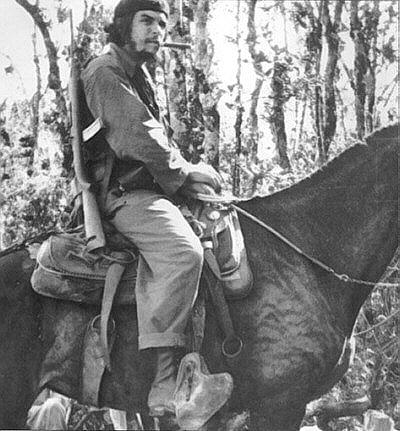 It is also possible to have recourse to certain very homogeneous groups, which must have shown their efficacy previously in less dangerous tasks, in order to make use of another of the terrible arms of the guerrilla band, sabotage. It is possible to paralyze entire armies, to suspend the industrial life of a zone, leaving the inhabitants of a city without factories, without light, without water, without communications of any kind, without being able to risk travel by highway except at certain hours. If all this is achieved, the morale of the enemy falls, the morale of his combatant units weakens, and the fruit ripens for plucking at a precise moment.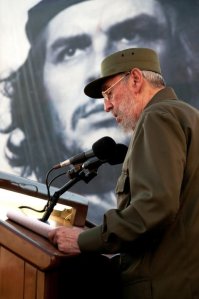

 Ελληνικό Αρχείο Τσε Γκεβάρα © Guevaristas