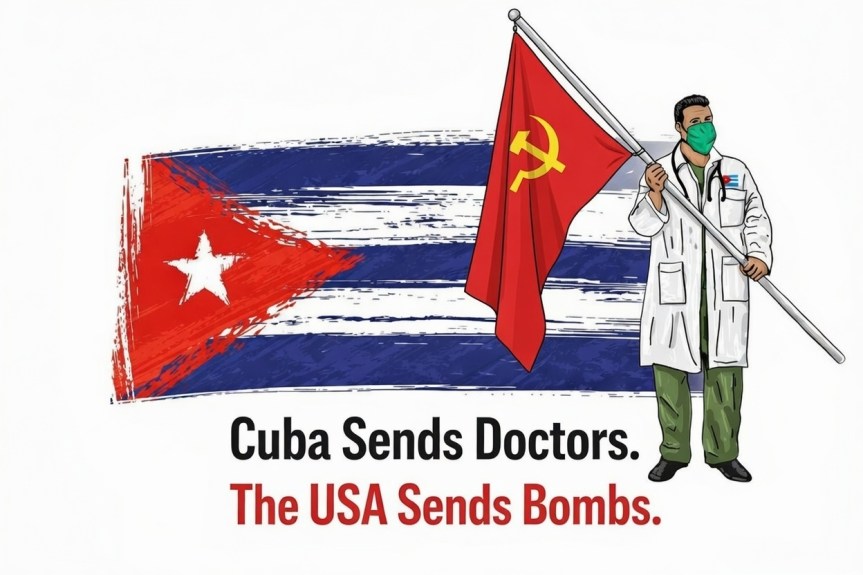
Nikos Mottas: «Cuba Sends Doctors. The USA Sends Bombs»

By Nikos Mottas

There are moments when history reduces itself to a single, unavoidable contrast. Today is one of them. As renewed threats and economic aggression once again emanate from Washington under Donald Trump, an old truth regains its sharpness:

Cuba sends doctors. The United States sends bombs.

This is not a slogan invented for effect. It is a reflection of two opposing social systems, two different priorities, two irreconcilable visions of what a society should produce—and for whom.

For more than sixty years, socialist Cuba has lived under blockade, sanctions, financial isolation, and constant political hostility from the United States. The goal of that pressure has never been hidden. From the early days after 1959, Washington’s strategy aimed at economic suffocation: restrict trade, choke access to credit, create scarcity, and force the population to turn against its own revolutionary project.

It did not work.

Instead of collapsing, the island reorganized itself. Instead of militarizing its society, it invested in education and public health. When much of the pre-revolutionary medical elite left the country expecting the Revolution to fall, Cuba made a historic decision: it would form a new generation of doctors drawn from workers and peasants. Healthcare would not depend on wealth. It would be universal, preventive, and public.

Under the leadership of Fidel Castro, scarce resources were directed not toward stock exchanges or private insurance conglomerates, but toward polyclinics, vaccination programs, and medical schools. In a poor country under siege, the Revolution chose to multiply doctors.

That choice transformed Cuba internally. Life expectancy rose. Infant mortality dropped to levels comparable with developed nations. Entire rural areas that had been abandoned under the old order received consistent medical care for the first time. Health ceased to be a commodity and became a social guarantee.

But Cuba did not stop at its own borders.

Time and again, when disaster struck elsewhere, Cuban medical brigades were there. After earthquakes in Latin America, hurricanes in the Caribbean, epidemics in Africa, and pandemics that paralyzed wealthy nations, Cuban doctors boarded planes carrying not weapons but stethoscopes. In the midst of Ebola’s devastation in West Africa, it was Cuban medical personnel who arrived in significant numbers when many powerful countries hesitated. During the COVID-19 crisis, Cuban brigades assisted overwhelmed healthcare systems abroad while the island simultaneously developed its own vaccines despite the blockade.

This is not charity diplomacy. It flows from a different organizing principle. A planned economy, even one with limited material wealth, can prioritize the defense of life because it is not governed by private profit.

Now look at the other side of the contrast.

The US commands the largest military budget in history. Its defense spending surpasses that of entire regions combined. It maintains hundreds of overseas bases and has been involved—directly or indirectly—in wars, invasions, regime-change operations, sanctions campaigns, and covert interventions across continents. From Southeast Asia to the Middle East, from Latin America to Eastern Europe, its foreign policy has consistently relied on military leverage and economic coercion.

At home, millions of Americans struggle with medical debt. Entire communities face inadequate healthcare access. Life-saving medication can be priced beyond reach. Yet there is no comparable hesitation when funding new weapons systems, expanding military alliances, or modernizing nuclear arsenals.

This contrast is not about national character. It is about structure.

Capitalism in its imperial stage concentrates wealth, protects corporate power, and projects military force to secure economic interests. Socialist construction—however constrained by massive external pressure—attempts to allocate resources according to collective need.

For more than six decades, the US blockade has attempted to make daily life in Cuba unbearable. It restricts access to medical equipment, fuel, spare parts, financial transactions, and international trade. It punishes third countries that attempt normal economic relations with the island. Every shortage is then cynically cited as proof that socialism “fails,” while the external chokehold is treated as invisible.

And yet, despite all this, Cuba continues to graduate doctors in remarkable numbers. It continues to dispatch medical brigades abroad. It continues to treat healthcare not as a luxury but as a right.

That reality is politically dangerous.

Washington is unsettled not by Cuban strength, but by Cuban example. A small Caribbean nation, ninety miles from Florida, demonstrating that education can be free, that healthcare can be universal, that solidarity can cross borders without corporate contracts—this stands as a quiet but persistent rebuke to the dominant model.

The difference can be expressed simply:

One system invests in aircraft carriers; the other invests in pediatricians

One system refines sanctions; the other refines vaccination campaigns.

One system speaks of “freedom” while tightening economic sieges; the other sends medical teams to communities that cannot pay.

Cuba is not a utopia. No society operating under permanent external pressure can be free of contradictions or difficulties. But its priorities are unmistakable. When faced with scarcity, it chooses to educate. When confronted with crisis, it chooses to heal. When attacked economically, it responds by training more doctors.

That moral orientation matters.

Cuba, a small island just ninety miles from Florida, keeps demonstrating that another world is possible — not through declarations and speeches, but through doctors, classrooms, and solidarity. And that living example is what the empire will never forgive.

* Nikos Mottas is the Editor-in-Chief of In Defense of Communism.  

Source: idcommunism.com

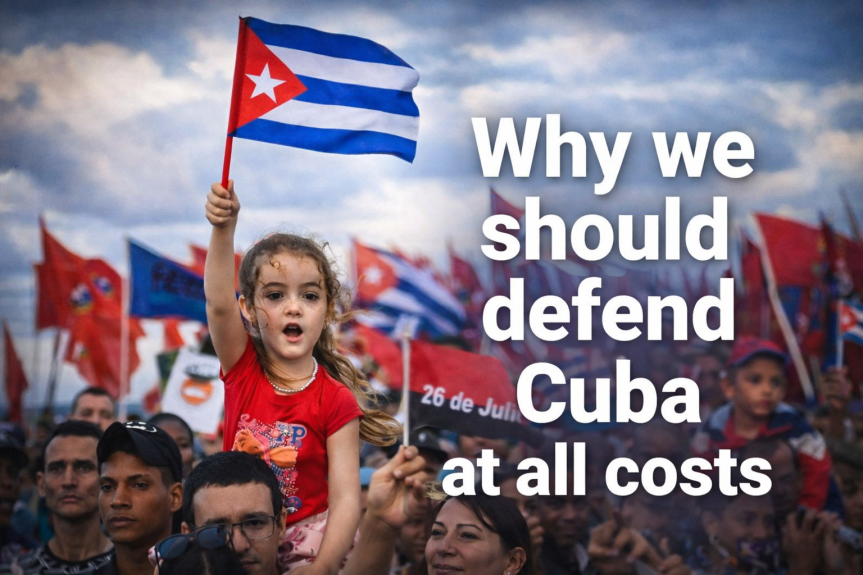
Nikos Mottas: Why we should defend Cuba at all costs

By Nikos Mottas

The recent escalation of vicious threats and coercive measures against Cuba by the Trump administration marks a new phase in a policy that is neither accidental nor episodic. The tightening of sanctions, the targeting of fuel supplies, the intensification of financial restrictions, and the open rhetoric of intimidation together constitute a deliberate sharpening of economic warfare against the Cuban people. 

This is not a diplomatic disagreement, nor a tactical adjustment dictated by momentary calculations. It is the continuation, under contemporary conditions, of a long-standing imperialist strategy whose objective has remained unchanged for more than six decades: to suffocate socialist Cuba and force its political capitulation.

What is unfolding today must be understood within the broader context of a generalized imperialist offensive, taking shape in conditions of deepening capitalist crisis. Economic coercion, sanctions regimes, and extraterritorial measures have become normalized instruments of class power on a global scale. In this framework, Cuba is not an isolated target but a strategic one. The attack on Cuba functions simultaneously as punishment and warning: punishment for a people that dared to break relations of dependency and expropriate capital, and warning to all others of the consequences of attempting a similar rupture.

To grasp why Cuba must be defended at all costs, it is necessary to move beyond moral appeals or abstract expressions of solidarity. The issue at stake is not sympathy, nor the defense of a distant cause. It is a question of class power, historical development, and the balance of forces between imperialism and the international working class.

Lenin’s analysis of imperialism remains indispensable precisely because it dispels illusions. Imperialism is not the product of particularly aggressive governments or misguided leaders; it is the necessary form assumed by capitalism at a certain stage of its development, when monopoly and finance capital dominate economic life and require political and military enforcement. Within this framework, the existence of a socialist state is intolerable not because of its rhetoric, but because of its material practice. Cuba did not merely replace one political leadership with another in 1959. It dismantled relations of dependency, expropriated foreign capital, and asserted social ownership over the decisive sectors of the economy. In doing so, it interrupted the mechanisms through which imperialism extracts value, disciplines labor, and reproduces its dominance.

The response was immediate and systematic. The blockade, sabotage, terrorist attacks, diplomatic isolation, and ideological warfare were not improvised reactions. They were the predictable instruments of a system that cannot coexist with alternatives. Imperialism does not tolerate exceptions; it seeks to erase them.

The blockade against Cuba has always functioned as a permanent counterrevolutionary mechanism. Its logic has never been military conquest, but social erosion. By restricting access to energy, medicine, spare parts, technology, credit, and trade, imperialism aims to disrupt the reproduction of socialist social relations themselves. This is why the targets are not abstract indicators, but concrete conditions of everyday life. Shortages are weaponized. Infrastructure is strained. Transport, production, and distribution are deliberately obstructed. Time, exhaustion, and uncertainty are transformed into political tools. The expectation is not that socialism will be overthrown through direct force, but that it will collapse under the cumulative pressure of material hardship.

Fidel Castro repeatedly warned that imperialism would attempt to defeat the revolution not only through open aggression, but through attrition. Yet he also emphasized that resistance under such conditions reshapes consciousness. Hardship, when interpreted correctly, does not automatically produce resignation or defeatism. It can also produce clarity. In this sense, Cuba’s endurance under siege is not passive survival; it is an ongoing ideological struggle conducted in conditions deliberately made hostile.

Cuba’s social achievements are often presented as isolated successes or statistical anomalies. This approach obscures their political content. Universal healthcare, free education, scientific development, cultural access, and social security are not neutral outcomes. They are the direct result of social ownership, central planning, and the exercise of working-class power. Under capitalism, even in its most developed forms, such guarantees remain subordinate to profitability. Under socialism, they become organizing principles. Cuba’s experience demonstrates, in practice rather than theory, that production organized for social use rather than private accumulation is not a utopian aspiration, but a viable historical alternative.

Che Guevara’s insistence on the moral and conscious dimensions of socialist construction is central to understanding this process. His emphasis on collective responsibility, social motivation, and the transformation of human relations was not ethical embellishment. It reflected a materialist understanding that socialism is not merely a rearrangement of property forms, but a struggle to overcome the social logic inherited from capitalism itself.

Cuba’s internationalist orientation emerged from this same clarity. It was not an optional moral stance, but the product of sober political assessment. As Lenin repeatedly warned, the existence of a socialist state in isolation, surrounded by an imperialist world system, inevitably entails immense pressure and heavy costs. International solidarity, therefore, is not generosity; it is a condition of survival. Cuba’s support for anti-colonial struggles, its internationalist missions, and its medical brigades were undertaken not in conditions of abundance, but of scarcity. They were acts of political realism, rooted in the understanding that fragmentation is imperialism’s most effective weapon and that solidarity, even when costly, strengthens resistance.

This is precisely why Cuba has been targeted so relentlessly. Internationalism undermines imperialism’s strategy of isolation. It exposes the global character of exploitation and reinforces the subjective capacity of oppressed peoples to resist. The attack on Cuba is therefore not only an attack on a specific country, but an attack on the principle of internationalism itself.

The defense of Cuba concerns the international working class directly. The message conveyed by imperialist aggression is unmistakable: any attempt to abolish capitalist property relations will be punished relentlessly. The objective is not only to defeat Cuba materially, but to present its defeat—if achieved—as historical proof that socialism is impossible. Such an outcome would have consequences far beyond the Caribbean. It would deepen defeatism, embolden reactionary forces, and reinforce the ideological hegemony of capital at a moment when capitalism itself is entering a period of intensified instability.

At this point, the historical significance of Cuba must be addressed without evasions. The counterrevolutionary overturns of 1989–1991 and the dissolution of the Soviet Union marked a profound setback in the global balance of class forces. They did not signify the “end of socialism,” but they did dramatically narrow the terrain of socialist construction. In the decades that followed, the international working class has confronted a world in which socialist transformation has been abandoned, distorted, or openly reversed in most places.

It is precisely within this historical rupture that Cuba’s role acquires exceptional weight. Despite its small size, despite suffocating imperialist pressure, and despite undeniable contradictions and difficulties, Cuba remains the only living example of a country that continues to attempt socialist construction on the basis of social ownership, planning, and working-class power, rather than market dominance and capitalist accumulation. This fact is not a moral judgment; it is an objective political reality.

Attempts to obscure this reality through false equivalences serve no emancipatory purpose. Capitalist restoration masked by socialist terminology, or systems dominated by market relations and capital accumulation, cannot substitute for socialist construction. Nor can forms of state survival that do not place the transformation of social relations at their core. Whatever their differences, such cases do not alter the historical truth that Cuba stands alone today as a reference point for socialism as a living project, not as a museum piece or rhetorical legacy.

For this reason, the defense of Cuba is not simply an act of solidarity with a besieged people. It is an act of strategic responsibility toward the international working class. To allow Cuba to be crushed, isolated, or forced into capitulation would not merely represent the defeat of one country. It would be used to seal the narrative that socialism belongs irrevocably to the past—that history has closed that chapter for good.

To defend Cuba is to reject that narrative in practice. It is to affirm that socialism is not a closed chapter of history, but a necessity born of capitalism’s own contradictions, contradictions that are deepening rather than receding. It is to defend the historical possibility that working people can still organize society on different foundations, even under conditions of extreme pressure.

For this reason, solidarity with Cuba cannot be episodic, symbolic, or rhetorical. It must be organized, political, and confrontational. It must challenge the legitimacy of the blockade, expose the criminal character of economic warfare, and mobilize working-class forces against imperialist aggression. For communist and workers’ parties, this is not a matter of preference. It is a test of internationalism. In conditions of imperialist assault, neutrality is not an intermediate position. Silence aligns objectively with the aggressor.

Capitalism today is marked by deep and sharpening structural contradictions: chronic economic instability, the permanent resort to militarization and war, increasingly authoritarian forms of governance, ecological devastation, and the systematic dismantling of social and labor rights. These phenomena are not accidental distortions of an otherwise functional system. They are the mature expression of capitalism’s historical limits. In this phase, the ruling classes are not merely managing crises; they are attempting to reorganize society in a way that permanently suppresses the possibility of systemic challenge.

Under these conditions, every living alternative becomes intolerable. Every historical experience that contradicts the narrative of capitalist inevitability must be erased, neutralized, or transformed into a harmless relic. It is in this sense that Cuba’s continued existence as a socialist project acquires decisive significance. Not because it claims perfection, but because it persists as a concrete negation of capitalist logic.

To understand this significance fully, one must confront directly the historical rupture produced by the counterrevolutionary overturns of 1989–1991 and the dissolution of the Soviet Union. That defeat did not mark the “end of socialism,” as bourgeois ideology endlessly proclaims. It marked a profound setback in the global balance of class forces, one whose consequences are still being felt. Since then, socialist construction has either been abandoned, reversed, or fundamentally distorted in most parts of the world.

In this post-counterrevolutionary landscape, Cuba occupies an objectively unique position. Despite its small size, despite relentless imperialist pressure, despite material scarcity and internal contradictions, Cuba remains the only country that continues to pursue socialist construction on the basis of social ownership, planning, and the primacy of working-class power over market relations and capital accumulation. This is not a matter of sentiment or loyalty; it is a material fact.

Attempts to blur this reality through false equivalences do not serve the working class. Capitalist restoration cloaked in socialist language, systems governed by the law of value and capital accumulation, or forms of state survival that do not place the transformation of social relations at their core cannot be treated as substitutes for socialist construction. Whatever their differences, such cases do not alter the central historical truth: Cuba stands today as the sole living reference point for socialism as a practical, ongoing process, not as a commemorative symbol of the past.

For this reason, the defense of Cuba transcends the boundaries of solidarity with a besieged nation. It becomes a question of strategic responsibility toward the international working class itself. To allow Cuba to be crushed, isolated, or forced into capitulation would not merely signify the defeat of one country. It would be mobilized ideologically to seal the argument that socialism belongs irreversibly to history, that the working class has no future beyond the management of capitalism’s crises.

To defend Cuba is to reject that argument in practice. It is to affirm that socialism is not a closed chapter of history, but a necessity born of capitalism’s own contradictions—contradictions that are intensifying rather than dissolving. It is to defend the historical possibility that working people can still organize society on different foundations, even under conditions of extreme pressure and hostility.

For this reason, solidarity with Cuba cannot be episodic, symbolic, or rhetorical. It must be organized, political, and confrontational. It must challenge the legitimacy of the blockade, expose the criminal character of economic warfare, and mobilize working-class forces against imperialist aggression. For communist and workers’ parties, this is not a question of preference or tone. It is a test of internationalism itself. In conditions of imperialist assault, neutrality is not an intermediate position; silence aligns objectively with the aggressor.

There is no comfortable middle ground. Either imperialism succeeds in suffocating socialist Cuba, or the international working class asserts its capacity to resist, to learn from historical defeats, and to re-enter history as an active force. Fidel Castro warned that revolutions are not destroyed only by external force, but by the erosion of solidarity and historical confidence. The defense of Cuba today is therefore a test—not of Cuba alone, but of the international workers’ movement as a whole.

Defending socialist Cuba is not a matter of sentiment, but a concrete historical task of the international working class — a task that must be carried out at all costs. 

* Nikos Mottas is the Editor-in-Chief of In Defense of Communism.  

Source: idcommunism.com

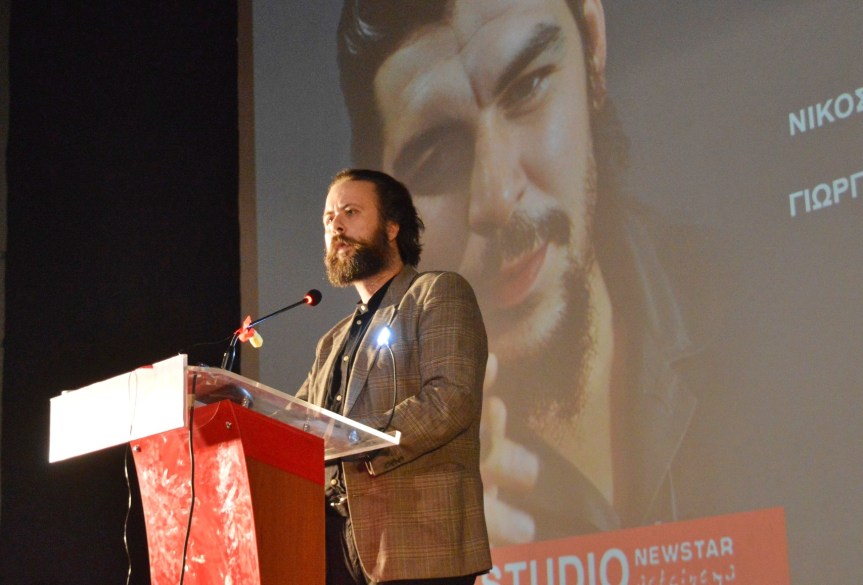
Νίκος Μόττας: Ομιλία στην εκδήλωση για την ένατη επέτειο από το θάνατο του Φιντέλ Κάστρο

Νίκος Μόττας

Ομιλία στην εκδήλωση για την ένατη επέτειο από το θάνατο του Φιντέλ Κάστρο

Studio New Star Art Cinema, 27/11/2025

Φίλες και φίλοι,
ένα πράγμα νομίζω οφείλουμε να ξεκαθαρίσουμε από την πρώτη στιγμή:
σήμερα δεν κάνουμε πολιτικό μνημόσυνο.
Δεν μαζευτήκαμε για να αναπολήσουμε περασμένα επαναστατικά μεγαλεία,
ούτε για να υμνήσουμε το παρελθόν σαν ανώδυνο εικόνισμα στο ράφι της Ιστορίας.
Είμαστε εδώ για να πάρουμε δύναμη και να βγάλουμε συμπεράσματα από ένα παράδειγμα που είναι επίκαιρο όσο ποτέ άλλοτε.
Για να δούμε τον κόσμο όπως είναι — και όπως μπορεί να γίνει, με όσα η Ιστορία έχει ήδη αποδείξει ότι είναι εφικτά.

Εννέα χρόνια μετά τον βιολογικό θάνατο του Φιντέλ και έναν χρόνο πριν την 100η επέτειο από τη γέννησή του,

δεν μας φέρνει εδώ η νοσταλγία.
Μας φέρνει κάτι πολύ πιο συγκεκριμένο:
η ανάγκη ενός κόσμου που ανήκει στους λαούς και όχι στα μονοπώλια,
μιας προοπτικής που δεν μετριέται με τα κέρδη λίγων αλλά με τις ζωες των πολλών.

Το παράδειγμα του Φιντέλ – επιτρέψτε μου να πω – δεν τιμάται με σιωπές και στεφάνια.

Τιμάται όταν γίνεται εργαλείο κατανόησης και αγώνα,
όταν δείχνει έμπρακτα τι μπορεί να πετύχει ο άνθρωπος
όταν συνειδητοποιεί ότι είναι πρωταγωνιστής της Ιστορίας.

Ο Φιντέλ δεν έγινε σύμβολο μιας κάποιας αφηρημένης επαναστατικότητας.
Έγινε σύμβολο γιατί πέτυχε αυτό που φάνταζε «αδύνατο»:
έδειξε σε έναν λαό που είχε μάθει να θεωρεί τη φτώχεια φυσικό νόμο
ότι μπορεί να διεκδικήσει και να οικοδομήσει την εξουσία του.

Αυτή η μεταστροφή — από την παραίτηση στη συλλογική διεκδίκηση — ήταν η πραγματική επανάσταση.

Τα γεγονότα του 1959 δεν ανέτρεψαν απλώς τον Μπατίστα.
Ανέτρεψαν το δόγμα που έλεγε ότι οι λαοί μικρών χωρών δεν δικαιούνται να ονειρεύονται και να αποφασίζουν για το μέλλον τους.
Η Κούβα δεν απελευθερώθηκε μόνο από μια στιγνή δικτατορία·
απελευθερώθηκε από τη μοιρολατρία που κρατά τους λαούς δεμένους χειροπόδαρα.

Σε μια χώρα που επί πολλά χρόνια ήταν αποικία των αμερικανικών μονοπωλίων και άντρο εξαθλίωσης, αποδείχθηκαν οι κολοσσιαίες δυνατότητες της σοσιαλιστικής οικοδόμησης:

  • η παιδεία έγινε καθολικό δικαίωμα,
  • η υγεία δημόσιο αγαθό για όλους,
  • ο πολιτισμός στοιχείο της καθημερινής ζωής,
  • η εργασία αξιοπρέπεια και όχι μισή ύπαρξη.

Ο αναλφαβητισμός εξαφανίστηκε.
Η παιδική θνησιμότητα έπεσε σε επίπεδα χαμηλότερα από πολλές «ανεπτυγμένες» καπιταλιστικές χώρες.
Η επιστήμη μπήκε στην υπηρεσία της κοινωνίας και όχι της αγοράς.
Και η Κούβα, από «σκουπιδότοπος» και «οίκος ανοχής» των ΗΠΑ, έγινε νησί γιατρών, δασκάλων και διεθνιστικής αλληλεγγύης.

Γι’ αυτό και η Επανάσταση πολεμήθηκε λυσσαλέα:
επειδή απέδειξε τι μπορεί να πετύχει ο λαός όταν έχει τον παραγόμενο πλούτο και την εξουσία στα δικά του χέρια — και όχι στα χέρια μιας μειοψηφίας.

Κι αυτή η νίκη ήταν απότοκο μιας διαλεκτικά δεμένης σχέσης μεταξύ ηγεσίας και λαού. Ο Φιντέλ, ο Τσε, ο Καμίλο, ο Ραούλ και όλη η επαναστατική ηγεσία είχαν καθοριστικό και αναντικατάστατο ρόλο — και αυτό πρέπει να λέγεται χωρίς δισταγμό.
Αλλά τίποτα δεν θα είχε κερδηθεί χωρίς τους δεκάδες χιλιάδες ανώνυμους αγωνιστές, εργάτες, αγρότες και νέους, που από την πρώτη στιγμή
πήραν την υπόθεση στα χέρια τους. Που έδωσαν την ψυχή και το αίμα τους.
Η Επανάσταση νίκησε γιατί η χαρισματική ηγεσία και ο αποφασισμένος λαός πορεύτηκαν μαζί, με κοινή στόχευση την απελευθέρωση της πατρίδας από τα ιμπεριαλιστικά δεσμά και την ανατροπή του σάπιου καπιταλιστικού κατεστημένου.

Κι όλα αυτά χτίστηκαν όχι σε «εύκολες εποχές», αλλά μέσα σε εμπορικό αποκλεισμό, διαρκή υπονόμευση και οικονομική ασφυξία.
Υπήρξαν στιγμές που η λογική του συμβιβασμού και της υποταγής έλεγε να κάνουν πίσω.
Αλλά ο Φιντέλ ήξερε:
«Η επανάσταση είναι σαν το ποδήλατο. Αν σταματήσουμε να κάνουμε πεντάλ, θα πέσουμε».

Κι εδώ ξεκινά το καθήκον της εποχής μας, φίλες και φίλοι:
Δεν αρκεί να μιλάμε για τον Φιντέλ.
Πρέπει να απαντήσουμε στο ερώτημα που το παράδειγμά του θέτει με επιτακτικότητα:
είμαστε ικανοποιημένοι με τον κόσμο όπως είναι — ή αποφασισμένοι να τον αλλάξουμε;

Το 2026, στην επέτειο των εκατό χρόνων από τη γέννησή του,
το ουσιαστικό ερώτημα δεν θα είναι «ποιος ήταν και τι έκανε ο Φιντέλ». Αυτό έχει καταγραφεί ανεξίτηλα στην συλλογική μνήμη των λαών του κόσμου.
Το ουσιαστικό ερώτημα θα είναι ποιοι είμαστε και τι κάνουμε εμείς.

Και εδώ ο ιμπεριαλισμός δείχνει τον φόβο του.
Δεν είναι τυχαίο ότι λίγες μέρες πριν, ο πρόεδρος των ΗΠΑ Τραμπ κήρυξε επίσημα την λεγόμενη «Εβδομάδα Αντικομμουνισμού».
Αν, όμως, όπως λένε, «ο κομμουνισμός είναι τελειωμένη υπόθεση που ανήκει στο παρελθόν», αν, όπως ισχυρίζονται, «η ιστορία έφτασε στο τέλος της»,
τότε γιατί χύνουν τόνους μελάνι, γιατί ξοδεύουν δισεκατομμύρια σε αντικομμουνιστικές συκοφαντικές εκστρατείες και καμπάνιες;
Τι φοβούνται;

Η απάντηση είναι απλή: φοβούνται τα συμπεράσματα.
Φοβούνται την σύγκριση ανάμεσα στην απάνθρωπη φύση του καπιταλισμού,
και τα επιτεύγματα της σοσιαλιστικής οικοδόμησης στην Κούβα, τη Σοβιετική Ένωση και αλλού.
Γι’ αυτό θέλουν να μετατρέψουν τον Φιντέλ, τον Τσε και τον Λένιν σε ακίνδυνα εικονίσματα.
Χτυπούν την Ιστορία — έχοντας το βλέμμα στραμμένο το μέλλον.

Ματαιοπονούν όμως.

Γιατί η αναγκαιότητα του σοσιαλισμού δεν μπορεί να ξεριζωθεί,
καθώς τη γεννά η ίδια η αντικειμενική πραγματικότητα:
όσο ο πλούτος συσσωρεύεται στα χέρια των λίγων,
όσο η ζωή των εργαζομένων μετριέται με όρους «κόστους» και «κέρδους»,
τόσο θα δυναμώνει η ανάγκη για έναν άλλο δρόμο ανάπτυξης.

Και όσο μελάνι κι αν χύσουν, όσες «Εβδομάδες Αντικομμουνισμού» κι αν κηρύξουν,
δεν μπορούν να εξαφανίσουν την ανάγκη των λαών για κοινωνική δικαιοσύνη, ισότητα και πραγματική αξιοπρέπεια.

Γι’ αυτό, όπως είπα και στο ξεκίνημα, τιμώντας σήμερα τον Φιντέλ, δεν κάνουμε πολιτικό μνημόσυνο.
Δίνουμε υπόσχεση.
Ότι η Ιστορία δεν τελείωσε —
και ότι οι λαοί, από την Κούβα μέχρι την Παλαιστίνη και από την Ελλάδα μέχρι το έσχατο σημείο της Αφρικής, δεν είπαν την τελευταία τους λέξη.

Φίλες και φίλοι,

Η κληρονομιά του κομμουνιστή επαναστάτη Φιντέλ δεν ανήκει στο χθες!
Ανήκει σε όσους δεν συμβιβάζονται με μια ζωή φτώχειας, εκμετάλλευσης και πολέμων.
Ανήκει στους αγώνες του σήμερα — και στις νίκες του αύριο.

Γιατί είναι καλό και πράγματι πρέπει να θυμόμαστε τις σοσιαλιστικές επαναστάσεις του παρελθόντος.
Αλλά, το ζήτημα είναι να χτίσουμε τις δικές μας, εκείνες του 21ου αιώνα.

Φιντέλ Κάστρο: Τιμητική εκδήλωση για τα 9 χρόνια από το θάνατό του – Studio New Star Art Cinema, 27/11/2025

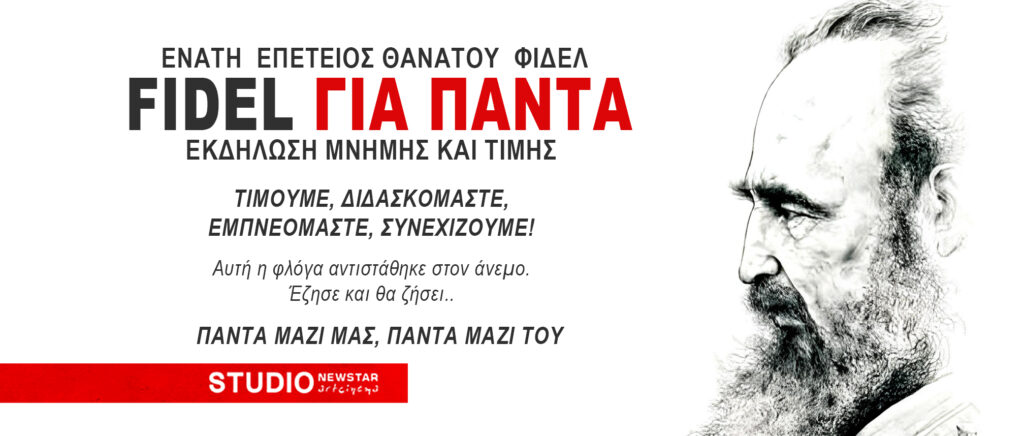
ΤΙΜΗΤΙΚΗ ΕΚΔΗΛΩΣΗ ΣΤΟ STUDIO ΓΙΑ ΤΗΝ ΕΝΑΤΗ ΕΠΕΤΕΙΟ ΘΑΝΑΤΟΥ ΤΟΥ ΦΙΔΕΛ

FIDEL ΓΙΑ ΠΑΝΤΑ, 27/11/25 ΣΤΟ STUDIO new star art cinema

ΕΚΔΗΛΩΣΗ ΜΝΗΜΗΣ ΚΑΙ ΤΙΜΗΣ

H NEW STAR σας καλεί στην εκδήλωση μνήμης και τιμής ΕΝΝΙΑ ΧΡΟΝΙΑ ΑΠΟ ΤΟ ΘΑΝΑΤΟ ΤΟΥ COMANDANTE EN JEFE FIDEL CASTRO RUZ.

Αυτή η φλόγα αντιστάθηκε στον άνεμο. Έζησε και θα ζήσει..

Θα μιλήσει ο Πρέσβης της Κούβας Aramis Fuente Hernandez.

Θα προβληθεί βιντεοσκοπημένος χαιρετισμός του René González Barrios, διευθυντή του Κέντρου Fidel Castro Ruz.

ΧΑΙΡΕΤΙΣΜΟΙ ΟΡΓΑΝΩΣΕΩΝ ΑΛΛΗΛΕΓΓΥΗΣ

Προβολή Βίντεο

  • ΦΙΔΕΛ ΚΑΣΤΡΟ -Επανάσταση σημαίνει
  • ΦΙΔΕΛ και ΜΙΚΗΣ
  • ΦΙΔΕΛ και ΠΑΛΑΙΣΤΙΝΗ
  • 3 VIDEO CLIP ΤΡΑΓΟΥΔΙΩΝ ΓΙΑ ΦΙΔΕΛ

Παρεμβάσεις

  • Μπάμπης Ζαφειράτος, ποιητής, συγγραφέας, μεταφραστής
  • Νίκος Μόττας, πολιτικός επιστήμονας, συγγραφέας

ΠΡΟΒΟΛΗ ΤΑΙΝΙΑΣ

«Η ΤΕΧΝΗ ΤΟΥ ΝΑ ΕΠΙΒΙΩΝΕΙΣ» (El Mérito Es Estar Vivo)

ΩΡΑ ΠΡΟΣΕΛΕΥΣΗΣ : 19.00

ΩΡΑ ΕΝΑΡΞΗΣ : 19.30

STUDIO new star art cinema, Σταυροπούλου 33 και Σπάρτης, ΠΛΑΤΕΙΑ ΑΜΕΡΙΚΗΣ.

THΛ.2108640054-2108220008 -6932479731

ΕΙΣΟΔΟΣ ΕΛΕΥΘΕΡΗ

Πληροφορίες – κρατήσεις : 2108640054, newstarcineinfo@gmail.com

ΦΩΤΟΓΡΑΦΙΕΣ ΦΙΔΕΛ ΚΑΣΤΡΟ

https://www.flickr.com/…/15566…/albums/72157690810068536

Φιντέλ, Φιντέλ, οι λαοί σ’ ευγνωμονούνε.

Και δίπλα σου είναι αφού και τον δικό μας

μεγάλο, τίμιο αγώνα ενσαρκώνεις

ΠΑΜΠΛΟ ΝΕΡΟΥΔΑ

«Ο λαός δημιούργησε πάντοτε τους ηγέτες του σε κάθε στάδιο των επαναστατικών αγώνων μας.

Οι ηγέτες δεν διαμορφώνουν τους λαούς, οι λαοί διαμορφώνουν τους ηγέτες τους…

Μερικές φορές οι δυσκολίες είναι απίστευτα μεγάλες και μπορεί να δοκιμάσεις πικρές αντιξοότητες.

Οι μορφές αγώνα μπορούν μάλιστα ν’ αλλάξουν συχνά, αλλά υπάρχει μόνο ένας δρόμος:

αγώνας, αγώνας, αγώνας.»

ΦΙΔΕΛ ΚΑΣΤΡΟ

«Επανάσταση σημαίνει να έχεις συναίσθηση της ιστορικής στιγμής. Να αλλάζεις όλα όσα πρέπει να αλλάξουν. Σημαίνει πλήρης ισότητα και ελευθερία. Σημαίνει να σου συμπεριφέρονται και να συμπεριφέρεσαι στους άλλους σαν σε ανθρώπινα όντα. Σημαίνει χειραφέτηση από εμάς τους ίδιους, με τις δικές μας δυνάμεις.

Σημαίνει να προκαλείς τις κυρίαρχες ισχυρές δυνάμεις μέσα και έξω από το εθνικό και κοινωνικό πλαίσιο. Σημαίνει να υπερασπίζεσαι αξίες στις οποίες πιστεύεις, με τίμημα οποιαδήποτε θυσία.

Σημαίνει ταπεινοφροσύνη ανιδιοτέλεια αλτρουισμό, αλληλεγγύη και ηρωισμό. Σημαίνει να αγωνίζεσαι με τόλμη, εξυπνάδα και ρεαλισμό.

Σημαίνει να μη λες ποτέ ψέματα, ούτε να παραβιάζεις ηθικές αρχές. Σημαίνει βαθιά πεποίθηση ότι δεν υπάρχει δύναμη στον κόσμο ικανή να συνθλίψει τη δύναμη της αλήθειας και των ιδεών. Επανάσταση σημαίνει ενότητα, ανεξαρτησία, σημαίνει να αγωνίζεσαι για τα όνειρά μας, της δικαιοσύνης για την Κούβα και για ολόκληρο τον κόσμο, το οποίο αποτελεί τη βάση για τον πατριωτισμό μας, τον σοσιαλισμό μας και τον διεθνισμό μας.»

ΦΙΔΕΛ ΚΑΣΤΡΟ, 1 Μάη 2000.

«Ας μάθουμε να ζούμε μ’ αυτούς που μας λείπουν, επειδή αποτελούν κομμάτι μας, επειδή ξέρουμε γιατί μας λείπουν, κι επειδή την απουσία τους την αναπληρώνουμε με καμάρι.»

ΛΟΥΙΣ ΣΕΠΟΥΛΒΕΔΑ

CABALGANDO CON FIDEL «Καλπάζοντας με τον Φιδέλ»

ΤΟ ΤΡΑΓΟΥΔΙ ΤΟΥ ΕΚΛΕΚΤΟΥ -Silvio Rodríguez – Canción del Elegido-

LO PROMETI

Link Video Canción dedicada a Fidel Castro Ruz

Link Video Fidel Castro y Silvio Rodríguez – Revolución Es

Νίκος Μόττας: Ομιλία στην παρουσίαση του βιβλίου «Ο Τσε της Ποίησης» του Μπάμπη Ζαφειράτου

Ομιλία του Νίκου Μόττα στην εκδήλωση παρουσίασης του βιβλίου του Μπάμπη Ζαφειράτου «Ο Τσε της Ποίησης – Ο Ποιητής των Ποιητών», που συνέπεσε με την 58η επέτειο από τη δολοφονία του Ερνέστο Τσε Γκεβάρα, την 8η Οκτωβρίου 2025 στο Studio New Star Art Cinema.

Φίλες και φίλοι –

υπάρχουν βιβλία που τα διαβάζεις…
υπάρχουν όμως και βιβλία που σε κοιτούν πίσω απ’ τις σελίδες τους και σε διαβάζουν αυτά.–

Σε κοιτούν κατάματα –
και σε ρωτούν:
τι κάνεις με τη ζωή σου, με τα όνειρά σου, με την αδικία που βλέπεις γύρω σου;

Ένα τέτοιο βιβλίο είναι «Ο Τσε της Ποίησης» του φίλου Μπάμπη Ζαφειράτου που παρουσιάζουμε σήμερα. –

Δεν είναι απλώς μια μελέτη για τον Ερνέστο Τσε Γκεβάρα·
είναι ένα ταξίδι μέσα στη φλόγα του ανθρώπου που τόλμησε να ενώσει την ποίηση με την επανάσταση. –
Ένα βιβλίο που δείχνει πως οι στίχοι μπορούν να γίνουν πράξη –
και πως η πράξη, όταν κουβαλά ψυχή, μπορεί να γίνει ποίηση. ––

Ο Ζαφειράτος μάς παρουσιάζει τον Τσε όχι όπως τον έχουμε συνηθίσει στις αφίσες και στα συνθήματα, –
αλλά όπως τον βλέπει η Ιστορία όταν σκύβει προσεκτικά: –
ως έναν άνθρωπο ευαίσθητο, οραματιστή, βαθιά στοχαστικό
έναν ποιητή που έζησε μέσα στη φωτιά της πράξης,
κι έναν κομμουνιστή που μετουσίωσε την ιδεολογία του σε τρόπο ζωής. –

Μέσα από τις εξακόσιες δέκα σελίδες του βιβλίου,
παρακολουθούμε τον Τσε να μεταμορφώνεται από νέο φοιτητή της ιατρικής σε οικουμενικό σύμβολο
μα πάντα με ένα σημειωματάριο στην τσέπη. –

Γιατί ο Τσε έγραφε.
Έγραφε για τον πόνο, για τη μοναξιά, για την αδικία. –
Έγραφε για να κρατήσει τη μνήμη όρθια. –
Και η γραφή του – όπως αναδεικνύει υπέροχα ο Ζαφειράτος – δεν ήταν διακοσμητική·
ήταν πολιτική πράξη. ––

Η ποίηση, για τον Τσε, δεν ήταν απόδραση από την πραγματικότητα·
ήταν όπλο για την αλλαγή της . –
Ήταν η μορφή που έπαιρνε η ταξική πάλη μέσα στην ψυχή. –
Γιατί, όταν οι λαοί στενάζουν, η ποίηση γίνεται η φωνή τους. –
Κι όταν ο κόσμος σωπαίνει, η ποίηση γίνεται κραυγή. –

Στη Ρωσία της Οχτωβριανής Επανάστασης, στην Ισπανία του εμφυλίου, στο Στάλινγκραντ, στην Κούβα, στη Χιλή, στη Μακρονήσο, στην Κύπρο, σήμερα στην Γάζα —
οι στίχοι έγιναν σύνθημα, και το τραγούδι έγινε σημαία. –

Αυτό το πνεύμα διαπερνά κάθε σελίδα του βιβλίου,
το ίδιο πνεύμα που ενέπνευσε τον Τσε να αγωνιστεί για τον σοσιαλισμό-κομμουνισμό,
όχι σαν αποστεωμένη θεωρία, αλλά σαν καθημερινή πράξη αξιοπρέπειας. ––

Ο συγγραφέας δεν περιορίζεται στα ποιήματα του ίδιου του Τσε·
παρουσιάζει και τα ποιήματα που γράφτηκαν γι’ αυτόν
από τους κορυφαίους ποιητές της Λατινικής Αμερικής:
τον Πάμπλο Νερούδα, τον Νικολάς Γκιγιέν, τον Μάριο Μπενεντέτι, τον Κορτάσαρ. –
Ποιητές που είδαν στον Τσε όχι μόνο έναν αντάρτη,
αλλά έναν ποιητή των ποιητών. –
Έναν άνθρωπο που, όπως λέει ο Ζαφειράτος,
«κατάκτησε και τις δύο τέχνες: έκανε την ποίηση επανάσταση και την επανάσταση ποίηση». ––

Κι εκεί, μέσα σ’ αυτό το μεγάλο ποτάμι της λογοτεχνικής μνήμης –
αντηχεί μια φωνή που ξεπερνά σύνορα και εποχές. –
Είναι η φωνή του Ναζίμ Χικμέτ, που μας θυμίζει:
«Οι πιο όμορφες θάλασσες, δεν έχουμε ακόμα ταξιδέψει».
Και η φωνή του Γιάννη Ρίτσου, από τη Ρωμιοσύνη:
«Αυτά τα δέντρα δεν βολεύονται με λιγότερο ουρανό».
Ποιητές που, όπως και ο Τσε, πίστεψαν ότι η ποίηση δεν είναι καταφύγιο, αλλά όρκος αγώνα. –
Κι έτσι, μέσα από το έργο του Ζαφειράτου,
η επαναστατική ποίηση δεν ανήκει πια σε μια ήπειρο·
γίνεται παγκόσμια γλώσσα της ελευθερίας. ––

Η δύναμη του βιβλίου βρίσκεται στη λεπτομέρεια – και στη σύνθεση. –
Ο Ζαφειράτος δεν καταγράφει απλώς γεγονότα· τα ερμηνεύει με το βλέμμα του δημιουργού. –
Στις σελίδες του, η Κούβα δεν είναι απλώς ένας τόπος –
είναι ένας στίχος που πάλλεται. –
Η Βολιβία δεν είναι πεδίο μάχης,
αλλά σκηνικό ενός ποιήματος που γράφεται με αίμα και όνειρα. –
Κι ο ίδιος ο Τσε – δεν είναι απλώς επαναστάτης·
είναι ένας άνθρωπος που πάλεψε να κρατήσει την ψυχή του καθαρή μέσα στη λάσπη της Ιστορίας. ––

Το βιβλίο «Ο Τσε της Ποίησης» είναι, θα έλεγα, μια πράξη αγάπης προς τον λόγο και προς τον άνθρωπο. –
Μια έκδοση που δείχνει πως ο Ζαφειράτος δεν είναι απλώς μεταφραστής ή σχολιαστής –
αλλά συνοδοιπόρος. –
Και μέσα από τη δική του ματιά, ο Τσε δεν είναι πια μακρινός μύθος·
είναι ένας φίλος που κάθεται απέναντί μας και μας ρωτά –
«Κι εσύ, ποια ποίηση γράφεις με τη ζωή σου;» ––

Γιατί στο τέλος, φίλες και φίλοι –
αυτό είναι και το βαθύτερο μήνυμα του βιβλίου: –
ότι η ποίηση είναι μορφή ευθύνης. –
Είναι η ευαισθησία που γίνεται στάση ζωής –
η συγκίνηση που γίνεται συνείδηση. –
Και μέσα σε αυτό, η επανάσταση δεν είναι πια μόνο πολιτική·
είναι υπαρξιακή. –
Είναι ο αγώνας του ανθρώπου – να μείνει άνθρωπος. ––

Κλείνοντας –
θα έλεγα πως ο Μπάμπης Ζαφειράτος, με αυτό το έργο,
δεν έγραψε απλώς ένα βιβλίο για τον Τσε·
έγραψε ένα βιβλίο με τον Τσε. –
Ένα βιβλίο που τον ανασταίνει μέσα από τις λέξεις·
που θυμίζει πως τα όνειρα, όταν έχουν ψυχή, δεν πεθαίνουν ποτέ. –

Ίσως τελικά αυτό να είναι και το πραγματικό μήνυμα του «Τσε της Ποίησης»: –
ότι η ποίηση και η επανάσταση είναι δύο μορφές της ίδιας ανάγκης –
της ανάγκης να αλλάξουμε τον κόσμο, ξεκινώντας από τον εαυτό μας. –

Σας ευχαριστώ. –

Με μεγάλη επιτυχία παρουσιάστηκε το βιβλίο του Μπάμπη Ζαφειράτου «Ο Τσε της Ποίησης-Ο Ποιητής των Ποιητών»

Με μεγάλη επιτυχία, παρουσία πλήθους κόσμου, παρουσιάστηκε την Τετάρτη 8 Οκτωβρίου 2025, στο Studio New Star Art Cinema στην Αθήνα, το βιβλίο του Μπάμπη Ζαφειράτου «Ο Τσε της Ποίησης – Ο Ποιητής των Ποιητών».

Το βιβλίο, που κυκλοφορεί από τις Εκδόσεις New Star, αποκαλύπτει τον Τσε ως ποιητή, αναδεικνύοντας τη βαθιά του σχέση με την ποίηση και τους ποιητές. Ο Μπ. Ζαφειράτος περιλαμβάνει δικά του ποιήματα, κείμενα και διηγήματα, αλλά και έργα γραμμένα γι’ αυτόν, αγαπημένα του ποιήματα και κείμενα που τον συνόδευσαν ως το τέλος. Με εισαγωγή, χρονοβιοεργογραφία, κείμενα του Εδουάρδο Γκαλεάνο, φωτογραφίες,πορτρέτα και πλούσιο τεκμηριωτικό υλικό, σκιαγραφείται όχι μόνο ο «Μεγάλος Ποιητής της Επανάστασης», αλλά και ο λογοτέχνης, ο σκακιστής, ο οικονομολόγος, ο φωτογράφος Τσε – ο «Ποιητής των Ποιητών».

Στην εκδήλωση, στην οποία τιμήθηκε η 58η επέτειος από τη δολοφονία του Ερνέστο Τσε Γκεβάρα, χαιρέτησαν ο Πρέσβης της Δημοκρατίας της Κούβας στην Ελλάδα Aramis Fuente Hernandez και ο Πρόεδρος του Ελληνοκουβανικου Συνδέσμου Φιλίας και Αλληλεγγύης Νίκος Καρανδρέας.

Για το βιβλίο μίλησαν οι:

  • Γιώργος Κεντρωτής , συγγραφέας, τέως καθηγητής Θεωρίας της Μετάφρασης στο Ιόνιο Πανεπιστήμιο.
  • Βύρων Κώττης, τέως καθηγητής Νέων Ελληνικών και Συγκριτικής Φιλολογίας. (Πανεπιστήμιο Ρεν 2, Γκρενόμπλ 3, Νεοελληνικό Ινστιτούτο Σορβόννης 4).
  • Νίκος Μόττας, πολιτικός επιστήμονας-Συγγραφεας.
  • Μπάμπης Ζαφειράτος, ποιητής, συγγραφέας, μεταφραστής.

Ο Εκδότης της New Star Βελισσάριος Κοσσυβάκης συντόνισε την εκδήλωση.

Μουσικό πρόγραμμα επιμελήθηκαν και παρουσίασαν οι Ευτυχία Μπίμη στο τραγούδι και ο Βασίλης Καβουκιδης στο πιάνο.

Δείτε βίντεο από την εκδήλωση (Βιντεοσκόπηση: Στέργιος Βασιλείου)

58 χρόνια από τη δολοφονία του Τσε Γκεβάρα: Βιβλιοπαρουσίαση «Ο ΤΣΕ ΤΗΣ ΠΟΙΗΣΗΣ» του Μπάμπη Ζαφειράτου (8/10/2025)

ΕΚΔΗΛΩΣΗ

58 ΧΡΟΝΙΑ ΑΠΟ ΤΗΝ ΔΟΛΟΦΟΝΙΑ ΤΟΥ ΤΣΕ

ΒΙΒΛΙΟΠΑΡΟΥΣΙΑΣΗ

«Ο ΤΣΕ ΤΗΣ ΠΟΙΗΣΗΣ – Ο Ποιητής Των Ποιητών»

Του Μπάμπη Ζαφειράτου

Εκδόσεις NEW STAR

Θα χαιρετίσουν:

ο Πρέσβης της Κούβας στην Ελλάδα Aramis Fuente Hernandez

και ο ΠΡΟΕΔΡΟΣ ΤΟΥ ΕΛΛΗΝΟΚΟΥΒΑΝΙΚΟΥ ΣΥΝΔΕΣΜΟΥ ΦΙΛΙΑΣ ΚΑΙ ΑΛΛΗΛΕΓΓΥΗΣ –Νίκος Καρανδρέας

Θα μιλήσουν οι :

  • Γιώργος Κεντρωτής, συγγραφέας, τέως καθηγητής Θεωρίας της Μετάφρασης στο Ιόνιο Πανεπιστήμιο.
  • Βύρων Κώττης, τέως καθηγητής Νέων Ελληνικών και Συγκριτικής Φιλολογίας (Πανεπιστήμιο Ρεν 2, Γκρενόμπλ 3, Νεοελληνικό Ινστιτούτο Σορβόννης 4).
  • Νίκος Μόττας, πολιτικός επιστήμονας, συγγραφέας
  • Μπάμπης Ζαφειράτος, ποιητής, συγγραφέας, μεταφραστής

Ο Εκδότης Βελισσάριος Κοσσυβάκης θα συντονίσει την εκδήλωση.

Την εκδήλωση θα πλαισιώσουν μουσικά οι:

  • Ευτυχία Μπίμη – Τραγούδι,
  • Βασίλης Καβουκίδης – Πιάνο

ΤΕΤΑΡΤΗ 8/10 στις 19:30

ΕΛΕΥΘΕΡΗ ΕΙΣΟΔΟΣ

στο STUDIO new star art cinema

Σταυροπούλου 33 & Σπάρτης, Αθήνα 112 52