
Κατηγορία: Ernesto Che Guevara
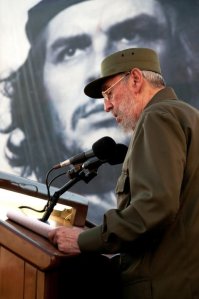

Should Che be an icon? YES!
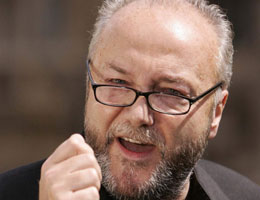 Saturday 06 October 2007.
By George Galloway*.
From Caracas to Cape Town, Ches- terfield to Cowdenbeath, one man’s admittedly handsome face on a T shirt tells you more about its wearer than how well he or she fits it. Ernesto «Che» Guevara Lynch, who was murdered by United States agents under orders from Washington 40 years ago, is the face of global rebellion.
He inspires all the more intensely since he could have lived a prosperous bourgeois life as an Argentine dentist. Instead, and despite asthma, he chose a life of action, a motorcycle diarist, a comandante in a triumphant Cuban revolutionary army, a guerrilla leader in the Congo, a martyr in the mountain gulleys of Bolivia.
It’s true he had a spell as a bank manager – but it was the governorship of Cuba’s revolutionary state bank.
It was the 1950s motorcycle tour that did it. The immiserated wastelands of Latin American, where the poor starved, the latifundists larked and the US corporations sucked the blood of South America.
In 1954 he witnessed the overthrow of the reforming Guatemalan government at the behest of the United Fruit company, run by those scions of the US establishment, the Dulles family.
By the time Che Guevara met Fidel Castro a year later he was a rebel. After, he was a revolutionary. Guevara had absolutely no military background and signed on with Fidel as the rebel «army’s» doctor. In the mountains of eastern Cuba in the late 1950s he became a military leader and a strategist of revolutionary warfare of the first order. It was an old-fashioned ethos: lead your men (and women) from the front and don’t ask them to do anything you aren’t prepared to do with them.
It was in no small measure due to his military victories that the Cuban revolution triumphed – the rebels’ entry into Havana on New Years Day 1959 is memorably recreated in the Godfather II. The Mafiosi and the bordello owners headed for the airport with the barbaric dictator Fulgencio Batista.
Those who would traduce Che, Fidel and the Cuban revolutionaries must say what Cuba would be like now if that dictatorship had held on – Haiti, the most hellish place in the Western hemisphere is literally not far from Cuba, but metaphorically in a different universe.
By the standards of Cuba’s blood-drenched history the retribution visited on the dictator’s henchmen was light – even according to the US ambassador to Havana and the head of the CIA at the time, Alan Dulles.
Che, in particular, defies the right-wing stereotype of the ice-cold, cunning revolutionist. He said that ‘the true revolutionary is guided by a great feeling of love. It is impossible to think of a genuine revolutionary lacking this quality.’
Even as Cuba, in the grip of the US’s embargo, looked to the Soviet Union for support, Che was prepared to criticise the bureaucratism he saw in Moscow.
It’s a staple of liberal and conservative cynics that revolutionaries such as Che ineluctably end up mirror images of the monsters they set out to overthrow. No one shatters that lazy cliché more than Che.
Instead of settling down in Havana, he set out to spread revolution in Congo, where the great Patrice Lumumba had been murdered in a UN-supported coup. Nelson Mandela paid tribute to the Cuban role in Africa’s liberation struggle. On his release from prison he went to Cuba, rather than any other capital in the world, beneath an illumination of Che’s image, Mandela lifted his hands aloft and said: ‘See how far we slaves have come!’
‘There are no frontiers in this struggle to the death,’ Che told an international conference in 1965. ‘We cannot remain indifferent in the face of what occurs in any part of the world. A victory for any country against imperialism is our victory, just as any country’s defeat is our defeat.’
That internationalism, which has become a leitmotif of today’s movements, connected him with the masses on every continent.
Even the coldest of latter-day Cold Warriors must have been moved by the recent story that a Cuban medical team last year saved the sight of Mario Teran, the Bolivian sergeant who executed Che.
One of the greatest mistakes the US state ever made was to create those pictures of Che’s corpse. Its Christ-like poise in death ensured that his appeal would reach way beyond the turbulent university campus and into the hearts of the faithful, flocking to the worldly, fiery sermons of the liberation theologists.
Which leaves the liberals, who say that they too, as Che put it, ‘. . . tremble with indignation at every injustice,’ but who turn up their noses when the despairing mass of people resort to force against the daily violence of the elite.
They call to mind the admonition of the great black abolitionist Frederick Douglass: ‘Those who profess to favour freedom and yet depreciate agitation… want the ocean without the awful roar of its many waters…. Power concedes nothing without a demand.’
Today, a new generation is struggling for progress – drawing strength from Hugo Chavez’s Bolivarian revolution, while many of us also remain mindful of the catastrophe that engulfed Allende and the Chilean movement when those who stood in its way were not defanged. To wish Venezuela’s social reforms without Che’s revolutionary steadfastness is to will the first 11 September atrocity – Santiago, Pinochet, 1973, gunfire drowning the song of a new Chile.
Che’s time is not past – it is coming. I was struck recently by the remarkable introduction by Lucia Alvarez de Toledo to a compilation of Che’s Bolivian diaries. She met the daughter of the telegaphist in the Bolivian village where Che was taken who had communicated the first written word of his murder.
Toldeo writes: «She said she had been there when Guevara had died. She said she was 19 at the time. Then she cast a look around her and said, ‘Look at us. Nothing has changed since then. El Commandante came too soon. We were ignorant and did not understand him… We abandoned him… and here we are just as we were before he came, or maybe even worse.’ «
*George Galloway is a british politician and a Member of the British Parliament from 1987 to 2010. Since 2004 he is a member of the Socialist political party «Respect» in the United Kingdom.
Article published on «The Independent».
Der Sozialismus und der Mensch auf Kuba
 Lieber Genosse,
ich beende diese Notizen auf der Reise nach Afrika, in dem Wunsch, mein Versprechen, wenn auch verspätet, zu erfüllen. Ich möchte gern auf das Thema der Überschrift eingehen. Ich glaube, das könnte für die uruguayischen Leser von Interesse sein.
Gewöhnlich hört man aus dem Mund der kapitalistischen Sprecher als Argument im ideologischen Kampf gegen den Sozialismus die Behauptung, dieses Gesellschaftssystem oder die Periode des Aufbaus des Sozialismus, in die wir eingetreten sind, kennzeichne sich durch die Opferung des Individuums auf den Altären des Staates. Ich beabsichtige nicht, diese Behauptung auf einer rein theoretischen Basis zu widerlegen, sondern ich möchte die Tatsachen feststellen, so wie sie in Cuba erlebt werden, und Kommentare allgemeiner Art anfügen.
Zunächst werde ich in großen Zügen die Geschichte unseres revolutionären Kampfes vor und nach der Machtübernahme skizzieren.
Bekanntlich war das genaue Datum, an dem die revolutionären Gefechte einsetzten, welche dann im 1. Januar 1959 dem Sieg der Revolution gipfelten, der 26. Juli 1953. Eine Gruppe Männer unter Führung Fidel Castros griff im Morgengrauen dieses Tages die Kaserne «Moncada» in der Oriente-Provinz an. Der Angriff wurde ein Mißerfolg, der Mißerfolg verwandelte sich in eine Katastrophe und die Überlebenden wanderten ins Gefängnis – um, kaum amnestiert, den revolutionären Kampf wieder aufzunehmen.
Während dieses Prozesses, in dem es nur Keime von Sozialismus gab, war der Mensch ein grundlegender Faktor. Au ihn vertraute man, den vereinzelten, den eigenartigen, mit Vor- und Zunamen, und von seiner Aktionsfähigkeit hing Sieg oder Scheitern der aufgetragenen Tat ab. Dann kam die Etappe des Guerrillakampfes. Dieser entfaltete sich in zwei unterschiedlichen Milieus: im Volk, eine noch schlaftrunkenen Masse, die es zu mobilisieren galt, und in seiner Avantgarde, der Guerrilla, dem treibenden Motor der Mobilisierung, dem Generator revolutionären Bewußtseins und kämpferischer Begeisterung. Diese Avantgarde wurde zum Katalysator, der die für den Sieg notwendigen subjektiven Bedingungen schuf. Auch hier, im Rahmen des Proletarisierungsprozesses, den unser Denken durchmachte, im Rahmen der Revolution, die sich in unseren Gewohnheiten, unserer Gesinnung vollzog, war das Individuum der grundlegende Faktor. Jeder der Kämpfer der Sierra Maestra, der einen höheren Grad in den revolutionären Streitkräften erwarb, verzeichnete eine Geschichte bemerkenswerter Taten. Auf deren Grundlage erhielt er seine Ernennungen.
Es war die erste heroische Etappe, in der man sich um einen Auftrag von größerer Verantwortung, von größerer Gefahr stritt, ohne eine andere Befriedigung als die Erfüllung der Pflicht. In unserer revolutionären Erziehungsarbeit kommen wir oft auf dieses lehrreiche Thema zu sprechen. Denn in der Haltung unserer Kämpfer kündigte sich der Mensch der Zukunft an. Bei anderen Anlässen in unserer Geschichte wiederholte sich dieses Ereignis der völligen Hingabe an die revolutionäre Sache. Während der Oktoberkrise und in den Tagen des Zyklon «Flora» erlebten wir Taten von außerordentlichem Mut und Opfer, welche ein ganzes Volk vollbrachte. Die Formel zu finden, um jene heroische Haltung auch im alltäglichen Leben zu verewigen, ist vom ideologischen Standpunkt aus eine unserer Hauptaufgaben.
Im Januar i959 wurde mit der Beteiligung verschiedener Mitglieder aus der übergelaufenen Bourgeoisie die revolutionäre Regierung eingesetzt. Die Gegenwart der Rebellenarmee garantierte als Hauptpfeiler der Stärke die Macht. Sofort entwickelten sich ernste Widersprüche, die zum Teil im Februar 1959 aufgehoben wurden, als Fidel Castro mit dem Amt des Premierministers die Regierungsführung übernahm. Seinen Höhepunkt fand dieser Prozeß im Juli des gleichen Jahres, als Präsident Urrutia unter dem Druck der Massen zurücktrat. Damit tauchte in der kubanischen Revolution, bereits in klaren Umrissen, eine Person auf, die sich systematisch bemerkbar machen wird: die Masse. Dieses vielgesichtige Wesen ist nicht, wie behauptet wird, die Summe von Elementen ein und derselben Kategorie (sie werden allerdings durch das aufgezwungene System auf eine einzige Kategorie reduziert), die wie eine zahme Herde handelt. Es ist wahr, daß die Masse ohne zu wanken ihren Führern folgt, vor allen Fidel Castro, doch der Grad an Vertrauen, den dieser sich erwarb, entspricht genau dem richtigen Ausdeuten der Wünsche des Volkes, seiner Sehnsüchte, und dem aufrichtigen Kampf für die Erfüllung der gegebenen Versprechen. Die Masse beteiligte sich an der Landreform und dem schwierigen Unternehmen der Verwaltung der staatlichen Betriebe; sie durchlief die heroische Erfahrung von Playa Giron; sie wurde gestählt in den Kämpfen gegen die vom CIA bewaffneten Banditenbanden; sie erlebte in der Oktoberkrise eine der wichtigsten Weichenstellungen der modernen Zeit und arbeitet heute weiter am Aufbau des Sozialismus.
Von einem oberflächlichen Standpunkt aus gesehen könnte es tatsächlich scheinen, als hätten jene recht, die von der Unterwerfung des Individuums unter den Staat sprechen; die Masse verwirklicht mit Begeisterung und Disziplin ohnegleichen die Aufgaben, welche die Regierung festsetzt, seien sie nun wirtschaftlicher, kultureller, verteidigungstechnischer, sportlicher oder anderer Natur. Die Initiative geht im allgemeinen von Fidel oder vom Oberkommando der Revolution aus und wird dem Volke erklärt, das sie dann als seine eigene aufgreift. Manchmal werden auch örtliche Erfahrungen durch die Partei und die Regierung aufgegriffen, um sie demselben Prozeß gemäß zu verallgemeinern. Jedoch der Staat irrt sich bisweilen. Und sobald einer dieser Irrtümer vorkommt, wird ein Abfall der kollektiven Begeisterung spürbar als Folge des quantitativen Abfalls jedes einzelnen Elements, das sie ausmacht, und die Arbeit erlahmt, bis sie auf unerhebliche Ausmaße zusammenschrumpft; das spätestens ist der Augenblick, wo man berichtigen muß. Dies eben geschah im März 1962 angesichts der sektiererischen Politik, die der Partei von Anibal Escalante aufgebürdet worden war.
Offenkundig ist, daß dieser Mechanismus nicht ausreicht, um eine Folge besonnener Maßnahmen zu gewährleisten, und daß es an strukturierter Verbindung mit der Masse fehlt. Das müssen wir im Lauf der nächsten Jahre verbessern. Gegenwärtig benutzen wir im Fall von Initiativen, die auf höheren Regierungsebenen ausgegeben werden, noch die gleichsam intuitive Methode, allgemeine Reaktionen gegenüber den gestellten Problemen zu erlauschen. Meister darin ist Fidel, dessen besondere Art, mit dem Volk eins zu werden, man nur würdigen kann, wenn man ihn handeln sieht. Bei den großen öffentlichen Zusammenkünften bemerkt man so etwas wie den Dialog zweier Stimmgabeln, deren Vibrationen beim Gesprächspartner andere, neue hervorrufen. Fidel und die Masse beginnen in einem Dialog von wachsender Intensität zu schwingen bis zum Höhepunkt in einem jähen Finale, das gekrönt wird durch unseren Kampf- und Siegesruf.
Das schwer Begreifliche für den, der die Erfahrung der Revolution nicht durchgemacht hat, ist die innige dialektische Einheit, die zwischen dem Individuum und der Masse herrscht, in der beide miteinander in Wechselbeziehung stehen und die Masse ihrerseits, als Gesamtheit von Individuen, in Wechselbeziehung zu den Führern steht.
Im Kapitalismus lassen sich einige Erscheinungen dieser Art beobachten, wenn Politiker auftauchen, die fähig sind, das Volk wirklich zu mobilisieren. Doch sofern es sich dabei nicht um eine echte Gesellschaftsbewegung handelt – in deren Fall man nicht mehr einfach von Kapitalismus sprechen dürfte -, wird die Bewegung nur so lange dauern wie das Leben dessen, der sie antreibt, oder bis die Illusionen des Volks unter dem Zwang der kapitalistischen Gesellschaft verfliegen. In dieser wird der Mensch durch eine kalte Ordnung gelenkt, die sich gewöhnlich dem Begreifen entzieht. Der sich entfremdende Mensch hat eine unsichtbare Nabelschnur, die ihn an die Gesellschaft als Ganzes fesselt: das Wertgesetz. Dieses greift in alle Bereiche seines Lebens ein, prägt seinen Weg und sein Schicksal.
Die Gesetze des Kapitalismus, unsichtbar für die meisten Leute und blind, wirken auf das Individuum, ohne daß es dessen gewahr wird. Es sieht nur einen weiten Horizont, der ihm unendlich dünkt. So stellt es auch die kapitalistische Propaganda hin, die aus dem Fall Rockefeller – ob nun der Wahrheit entsprechend oder nicht – eine Lektion über die Möglichkeiten des Erfolgs ableiten will. Das Elend, das notwendigerweise angehäuft werden muß, damit ein solches Paradebeispiel entsteht, und die Summe von Bankrotterklärungen, auf der ein Vermögen dieser Größe beruht, erscheinen nicht in dem Gemälde, und nicht immer ist es den Volkskräften möglich, diese Entstellungen aufzudecken. (Man müßte hier eigentlich darauf eingehen, wie in den kapitalistischen Ländern die Arbeiter mehr und mehr ihren internationalen Klassengeist verlieren unter dem Einfluß einer gewissen Komplizenschaft an der Ausbeutung der abhängigen Länder, wie dadurch der Kampfgeist der Massen im eigenen Land untergraben wird – doch das ist ein Thema das über die Absicht dieser Notizen hinausreicht.)
Jedenfalls erweist der Weg sich voller Klippen, die anscheinend nur ein Individuum mit den nötigen Eigenschaften zu überwinden vermag, um sein Ziel zu erreichen. Der Preis winkt in der Ferne; der Weg ist einsam. Außerdem handelt es sich um eine Wolfskarriere: man gelangt nur über das Scheitern der andern zum Erfolg. Ich möchte nun das Individuum – Handlungsträger in diesem seltsamen und mitreißenden Drama, das der Aufbau des Sozialismus darstellt – definieren in seiner doppelten Existenz als Einzelwesen und Mitglied der Gemeinschaft.
Ich glaube, es ist das Einfachste, wenn man zunächst einmal seine Eigenschaft als etwas noch Unfertiges, als unvollkommenes Produkt zugibt. Die erblichen Belastungen aus der Vergangenheit schlagen sich in der Gegenwart im individuellen Bewußtsein nieder, und es bedarf einer unablässigen Arbeit, um sie zu jäten. Dieser Prozeß vollzieht sich in doppelter Weise: auf der einen Seite wirkt die Gesellschaft mit ihrer unmittelbaren und mittelbaren Erziehung ein, auf der anderen Seite unterwirft sich das Individuum von sich aus einem bewußten Prozeß der Selbsterziehung.
Die neue Gesellschaft im Werden muß sehr hart mit der Vergangenheit abrechnen. Diese macht sich nicht nur im individuellen Bewußtsein bemerkbar, auf dem die Rückstände einer systematisch auf die Isolierung des Individuums ausgerichteten Erziehung lasten, sondern auch im Charakter dieser Übergangsperiode selbst, besonders in ihren Handelsbeziehungen. Die Ware ist die ökonomische Zelle der kapitalistischen Gesellschaft; solange sie besteht, werden sich ihre Auswirkungen in der Organisation der Produktion und demzufolge im Bewußtsein spüren lassen.
Im Marxschen Schema wurde die Übergangsphase verstanden als Ergebnis der explosiven Umformung des kapitalistischen Systems, das durch seine eigenen Widersprüche zerrissen wird; in der späteren Wirklichkeit sah man, wie sich vom imperialistischen Stamm einige Länder lösen, die gerade seine schwachen Äste bilden – ein von Lenin übrigens vorausgesehenes Phänomen. In diesen Ländern hat der Kapitalismus sich soweit entfaltet, daß seine Auswirkungen in der einen oder anderen Form auf das Volk spürbar werden, doch es sind nicht seine eigenen Widersprüche, die nach Ausschöpfen aller Möglichkeiten das System sprengen. Der Befreiungskampf gegen einen Unterdrücker von außen, das durch ungewöhnliche Ereignisse wie Krieg hervorgerufene Elend, in deren Gefolge die privilegierten Klassen noch stärker über die Ausgebeuteten herfallen, die Befreiungsbewegungen, die auf den Sturz der neokolonialen Regime zielen, sind gewöhnlich die auslösenden Faktoren. Die bewußte Aktion tut das übrige.
In diesen Ländern hat es noch keine umfassende Erziehung zur gesellschaftlichen Arbeit gegeben, und der Reichtum wird den Massen nicht zugänglich durch den einfachen Aneignungsprozeß. Die Unterentwicklung einerseits und die übliche Kapitalflucht in «zivilisierte» Länder andererseits, machen eine rasche und von Opfern freie Veränderung unmöglich.
Es gilt eine große Strecke zu überwinden bis zum Aufbau der wirtschaftlichen Basis, und die Versuchung, den ausgetretenen Pfaden des materiellen Interesses als antreibender Hebelkraft für eine raschere Entwicklung zu folgen, ist sehr groß. Doch läuft man dann Gefahr, vor lauter Bäumen den Wald nicht zu sehen. Dem Hirngespinst nachjagend, man könne den Sozialismus mit den morschen Waffen verwirklichen, welche der Kapitalismus uns vererbt (die Ware als ökonomische Zelle, die Rentabilität, das individuelle materielle Interesse als Hebelkraft usw.), kann man sich leicht in einer Sackgasse verfangen. Und man landet unweigerlich in ihr, nachdem man eine große Strecke zurückgelegt hat, auf der die Wege sich oftmals kreuzen und es schwerfällt, den Augenblick zu erkennen, da man sich in der Richtung irrte. In der Zwischenzeit hat die angepaßte ökonomische Basis ihre Wühlarbeit in der Entwicklung des Bewußtseins vollbracht. Um den Kommunismus aufzubauen, müssen wir mit der materiellen Basis zugleich den neuen Menschen schaffen.
Daher ist es so wesentlich, das Instrument für die Mobilisierung der Massen richtig auszuwählen. Dieses Instrument muß grundsätzlich moralischer Art sein – worüber man keineswegs den richtigen Einsatz des materiellen Anreizes, vor allem gesellschaftlicher Natur, außer acht lassen sollte. Wie ich bereits angedeutet habe, fällt es in Augenblicken äußerster Gefahr leicht, den moralischen Ansporn wirken zu lassen. Doch um ihn auch weiter wachzuhalten, gilt es, ein Bewußtsein zu entwickeln, in dem die Werte sich nach neuen Kategorien ordnen. Die Gesellschaft als Ganzes muß sich in eine riesige Schule verwandeln.
In groben Zügen entspricht dieses Ereignis dem Bildungsprozeß des kapitalistischen Bewußtseins in seiner ersten Phase. Der Kapitalismus greift zur Gewalt, doch darüber hinaus erzieht er die Leute im System. Die direkte Propaganda wird von jenen betrieben, welche die Unvermeidlichkeit der Klassenherrschaft zu predigen haben, sei sie nun göttlichen Ursprungs oder von der Natur als mechanischem Wesen aufgezwungen. Das lähmt die Massen, die sich von einem Übel unterdrückt sehen, gegen das kein Kampf hilft.
Dem folgt die Hoffnung, und in diesem Punkt unterscheidet der Kapitalismus sich von den früheren Kastenregimen, die keinerlei Möglichkeit des Auswegs ließen. Für einige bleibt dabei die Kastenformel weiterhin in Kraft: die Belohnung für die Gehorsamen besteht im Eingehen nach dem Tode in andere wunderbare Welten, wo die Guten entschädigt werden – und damit setzt die alte Tradition sich fort. Für andere gibt es eine Neuerung: die Trennung in Klassen ist unabwendbar, doch können die einzelnen Individuen sich lösen aus jener, der sie zugehören, mittels Arbeit, Initiative usw. Dieser Prozeß und jener der Selbsterziehung auf den Erfolg hin sind reiner Betrug: die eigennützige Demonstration, daß eine Lüge Wahrheit sei.
In unserm Fall gewinnt die unmittelbare Erziehung eine weit größere Bedeutung. Die Aufklärung überzeugt, weil sie wahr ist; Ausflüchte hat sie nicht nötig. Sie wird geleistet durch den Erziehungsapparat des Staates im Dienst der allgemeinen, technischen und ideologischen Kultur, mit Hilfe von Organismen wie dem Erziehungsministerium und dem Verbreitungsapparat der Partei. Die Erziehung verwurzelt sich in den Massen, und die verkündete neue Haltung neigt dazu, eine Gewohnheit zu werden. Die Masse macht sie sich allmählich zu eigen und übt Druck aus auf jene, die noch nicht erzogen sind. Das ist dann die mittelbare Form, die Massen zu erziehen, und sie ist ebenso wirkungsvoll wie die andere.
Dieser Prozeß ist bewußt; das Individuum empfindet ständig den Einfluß an neuer gesellschaftlicher Macht und merkt, daß es ihr nicht ganz gewachsen ist. Unter dem Druck, den die mittelbare Erziehung ausübt, versucht es, sich auf eine Situation einzustellen, die es als richtig empfindet, und deren mangelnde Entwicklung ihn bisher daran gehindert hat, es zu tun. Es erzieht sich selbst. In dieser Periode des Aufbaus des Sozialismus können wir miterleben, wie der neue Mensch entsteht. Sein Bild ist noch nicht ganz vollendet, kann es gar nicht sein, weil der Prozeß parallel läuft zur Entwicklung neuer ökonomischer Formen. Abgesehen von denen, deren mangelnde Erziehung sie auf den Weg des Einzelgängers treibt, zur Selbstbefriedigung ihrer Ambitionen, gibt es solche, die auch in diesem neuen Rahmen gemeinsamen Voranschreitens dazu neigen, isoliert von der Masse zu gehen, welche sie begleitet. Entscheidend ist, daß die Menschen jeden Tag mehr Bewußtsein erlangen von der Notwendigkeit ihrer Eingliederung in die Gesellschaft und zugleich von ihrer eigenen Bedeutung als Triebkräfte derselben.
Sie gehen nicht mehr völlig allein auf Irrpfaden fernen Sehnsüchten entgegen. Sie folgen ihrer Avantgarde, die aus der Partei besteht, aus den fortschrittlichen Arbeitern, aus den fortschrittlichen Menschen, die den Massen verbunden und in enger Gemeinschaft mit ihnen vorwärts marschieren. Die Avantgarden haben ihren Blick auf die Zukunft gerichtet und auf ihrer Lohn, doch dieser wird nicht als etwas Individuelles erhofft. Der erstrebte Preis ist die neue Gesellschaft, in der die Menschen andere Züge tragen: die Gesellschaft des kommunistischen Menschen.
Der Weg ist lang und voller Schwierigkeiten. Manchmal werden wir umkehren müssen, weil wir von der Route abkamen; ein andermal trennen wir uns von den Massen, weil wir zu schnell vorrückten; gelegentlich auch, weil wir zu langsam sind, spüren wir den nahen Atem jener, die uns auf die Fersen treten. Unserem Ehrgeiz als Revolutionäre gemäß versuchen wir, so rasch wie möglich voranzukommen und Wege zu bahnen, doch dabei zu berücksichtigen, daß wir uns der Masse nähern müssen und daß diese nur dann schneller vorwärtsgehen kann, wenn wir sie mit unserem direkten Beispiel ermutigen.
Soviel Bedeutung den moralischen Antrieben zukommt, an der Tatsache, daß eine Trennung in zwei Hauptgruppen herrscht (ausgenommen natürlich die Minderheitenfraktion derer, die aus dem einen oder anderen Grund gar nicht am Aufbau des Sozialismus teilnehmen), zeigt sich die noch relativ ungenügende Entwicklung gesellschaftlichen Bewußtseins. Die Avantgarde-Gruppe ist ideologisch fortgeschrittener als die Masse; diese kennt zwar die neuen Werte, aber nur unzulänglich. Während sich bei den zuerst genannten eine qualitative Veränderung vollzieht, die es ihnen ermöglicht, sich in ihrer Funktion als Vorhut aufzuopfern, kommen die zweiten nur mittelbar voran und müssen Ansporn und Druck von gewisser Intensität erfahren. Das ist die Diktatur des Proletariats, die nicht nur über die besiegte Klasse, sondern auch individuell über die siegreiche Klasse ausgeübt wird.
All dies birgt für einen umfassenden Erfolg die Notwendigkeit einer Reihe von Mechanismen in sich, von revolutionären Institutionen. Zum Bild der Volksmengen, die der Zukunft entgegen marschieren, gehört die Idee von der Institutionalisierung zu einem harmonischen Ganzen von Kanälen, Stufen, Staudämmen, gut geölten Apparaten, die diesen Vormarsch ermöglichen, die eine natürliche Auslese derer gestatten, die dazu bestimmt sind, in der Avantgarde zu schreiten, und Belohnung oder Bestrafung erteilen an jene, die der Gesellschaft im Aufbau dienen oder sich an ihr vergehen.
Diese Institutionalisierung der Revolution ist bis heute nicht erreicht. Wir suchen nach etwas Neuem, das die vollkommene Identifizierung zwischen der Regierung und der Gemeinschaft in ihrer Gesamtheit erlaubt, dabei in Einklang steht mit den besonderen Bedingungen des Aufbaus des Sozialismus und möglichst weit entfernt ist von den Gemeinplätzen der bürgerlichen Demokratie, die auf die werdende Gesellschaft aufgepfropft wurden (wie zum Beispiel die Parlamente). Es hat einige Versuche gegeben mit dem Ziel, bedachtsam und ohne Überstürzung die Institutionalisierung der Revolution zu schaffen. Dabei war unsere stärkste Bremse die Furcht, daß irgendein formaler Aspekt uns von den Massen und vom Individuum trennen und wir die letzte und wichtigste revolutionärste Bestrebung aus den Augen verlieren könnten: den Menschen von seiner Entfremdung befreit zu sehen.
Ungeachtet des Mangels an Institutionen, der stufenweise überwunden werden muß, wird die Geschichte heute von den Massen gemacht als einer bewußten Gesamtheit von Individuen, die für eine gleiche Sache kämpfen. Der Mensch im Sozialismus ist trotz seiner scheinbaren Standardisierung vollkommener: obwohl der perfekte Mechanismus dazu noch fehlt, ist seine Möglichkeit, sich zu äußern und im gesellschaftlichen Apparat bemerkbar zu machen, unendlich viel größer.
Noch müssen wir seine bewußte, individuelle oder kollektive Beteiligung an allen Führungs- und Produktionsmechanismen verstärken und sie verbinden mit der Idee von der Notwendigkeit der technischen und ideologischen Erziehung, so daß er spürt, wie eng diese beiden Prozesse miteinander verknüpft und wie parallel sie im Fortschritt sind. Damit wird er zum vollen Bewußtsein seines gesellschaftlichen Seins gelangen, was seiner vollen Verwirklichung als menschlichem Wesen entspricht – wenn erst einmal die Ketten der Entfremdung zerbrochen sind. Konkret wird sich das niederschlagen in der Wiedergewinnung seiner Natur – vermittels der befreiten Arbeit – und in der Äußerung seines eigenen menschlichen Zustandes – vermittels der Kultur und Kunst. Damit er sich im Ersten [der Wiedergewinnung seiner Natur] entfaltet, muß die Arbeit einen neuen Charakter erhalten: die Ware Mensch hört auf zu existieren, und es bildet sich ein System heraus, das eine Quote verteilt für die Erfüllung der gesellschaftlichen Pflicht. Die Produktionsmittel gehören der Gesellschaft, und die Maschine ist nur wie der Schützengraben, in dem die Pflicht erfüllt wird. Der Mensch beginnt, sein Denken zu befreien von der ärgerlichen, ihm durch Notwendigkeit aufgezwungene Tatsache, vermittels der Arbeit seine tierischen Bedürfnisse befriedigen zu müssen. Er beginnt, sich in seinem Werk wiederzuerkennen und seine menschliche Größe mit Hilfe des geschaffenen Gegenstandes, der verwirklichten Arbeit, zu erfassen. Diese Arbeit bedeutet nicht mehr, einen Teil seines Seins aufzugeben als verkaufte Arbeitskraft, die ihm nicht mehr gehört; sie wird statt dessen zum Ausfluß seiner selbst, zu einem Beitrag für das gemeinsame Leben, in dem er sich spiegelt: zur Erfüllung seiner gesellschaftlichen Pflicht.
Wir unternehmen alles nur Mögliche, um der Arbeit diesen neuen Charakter der gesellschaftlichen Pflicht zu verleihen, sie auf der einen Seite mit der Entwicklung der Technik zu verbinden, welche die Bedingungen zu größerer Freiheit bieten wird, und auf der anderen Seite mit der freiwilligen Arbeit. Dabei stützen wir uns auf die marxistische Bestimmung, daß der Mensch seinen vollen menschlichen Zustand erst dann wirklich erreicht, wenn er produziert ohne den Zwang der physischen Notwendigkeit, sich als Ware verkaufen zu müssen.
Natürlich gibt es weiter Zwangsaspekte in der Arbeit, selbst wenn sie freiwillig ist; der Mensch hat noch nicht alle Nötigung, die ihn umgibt, in einen bedingten Reflex gesellschaftlicher Natur verwandelt, er produziert noch in vielen Fällen unter dem Druck der Umwelt (moralischen Zwang nennt Fidel es). Noch gelingt ihm die völlige geistige Erfreuung an seinem eigenen Werk nicht – frei vom direkten Druck der gesellschaftlichen Umwelt, jedoch in enger Verbindung mit ihr durch die neuen Gewohnheiten. Das wird dann der Kommunismus sein.
Der Wandel im Bewußtsein vollzieht sich nicht automatisch, ebensowenig wie in der Wirtschaft. Die Veränderungen sind langsam und unrhythmisch; es gibt Perioden der Beschleunigung, der Verlangsamung und auch des Rücklaufs. Darüber hinaus müssen wir, wie bereits bemerkt, berücksichtigen, daß wir nicht vor einer reinen Übergangsperiode stehen, wie Marx sie in der Kritik des Gothaer Programmes entwickelte, sondern vor einer neuen, von ihm nicht vorausgesehenen Phase: der vorzeitigen Periode des Übergangs zum Kommunismus oder des Aufbaus des Sozialismus.
Diese verläuft inmitten von heftigen Klassenkämpfen und trägt noch Elemente von Kapitalismus in sich, die das richtige Verständnis ihres Wesens verdunkeln.
Wenn wir dazu noch die Scholastik bedenken, welche die Entwicklung der marxistischen Philosophie bremste und eine systematische Beschäftigung mit dieser Periode verhinderte, so daß deren politische Ökonomie sich nicht entfalten konnte, dann müssen wir eingestehen, daß wir vorerst noch in den Kinderschuhen stecken und uns daran machen müssen, alle Grundzüge zu untersuchen, bevor wir eine ökonomische und politische Theorie von größerer Tragweite erarbeiten.
Die daraus hervorgehende Theorie wird unweigerlich den beiden Pfeilern des Aufbaus Vorrang einräumen; der Bildung des neuen Menschen und der Entwicklung der Technik. Auf beiden Seiten bleibt uns noch viel zu tun; doch weniger entschuldbar ist der Rückstand im Verständnis für die Technik als Grundlage, weil es hier nicht darum geht, sich blindlings vorzutasten, sondern wir ein gutes Stück lang dem Weg folgen können, den die fortgeschritteneren Länder der Welt gebahnt haben. Deswegen beharrt Fidel mit so viel Hartnäckigkeit auf der Notwendigkeit der technischen und wissenschaftlichen Ausbildung des ganzen Volkes und insbesondere seiner Avantgarde.
Im Bereich der Ideen, die zu nicht produktiven Tätigkeiten führen, ist es einfacher, die Trennung zwischen materieller und ideeller Notwendigkeit zu erkennen. Seit langer Zeit versucht der Mensch, sich von der Entfremdung zu befreien mittels der Kultur und der Kunst. Er stirbt täglich die acht oder mehr Stunden, in denen er sich als Ware betätigt, um dann in der geistigen Schöpfung wieder aufzuerstehen. Doch dieses Heilmittel trägt in sich die Keime der Krankheit selber: es ist ein einsames Wesen, was da die Vereinigung mit der Natur sieht. Er verteidigt seine durch die Umwelt unterdrückte Individualität und reagiert auf die ästhetischen Ideen als ein Einzelwesen, das die Sehnsucht hegt, unbefleckt zu bleiben.
Es handelt sich nur um einen Fluchtversuch. Das Wertgesetz ist längst nicht mehr ein reiner Reflex der Produktionsverhältnisse; die Monopolkapitalisten hüllen es in ein kompliziertes Gerüst, das es zu einem gefügigen Diener verwandelt, obwohl die Methoden, die sie anwenden, rein empirisch sind. Dieser Überbau zwingt einen Typ von Kunst auf, für den es die Künstler zu erziehen gilt. Die Rebellen werden von der Maschinerie gezügelt, und nur die außergewöhnlichen Talente können ihr eigenes Werk schaffen. Die übrigen werden zu verschämten Lohnempfängern oder zermalmt.
Man erklärt sich zwar für die künstlerische Suche, die man als Definition der Freiheit ausgibt, doch diese «Suche» hat ihre Grenzen, die unsichtbar bleiben, bis man dagegen stößt, will sagen: bis man die realen Probleme des Menschen und seiner Entfremdung stellt. Sinnlose Angst oder vulgärer Zeitvertreib bilden bequeme Ventile für die menschliche Unruhe; man bekämpft die Idee, aus der Kunst eine Waffe der Denunzierung zu schmieden. Wenn sie sich an die Spielregeln halten, erlangen die Künstler alle Ehren; die gleichen, die ein Affe empfängt, wenn er Pirouetten erfindet. Die Bedingung ist nur, keinen Versuch zu unternehmen, dem unsichtbaren Käfig zu entkommen. Als die Revolution die Macht übernahm, vollzog sich der Exodus all derer, die völlig domestiziert waren; die anderen, ob Revolutionäre oder nicht, sahen einen neuen Weg vor sich. Die künstlerische Suche empfing neuen Impuls. Jedoch die Routen waren mehr oder weniger vorgezeichnet, und der Hang zur Fluchtidee versteckte sich hinter dem Wort Freiheit. Selbst bei den Revolutionären erhielt sich diese Haltung vielfach, ein Abglanz des bürgerlichen Idealismus im Bewußtsein.
In Ländern, die einen ähnlichen Prozeß durchmachten, versuchte man diese Tendenzen mit übertriebenem Dogmatismus zu bekämpfen. Die allgemeine Kultur wandelte sich fast zu einem Tabu, und zum Gipfel künstlerischen Strebens erklärte man eine formal exakte Wiedergabe der Natur, die sich dann verwandelte in eine mechanische Wiedergabe jener gesellschaftlichen Wirklichkeit, die man zu zeigen wünschte: jene ideale Gesellschaft, sozusagen ohne Konflikte und Widersprüche, die man zu schaffen suchte.
Der Sozialismus ist jung und hat seine Fehler. Uns Revolutionären mangelt es oft an den nötigen Kenntnissen und an der nötigen intellektuellen Kühnheit, um die Aufgabe anzugehen, einen neuen Menschen mit Methoden zu entwickeln, die sich von den konventionellen unterscheiden, denn die konventionellen Methoden leiden unter dem Einfluß der Gesellschaft, die sie schuf. (Einmal mehr stellt sich das Problem des Verhältnisses von Inhalt und Form.) Die Richtungslosigkeit ist groß, und die Probleme des materiellen Aufbaus nehmen uns völlig in Anspruch. Es gibt keine Künstler mit großer Autorität, die zugleich große revolutionäre Autorität besäßen.
Die Männer der Partei müssen diese Aufgabe in die Hand nehmen und das Hauptziel zu erreichen suchen: die Erziehung des Volkes. Man sucht dann nach Vereinfachung, nach dem, was jedermann versteht, und das heißt, was die Funktionäre verstehen. Die echte künstlerische Suche wird für nichtig erklärt und das Problem der allgemeinen Kultur reduziert auf eine Aneignung der sozialistischen Gegenwart und der toten, daher ungefährlichen Vergangenheit. So entsteht der sozialistische Realismus auf den Grundlagen der Kunst des vorigen Jahrhunderts.
Jedoch die realistische Kunst des 19. Jahrhunderts ist ebenfalls klassengebunden, vielleicht noch reiner kapitalistisch als diese dekadente Kunst des 20. Jahrhunderts, durch welche die allen gemeinsame Angst des entfremdeten Menschen schimmert. Der Kapitalismus hat in der Kultur alles von sich gegeben, und es bleibt nichts von ihm übrig außer dem Vorzeigen eines übelriechenden Kadavers: die heutige Dekadenz in der Kunst.
Warum aber in den eingefrorenen Formen des sozialistischen Realismus das einzig gültige Rezept suchen wollen? Man kann dem sozialistischen Realismus zwar nicht «die Freiheit» entgegenstellen, weil diese noch nicht existiert, nicht existieren wird bis zur vollkommenen Entfaltung der neuen Gesellschaft; aber man soll sich auch nicht anmaßen, alle Kunstformen, die nach der ersten Hälfte des 19. Jahrhunderts entstanden, vom päpstlichen Stuhl des Ultrarealismus aus zu verdammen. Man verfiele dann in einen Proudhonschen Fehler der Rückkehr zum Vergangenen, würde der künstlerischen Äußerung des Menschen, die heute entsteht und sich aufbaut, eine Zwangsjacke anlegen. Es fehlt an der Entwicklung eines ideologisch-kulturellen Mechanismus, der das Suchen ermöglicht und das Unkraut jätet, das sich so leicht vermehrt auf dem mit staatlicher Subvention gedüngten Boden.
In unserem Land hat es den Irrtum des mechanischen Realismus nicht gegeben, dafür einen anderen mit umgekehrten Vorzeichen. Weil wir nämlich die Notwendigkeit nicht begriffen, den neuen Menschen zu schaffen, der weder die Ideen des 19. noch die unseres dekadenten und krankhaften Jahrhunderts vertritt. Es ist der Mensch des 2 I. Jahrhunderts, den wir zu schaffen haben, auch wenn das bisher nur als ein subjektives und nicht systematisiertes Streben erscheint. Eben darin liegt einer der Hauptpunkte unseres Studiums und unserer Arbeit, und in dem Maße, wie wir konkrete Erfolge auf einer theoretischen Basis erzielen oder umgekehrt theoretische Schlußfolgerungen von größerer Tragweite auf der Grundlage unserer konkreten Suche ziehen, leisten wir einen wertvollen Beitrag zum Marxismus-Leninismus, zur Sache der Menschheit.
Die Reaktion auf den Menschen des 19. Jahrhunderts hat uns den Rückfall in das Dekadenzlertum [decadentismo] des 20. Jahrhunderts beschert; das ist kein übermäßig schwerer Fehler, aber wir müssen ihn überwinden, sonst laufen wir Gefahr, dem Revisionismus Tür und Tor zu öffnen.
Die breiten Massen entwickeln sich allmählich, die neuen Ideen empfangen im Schoß der Gesellschaft den entsprechenden Auftrieb, die materiellen Möglichkeiten für eine vollständige Entwicklung absolut all ihrer Mitglieder machen das Arbeiten weit fruchtbringender. Die Gegenwart gehört dem Kampf; die Zukunft gehört uns.
Fassen wir zusammen: die Schuld bei vielen unserer Intellektuellen und Künstlern liegt in ihrer «Ursünde» – sie sind keine echten Revolutionäre. Man kann versuchen, eine Ulme zu pfropfen, damit sie Birnen trägt; aber gleichzeitig muß man eben Birnbäume pflanzen. Die neuen Generationen werden frei von dieser Ursünde sein. Je stärker das Feld der Kultur und der Möglichkeit zur Äußerung sich ausdehnt, desto größer werden auch die Chancen sein, daß außergewöhnliche Künstler erstehen. Unsere Aufgabe besteht darin, zu verhindern, daß die gegenwärtige Generation, durch ihre Konflikte entwurzelt, sich selber verdirbt und auch die neuen verdirbt. Wir dürfen keine Lohnempfänger schaffen, die dem offiziellen Denken hörig sind, und auch keine «Stipendiaten», die unter dem Schutz des Staatsbudgets leben und eine Freiheit in Gänsefüßchen pflegen. Es werden die Revolutionäre kommen, die das Lied vom neuen Menschen mit der wahren Stimme des Volkes anstimmen. Dies ist ein Prozeß, der Zeit erfordert.
In unserer Gesellschaft spielen die Jugend und die Partei eine große Rolle. Besonders wichtig ist die erste, denn sie ist der formbare Ton, mit dem sich der neue Mensch ohne alle früheren Mängel aufbauen läßt. Sie empfängt die Behandlung, welche unseren Bestrebungen entspricht. Ihre Erziehung wird von Mal zu Mal vollkommener, und wir vergessen nicht, sie vom ersten Augenblick an in die Arbeit einzuweisen. Unsere Stipendiaten leisten körperliche Arbeit in ihren Ferien oder auch neben dem Studium. Die Arbeit ist in gewissen Fällen eine Belohnung, manchmal auch ein Instrument der Erziehung, niemals aber eine Strafe. Eine neue Generation entsteht.
Die Partei ist eine Organisation der Avantgarde. Die besten Arbeiter werden von ihren Kameraden zur Aufnahme vorgeschlagen. Sie ist minoritär, besitzt jedoch eine große Autorität durch die Qualität ihrer Kader. Wir streben danach, daß die Partei eine Massenorganisation wird, aber erst, wenn die Massen den Entwicklungsgrad der Avantgarde erreicht haben, das heißt, wenn sie zum Kommunismus erzogen sind. Und auf diese Erziehung ist die Arbeit ausgerichtet. Die Partei stellt das lebendige Vorbild; ihre Kader müssen Arbeitseifer und Aufopferung lehren, sie müssen durch ihr Handeln die Massen zur Erfüllung der revolutionären Aufgabe führen; das bedeutet Jahre harten Kämpfens gegen die Schwierigkeiten des Aufbaus, die Klassenfeinde, die Gebrechen aus der Vergangenheit, den Imperialismus.
Ich möchte nun die Rolle darlegen, welche die Persönlichkeit spielt, der Mensch als Individuum und Führer der Massen, welche die Geschichte machen. Es ist unsere Erfahrung, nicht ein Rezept.
Fidel verlieh in den ersten Jahren der Revolution den Impuls, gab ihr immer die Richtung, den Ton. Dahinter steht eine ansehnliche Gruppe von Revolutionären, die sich im gleichen Sinn wie der Anführer entwickelt, und eine große Masse, die ihren Führern folgt, weil sie ihnen vertraut; und sie vertraut ihnen, weil diese es verstanden, ihre Sehnsüchte zu deuten.
Es geht nicht darum, wieviel Kilogramm Fleisch man ißt oder wieviel Mal im Jahr sich jemand am Strand tummeln kann, auch nicht wieviel Luxusartikel aus dem Ausland man sich mit den gegenwärtigen Löhnen leisten kann. Es geht eben darum, daß das Individuum sich erfüllter fühlt, mit viel größerem inneren Reichtum und mit viel größerer Verantwortlichkeit. Das Individuum in unserem Land weiß, daß die glorreiche Epoche, in der zu leben ihm zufiel, eine Epoche des Opfers ist, und es kennt das Opfer. Die ersten lernten es in der Sierra Maestra kennen, und dort hieß es zu kämpfen; später haben wir es in ganz Cuba kennengelernt. Cuba ist die Avantgarde Amerikas und muß Opfer bringen, weil es diesen Vorposten innehat, weil es den Massen Lateinamerikas den Weg zur vollen Freiheit weist.
Innerhalb des Landes müssen die Führer ihre Rolle als Avantgarde erfüllen; und in aller Offenheit soll gesagt werden: in einer wahren Revolution, für die man alles gibt, von der man keinerlei materielle Vergütung erwartet, ist die Aufgabe des Avantgarde-Revolutionärs, eine großartige und zugleich beängstigende.
Ich wage zu behaupten – auch auf die Gefahr hin, lächerlich zu erscheinen -, daß der wahre Revolutionär von großen Gefühlen der Liebe geleitet wird. Es ist unmöglich, sich einen echten Revolutionär ohne diese Eigenschaft vorzustellen. Vielleicht liegt hierin eines der großen Dramen des Führenden: dieser muß mit einer leidenschaftlichen Seele einen kühlen Intellekt verbinden und, ohne mit der Wimper zu zucken, schmerzliche Entscheidungen fällen. Wir Revolutionäre der Avantgarde müssen diese Liebe zu den Völkern, zu den heiligsten Dingen idealisieren und sie einzig, unteilbar machen. Revolutionäre können nicht mit ihrer kleinen Dosis täglicher Zärtlichkeit in die Plätze hinuntersteigen, wo der gewöhnliche Mensch sie pflegt.
Die Führer der Revolution haben Kinder, die beim ersten Stammeln nicht den Vater nennen lernen, Frauen, die ein Teil des allgemeinen Verzichts auf Leben sind, damit die Revolution ihrer Bestimmung zugeführt wird. Der Kreis der Freunde entspricht genau dem Kreis der Revolutionsgefährten. Es gibt kein Leben außerhalb der Revolution. Unter diesen Umständen braucht es ein großes Maß an Menschlichkeit, ein großes Maß an Gerechtigkeits- und Wahrheitssinn, um nicht in extreme Dogmatik, in kalte Scholastik zu verfallen, um sich nicht von den Massen zu isolieren. Alle Tage müssen wir kämpfen, damit diese Liebe zur lebendigen Menschheit sich in konkrete Taten umsetzt, in Handlungen, die als Vorbild, die als Mobilisierung dienen.
Der Revolutionär, ideologischer Motor der Revolution innerhalb seiner Partei, verbraucht sich in dieser unablässigen Aktivität, die erst mit dem Tod ein Ende nimmt – bis zumindest der Aufbau Weltmaßstab erreicht. Wenn sein revolutionären Eifer abstumpft, sobald die dringlichsten Aufgaben in lokalem Maßstab verwirklicht sind, und wenn er den proletarischen Internationalismus vergißt, dann hört die Revolution, die er leitet, auf, eine treibende Kraft zu sein und sinkt in eine bequeme Schläfrigkeit ab, die von unseren unversöhnlichen Feinden, dem Imperialismus, ausgenutzt wird, um an Boden zu gewinnen. Der proletarische Internationalismus ist eine Pflicht, aber auch eine revolutionäre Notwendigkeit. So lehren wir es unser Volk.
Natürlich bergen die gegenwärtigen Umstände Gefahren. Nicht nur die des Dogmatismus, nicht nur des Einfrierens der Beziehungen zu den Massen mitten in der großen Aufgabe; es besteht auch die Gefahr von Schwächen, in die man verfallen kann. Wenn ein Mensch glaubt, um sein ganzes Leben der Revolution zu weihen, dürfe er seinen Geist nicht ablenken mit der Sorge, daß einem Sohn ein bestimmtes Produkt fehlt, daß die Schuhe der Kinder abgetragen sind, daß es seiner Familie an etwas Notwendigem mangelt, dann läßt er unter diesem Gedankengang die Keime künftiger Korruption ein.
In unserem Fall haben wir den Standpunkt verfechten, daß unsere Kinder dasselbe besitzen und entbehren sollen, was die Kinder des gewöhnlichen Menschen besitzen und entbehren, und unsere Familie muß es begreifen und dafür kämpfen. Die Revolution erfolgt mittels des Menschen, doch muß der Mensch tagtäglich seinen revolutionären Geist stählen.
Auf diese Weise schreiten wir voran. An der Spitze der riesigen Kolonne – wir schämen uns dessen nicht, noch haben wir Angst es auszusprechen – erst Fidel, dann kommen die besten Kader der Partei und unmittelbar dahinter, so nah, daß man seine ungeheure Kraft spürt, geht das Volk in seiner Gesamtheit; ein solider Bau aus Individuen, die einem gemeinsamen Ziel entgegen schreiten; Individuen, die das Bewußtsein empfingen von dem, was getan werden muß; Menschen, die kämpfen, um dem Reich der Notwendigkeit zu entkommen und in das der Freiheit einzutreten.
Diese riesige Menge ordnet sich; ihre Ordnung entspricht dem Bewußtsein von der Notwendigkeit derselben; es ist keine verstreute Kraft, die wie Granatäpfel zu zerstückeln wäre in Tausende durch den Raum irrende Bruchteilchen, wo jedermann auf irgendwelche Weise, in erbittertem Kampf gegen seinesgleichen versucht, eine Position zu erreichen, die ihm Halt bietet vor einer unsicheren Zukunft.
Wir wissen, daß Opfer auf uns warten und daß wir einen Preis zu zahlen haben für das heroische Beginnen, eine Avantgarde als Nation aufzubauen. Wir Führer wissen, daß wir uns das Recht erkaufen müssen, sagen zu dürfen, daß wir an der Spitze des Volkes stehen und daß dieses an der Spitze Amerikas steht. Alle und jeder einzelne von uns entrichtet pünktlich seinen Beitrag an Opfern in dem Bewußtsein, belohnt zu werden durch die Befriedigung in der erfüllten Pflicht, mit allen gemeinsam dem neuen Menschen entgegenzusehen, der sich am Horizont abzeichnet.
Lassen Sie mich einige Schlußfolgerungen ziehen: Wir Sozialisten sind freier, weil wir erfüllter sind; wir sind erfüllter, weil wir freier sind. Das Gerippe unserer vollen Freiheit steht, es fehlt die fleischliche Substanz und die Hülle; wir werden sie schaffen.
Unsere Freiheit und ihr täglicher Unterhalt haben die Farbe des Blutes und sind voller Opfer.
Unser Opfer ist bewußt; ein Beitrag, um die Freiheit zu bezahlen, die wir errichten.
Der Weg ist lang und zum Teil unbekannt; wir kennen unsere Grenzen. Wir werden den Menschen des 21. Jahrhunderts hervorbringen: uns selber. Wir werden uns stählen im täglichen Handeln, um einen neuen Menschen mit einer neuen Technik zu erschaffen. Die Persönlichkeit spielt die Rolle der Mobilisierung und Führung, sofern sie die höchsten Tugenden und Sehnsüchte des Volkes verkörpert und nicht von der Route abweicht. Den Weg bahnt die Gruppe der Avantgarde, die Besten unter den Guten, die Partei.
Der Ton, aus dem wir unser Werk formen, ist die Jugend; in sie setzen wir unsere Hoffnung, und sie bereiten wir darauf vor, aus unsren Händen die Fahne entgegenzunehmen. Wenn dieser stammelnde Brief einiges erhellt, hat er sein Ziel erfüllt, das ich ihm steckte.
Empfangen Sie unseren Gruß, wie einen Händedruck oder ein «Ave Maria Purisima».
Vaterland oder Tod!
Che
Projekt Sozialistische Klassiker Online / Retrieved from Die Marxisten Archiv.
Forty years since the death of Che Guevara (Part One)
9 October 2007.
By Alan Woods*.
Ernesto (“Che”) Guevara was executed by Bolivian troops near the town of La Higuera on 9 October 1967, following an ambush. The operation was planned by the CIA and organized by US Special Forces. On the 40th anniversary of his death it is appropriate that we make a balance sheet of this outstanding revolutionary and martyr. Alan Woods in a two-part article looks at the evolution of Che Guevara from his early days to the day he was killed.
Che – an icon?
Lenin wrote in State and Revolution: «What is now happening to Marx’s theory has, in the course of history, happened repeatedly to the theories of revolutionary thinkers and leaders of oppressed classes fighting for emancipation. During the lifetime of great revolutionaries, the oppressing classes constantly hounded them, received their theories with the most savage malice, the most furious hatred and the most unscrupulous campaigns of lies and slander. After their death, attempts are made to convert them into harmless icons, to canonize them, so to say, and to hallow their names to a certain extent for the ‘consolation’ of the oppressed classes and with the object of duping the latter, while at the same time robbing the revolutionary theory of its substance, blunting its revolutionary edge and vulgarizing it.»
After his death, Guevara became an icon of socialist revolutionary movements and a key figure of modern pop culture worldwide. The Alberto Korda photo of Che has become famous, appearing on t-shirts and protest banners all over the world. Thus, Che has become an icon of our times. After the death of Lenin, the leading clique of Stalin and Zinoviev created a cult around his figure. Against Krupskaya’s wishes, his body was embalmed and placed on public display in the mausoleum in Red Square. Later Krupskaya stated: «All his life Vladimir Ilyich was against icons, and now they have turned him into an icon.»
In November 2005, the German magazine Der Spiegel wrote about Europe’s «peaceful revolutionaries» whom it describes as the heirs of Gandhi and Guevara [!]. This is a complete travesty. We should form a «Society for the Protection of Che Guevara» against the people who have nothing to with Marxism, the class struggle or socialist revolution, and who wish to paint an entirely false picture of Che as a kind of revolutionary saint, a romantic petty bourgeois, an anarchist, a Gandhian pacifist or some other nonsense of the sort.
Our attitude to this outstanding revolutionary is similar to the attitude of Lenin towards Rosa Luxemburg. While not concealing his criticisms of the mistakes of Rosa Luxemburg, Lenin held Rosa Luxemburg in high regard as a revolutionary and internationalist. Here is what he wrote about Rosa, defending her memory against the reformists and Mensheviks:
«We shall reply to this by quoting two lines from a Russian fable, ‘Eagles may at times fly lower than hens but hens can never rise to the height of eagles’. [Rosa ] in spite of her mistakes […] was and remains for us an eagle. And not only will Communists all over the world cherish her memory, but her biography and her complete works will serve as useful manuals for training many generations of communists all over the world. ‘Since August 4, 1914, German social-democracy has become a stinking corpse’ ‑ this statement will make Rosa Luxemburg’s name famous in the history of the international working class movement. And, of course, in the backyard of the working class movement, among the dung heaps, hens like Paul Levi, Scheidemann, Kautsky and all their fraternity will cackle over the mistakes committed by the great Communist». (Lenin Collected Works, Vol. 33, p. 210, Notes of a Publicist, Vol. 33).
Early life
Ernesto Guevara de la Serna (14th June 1928 – 9th October, 1967), generally known as Che Guevara was a Marxist revolutionary – Argentinean by birth but an internationalist to the marrow of his bones. His ancestry, like that of most people in Latin America, was very mixed. Guevara is a Castilianized form of the Basque Gebara, signifying «from the Basque province of Araba (Alava)». One of his family names, Lynch, was Irish (the Lynch family was one of the 14 Tribes of Galway). The mixture of Basque and Irish blood is somewhat explosive!
Born into a middle class family, he did not suffer poverty and hunger like so many other children in Latin America. But he suffered from ill health. His naturally adventurous and rebellious spirit was connected with the fact that from an early age he had a serious asthmatic condition. He spent all his life trying to overcome this problem by deliberately driving himself to the limit. His steely determination to overcome all difficulties may also be traced back to this.
His humanitarian instincts first inclined him to the field of medicine. He obtained a medical degree. His specialty was dermatology and he was particularly interested in leprosy. At this time his horizons were no wider than those of most other middle class young men: to work hard, get a degree in medicine, get a good job, maybe do original research into medical science and advance human knowledge by some amazing discovery. About this period in his life he wrote:
«When I began to study medicine most of the concepts I now have as a revolutionary were then absent from my warehouse of ideals. I wanted to be successful, as everyone does. I used to dream of being a famous researcher, of working tirelessly to achieve something that could, decidedly, be placed at the service of mankind, but which was at that time all about personal triumph. I was, as we all are, a product of my environment.»
Like most young people, Ernesto loved to travel. He was seized by what the Germans call «Wanderlust». He wrote: «I now know by an unbelievable coincidence of fate that I am destined to travel.» Just how far he was to travel, and in what direction he would go, was as yet a sealed book to him. No doubt he would have made a conscientious physician, but the Wanderlust got the better of him. He took to the road, and did not to return to Argentina for many years. His adventurous nature induced him to set out on a long journey travelling rough throughout South America on a motorbike.
The link between medicine and his political ideals emerged in a speech that he delivered in the San Pablo leprosarium in Peru on the occasion of his 24th birthday. He said:
«Although we’re too insignificant to be spokesmen for such a noble cause, we believe, and this journey has only served to confirm this belief, that the division of America into unstable and illusory nations is a complete fiction. We are one single mestizo race with remarkable ethnographical similarities, from Mexico down to the Magellan Straits. And so, in an attempt to break free from all narrow-minded provincialism, I propose a toast to Peru and to a United America.»(Motorcycle Diaries, p.135).
Early awakenings
This journey was the beginning of a long odyssey that slowly opened his eyes to the reality of the world in which he lived. For the first time in his life he was brought into direct contact with the impoverished and oppressed masses of the continent. He witnessed at first hand the appalling conditions in which the majority of people lived. That such dreadful poverty should exist amidst all the natural wealth and beauty of this wonderful continent made a deep impression on his young mind.
These contradictions moved his passionate and sensitive nature and caused him to mediate on their causes. Che always had an eager and inquiring mind. That same intellectual fervour that he showed in his study of medicine was now turned to the study of society. The experiences and observations he had during these trips left a lasting mark on his consciousness.
Suddenly all his earlier ambitions for personal advancement seemed petty and uninteresting. After all, a doctor can cure individual patients. But who can cure the terrible disease of poverty, illiteracy, homelessness and oppression? One cannot cure cancer with an aspirin, and one cannot cure the underlying ills of society with palliatives and half-measures.
Slowly in the mind of this young man a revolutionary idea was maturing and developing. He did not immediately become a Marxist. Who does? He thought long and hard, and read widely: a habit that never left him to the end of his life. He began to study Marxism. Gradually, imperceptibly, but with a steely inevitability, he became convinced that the problems of the masses could only be remedied by revolutionary means.
Guatemala
His conversion to conscious Marxism received a decisive impetus when he went to Guatemala to learn about the reforms being implemented there by President Jacobo Arbenz Guzmán. In December 1953 Che arrived in Guatemala where Guzmán headed a reformist government, which was attempting to carry out a land reform and demolish the latifundia system.
Even before arriving in Guatemala Guevara was a committed revolutionary, although his views were still in a formative stage. This is shown by a letter written in Costa Rica on 10 December 1953, in which he says: «En Guatemala me perfeccionaré y lograré lo que me falta para ser un revolucionario auténtico.» («In Guatemala I will perfect myself and gain everything I still lack to be a real revolutionary»: Guevara Lynch, Ernesto. Aquí va un soldado de América. Barcelona: Plaza y Janés Editores, S.A., 2000, p. 26.).
But the United Fruit Company and the CIA had other ideas. They organized a coup attempt led by Carlos Castillo Armas, with US air support. Guevara immediately joined an armed militia organized by the Communist Youth; but was frustrated with the group’s inaction. After the coup, the arrests began and Che had to seek refuge in the Argentine consulate where he remained until he received a safe-conduct pass. He then decided to make his way to Mexico.
His experience of the US-sponsored coup against Arbenz confirmed him in his views and led him to draw certain conclusions. It concentrated Che Guevara’s mind on the role of the United States in Latin America. Here was an imperialist power that was a bulwark of all the reactionary forces throughout the continent. Any government that tried to change society would inevitably face the implacable opposition of a powerful and ruthless enemy.
After the victory of the CIA-inspired coup, Che was forced to flee to Mexico where, in 1956, he joined Fidel Castro’s revolutionary 26th of July Movement, which was engaged in a ferocious struggle against the dictatorship of General Fulgencio Batista in Cuba. The two men seemed to strike up an immediate rapport. Castro needed reliable men and Che needed an organization and a cause for which to fight.
Che had seen with his own eyes the fatal weakness of reformism and this confirmed in him the belief that socialism could only be achieved through armed struggle. He arrived in Mexico City in early September 1954, and entered into contact with Cuban exiles whom he had met in Guatemala. In June 1955 he met first Raúl Castro, and then his brother Fidel, who had been amnestied from prison in Cuba, where he had been confined after the failure of the assault on the Moncada Barracks.
Che immediately joined the 26th of July Movement that was planning to overthrow the dictatorship of Fulgencio Batista. At first Che was supposed to play a medical role. His poor health (he suffered from asthma all his life) did not suggest a warrior’s constitution. Nevertheless, he participated in military training side by side with the other members of the Movement, and proved his worth.
Granma
On November 25th, 1956, the cabin cruiser Granma set out from Tuxpan, Veracruz heading for Cuba, loaded with revolutionaries. It was an old ship and it was carrying many more people than it was designed for. It nearly sank in the heavy weather that reduced many of the passengers to severe seasickness. This was only the beginning of their problems.
The expedition was almost destroyed right at the outset. They landed in the wrong place and were caught in the swamps. They were attacked by government troops soon after landing, and about half of the rebels were killed or executed after being captured. Only 15-20 survived. This battered and depleted force somehow managed to re-group and escape into the Sierra Maestra Mountains from where they waged a guerrilla war against the Batista dictatorship.
Despite the initial setback, the rebels had struck a courageous blow, which resonated in the hearts and minds of the masses and especially the youth. New recruits filled up their depleted ranks. The guerrilla war spread throughout eastern Cuba. Che had been taken on as a medic, but in the heat of battle he had to make up his mind whether he could serve the cause best as a doctor or a fighter. He decided:
«Perhaps this was the first time I was confronted with the real-life dilemma of having to choose between my devotion to medicine and my duty as a revolutionary soldier. Lying at my feet were a knapsack full of medicine and a box of ammunition. They were too heavy for me to carry both of them. I grabbed the box of ammunition, leaving the medicine behind « (Quizás esa fue la primera vez que tuve planteado prácticamente ante mí el dilema de mi dedicación a la medicina o a mi deber de soldado revolucionario. Tenía delante de mí una mochila llena de medicamentos y una caja de balas, las dos eran mucho peso para transportarlas juntas; tomé la caja de balas, dejando la mochila ….»)
The main strength of the rebellion lay in the chronic weakness of the old regime, which was internally rotted with corruption and decay. Despite the support, money and arms of US imperialism, Batista was unable to check the advance of the revolution. His soldiers were unwilling to risk their lives to defend a diseased regime. Weakened and demoralized by a series of ambushes in the heights of the Sierra Maestra, at Guisa and Cauto Plains, the army was already thoroughly demoralized when the final offensive was launched.
In this campaign Che became a Comandante, gaining a reputation for courage, bravery and military skill. He was now second only to Fidel Castro himself. In the final days of December 1958, Comandante Guevara and his column of fighters headed west for the final push towards Havana. This column undertook the most dangerous tasks in the decisive attack on Santa Clara. In a speech given in Palma Soriano on December 27, 1983), Castro pointed out the importance of this offensive:
«We established our defensive line on the Cautillo River. We had Mapos surrounded, but there was still Palma. There were approximately 300 enemy soldiers. We had to take Palma. We were also anxious to take the arms that were to be found in Palma, because when we left La Plata, in the Sierra Maestra, because of the latest offensive, we left with 25 armed soldiers and 1,000 unarmed recruits. We armed those troops along the way. We armed them during the fighting, but we really finished fully arming them in Palma.»
The final orders to the rebel army were issued from Palma on January 1, 1959. But the final blow that finished off the dictatorship was the general strike of the workers of Havana. The whole edifice was collapsing like a house of cards. Batista’s generals were attempting to negotiate a separate peace with the rebels. When he learned of this, the dictator realized that the game was up and fled to the Dominican Republic on New Year’s Day, 1959.
In power
The old bourgeois state had been smashed and a new power was formed, or rather improvised, on the basis of the guerrilla army. Power now passed into the hands of the guerrilla army. Marxists all over the world rejoiced at the victory of the Cuban Revolution. This was a heavy blow stuck at imperialism, capitalism and landlordism on the doorstep of the most powerful imperialist state in history. It gave hope to the oppressed masses everywhere. Yet the way in which it took place was different to the Russian Revolution of October 1917. There were no soviets and the working class, although it had ensured the final victory of the Revolution through a general strike, did not play a leading role.
There are some who argue that this is irrelevant, that every revolution is different, that there cannot be a model that is applicable to all cases, and so on. To some extent this is true. Every revolution has its own concrete features and characteristics that correspond to the different concrete conditions, class balance of forces, history and traditions of different countries. But this observation by no means exhausts the question.
«The dictatorship of the proletariat»
Marx explained that the workers cannot simply lay hold of the old state apparatus and use it to change society. He developed his theory of workers’ power in The Civil War in France: Address of the General Council of the International Working Men’s’ Association, 1871. What is the essence of this theory? Marx explained that the old state could not serve as an instrument to change society. It had to be destroyed and replaced with a new state power – a workers’ state – that would be completely different to the old state machine, «the centralized state power, with its ubiquitous organs of standing army, police, bureaucracy, clergy, and judicature». It would be a semi-state, to use Marx’s expression, dedicated to its own disappearance:
«The Commune was formed of the municipal councillors, chosen by universal suffrage in the various wards of the town, responsible and revocable at short terms. The majority of its members was naturally working men, or acknowledged representatives of the working class. The Commune was to be a working, not a parliamentary body, executive and legislative at the same time.
«Instead of continuing to be the agent of the Central Government, the police was at once stripped of its political attributes, and turned into the responsible, and at all times revocable, agent of the Commune. So were the officials of all other branches of the administration. From the members of the Commune downwards, the public service had to be done at workman’s wage. The vested interests and the representation allowances of the high dignitaries of state disappeared along with the high dignitaries themselves. Public functions ceased to be the private property of the tools of the Central Government. Not only municipal administration, but the whole initiative hitherto exercised by the state was laid into the hands of the Commune.
«Having once got rid of the standing army and the police – the physical force elements of the old government – the Commune was anxious to break the spiritual force of repression, the «parson-power», by the disestablishment and disendowment of all churches as proprietary bodies. The priests were sent back to the recesses of private life, there to feed upon the alms of the faithful in imitation of their predecessors, the apostles.» (Marx, The Civil War in France, The Third Address, May, 1871 [The Paris Commune])
This bears absolutely no relation to the bureaucratic totalitarian regime of Stalinist Russia where the state was a monstrous repressive power standing above society. Even the word «dictatorship» in Marx’s day had an entirely different connotation to that which we attach to it today. After the experience of Stalin, Hitler, Mussolini, Franco and Pinochet the word dictatorship signifies concentration camps, the Gestapo and the KGB. But Marx actually had in mind the dictatorship of the Roman Republic, whereby in a state of emergency (usually war) the usual mechanisms of democracy were temporarily suspended and a dictator ruled for a temporary period with exceptional powers.
Far from a totalitarian monster, the Paris Commune was a very democratic form of popular government. It was a state so constructed that it was intended to disappear – a semi-state, to use Engels’ expression. Lenin and the Bolsheviks modelled the Soviet state on the same lines after the October Revolution. The workers took power through the soviets, which were the most democratic organs of popular representation ever invented.
Despite the conditions of terrible backwardness in Russia the working class enjoyed democratic rights. The 1919 Party programme specified that, «all the working masses without exception must be induced to take part in the work of state administration». Direction of the planned economy was to be mainly in the hands of the trade unions. This document was immediately translated into all the main languages of the world and widely distributed. However, by the time of the Purges in 1936 it was already regarded as a dangerous document and all copies of it were quietly removed from all libraries and bookshops in the USSR.
In any revolution where the leading role is not played by the working class but other forces, certain things will inevitably flow. There is always a tendency for the state to rise above the rest of society and even the most dedicated people can be corrupted or lose contact with the masses under certain circumstances. That is why Lenin devised his famous four conditions for workers’ power:
i) Free and democratic elections with right of recall of all officials.
ii) No official to receive a higher wage than a skilled worker.
iii) No standing army but the armed people.
iv) Gradually, all the tasks of running society to be done by everybody in turn (when everybody is a bureaucrat nobody is a bureaucrat).
These conditions were not a caprice or an arbitrary idea of Lenin. In a nationalized planned economy it is absolutely necessary to ensure the maximum of participation of the masses in the running of industry, society and the state. Without that, there will inevitably be a tendency towards bureaucratism, corruption and mismanagement, which can ultimately undermine and destroy the planned economy from within. That is just what happened to the USSR. The points raised by Lenin have an important bearing on the events in Cuba and on Che’s own evolution.
Revolutionary minister
Che occupied various posts in the revolutionary administration. He worked at the National Institute of Agrarian Reform, and was President of the National Bank of Cuba, when he signed banknotes with his nickname, «Che». All this time, Guevara refused his official salaries of office, drawing only his lowly wage as an army comandante.
This little detail tells us a lot about the man. He maintained that he did this in order to set a «revolutionary example». In fact, he was following to the letter the principle laid down by Lenin in State and Revolution that no official in the Soviet state should receive a salary higher than a skilled worker. This was an anti-bureaucratic measure. Lenin, like Marx, was well aware of the danger of the state raising itself above society and that this danger also existed in a workers’ state.
Taking as his point of departure Marx and Engels’ analysis of the Paris Commune, Lenin put forward four key points to fight bureaucracy in a workers’ state in 1917 to which we have already referred to above.
«We shall reduce the role of state officials,» wrote Lenin, «to that of simply carrying out our instructions as responsible, revocable, modest paid ‘foremen and accountants’ (of course, with the aid of technicians of all sorts, types and degrees). This is our proletarian task, this is what we can and must start with in accomplishing the proletarian revolution.» (LCW, Vol. 25, p. 431.).
During the first months of Soviet rule the salary of a People’s Commissar (including Lenin himself) was only twice the minimum subsistence wage for an ordinary citizen. Over the next years, prices and the value of the ruble often changed very rapidly and wages altered accordingly. At times the figures were quite astonishing – hundreds of thousands and millions of rubles. But even under these conditions Lenin made sure that the ratio between lowest and highest salaries in state organizations did not exceed the fixed limit – during his lifetime the differential apparently was never greater than 1:5.
Of course, under conditions of backwardness, many exceptions had to be made which represented a retreat from the principles of the Paris Commune. In order to persuade the «bourgeois specialists» (spetsy) to work for the Soviet state, it was necessary to pay them very large salaries. Such measures were necessary until the working class could create its own intelligentsia. In addition, special «shock worker» rates were paid for certain categories of factory and office workers, and so on.
However, such compromises did not apply to Communists. They were strictly forbidden to receive more than a skilled worker. Any income they received in excess of that figure had to be paid over to the Party. The chair of the Council of People’s Deputies received 500 rubles, comparable to the earnings of a skilled worker. When the office manager of the Council of People’s Deputies, V. D. Bonch-Bruevich paid Lenin too much in May 1918, he was given «a severe reprimand» by Lenin, who described the rise as «illegal».
Due to the isolation of the revolution, and the need to employ bourgeois specialists and technicians the differential was increased for these workers – they could earn a wage 50 per cent more than that received by the members of the government. Lenin was to denounce this as a «bourgeois concession», which should be reduced as rapidly as possible.
Not only in theory but in practice, Che adhered to similar revolutionary principles.
Che versus Stalinism
Che Guevara was an instinctive revolutionary. He was personally incorruptible and detested bureaucracy, careerism and privileges. His was the stern and puritan morality of the revolutionary fighter. Therefore, he was repelled by the manifestations of bureaucracy and flunkeyism that he observed after the victory of the Revolution.
Che often expressed opinions in opposition of the official positions of the Communist Party of the Soviet Union under Nikita Khrushchev. He was opposed to the «theory» of peaceful coexistence. He did not like the slavish attitude of some Cubans towards Moscow and its ideology. Above all, bureaucracy, careerism and privilege repelled him. His visits to Russia and Eastern Europe shocked him and deepened his sense of disillusionment with Stalinism. The bureaucracy, privileges and suffocating conformism repelled him to the depths of his soul.
He became increasingly critical of the Soviet Union and its leaders. That is why he initially inclined to China in the Sino-Soviet dispute. But to portray Che as a Maoist is to do him an injustice. There is no reason to believe that he would have felt any more at home in Mao’s China than in Khrushchev’s Russia. The reason he appeared to lean to China was that the Chinese criticized Moscow’s decision to remove the Soviet missiles from Cuba, an act that Che looked on as a betrayal.
It is impossible to arrive at a neat classification of Che Guevara. He was a complex character with a fertile brain that was always seeking after truth. The dogmas of Stalinism were the absolute antithesis of his way of thinking. He was repelled by bureaucratic servility and conformism and detested privilege of any sort. This made him an object of suspicion to visiting «Communist» dignitaries from Europe and the Soviet Bloc. The Stalinist leaders of the French Communist Party were particularly hostile to him and even launched a campaign of calumnies against Che, describing him as a «petty bourgeois adventurer».
Minister of Industries
Guevara later served as Minister of Industries, in which post he grappled with the problems of building a socialist planned economy in the difficult conditions that confronted the Cuban Revolution. My good friend and comrade Leon Ferrera, the veteran Cuban Trotskyist, worked with Che in the Ministry and had many discussions with him about Trotsky and Trotskyism. He gave him Trotsky’s books to read and he showed some interest in them. But there was one point he could not grasp: «Trotsky writes a lot about the bureaucracy, but what does this mean». Leon explained as best he could, and after a while Che said: «Yes, I think I understand what you mean.»
The next day Che and Leon were together cutting sugar cane in the fields. In the middle of this backbreaking work, Leon saw a big black car slowly advancing across the field. He turned to Che: «Comandante, it looks like you have a visitor,» he said. Che looked up, surprised and saw the limousine. Then his face lit up with a smile and he said to Leon: «Now just you watch this!»
The car came to a halt and a sweating official with a suit and tie stepped out and began to walk towards Che. Before he could open his mouth, Che shouted at him: «What are you doing here? Get out! We don’t want any bureaucrats here!» The shamefaced functionary turned back and headed for the car and Che turned to Leon: «You see!» he said with a triumphant grin.
When the Cuban Trotskyists were arrested Che personally intervened to secure their release. (He later said that this had been a mistake.) He also proposed a study of the writings of Leon Trotsky, who he regarded as one of the unorthodox Marxists. This attitude is very different to the position of the followers of Mao Tse Tung who described Trotsky as a counterrevolutionary and enemy of socialism.
These ideas are expressed in the letter of Che Guevara to Armando Hart Dávalos, which was published in Cuba in September, 1997 in Contracorriente, N°9. The letter was written in Dar-es-Salaam, Tanzania on 4 December 1965, during Che’s African expedition. In it he expresses himself in very critical terms on Soviet philosophy and the servile tail-endism of some Cubans:
«In this long period of holidays [sic!] I have stuck my nose into philosophy, which is something I have been meaning to do for a long time. I met my first difficulties in Cuba [where] there is nothing published except the unreadable Soviet tomes [literally «Soviet bricks» los ladrillos soviéticos] which have the drawback that they do not allow you to think, since the Party has done it for you and you just have to swallow it. As a method, this is completely anti-Marxist, and furthermore they are mostly very bad.»
«If you take a look at the publications [in Cuba] you will see a profusion of Soviet and French authors [He is referring to the French hard-line Stalinists like Garaudy]. This is due to the ease with which translations are obtained and also to ideological tail-endism [seguidismo ideológico]. This is not the way to give Marxist culture to the people. In the best case it is Marxist propaganda [divulgación marxista], which is necessary, if it is of good quality (which is not the case), but insufficient.»
He proposes an extensive plan of political education including the study of the collected works of Marx, Engels, Lenin and Stalin «and other great Marxists. Nobody has read anything of Rosa Luxemburg, for example, who made mistakes in her criticism of Marx, but who died, assassinated, and the instinct of imperialism is superior to ours in cases like this. Also missing are Marxists who later went off the rails, like Kautsky and Hilfering (it is not written like that) [Che was thinking of the Austrian Marxist Rudolf Hilferding] who made some contributions, and many contemporary Marxists, who are not totally scholastic».
He adds playfully: «and your friend Trotsky, who existed and wrote, so it seems, should be included.» His interest in Trotsky’s ideas increased in the same degree that he became disillusioned with the bureaucratic regimes of Russia and Eastern Europe. Che Guevara was an avid reader and he took many books with him on his last campaign in Bolivia. Among these, significantly, were books by Trotsky – the Permanent Revolution and the History of the Russian Revolution.
Given the extremely difficult conditions of guerrilla war in the mountains and jungles, a fighter will only take what he regards as absolutely necessary. This tells us a lot of how Che was thinking at this time. We have no doubt that had he lived he would have moved towards Trotskyism and in fact he was already doing so before his life was cut short.
(Ο Alan Woods είναι Τροτσκιστής πολιτικός επιστήμων. Είναι ηγετικό στέλεχος της International Marxist Tendency και πολιτικός συντάκτης της ιστοσελίδας «In Defence of Marxism».)
Οι απόψεις που εκφράζονται στο άρθρο δεν υιοθετούνται απ’ το Ελληνικό Αρχείο Τσε Γκεβάρα.
Che’s ideas are absolutely relevant today: A speech by Fidel Castro (Part Two)
 Thus, I remember that during the days of Batista’s final offensive in the Sierra Maestra mountains against our militant but small forces, the most experienced cadres were not in the front lines; they were assigned strategic leadership assignments and save for our devastating counterattack. It would have been pointless to put Che, Camilo [Cienfuegos], and other compañeros who had participated in many battles at the head of a squad. We held them back so that they could subsequently lead columns that would undertake risky missions of great importance, it was then that we did send them in enemy territory with full responsibility and awareness of the risks as in the case of the invasion of Las Villas led by Camilo and Che, an extraordinarily difficult assignment that required men of great experience and authority as column commanders, men capable of reaching the goal.
In line with this reasoning, and considering the objectives, perhaps it would have been better if this principle had been observed and Che had joined at a later stage. It really was no so critical for him to handle everything right from the start. But he was impatient, very impatient really. Some Argentine comrades had been killed in the initial efforts he had made years before, including Ricardo Massetti, the founder of Presna Latina. He remembered that often and was really impatient to start to participate personally in the work.
As always, we respected our commitments and his views, for our relationship was always based on absolute trust, absolute brotherhood, regardless of our ideas about what would be the right time for him to join in. And so we gave him all the help and the facilities possible to start the struggle. The news came of the first clashes, and contact was completely lost. The enemy detected the initial stage of organization of the guerrilla movement, and that marked the start of a period lasting many months in which almost the only news we received was what came via international news dispatches, and we had to know how to interpret them. But that’s something our revolution had become very experienced at: determining when a report is reliable or when it is made up, false.
I remember, for example, when a dispatch came with the news of the death of Joaquín’s grip (his real name was Vilo Acuña.* When we analyzed it, I immediately concluded that it was true, this was because of the way they described how the group had been eliminated while crossing a river. Because of our own guerrilla experience, because of what we had lived through, we knew how a small guerrilla group can be done away with. We knew the few, exceptional ways such a group can be destroyed,
When it was reported that a peasant had made contact with the army and provided detailed information on the location and plans of the group, which was looking for a way to cross the river; how the army set up an ambush on the other bank at a spot on the route the same peasant had told the guerrilla fighters to use; the way the army opened fire in midstream; there was no doubt as to the truth of the explanation. If the writers of false reports, which came in often, tried to do it again, it was impossible to admit that they, who were always so clumsy in their lies, would have had enough intelligence and experience to make up the exact and only circumstances in which the group could be eliminated. That’s why we conclude the report was true. Long years of revolutionary experience had taught us to decipher dispatches and tell the difference between the truth and the falsehood of each development; although, of course, there are other things to keep in mind when making a judgment. But that was the type of information we had about the situation until the news of Che’s death arrived.
As we have explained, we had hopes that even with only twenty men left, even in a very difficult situation, the guerrillas still had a chance. They were headed toward an area where sectors of the peasants were organized, where some good Bolivian cadres had influence, and until that moment, until almost the very end, there was chance that the movement could consolidate and could develop. But the circumstances in which my relationship with Che were so unique — the almost unreal history of the brief but intense saga of the first year of the revolution when we were used to making the impossible possible — that is, as I explained to that journalist, one had the permanent impression that Che had not died, that he was still alive. Sine his was such an exemplary personality, so unforgettable, so familiar, it was difficult to resign oneself to the idea of his death.
Sometimes I would dream — all of us dream of things related to our lives and struggles — that I saw Che, that he returned, that we was alive. How often this happened! I told the journalist that these are feelings you seldom talk about, but they give an idea of the impact of Che’s personality and also of the extraordinary degree to which he really lives on, almost as if his was a physical presence, with his ideas and deeds, with his example and all the things he created, with his continued relevance and the respect for him not only in Latin America but in Europe and all over the world. As we predicted on October 18, twenty years ago, he became a symbol for all the oppressed, for all the exploited, for all the patriotic and democratic forces, for all the revolutionaries. He became a permanent and invincible symbol.
We feel Che’s presence for all these reasons, because of the real force that he still has today which, even though twenty years have gone by, exists in the spirit of all of us, when we hear the poem, when we hear the anthem, or the bugle is sounded before a moment’s silence, when we open our newspapers and see photographs of Che during different stages of his life, his image, so well known throughout the world — because it has to be said that Che not only had the virtues and all the human moral qualities to be a symbol, he also had the appearance of a symbol, the image of a symbol: his look, the frankness and strength of his look; his face, which reflects character irrepressibly determined for action, at the same time showing great intelligence and great purity — when we look at the poems that have been written, the episodes that are recounted, and the stories that are repeated, we feel the reality of Che’s relevance, of his presence.
It’s not strange if one feels Che’s presence not only in everyday life, but even in dreams if one imagines that he is alive, that Che is in action and that he never died. In the end we must reach the conclusion that for all intents and purposes in the life of our revolution, Che never died, and the light that of what has been done, he is more alive than ever, has more influence than ever, and is a more powerful opponent of imperialism than ever. Those who disposed of his body so that he would not become a symbol; those who, under the guidance of the methods of their imperial masters, did not want any trace to remain, have discovered that although his tomb is unmarked, there are no remains, and there is no body, nevertheless a frightening opponent of imperialism, a symbol, a force, a presence that can never be destroyed, does exist.
When they hid Che’s body, they showed their weakness and their cowardice, because they also showed their fear of the example and the symbol. They did not want the exploited peasants, the workers, the students, the intellectuals, the democrats, the progressives or the patriots of this hemisphere to have a place to go to pay tribute to Che’s remains. And in the world today, in which there is no specific place to go to pay tribute to Che’s remains, tribute is paid to everywhere.
Today tribute is not paid to Che once a year, not once ever five, ten, fifteen, or twenty years; today homage is paid to Che every year every month, every day, everywhere, in a factory, in a school, in a military barracks, in a home, among children, among Pioneers. Who can count how many millions of times in these twenty years, the Pioneers have said: “Pioneers for communism, we will be like Che”!
Really, there can be no superior symbol, there can be no better image, when searching for a model revolutionary man, when searching for the model communist. I say this because I have the deepest conviction — I always have had and I still have today, just the same or more so when I spoke that October 18 and I asked how we wanted our fighters, our revolutionaries, our party members, our children to be, and I said we wanted them to be like Che. Because Che is the personification, Che is the image of that new man, the image of that human being if we want to talk about a communist society; if our real objective is to build, not just socialism but the higher stages of socialism, if humanity is not going to renounce the lofty and extraordinary idea of living in a communist society one day.
If we need a paradigm, a model, an example to follow, then men like Che are essential, as are men and women who imitate him, who are like him, who think like, who act like him; men and women whose conduct resembles his when it comes to doing their duty, in every little thing, every detail, every activity; in his attitude toward work, his habit of teaching and educating by setting an example; his attitude of wanting to be first at everything, the first to volunteer for the most difficult tasks, the hardest ones, the most self-sacrificing ones; the individual who gives his body and soul to others, the person who displays true solidarity, the individual who never lets down a compañero; the simple man; the man without a flaw, who doesn’t live any contradiction between what he says and what he does, between what he practices and what he preaches; a man of thought and a man of action — all of which Che symbolizes.
For our country, it is a great honor and privilege to have had Che as a son of our people even though he wasn’t born in this land. He was a son because he earned the right consider himself and to be considered a son of our country, and it is an honor and a privilege for our people, for our country, for our country’s history, for our revolution to have had among its ranks a truly exceptional man such as Che.
That’s not to say that exceptional people are rare; that’s not to say that amid the masses there are not hundreds, thousands, even millions of exceptional men and women. I said it once during the bitter days after Camilo disappeared. When I recounted the history of how Camilo became the man he was, I said: “Among our people there are many Camilos.” I could say: “Among our peoples, among the peoples of Latin America and peoples of the world, there are many Ches.” But, why do we call them exceptional? Because in actual fact, in the world in which they lived, in the circumstances in which they lived, they had the chance and the opportunity to demonstrate all that man, with his generosity and solidarity, is capable of being. And, indeed, seldom do ideal circumstances exist in which man has the opportunity to express himself and to show everything he has inside as was the case with Che.
Of course, it’s clear that there are countless men and women among the masses who, partly as a result of other people’s examples and certain new values, are capable of heroism, including a kind of heroism I greatly admire: silent heroism, anonymous heroism, silent virtue, anonymous virtue, But given that its so unusual, so rare for all the necessary circumstances to exist to produce a figure like Che — who today has become a symbol for world, a symbol that will grow — it is a great honor and privilege that this figure was born during our revolution.
And as proof of what I said earlier about Che’s presence and force today, I could ask: Is there a better date, a better anniversary than this one to remember Che with all our conviction and deep feelings of appreciation and gratitude? Is there a better moment than this particular anniversary, when we are in the middle of the rectification process?
What are we rectifying? We are rectifying all those things — and there are many — that strayed from the revolutionary spirit, from revolutionary work, revolutionary virtue, revolutionary effort, revolutionary responsibility; all those things that strayed from the spirit of solidarity among people. We’re rectifying all the shoddiness and mediocrity that is precisely the negation of Che’s ideas, his revolutionary thought, his style, his spirit and his example. I really believe, and I say it with great satisfaction, that if Che were sitting in this chair, he would feel jubilant. He would be happy about what we are doing these days, just like he would have felt very unhappy during that unstable period, that disgraceful period of building socialism in which there began to prevail a series of ideas, of mechanisms, of bad habits, which would have caused Che to feel profound and terrible bitterness.
Speech at the U.N. General Assembly (1964)
 Mr. President;
Distinguished delegates:
The delegation of Cuba to this Assembly, first of all, is pleased to fulfill the agreeable duty of welcoming the addition of three new nations to the important number of those that discuss the problems of the world here. We therefore greet, in the persons of their presidents and prime ministers, the peoples of Zambia, Malawi and Malta, and express the hope that from the outset these countries will be added to the group of Nonaligned countries that struggle against imperialism, colonialism and neocolonialism.
We also wish to convey our congratulations to the president of this Assembly [Alex Quaison-Sackey of Ghana], whose elevation to so high a post is of special significance since it reflects this new historic stage of resounding triumphs for the peoples of Africa, who up until recently were subject to the colonial system of imperialism. Today, in their immense majority these peoples have become sovereign states through the legitimate exercise of their self-determination. The final hour of colonialism has struck, and millions of inhabitants of Africa, Asia and Latin America rise to meet a new life and demand their unrestricted right to self-determination and to the independent development of their nations.
We wish you, Mr. President, the greatest success in the tasks entrusted to you by the member states.
Cuba comes here to state its position on the most important points of controversy and will do so with the full sense of responsibility that the use of this rostrum implies, while at the same time fulfilling the unavoidable duty of speaking clearly and frankly.
We would like to see this Assembly shake itself out of complacency and move forward. We would like to see the committees begin their work and not stop at the first confrontation. Imperialism wants to turn this meeting into a pointless oratorical tournament, instead of solving the serious problems of the world. We must prevent it from doing so. This session of the Assembly should not be remembered in the future solely by the number 19 that identifies it. Our efforts are directed to that end.
We feel that we have the right and the obligation to do so, because our country is one of the most constant points of friction. It is one of the places where the principles upholding the right of small countries to sovereignty are put to the test day by day, minute by minute. At the same time our country is one of the trenches of freedom in the world, situated a few steps away from U.S. imperialism, showing by its actions, its daily example, that in the present conditions of humanity the peoples can liberate themselves and can keep themselves free.
Of course, there now exists a socialist camp that becomes stronger day by day and has more powerful weapons of struggle. But additional conditions are required for survival: the maintenance of internal unity, faith in one’s own destiny, and the irrevocable decision to fight to the death for the defense of one’s country and revolution. These conditions, distinguished delegates, exist in Cuba.
Of all the burning problems to be dealt with by this Assembly, one of special significance for us, and one whose solution we feel must be found first — so as to leave no doubt in the minds of anyone — is that of peaceful coexistence among states with different economic and social systems. Much progress has been made in the world in this field. But imperialism, particularly U.S. imperialism, has attempted to make the world believe that peaceful coexistence is the exclusive right of the earth’s great powers. We say here what our president said in Cairo, and what later was expressed in the declaration of the Second Conference of Heads of State or Government of Nonaligned Countries: that peaceful coexistence cannot be limited to the powerful countries if we want to ensure world peace. Peaceful coexistence must be exercised among all states, regardless of size, regardless of the previous historical relations that linked them, and regardless of the problems that may arise among some of them at a given moment.
At present, the type of peaceful coexistence to which we aspire is often violated. Merely because the Kingdom of Cambodia maintained a neutral attitude and did not bow to the machinations of U.S. imperialism, it has been subjected to all kinds of treacherous and brutal attacks from the Yankee bases in South Vietnam.
Laos, a divided country, has also been the object of imperialist aggression of every kind. Its people have been massacred from the air. The conventions concluded at Geneva have been violated, and part of its territory is in constant danger of cowardly attacks by imperialist forces.
The Democratic Republic of Vietnam knows all these histories of aggression as do few nations on earth. It has once again seen its frontier violated, has seen enemy bombers and fighter planes attack its installations and U.S. warships, violating territorial waters, attack its naval posts. At this time, the threat hangs over the Democratic Republic of Vietnam that the U.S. war makers may openly extend into its territory the war that for many years they have been waging against the people of South Vietnam. The Soviet Union and the People’s Republic of China have given serious warnings to the United States. We are faced with a case in which world peace is in danger and, moreover, the lives of millions of human beings in this part of Asia are constantly threatened and subjected to the whim of the U.S. invader.
Peaceful coexistence has also been brutally put to the test in Cyprus, due to pressures from the Turkish Government and NATO, compelling the people and the government of Cyprus to make a heroic and firm stand in defense of their sovereignty.
In all these parts of the world, imperialism attempts to impose its version of what coexistence should be. It is the oppressed peoples in alliance with the socialist camp that must show them what true coexistence is, and it is the obligation of the United Nations to support them.
We must also state that it is not only in relations among sovereign states that the concept of peaceful coexistence needs to be precisely defined. As Marxists we have maintained that peaceful coexistence among nations does not encompass coexistence between the exploiters and the exploited, between the oppressors and the oppressed. Furthermore, the right to full independence from all forms of colonial oppression is a fundamental principle of this organization. That is why we express our solidarity with the colonial peoples of so-called Portuguese Guinea, Angola and Mozambique, who have been massacred for the crime of demanding their freedom. And we are prepared to help them to the extent of our ability in accordance with the Cairo declaration.
We express our solidarity with the people of Puerto Rico and their great leader, Pedro Albizu Campos, who, in another act of hypocrisy, has been set free at the age of 72, almost unable to speak, paralyzed, after spending a lifetime in jail. Albizu Campos is a symbol of the as yet unfree but indomitable Latin America. Years and years of prison, almost unbearable pressures in jail, mental torture, solitude, total isolation from his people and his family, the insolence of the conqueror and its lackeys in the land of his birth — nothing broke his will. The delegation of Cuba, on behalf of its people, pays a tribute of admiration and gratitude to a patriot who confers honor upon our America.
The United States for many years has tried to convert Puerto Rico into a model of hybrid culture: the Spanish language with English inflections, the Spanish language with hinges on its backbone — the better to bow down before the Yankee soldier. Puerto Rican soldiers have been used as cannon fodder in imperialist wars, as in Korea, and have even been made to fire at their own brothers, as in the massacre perpetrated by the U.S. Army a few months ago against the unarmed people of Panama — one of the most recent crimes carried out by Yankee imperialism. And yet, despite this assault on their will and their historical destiny, the people of Puerto Rico have preserved their culture, their Latin character, their national feelings, which in themselves give proof of the implacable desire for independence lying within the masses on that Latin American island. We must also warn that the principle of peaceful coexistence does not encompass the right to mock the will of the peoples, as is happening in the case of so-called British Guiana. There the government of Prime Minister Cheddi Jagan has been the victim of every kind of pressure and maneuver, and independence has been delayed to gain time to find ways to flout the people’s will and guarantee the docility of a new government, placed in power by covert means, in order to grant a castrated freedom to this country of the Americas. Whatever roads Guiana may be compelled to follow to obtain independence, the moral and militant support of Cuba goes to its people.
Furthermore, we must point out that the islands of Guadaloupe and Martinique have been fighting for a long time for self-government without obtaining it. This state of affairs must not continue. Once again we speak out to put the world on guard against what is happening in South Africa. The brutal policy of apartheid is applied before the eyes of the nations of the world. The peoples of Africa are compelled to endure the fact that on the African continent the superiority of one race over another remains official policy, and that in the name of this racial superiority murder is committed with impunity. Can the United Nations do nothing to stop this?
I would like to refer specifically to the painful case of the Congo, unique in the history of the modern world, which shows how, with absolute impunity, with the most insolent cynicism, the rights of peoples can be flouted. The direct reason for all this is the enormous wealth of the Congo, which the imperialist countries want to keep under their control. In the speech he made during his first visit to the United Nations, compañero Fidel Castro observed that the whole problem of coexistence among peoples boils down to the wrongful appropriation of other peoples’ wealth. He made the following statement: “End the philosophy of plunder and the philosophy of war will be ended as well.”
But the philosophy of plunder has not only not been ended, it is stronger than ever. And that is why those who used the name of the United Nations to commit the murder of Lumumba are today, in the name of the defense of the white race, murdering thousands of Congolese. How can we forget the betrayal of the hope that Patrice Lumumba placed in the United Nations? How can we forget the machinations and maneuvers that followed in the wake of the occupation of that country by UN troops, under whose auspices the assassins of this great African patriot acted with impunity? How can we forget, distinguished delegates, that the one who flouted the authority of the UN in the Congo — and not exactly for patriotic reasons, but rather by virtue of conflicts between imperialists — was Moise Tshombe, who initiated the secession of Katanga with Belgian support? And how can one justify, how can one explain, that at the end of all the United Nations’ activities there, Tshombe, dislodged from Katanga, should return as lord and master of the Congo? Who can deny the sad role that the imperialists compelled the United Nations to play?
To sum up: dramatic mobilizations were carried out to avoid the secession of Katanga, but today Tshombe is in power, the wealth of the Congo is in imperialist hands — and the expenses have to be paid by the honorable nations. The merchants of war certainly do good business! That is why the government of Cuba supports the just stance of the Soviet Union in refusing to pay the expenses for this crime.
And as if this were not enough, we now have flung in our faces these latest acts that have filled the world with indignation. Who are the perpetrators? Belgian paratroopers, carried by U.S. planes, who took off from British bases. We remember as if it were yesterday that we saw a small country in Europe, a civilized and industrious country, the Kingdom of Belgium, invaded by Hitler’s hordes. We were embittered by the knowledge that this small nation was massacred by German imperialism, and we felt affection for its people. But this other side of the imperialist coin was the one that many of us did not see. Perhaps the sons of Belgian patriots who died defending their country’s liberty are now murdering in cold blood thousands of Congolese in the name of the white race, just as they suffered under the German heel because their blood was not sufficiently Aryan. Our free eyes open now on new horizons and can see what yesterday, in our condition as colonial slaves, we could not observe: that “Western Civilization” disguises behind its showy facade a picture of hyenas and jackals. That is the only name that can be applied to those who have gone to fulfill such “humanitarian” tasks in the Congo. A carnivorous animal that feeds on unarmed peoples. That is what imperialism does to men. That is what distinguishes the imperial “white man.”
All free men of the world must be prepared to avenge the crime of the Congo. Perhaps many of those soldiers, who were turned into sub-humans by imperialist machinery, believe in good faith that they are defending the rights of a superior race. In this Assembly, however, those peoples whose skins are darkened by a different sun, colored by different pigments, constitute the majority. And they fully and clearly understand that the difference between men does not lie in the color of their skin, but in the forms of ownership of the means of production, in the relations of production. The Cuban delegation extends greetings to the peoples of Southern Rhodesia and South-West Africa, oppressed by white colonialist minorities; to the peoples of Basutoland, Bechuanaland, Swaziland, French Somaliland, the Arabs of Palestine, Aden and the Protectorates, Oman; and to all peoples in conflict with imperialism and colonialism. We reaffirm our support to them.
I express also the hope that there will be a just solution to the conflict facing our sister republic of Indonesia in its relations with Malaysia. Mr. President: One of the fundamental themes of this conference is general and complete disarmament. We express our support for general and complete disarmament. Furthermore, we advocate the complete destruction of all thermonuclear devices and we support the holding of a conference of all the nations of the world to make this aspiration of all people a reality. In his statement before this assembly, our prime minister warned that arms races have always led to war. There are new nuclear powers in the world, and the possibilities of a confrontation are growing. We believe that such a conference is necessary to obtain the total destruction of thermonuclear weapons and, as a first step, the total prohibition of tests. At the same time, we have to establish clearly the duty of all countries to respect the present borders of other states and to refrain from engaging in any aggression, even with conventional weapons.
In adding our voice to that of all the peoples of the world who ask for general and complete disarmament, the destruction of all nuclear arsenals, the complete halt to the building of new thermonuclear devices and of nuclear tests of any kind, we believe it necessary to also stress that the territorial integrity of nations must be respected and the armed hand of imperialism held back, for it is no less dangerous when it uses only conventional weapons. Those who murdered thousands of defenseless citizens of the Congo did not use the atomic bomb. They used conventional weapons. Conventional weapons have also been used by imperialism, causing so many deaths.
Even if the measures advocated here were to become effective and make it unnecessary to mention it, we must point out that we cannot adhere to any regional pact for denuclearization so long as the United States maintains aggressive bases on our own territory, in Puerto Rico, Panama and in other Latin American states where it feels it has the right to place both conventional and nuclear weapons without any restrictions. We feel that we must be able to provide for our own defense in the light of the recent resolution of the Organization of American States against Cuba, on the basis of which an attack may be carried out invoking the Rio Treaty.If the conference to which we have just referred were to achieve all these objectives — which, unfortunately, would be difficult — we believe it would be the most important one in the history of humanity. To ensure this it would be necessary for the People’s Republic of China to be represented, and that is why a conference of this type must be held. But it would be much simpler for the peoples of the world to recognize the undeniable truth of the existence of the People’s Republic of China, whose government is the sole representative of its people, and to give it the seat it deserves, which is, at present, usurped by the gang that controls the province of Taiwan, with U.S. support.
The problem of the representation of China in the United Nations cannot in any way be considered as a case of a new admission to the organization, but rather as the restoration of the legitimate rights of the People’s Republic of China.
We must repudiate energetically the “two Chinas” plot. The Chiang Kai-shek gang of Taiwan cannot remain in the United Nations. What we are dealing with, we repeat, is the expulsion of the usurper and the installation of the legitimate representative of the Chinese people.
We also warn against the U.S. Government’s insistence on presenting the problem of the legitimate representation of China in the UN as an “important question, in order to impose a requirement of a two-thirds majority of members present and voting. The admission of the People’s Republic of China to the United Nations is, in fact, an important question for the entire world, but not for the machinery of the United Nations, where it must constitute a mere question of procedure. In this way justice will be done. Almost as important as attaining justice, however, would be the demonstration, once and for all, that this august Assembly has eyes to see, ears to hear, tongues to speak with and sound criteria for making its decisions. The proliferation of nuclear weapons among the member states of NATO, and especially the possession of these devices of mass destruction by the Federal Republic of Germany, would make the possibility of an agreement on disarmament even more remote, and linked to such an agreement is the problem of the peaceful reunification of Germany. So long as there is no clear understanding, the existence of two Germanys must be recognized: that of the German Democratic Republic and the Federal Republic. The German problem can be solved only with the direct participation in negotiations of the German Democratic Republic with full rights. We shall only touch on the questions of economic development and international trade that are broadly represented in the agenda. In this very year of 1964 the Geneva conference was held at which a multitude of matters related to these aspects of international relations were dealt with. The warnings and forecasts of our delegation were fully confirmed, to the misfortune of the economically dependent countries.
We wish only to point out that insofar as Cuba is concerned, the United States of America has not implemented the explicit recommendations of that conference, and recently the U.S. Government also prohibited the sale of medicines to Cuba. By doing so it divested itself, once and for all, of the mask of humanitarianism with which it attempted to disguise the aggressive nature of its blockade against the people of Cuba.
Furthermore, we state once more that the scars left by colonialism that impede the development of the peoples are expressed not only in political relations. The so-called deterioration of the terms of trade is nothing but the result of the unequal exchange between countries producing raw materials and industrial countries, which dominate markets and impose the illusory justice of equal exchange of values.
So long as the economically dependent peoples do not free themselves from the capitalist markets and, in a firm bloc with the socialist countries, impose new relations between the exploited and the exploiters, there will be no solid economic development. In certain cases there will be retrogression, in which the weak countries will fall under the political domination of the imperialists and colonialists.
Finally, distinguished delegates, it must be made clear that in the area of the Caribbean, maneuvers and preparations for aggression against Cuba are taking place, on the coasts of Nicaragua above all, in Costa Rica aswell, in the Panama Canal Zone, on Vieques Island in Puerto Rico, in Florida and possibly in other parts of U.S. territory and perhaps also in Honduras. In these places Cuban mercenaries are training, as well as mercenaries of other nationalities, with a purpose that cannot be the most peaceful one. After a big scandal, the government of Costa Rica — it is said — has ordered the elimination of all training camps of Cuban exiles in that country.
No-one knows whether this position is sincere, or whether it is a simple alibi because the mercenaries training there were about to commit some misdeed. We hope that full cognizance will be taken of the real existence of bases for aggression, which we denounced long ago, and that the world will ponder the international responsibility of the government of a country that authorizes and facilitates the training of mercenaries to attack Cuba. We should note that news of the training of mercenaries in different parts in the Caribbean and the participation of the U.S. Government in such acts is presented as completely natural in the newspapers in the United States. We know of no Latin American voice that has officially protested this. This shows the cynicism with which the U.S. Government moves its pawns.
The sharp foreign ministers of the OAS had eyes to see Cuban emblems and to find “irrefutable” proof in the weapons that the Yankees exhibited in Venezuela, but they do not see the preparations for aggression in the United States, just as they did not hear the voice of President Kennedy, who explicitly declared himself the aggressor against Cuba at Playa Girón [Bay of Pigs invasion of April 1961]. In some cases, it is a blindness provoked by the hatred against our revolution by the ruling classes of the Latin American countries. In others — and these are sadder and more deplorable — it is the product of the dazzling glitter of mammon.
As is well known, after the tremendous commotion of the so-called Caribbean crisis, the United States undertook certain commitments with the Soviet Union. These culminated in the withdrawal of certain types of weapons that the continued acts of aggression of the United States — such as the mercenary attack at Playa Girón and threats of invasion against our homeland — had compelled us to install in Cuba as an act of legitimate and essential defense.
The United States, furthermore, tried to get the UN to inspect our territory. But we emphatically refuse, since Cuba does not recognize the right of the United States, or of anyone else in the world, to determine the type of weapons Cuba may have within its borders.
In this connection, we would abide only by multilateral agreements, with equal obligations for all the parties concerned. As Fidel Castro has said: “So long as the concept of sovereignty exists as the prerogative of nations and of independent peoples, as a right of all peoples, we will not accept the exclusion of our people from that right. So long as the world is governed by these principles, so long as the world is governed by those concepts that have universal validity because they are universally accepted and recognized by the peoples, we will not accept the attempt to deprive us of any of those rights, and we will renounce none of those rights.” The Secretary-General of the United Nations, U Thant, understood our reasons. Nevertheless, the United States attempted to establish a new prerogative, an arbitrary and illegal one: that of violating the airspace of a small country. Thus, we see flying over our country U-2 aircraft and other types of spy planes that, with complete impunity, fly over our airspace. We have made all the necessary warnings for the violations of our airspace to cease, as well as for a halt to the provocations of the U.S. Navy against our sentry posts in the zone of Guantánamo, the buzzing by aircraft of our ships or the ships of other nationalities in international waters, the pirate attacks against ships sailing under different flags, and the infiltration of spies, saboteurs and weapons onto our island.
We want to build socialism. We have declared that we are supporters of those who strive for peace. We have declared ourselves to be within the group of Nonaligned countries, although we are Marxist-Leninists, because the Nonaligned countries, like ourselves, fight imperialism. We want peace. We want to build a better life for our people. That is why we avoid, insofar as possible, falling into the provocations manufactured by the Yankees. But we know the mentality of those who govern them. They want to make us pay a very high price for that peace. We reply that the price cannot go beyond the bounds of dignity.
And Cuba reaffirms once again the right to maintain on its territory the weapons it deems appropriate, and its refusal to recognize the right of any power on earth — no matter how powerful — to violate our soil, our territorial waters, or our airspace.
If in any assembly Cuba assumes obligations of a collective nature, it will fulfill them to the letter. So long as this does not happen, Cuba maintains all its rights, just as any other nation. In the face of the demands of imperialism, our prime minister laid out the five points necessary for the existence of a secure peace in the Caribbean. They are:
1. A halt to the economic blockade and all economic and trade pressures by the United States, in all parts of the world, against our country.
2. A halt to all subversive activities, launching and landing of weap- ons and explosives by air and sea, organization of mercenary invasions, infiltration of spies and saboteurs, acts all carried out from the territory of the United States and some accomplice countries.
3. A halt to pirate attacks carried out from existing bases in the United States and Puerto Rico.
4. A halt to all the violations of our airspace and our territorial waters by U.S. aircraft and warships.
5. Withdrawal from the Guantánamo naval base and return of the Cuban territory occupied by the United States.
None of these elementary demands has been met, and our forces are still being provoked from the naval base at Guantánamo. That base has become a nest of thieves and a launching pad for them into our territory. We would tire this Assembly were we to give a detailed account of the large number of provocations of all kinds. Suffice it to say that including the first days of December, the number amounts to 1,323 in 1964 alone. The list covers minor provocations such as violation of the boundary line, launching of objects from the territory controlled by the United States, the commission of acts of sexual exhibitionism by U.S. personnel of both sexes, and verbal insults. It includes others that are more serious, such as shooting off small caliber weapons, aiming weapons at our territory, and offenses against our national flag. Extremely serious provocations include those of crossing the boundary line and starting fires in installations on the Cuban side, as well as rifle fire. There have been 78 rifle shots this year, with the sorrowful toll of one death: that of Ramón López Peña, a soldier, killed by two shots fired from the U.S. post three and a half kilometers from the coast on the northern boundary. This extremely grave provocation took place at 7:07 p.m. on July 19, 1964, and the prime minister of our government publicly stated on July 26 that if the event were to recur he would give orders for our troops to repel the aggression. At the same time orders were given for the withdrawal of the forward line of Cuban forces to positions farther away from the boundary line and construction of the necessary fortified positions. One thousand three hundred and twenty-three provocations in 340 days amount to approximately four per day. Only a perfectly disciplined army with a morale such as ours could resist so many hostile acts without losing its self-control.
Forty-seven countries meeting at the Second Conference of Heads of State or Government of Nonaligned Countries in Cairo unanimously agreed:
Noting with concern that foreign military bases are in practice a means of bringing pressure on nations and retarding their emancipation and development, based on their own ideological, political, economic and cultural ideas, the conference declares its unreserved support to the countries that are seeking to secure the elimination of foreign bases from their territory and calls upon all states maintaining troops and bases in other countries to remove them immediately. The conference considers that the maintenance at Guantánamo (Cuba) of a military base of the United States of America, in defiance of the will of the government and people of Cuba and in defiance of the provisions embodied in the declaration of the Belgrade conference, constitutes a violation of Cuba’s sovereignty and territorial integrity.
Noting that the Cuban Government expresses its readiness to settle its dispute over the base at Guantánamo with the United States of America on an equal footing, the conference urges the U.S. Government to open negotiations with the Cuban Government to evacuate their base. The government of the United States has not responded to this request of the Cairo conference and is attempting to maintain indefinitely by force its occupation of a piece of our territory, from which it carries out acts of aggression such as those detailed earlier.
The Organization of American States — which the people also call the U.S. Ministry of Colonies — condemned us “energetically,” even though it had just excluded us from its midst, ordering its members to break off diplomatic and trade relations with Cuba. The OAS authorized aggression against our country at any time and under any pretext, violating the most fundamental international laws, completely disregarding the United Nations. Uruguay, Bolivia, Chile and Mexico opposed that measure, and the government of the United States of Mexico refused to comply with the sanctions that had been approved. Since then we have had no relations with any Latin American countries except Mexico, and this fulfills one of the necessary conditions for direct aggression by imperialism.
We want to make clear once again that our concern for Latin America is based on the ties that unite us: the language we speak, the culture we maintain, and the common master we had. We have no other reason for desiring the liberation of Latin America from the U.S. colonial yoke. If any of the Latin American countries here decide to reestablish relations with Cuba, we would be willing to do so on the basis of equality, and without viewing that recognition of Cuba as a free country in the world to be a gift to our government. We won that recognition with our blood in the days of the liberation struggle. We acquired it with our blood in the defense of our shores against the Yankee invasion.
Although we reject any accusations against us of interference in the internal affairs of other countries, we cannot deny that we sympathize with those people who strive for their freedom. We must fulfill the obligation of our government and people to state clearly and categorically to the world that we morally support and stand in solidarity with peoples who struggle anywhere in the world to make a reality of the rights of full sovereignty proclaimed in the UN Charter.
It is the United States that intervenes. It has done so historically in Latin America. Since the end of the last century Cuba has experienced this truth; but it has been experienced, too, by Venezuela, Nicaragua, Central America in general, Mexico, Haiti and the Dominican Republic. In recent years, apart from our people, Panama has experienced direct aggression, where the marines in the Canal Zone opened fire in cold blood against the defenseless people; the Dominican Republic, whose coast was violated by the Yankee fleet to avoid an outbreak of the just fury of the people after the death of Trujillo; and Colombia, whose capital was taken by assault as a result of a rebellion provoked by the assassination of Gaitán.[18] Covert interventions are carried out through military missions that participate in internal repression, organizing forces designed for that purpose in many countries, and also in coups d’état, which have been repeated so frequently on the Latin American continent during recent years. Concretely, U.S. forces intervened in the repression of the peoples of Venezuela, Colombia and Guatemala, who fought with weapons for their freedom. In Venezuela, not only do U.S. forces advise the army and the police, but they also direct acts of genocide carried out from the air against the peasant population in vast insurgent areas. And the Yankee companies operating there exert pressures of every kind to increase direct interference. The imperialists are preparing to repress the peoples of the Americas and are establishing an International of Crime.
The United States intervenes in Latin America invoking the defense of free institutions. The time will come when this Assembly will acquire greater maturity and demand of the U.S. Government guarantees for the life of the blacks and Latin Americans who live in that country, most of them U.S. citizens by origin or adoption.
Those who kill their own children and discriminate daily against them because of the color of their skin; those who let the murderers of blacks remain free, protecting them, and furthermore punishing the black population because they demand their legitimate rights as free men — how can those who do this consider themselves guardians of freedom? We understand that today the Assembly is not in a position to ask for explanations of these acts. It must be clearly established, however, that the government of the United States is not the champion of freedom, but rather the perpetrator of exploitation and oppression against the peoples of the world and against a large part of its own population.
To the ambiguous language with which some delegates have described the case of Cuba and the OAS, we reply with clear-cut words and we proclaim that the peoples of Latin America will make those servile, sell-out governments pay for their treason.
Cuba, distinguished delegates, a free and sovereign state with no chains binding it to anyone, with no foreign investments on its territory, with no proconsuls directing its policy, can speak with its head held high in this Assembly and can demonstrate the justice of the phrase by which it has been baptized: “Free Territory of the Americas.” Our example will bear fruit in the continent, as it is already doing to a certain extent in Guatemala, Colombia and Venezuela.
There is no small enemy nor insignificant force, because no longer are there isolated peoples. As the Second Declaration of Havana states:
No nation in Latin America is weak — because each forms part of a family of 200 million brothers, who suffer the same miseries, who harbor the same sentiments, who have the same enemy, who dream about the same better future, and who count upon the solidarity of all honest men and women throughout the world…
This epic before us is going to be written by the hungry Indian masses, the peasants without land, the exploited workers. It is going to be written by the progressive masses, the honest and brilliant intellectuals, who so greatly abound in our suffering Latin American lands. Struggles of masses and ideas. An epic that will be carried forward by our peoples, mistreated and scorned by imperialism; our people, unreckoned with until today, who are now beginning to shake off their slumber. Imperialism considered us a weak and submissive flock; and now it begins to be terrified of that flock; a gigantic flock of 200 million Latin Americans in whom Yankee monopoly capitalism now sees its gravediggers…
But now from one end of the continent to the other they are signaling with clarity that the hour has come — the hour of their vindication. Now this anonymous mass, this America of color, somber, taciturn America, which all over the continent sings with the same sadness and disillusionment, now this mass is beginning to enter definitively into its own history, is beginning to write it with its own blood, is beginning to suffer and die for it.
Because now in the mountains and fields of America, on its flatlands and in its jungles, in the wilderness or in the traffic of cities, on the banks of its great oceans or rivers, this world is beginning to tremble. Anxious hands are stretched forth, ready to die for what is theirs, to win those rights that were laughed at by one and all for 500 years. Yes, now history will have to take the poor of America into account, the exploited and spurned of America, who have decided to begin writing their history for themselves for all time. Already they can be seen on the roads, on foot, day after day, in endless march of hundreds of kilometers to the governmental “eminences,” there to obtain their rights.
Already they can be seen armed with stones, sticks, machetes, in one direction and another, each day, occupying lands, sinking hooks into the land that belongs to them and defending it with their lives. They can be seen carrying signs, slogans, flags; letting them flap in the mountain or prairie winds. And the wave of anger, of demands for justice, of claims for rights trampled underfoot, which is beginning to sweep the lands of Latin America, will not stop. That wave will swell with every passing day. For that wave is composed of the greatest number, the majorities in every respect, those whose labor amasses the wealth and turns the wheels of history. Now they are awakening from the long, brutalizing sleep to which they had been subjected.
For this great mass of humanity has said, “Enough!” and has begun to march. And their march of giants will not be halted until they conquer true independence — for which they have vainly died more than once. Today, however, those who die will die like the Cubans at Playa Girón. They will die for their own true and never-to-be-surrendered independence.
All this, distinguished delegates, this new will of a whole continent, of Latin America, is made manifest in the cry proclaimed daily by our masses as the irrefutable expression of their decision to fight and to paralyze the armed hand of the invader. It is a cry that has the understanding and support of all the peoples of the world and especially of the socialist camp, headed by the Soviet Union.
That cry is: Patria o muerte! [Homeland or death]
(© 2005 Aleida March, Che Guevara Studies Center and Ocean Press. Reprinted with their permission. Not to be reproduced in any form without the written permission of Ocean Press).
Forty years since the death of Che Guevara (Part Two)
 9 October 2009.
By Alan Woods*.
Che Guevara was a dedicated revolutionary and Communist. He was also an internationalist and understood that to defend the Cuban revolution it was necessary to spread it to other parts of the world. He attempted this in Africa and Latin America. This was his strong side. His weak side was that he saw the revolution fundamentally as a peasant guerilla struggle and did not fully understand the central role of the working class in the socialist revolution.
The campaign against Che
The fortieth anniversary of the assassination of Che Guevara has been the signal for a noisy campaign against him. The attacks against Che do not all come from the right. There are constant attacks from anarchists, libertarians, and all kinds of «democrats». Particularly distasteful are the criticisms of Che by Regis Debray, that miserable renegade and coward, who played such a pernicious role in Che’s last campaign in Bolivia and later became a reformist and an adviser to Mitterand.
Other «intellectuals» like Jon Lee Anderson, who wrote a well-known book about Che, Jorge Castaneda and Octavio Paz have joined this chorus of scoundrels and renegades vying with each other to «demystify» Che – that is, to pour dirt on his memory. This disgraceful campaign of calumnies has been backed by many in the Latin American «left», which is just another indication of the degeneration of the «democratic» intelligentsia in the period of the senile decay of capitalism.
Writer Paul Berman informs us that the «modern-day cult of Che» obscures the work of dissidents and what he believes is a «tremendous social struggle» currently taking place in Cuba. There is indeed a tremendous social struggle taking place in Cuba. It is a struggle between revolution and counterrevolution: a struggle between those who wish to defend the gains of the Cuban Revolution and those who, under the false flag of «democracy» wish to drag Cuba towards capitalist slavery, as has already happened in Russia. In this struggle it is not possible to be neutral, and these «democratic intellectuals» have openly taken the side of the capitalist counterrevolution.
Another one of these scoundrels, author Christopher Hitchens, once considered himself a socialist and a supporter of the Cuban revolution, but now, like so many others of the middle class fair weather friends of Cuba has changed his mind. Of Che Guevara’s legacy he writes: «Che’s iconic status was assured because he failed. His story was one of defeat and isolation, and that’s why it is so seductive. Had he lived, the myth of Che would have long since died.»
No, my friend, Che Guevara is not dead but very much alive, and he will be remembered long after all this miserable tribe of bourgeois Pharisees has been forgotten. Yes, Che was defeated. But at least he had the courage to try to fight, and it is a thousand times better to try to fight and to fall honourably in battle for a just cause than to chatter and complain and whimper from the sidelines of history and to do precisely nothing.
The question of revolutionary violence
The main accusation against Che is that he was responsible for unnecessarily brutal repression. What are the facts? After the overthrow, Che Guevara was assigned the role of «supreme prosecutor», overseeing the trials and executions of hundreds of suspected war criminals from the previous regime. As commander of the La Cabana prison, he oversaw the trial and execution of former Batista regime officials and members of the «Bureau for the Repression of Communist Activities» (a unit of the secret police known by its Spanish acronym BRAC). This has provided the excuse for a stream of vicious attacks against him by the enemies of the Revolution. We have seen a stream of articles with titles referring to Che as a «butcher» and so on.
In his book on Che, Jon Lee Anderson writes:
«Throughout January, suspected war criminals were being captured and brought to La Cabana daily. For the most part, these were not the top henchmen of the ancien régime; most had escaped before the rebels assumed control of the city and halted outgoing air and sea traffic, or remained holed up in embassies. Most of those left behind were deputies, or rank and file chivatos and police torturers. The trials began at eight or nine in the evening, and, more often than not, a verdict was reached by two or three in the morning. Duque de Estrada, whose job it was to gather evidence, take testimonies, and prepare the trials, also sat with Che, the «supreme prosecutor,» on the appellate bench, where Che made the final decision on the men’s fate.» (Source: Anderson, Jon Lee. Che Guevara: A Revolutionary Life, New York: 1997, Grove Press, pp. 386-387.)
José Vilasuso, an attorney who worked under Guevara, has said that these were «lawless proceedings» where «the facts were judged without any consideration to general juridical principles». Vilasuso described a process where «[t]he statements of the investigating officer constituted irrefutable proof of wrongdoing» and where «[t]here were relatives of victims of the previous regime who were put in charge of judging the accused.»
Solon the Great, who wrote the Athenian Constitution and knew one or two things about laws, said the following: «the law is like a spider’s web: the small are caught and the great tear it up.» The law has never been higher than the class interests that lie behind it. The bourgeoisie hides behind the so-called impartiality of the law to disguise the dictatorship of the big banks and monopolies. When it no longer suits the ruling class, it sets aside these laws and exercises its dictatorship openly.
The people who were executed in La Cabana, were, as the above quotation says, notorious supporters of the Batista dictatorship that tortured and killed many people without trial, informers who spied on people and were responsible for their imprisonment, torture and death, and the torturers themselves. These were the people who were handed over to the revolutionary firing squads. And we are supposed to raise our hands in horror over this? Are we supposed to be shocked when the Revolution settles accounts with its enemies?
The same middle class Pharisees who whimper about these executions are those who support «peace and reconciliation» in places like Chile, Argentina and South Africa. They are the authors of the obscene farce of «truth commissions» where the murderers and torturers meet face to face with their victims, with widows and orphans, with people who suffered unspeakable tortures or years of imprisonment for their views. And at the end of this, they are supposed to be reconciled and «at peace». Yes, and how many others are «at peace» in unmarked graves or at the bottom of the River Plate with their hands chopped off?
This so-called peace and reconciliation is nothing but a cruel deception and the so-called truth commissions a cowardly evasion of the truth: that there can never be peace and reconciliation between the murderers and torturers and their victims, who cry for justice even from the grave. It is absolutely intolerable that today known murderers and torturers walk the streets of Santiago, Buenos Aires and Johannesburg, and their victims are forced to live with this knowledge. In Spain the reformists and Stalinists subscribed to the shameful fraud that they called the «Transition». The fascist butchers who were responsible for the deaths of over a million people were allowed to go unpunished as a result. This was taken by the reformists in Chile and elsewhere to be a good example to follow.
Was it a good thing that Pinochet was permitted to die peacefully in his bed of old age? Would it not have been better for this mass murderer to be tried by the families of his victims? A violation of the principles of legality, say the Pharisees! An act of true revolutionary justice, we reply! To preach love and reconciliation in the midst of the class struggle is a form of crime: for it is always the weak and defenceless who are expected to show love and forgiveness, while the rich and powerful always escape the consequences of their crimes.
Che Guevara was a humanitarian who had a deep love for the poor and oppressed, and consequently he had a profound hatred for the oppressors and exploiters. He wrote:
«Hatred is an element of struggle; relentless hatred of the enemy that impels us over and beyond the natural limitations of man and transforms us into effective, violent, selective, and cold killing machines. Our soldiers must be thus; a people without hatred cannot vanquish a brutal enemy.»
Harsh words? Yes, but the class struggle is harsh, and the consequences of defeat are deadly serious. Cuba is only 90 miles from the most powerful imperialist nation on earth. Not long after these events US imperialism organized an invasion with the help of those agents of Batista who Che did not manage to place before a firing squad.
Hypocrisy of imperialists
The attacks of the enemies of the Revolution are motivated by spite and hypocrisy. A Revolution has to defend itself against its enemies, both internal and external. A Revolution, which by its very nature overturns all the old laws, rules and regulations cannot be expected to operate on the basis of bourgeois legality. It has to invent new rules and a new legality and the only rule it knows is the one invented long ago by Cicero: salus populi suprema lex est (the salvation of the people is the supreme law). For revolutionaries the salvation of the revolution is the supreme law. The idea that a revolution must dance the minuet of bourgeois legality is just stupidity.
Throughout history there have been many risings of the oppressed underdogs against their masters. The annals of human history are full rich in defeated slave rebellions and similar tragedies. In every case we find that the slaves were defeated because they did not show sufficient determination and were too soft and trusting, whereas the ruling class is always prepared to employ the most brutal and bloody methods in order to maintain their class rule.
History is full of examples of the brutality of the ruling class. After the defeat of Spartacus, the Romans crucified thousands of slaves along the Via Apia. In June, 1848, general Cavaignac had promised pardon, and he massacred the workers. The bourgeois Thiers had sworn by the law, and he gave the army carte-blanche to slaughter. After the defeat of the Commune, the butchers of Versailles took a terrible revenge against the proletarians of Paris. Lissagaray (History of the Paris Commune of 1871) writes:
«The wholesale massacres lasted up to the first days of June, and the summary executions up to the middle of that month. For a long time mysterious dramas were enacted in the Bois de Boulogne. Never will the exact number of the victims of the Bloody Week be known. The chief of military justice admitted 17,000 shot, the municipal council of Paris paid the expenses of burial of 17,000 corpses; but a great number were killed out of Paris or burnt. There is no exaggeration in saying 20,000 at least. «Many battlefields have numbered more dead, but these at least had fallen in the fury of the combat. The century has not witnessed such a slaughtering after the battle; there is nothing to equal it in the history of our civil struggles. St. Bartholomew’s Day, June 1848, the 2nd December, would form but an episode of the massacres of May. Even the great executioners of Rome and modern times pale before the Duke of Magenta. The hecatombs of the Asiatic victors, the fetes of Dahomey alone could give some idea of this butchery of proletarians.»
There are many more recent examples. After the overthrow of the democratically elected Arbenz government, the rulers of Guatemala unleashed a bloody war of genocide against its own people with the aid of the CIA. Pinochet killed and tortured tens of thousands. In Argentina there was even greater slaughter under the Junta. In the case of Cuba, the American stooge Batista murdered and tortured countless oppositionists.
All this is a matter of historical record. The so-called democrats in the USA and the European Union pretend to be shocked at the revolutionary violence which the Cuban Revolution directed against its enemies, but the same people were prepared to turn a blind eye to the crimes of the counterrevolutionary despots who were the friends of US imperialism. As President Franklin D Roosevelt said about the Nicaraguan dictator Somoza: «He’s a son of a bitch, but he’s our son of a bitch.»
The Bay of Pigs
The bourgeois approach the question of violence from a practical and class point of view. The working class should do likewise. The idea that it is possible to defeat the class enemy by reading them lectures on morality is naïve and foolish. The real reason for the hypocritical cries of moral outrage against the Cuban (and Russian) Revolutions is that here at last the slaves fought back against the slave-owners, and they won.
In the beginning, Castro did not put forward a socialist perspective and did not nationalize anything. Che, on the other hand, insisted that the Cuban Revolution must be a socialist revolution. The Revolution soon entered into conflict with US imperialism, which attempted to sabotage its attempts to carry out an agrarian reform and other measures to improve the living standards of the masses. The big US companies tried to sabotage the Cuban economy. Castro responded by nationalizing all US property in Cuba. The Revolution had crossed the Rubicon. It had expropriated the landlords and capitalists and was now on collision course with Washington.
This was a complete confirmation of Trotsky’s theory of Permanent Revolution – a theory that Che was so interested in that he took a copy of this book with him on his final Bolivian expedition. Trotsky explains that in modern conditions the tasks of the bourgeois democratic revolution in colonial and ex-colonial countries cannot be carried out by the bourgeoisie but can only be realized by expropriating the landlords and capitalists and beginning the socialist transformation of society.
The imperialist «democrats» replied by organizing an invasion of Cuba. Cuban mercenaries were armed and trained by the CIA and set out to effect the violent overthrow of the revolutionary government. The Revolution defended itself, mobilizing and arming the workers and peasants. The imperialist forces were routed at the Bay of Pigs – the first time that imperialism had suffered a military defeat in Latin America. The Revolution was triumphant.
If the reactionaries had succeeded in regaining power, what would they have done? Would they have invited the Cuban workers and peasants to join them in a universal celebration of brotherly love and reconciliation? Would they have set up a truth commission and invited Che and Fidel to participate? They would have filled not one Cabana but a hundred with their victims. Only a blind man can fail to understand this. But there are none so blind as they who will not see.
Che and world revolution
The Cuban Revolution was in danger. How was it to be saved? Che Guevara had the right idea, and was moving in the right direction before his young life was brutally ended. He was radically opposed to bureaucracy, corruption and privilege, which are today the biggest threat to the Cuban Revolution and, if not corrected, will prepare the way for capitalist restoration. Above all, he understood that the only way to preserve the Cuban Revolution was to extend the socialist revolution to the rest of the world, beginning with Latin America.
His speeches against bureaucracy and his criticisms of the Soviet Union became more and more outspoken to the degree that the influence of the Soviet Union in Cuba grew. In general he had grown increasingly sceptical of the Soviet Union. He publicly accused Moscow of betraying the colonial revolution. In February 1965 Che made what turned out to be his last public appearance on the international stage when he delivered a speech to the Second Economic Seminar on Afro-Asian Solidarity in Algiers. In the course of his speech he stated:
«There are no frontiers in this struggle to the death. We cannot remain indifferent in the face of what occurs in any part of the world. A victory for any country against imperialism is our victory, just as any country’s defeat is our defeat.» He went on to say that, «The socialist countries have the moral duty of liquidating their tacit complicity with the exploiting countries of the West.»
This was a very explicit condemnation of the policy of peaceful co-existence pursued by Moscow. He considered that the withdrawal of Soviet missiles from Cuban territory without consulting Castro to be a betrayal. He enthusiastically supported the Vietnamese people in their war of liberation against US imperialism. He called upon the oppressed peoples of other countries to take up arms and create «100 Vietnams». Such talk horrified Khrushchev and the Moscow bureaucracy.
In his mind the idea slowly matured that the only way to save the Cuban Revolution was to spread the revolution on a world scale. This idea was fundamentally correct. The isolation of the Cuban Revolution was the greatest threat to its survival. Che was not a man to allow an idea to remain on paper. He decided to translate it into action. Che Guevara left Cuba in 1965 to participate in the revolutionary struggles in Africa. He first went to Congo-Kinshasa, although his whereabouts remained a closely held secret for the next two years.
Che wrote a letter in which he reaffirmed his solidarity with the Cuban Revolution but declared his intention to leave Cuba to fight abroad for the cause of the revolution. He stated that «Other nations of the world summon my modest efforts,» and that he had therefore decided to go and fight as a guerrilla «on new battlefields». In order not to embarrass the Cuban government and provide excuses to the imperialists to attack Cuba, he announced his resignation from all his positions in the government, in the Party, and in the Armed forces, and renounced his Cuban citizenship, which had been granted to him in 1959 in recognition of his efforts on behalf of the revolution.
«This is the history of a failure.»
At that time Africa was in a state of ferment. The French colonialists had been driven out of Algeria and the Belgian imperialists had been forced to leave the Congo. But the imperialists were waging a stubborn rearguard action in alliance with the Apartheid regime in South Africa and reactionary elements in different countries. At stake was Africa’s vast mineral wealth. It was also the chief battleground between the Soviet Union and the United States.
Che concluded that this was the beast place to fight. Ben Bella, who was president of Algeria, had recently held discussions with Guevara, and said: «The situation prevailing in Africa, which seemed to have enormous revolutionary potential, led Che to the conclusion that Africa was imperialism’s weak link. It was to Africa that he now decided to devote his efforts.»
In the recently independent Congo the Belgian and French imperialists sabotaged the left-wing government of Patrice Lumumba by creating chaos as a pretext for a military intervention. With the active collaboration of the CIA the reactionaries led by Mobutu murdered Lumumba and seized power in Leopoldville (Kinshasa). A guerrilla war led by Lumumba supporters commenced. The Cuban operation was to be carried out in support of the rebels under the command of Laurent-Désiré Kabila.
Astonishingly, the thirty-seven year old Guevara had no formal military training (his asthma had prevented him from being drafted into military service in Argentina) but he had the experiences of the Cuban revolution, and that was enough. In the same way, Trotsky had no formal military training when he formed the Red Army, yet the Red soldiers, armed by revolutionary fervour, defeated every foreign army thrown against them.
Napoleon pointed out long ago that in warfare morale is always the decisive factor. However, Che was swiftly disillusioned by his Congolese allies. He had little regard for the ability of Kabila. «Nothing leads me to believe he is the man of the hour,» he wrote. The Cuban and Russian revolutionaries were fighting for a cause they believed in. But in the Congo, the anti-imperialist struggle was mixed up with tribal divisions, personal ambition and corruption. That was shown by subsequent events. In May 1997, Laurent Kabila overthrew Mobuto and became President of the Democratic Republic of the Congo. In that position, which he held until his assassination in 2001, he behaved as a corrupt tyrant. He was succeeded in the presidency by his son, the equally corrupt Joseph Kabila.
The CIA and South African mercenaries were working with Mobutu’s forces to defeat the rebels. They soon realized that they were fighting a far more serious enemy, although originally they did not know that Che was present. However, the superior intelligence available to the CIA alerted the South Africans to his presence. Che’s Congo Diary speaks of the incompetence, stupidity, and infighting of the local Congolese forces. This was the main reason for the revolt’s failure. Without Cuban help it would have been defeated much earlier.
After seven months of frustrations, suffering from his asthma and crippling dysentery and disillusioned with his allies, Che left the Congo with the surviving members of his force of Afro-Cubans. Later, when writing of the Congo mission, he states bitterly: «This is the history of a failure.»
Bolivia
After the failure in Africa, Che decided to attempt to open s new revolutionary front in Latin America. He seems to have chosen Bolivia for its strategic position, bordering a number of important countries, including Argentina. He adopted the disguise of a Uruguayan businessman with thick glasses and a shaved head. This was so perfect that when he said his final goodbye to his little daughter she did not recognize him. However, the imperialists were not so easily fooled.
Che clearly made a mistake when he tried to organize a guerrilla war in Bolivia, a country with a powerful working class with great revolutionary traditions. He miscalculated in a number of areas. He expected to be confronted only by the poorly trained and equipped Bolivian army. But, as we have already pointed out, the imperialists had learned the lesson of Cuba and were prepared for him. Only eleven months after beginning the operation the guerrillas were routed and Che Guevara was dead. Only five men managed to escape from the trap that had been prepared for them by the Bolivian army and its US «advisers».
To read today Che Guevara’s Bolivian Diaries is a moving and tragic experience. The physical and mental sufferings of this small band of men are indescribable. Their final destiny is heartbreaking. He established his base in the jungles of the remote Ñancahuazú region. But building a guerrilla army under such conditions proved extremely difficult, as his Bolivian diary shows. But to start a revolution in the jungles of Bolivia, was a hopeless venture from the start. The total guerrilla force numbered only about fifty. They experienced great difficulty recruiting from the local populace, who did not even speak Spanish. The guerrillas had learned Quechua, but the local language was Tupí-Guaraní.
Despite everything, the guerrillas showed tremendous bravery and determination and scored a number of early successes against Bolivian regular soldiers in the Camiri mountains. However, in September, the Army managed to eliminate two guerrilla groups, killing one of the leaders. From this point on, they were fighting a battle that was lost in advance. Moreover, as the campaign dragged on, Che’s health deteriorated. He suffered from severe and debilitating bouts of asthma.
The Bolivian authorities were finally alerted about Guevara’s presence when photographs taken by the rebels fell into their hands after a clash with the Bolivian army in March 1967. It is said that after seeing them, President René Barrientos exclaimed that he wanted Guevara’s head on a pike in the centre of la Paz. Here we have an authentic expression of the humanitarian pacifism of the bourgeoisie – the same people who criticize revolutionaries for violence.
Despite the attempts to portray him as a bloodthirsty monster (what revolutionary leader has not been so portrayed?) Che was actually a very humanitarian person. In one very moving passage of his Bolivian Diaries he recalls a moment when he could have shot a young Bolivian soldier but found himself unable to pull the trigger.
This is hardly the conduct of a cruel and bloodthirsty man! Che personally gave medical treatment to wounded Bolivian soldiers whom the guerrillas took prisoner, and then let them go free. This humane behaviour contrasts to the brutal treatment he himself received when he fell into the hands of the Bolivian army. It is even said that, when captured, he offered to treat some Bolivian soldiers who had also been wounded in the fighting. The Bolivian officer in charge rejected his offer.
Stalinists betray
Che’s men faced innumerable obstacles – not only from the language and the weather (it was almost always raining) and the terrain. Under the Stalinist pro-Moscow leadership of Mario Monje the Bolivian Communist Party was bitterly hostile to Guevara and resented his presence in Bolivia. The Bolivian Stalinists refused to honour their commitments to the guerrillas. They argued that there were no conditions to launch a revolutionary offensive in Bolivia. Fidel Castro in his Introduction to Che’s Bolivian Diaries answered this very well:
«There will always be a proliferation of excuses, whatever the time and circumstance, not to fight – and that would mean that we could never obtain freedom. Che did not outlive his ideas, but he knew that with the loss of his life they would spread even wider. His pseudo-revolutionary critics, with their political cowardice and eternal failure to act, will certainly outlive the evidence of their own stupidity. It is worth noting, as the diary shows us, that Mario Monje, one of those ‘revolutionary’ specimens who are becoming so frequent in Latin America, took advantage of his title of secretary of the Communist Party of Bolivia to dispute Che’s right to the political and military leadership of the movement. And Monje had also announced his intention of giving up his position within the party. According to him, it was enough to have held the position, and that gave him the right to claim the leadership.
«Mario Monje, needless to say, had no experience in guerrilla warfare, nor had he ever been in combat. But the fact that he considered himself a Communist should have rid him of crude and superficial patriotism, as had the true patriots who had fought for Bolivia’s first independence.
«If this is their idea of the internationalist and anti-imperialist struggle on this continent, such ‘Communist leaders’ have not progressed as far as the aboriginal tribes who were vanquished by the European colonisers at the time of the conquest.
«This was the behaviour of the leader of the Communist Party of a country called Bolivia, whose historical capital is called Sucre, in honour of its first liberators, who were both Venezuelan. Monje had the opportunity to count on the co-operation of the political, organisational and military talent of a true and revolutionary giant, whose cause was not circumscribed to the narrow, artificial and even unjust boundaries of Bolivia. However, Monje did nothing but make claims for the leadership in a shameful, ridiculous and unwarranted manner.» (Ernesto Che Guevara, Bolivian Diary, «A Necessary Introduction» by Fidel Castro, pp. xxxi-xxxii.)
And Castro continues his blistering indictment of Monje and the leaders of the Bolivian C.P.:
«[…] But Monje, unhappy with the outcome, set out to sabotage the movement. While in La Paz, he intercepted the well-trained Communist militants who were about to join the guerrilla force. They were the kind of men who have all the necessary qualities to join the armed struggle, but whose progress is criminally frustrated by their incapable and manipulating leaders.» (Ernesto Che Guevara, Bolivian Diary, «A Necessary Introduction» by Fidel Castro, p. xxxiii.)
At the end of January, Che wrote in his Diary:
«Analysis of the month.
«As I expected, Monje’s attitude was evasive at first and then treacherous.
«The party is now up in arms against us, and I do not know how far they will go. But this will not stop us and maybe in the long run it will be to our advantage (I am almost certain of this). The most hones and militant people will be with us, even if they have to go through a crisis of conscience that may be quite serious.
«Moisés Guevara has so far responded well. We shall see how he and his people behave in the future.
«Tania left, but the Argentines have given no signs of life, and neither has she. Now begins the real guerrilla phase and we will test the troops. Time will tell what they are capable of and what are the prospects for the Bolivian revolution.
«Of all we had envisaged, the hardest task was the recruitment of Bolivian combatants.» (Ernesto Che Guevara, Bolivian Diary, p. 38.)
Those members of the Party who did join or support Che Guevara did so against the Party leadership’s wishes. Che’s Bolivian Diary shows how the problems with the Bolivian Communist Party resulted in the guerrillas having significantly smaller forces than originally anticipated. This dealt a mortal blow to the guerrilla’s chances of success.
Regis Debray
A lamentable role in all this was played by Regis Debray, a man who subsequently made a career out of exploiting his alleged relation with Che Guevara. It is frequently stated that he «fought with Che in Bolivia» and was a «comrade of Che.» This is completely untrue. Debray never did any fighting and in fact caused serious problems for the guerrillas. Che regarded this petty bourgeois intellectual with well-deserved contempt. His Diary contains frequent references to this unwelcome «travelling companion» and none of them is flattering.
Debray and the Argentine painter Ciro Bustos turned up in Che’s camp as revolutionary tourists and caused nothing but trouble. They were supposed to help to develop contacts with the outside world. In the end they got plenty of publicity for themselves at the cost of the guerrillas. The Diary shows that Che was suspicious of Debray from the start:
«The Frenchman emphasised rather too vehemently how useful he could be outside.» (Ernesto Che Guevara, Bolivian Diary, p. 69.)
Che’s suspicions were soon justified. Unable to tolerate the harsh conditions they pestered Che to allow them to leave. They were soon captured by the army and gave information that was invaluable in the pursuit of the rebels. Bustos betrayed the guerrillas and became a vulgar informant. He even drew portraits so that the army could recognize them. The trial of Regis Debray attracted the attention of the world’s media, but distracted attention from the guerrillas who were the ones really putting up a fight. This trial undoubtedly embarrassed the Bolivian government, but it also hardened their attitudes towards the guerrillas. It is possible that one of the reasons Barrientos decided to murder Guevara was to avoid a repetition of the media circus of this trial.
The final chapter
Barrientos ordered the Bolivian Army to hunt Guevara down. But in fact he was merely following the orders of his bosses in Washington, who had long ago put a price on the head of their most hated enemy. As soon as Washington discovered his location, CIA and other special forces were sent to Bolivia, where they took charge of the operation.
US advisors arrived on April 29 and instituted a 19-week counter-insurgency training programme for the Bolivian 2nd Ranger Battalion. The intensive course included training in weapons, individual combat, squad and platoon tactics, patrolling, and counter-insurgency. The Bolivian Army was trained and supplied by US advisors and Special Forces. These included a recently established elite battalion of Rangers with special training in jungle operations.
From late September the enemy dogged their footsteps. Bolivian Special Forces were notified of the location of Guevara’s guerrilla encampment by an informant. They encircled it on 8 October and Che was captured after a brief skirmish. As the Bolivian forces approached him, he is supposed to have called out: «Do not shoot! I am Che Guevara and worth more to you alive than dead.» By this means they try to portray him as a coward. This is just another of the calumnies with which the reactionaries attempt to blacken the memory of this man, who always showed great bravery and complete disregard for his personal safety.
Barrientos lost no time in ordering the execution of Che Guevara. He issued the order as soon as he was informed of the capture. He did not waste time in legal niceties. He did this with the full knowledge and consent of the «democrats» in Washington. None of these people could run the risk of a trial where Che Guevara could defend himself and, as he inevitably would, pass over to the counteroffensive, denouncing the social injustices that justified his fight. No! This voice had to be silenced once and for all.
In January 1919 in Berlin, the Junkers who captured Rosa Luxemburg and Karl Liebknecht also had no intention of allowing them to reach a court of law. They did not consult a law book before battering their brains out either. Che Guevara was taken to a dilapidated schoolhouse in the nearby village of La Higuera where he was held prisoner overnight. What thoughts must have gone through his mind on that last terrible night when he was alone, like a lamb among hungry wolves, alone and isolated from the world, from his family, friends and comrades, facing dawn and inevitable death!
Early the next afternoon Che Guevara was taken out of the schoolhouse. At 1.10pm on 9 October 1967 he was executed by Mario Teran, a sergeant in the Bolivian army. In an attempt to conceal the fact that he had been shot in cold blood, he received multiple shots to the legs, so as to simulate combat wounds. Before this he said to his executioner: «I know you are here to kill me. Shoot, coward, you are only going to kill a man.» This is the voice of the real Che Guevara, not that of a coward pleading for his life.
The dead body was lashed to the landing skids of a helicopter and flown to neighbouring Vallegrande where it was placed in a laundry tub in the local hospital and put on display for the gentlemen of the press who took photographs. In a macabre act of desecration a military doctor surgically amputated his hands, Bolivian army officers transferred Guevara’s cadaver to an undisclosed location.
The man who headed the hunt for Guevara was Felix Rodriguez, a CIA agent, who had infiltrated Cuba to prepare for an anti-Castro uprising to coincide with the Bay of Pigs invasion. It was Rodriguez who informed his masters in Washington and Virginia of Che’s death. Like a common thief he removed Che’s Rolex watch and other personal items that he used to show to reporters while bragging of his exploits. Felix Rodriguez’s name will enter the annals of history branded with infamy. But the memory of the man he cruelly murdered will forever live as a champion of the poor and oppressed, a fighter, a revolutionary hero and a martyr for the cause of world socialism.
The Question of Guerrilla War
As with any other person, Che had his strong side and his weak side. He undoubtedly made a mistake when he attempted to present the Cuban model of guerrilla war as a tactic with a general application. Marxists have always conceived the peasant war as an auxiliary of the workers in the struggle for power. That position was first developed by Marx during the German revolution of 1848, when he argued that the German revolution could only triumph as a second edition of the Peasants’ War. That is to say, the movement of the workers in the towns would have to draw behind it the peasant masses.
It is not correct to argue that this position is only for developed capitalist countries. Before the Russian revolution the industrial working class represented no more than 10 per cent of the population. Yet Lenin and the Bolsheviks always argued that the working class had to place itself at the head of the nation and lead the peasants and other oppressed layers behind them. The proletariat played the leading role in the Russian revolution, drawing behind itself the multi-millioned mass of poor peasants – the natural ally of the proletariat.
The only class able to lead a successful socialist revolution is the working class. This is not for sentimental reasons but because of the place it occupies in society and the collective character of its role in production. No reference or hint at the possibility that the peasantry can bring about a socialist revolution can be found in the writings of Marx, Engels, Lenin and Trotsky. The reason for that is the extreme heterogeneity of the peasantry as a class. It is divided into many layers, from the landless labourers (who are really rural proletarians) to the rich peasants who employ other peasants as wage labourers. They do not have a common interest and therefore cannot play an independent role in society. Historically they have supported different classes or groups in the cities.
By its very nature, guerrilla warfare is the classical weapon of the peasantry, and not the working class. It is suited for conditions of armed struggle in inaccessible rural areas – mountains, jungle, etc. – where the difficulty of the terrain makes it complicated to deploy regular troops and where the support of the rural masses provides the necessary logistic support and cover for the guerrillas to operate.
In the course of a revolution in a backward country with a sizeable peasant population, guerrilla warfare can act as a useful auxiliary for the revolutionary struggle of the workers in the towns. But it would never have occurred to Lenin to put forward the idea of guerrillaism as a substitute for the conscious movement of the working class. Guerrilla tactics, from a Marxist standpoint, are only permissible as a subordinate and auxiliary part of the socialist revolution.
This was precisely Lenin’s position in 1905. It had nothing in common with the kind of individual terrorist tactics pursued by the Narodnaya Volya and their heirs, the Social Revolutionary Party, still less the insane tactics of the modern terrorists and «urban guerrilla» organisations which are the very antithesis of a genuine Leninist policy. Lenin insisted that armed struggle must be part of the revolutionary mass movement, and specified the conditions in which it was permissible:
«1) the sentiments of the masses be taken into account; 2) the conditions of the working class movement in the given locality be reckoned with, and 3) care be taken that the forces of the proletariat should not be frittered away.» And he also made it clear that, far from being a panacea, guerrilla war was only one possible method of struggle permissible only «at a time when the mass movement has actually reached the point of an uprising».
 Ελληνικό Αρχείο Τσε Γκεβάρα © Guevaristas